
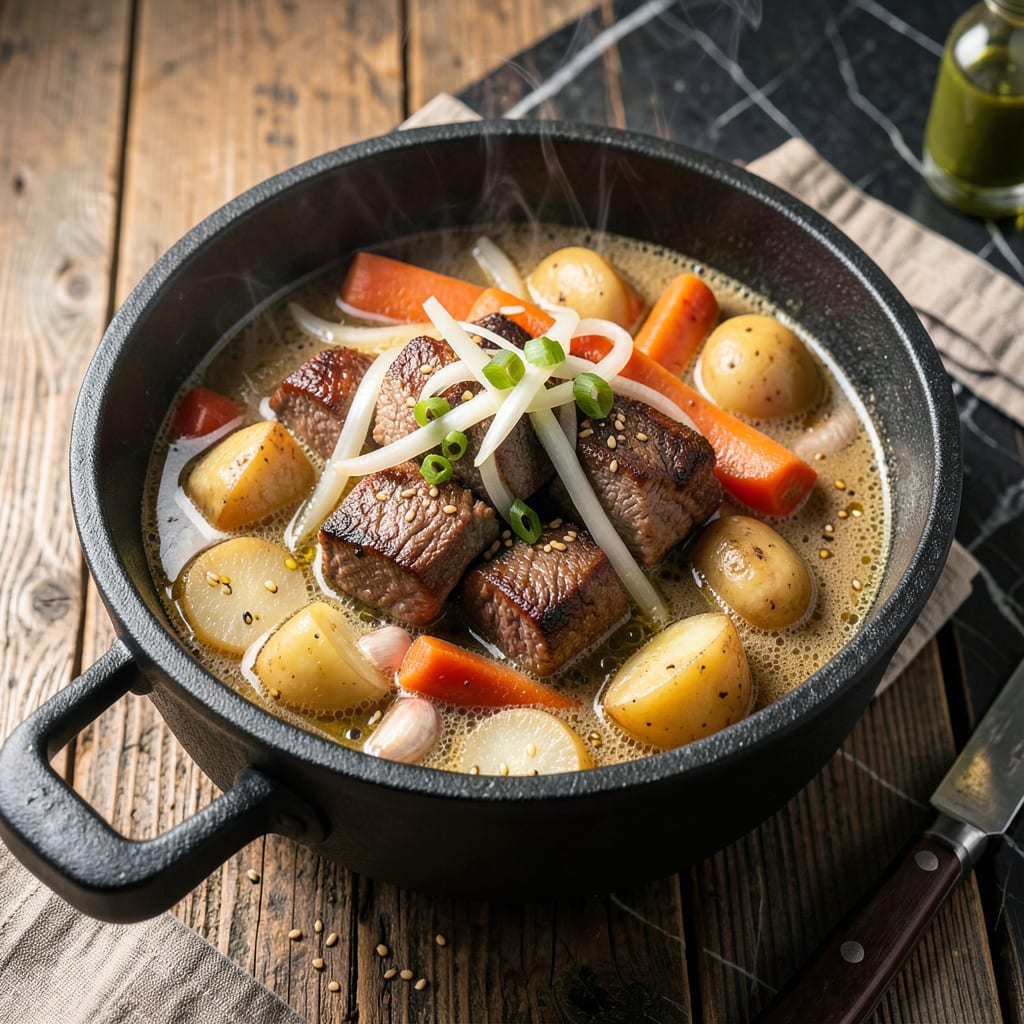
This traditional Korean stew delivers tender meat and vegetables in a deeply flavorful, spicy broth. The slow cooking process allows the ingredients to absorb the rich seasonings fully.
Perfect for cold weather, this hearty dish brings authentic Korean flavors to your table with minimal effort. The balance of heat and umami creates a satisfying meal.
Ingredients for Korean Pot
Hearty beef, vibrant vegetables, and bold Korean seasonings create this satisfying stew.
| Ingredient | Amount | Notes |
|---|---|---|
| Beef Chuck Roast 🥩 | 1 ½ lb | Cut into bite-sized pieces |
| Korean Radish 🥬 | 1 lb | Peeled and cubed |
| Carrots 🥕 | 2 whole | Peeled and sliced into chunks |
| Potatoes 🥔 | 2 whole | Peeled and quartered |
| Onion 🧅 | 1 whole | Thinly sliced |
| Garlic Cloves 🧄 | 6 cloves | Minced for depth of flavor |
| Gochugaru 🌶️ | 3 tbsp | Korean red chili flakes |
| Soy Sauce 🥢 | ½ cup | Low-sodium preferred |
| Gochujang 🌶️ | 2 tbsp | Korean fermented chili paste |
| Brown Sugar 🍚 | 1 tbsp | Balances the heat and spice |
| Sesame Oil 🫒 | 1 tbsp | Toasted for aroma |
| Beef Broth 🍲 | 4 cups | Low-sodium for control |
| Green Onions 🌱 | 4 whole | Thinly sliced for garnish |
| Zucchini 🥒 | 1 whole | Sliced into chunks |
The beef chuck roast is essential for achieving that fall-apart tenderness. Look for well-marbled pieces at your butcher or Whole Foods meat counter. Korean radish (mu) can be found at H Mart or other Asian grocers—its slightly sweet flavor balances the spice perfectly. If unavailable, daikon radish makes an acceptable substitute with minimal flavor difference.
No gochugaru? Substitute with cayenne pepper at half the amount (it’s hotter, so adjust carefully). Gochujang is non-negotiable for authentic flavor, but miso paste mixed with sriracha can work in a pinch. The soy sauce should be Korean if possible—Jin Ganjang is a reliable brand. For a gluten-free version, tamari works just as well.
This stew tastes even better the next day as flavors meld. Refrigerate in airtight containers for up to 4 days, or freeze portions for 3 months. Reheat gently to preserve the meat’s tenderness.
Why You’ll Love This Recipe
- One Pot Wonder: I just dump everything in and let it simmer – the beef, radish, and veggies all cook together with almost no effort.
- Deep Umami: The beef chuck soaks up the soy and garlic until every bite is ridiculously rich and savory.
- Feeds a Crowd: I make a huge batch for Sunday dinner and we’re set for leftovers all week.
Step-by-Step Instructions for Spicy Stew With Tender Meat and Vegetables
This method ensures fall-apart beef and vegetables that soak up every drop of rich, spicy broth.
Step 1: Sear the Beef Chuck Roast for Depth
Heat a large, heavy pot over medium-high heat. Add the 1.5 lb Beef Chuck Roast pieces in a single layer, working in batches if needed to avoid crowding. Sear for 3-4 minutes per side until deeply browned on all surfaces—this builds a flavor foundation for the stew.
Don’t rush this step; you want a dark, caramelized crust on each piece. The beef should release easily from the pot when it’s ready to flip. Transfer the seared beef to a plate and set aside—it will finish cooking in the broth later.
Step 2: Build the Aromatic Base
In the same pot, add the thinly sliced Onion, 2 whole Carrots, and 6 cloves Garlic Cloves. Sauté over medium heat for 5-6 minutes until the onions soften and the carrots begin to caramelize around the edges.
Stir in the 3 tbsp Gochugaru, 2 tbsp Gochujang, 0.5 cup Soy Sauce, 1 tbsp Brown Sugar, and 1 tbsp Sesame Oil. Cook for 1-2 minutes until the mixture becomes fragrant and the spices toast slightly—this deepens their flavor before adding liquid.
Step 3: Simmer the Stew to Tender Perfection
Return the seared beef to the pot along with the 1 lb Korean Radish, 2 whole Potatoes, and 1 whole Zucchini. Pour in the 4 cups Beef Broth, stirring to combine and deglaze the pot. Bring to a boil, then reduce heat to low.
Cover and simmer for 1.5 to 2 hours, stirring occasionally, until the beef is fork-tender and the vegetables are soft. The stew is ready when the beef shreds easily with a fork and the broth has thickened slightly. Taste and adjust seasoning if needed.
Step 4: Finish with Fresh Green Onions
Just before serving, stir in the 4 whole Green Onions. Let the stew sit covered for 5 minutes off the heat to allow the flavors to meld and the green onions to soften slightly without losing their bright, fresh flavor.
Ladle the stew into bowls, ensuring each serving has a generous portion of beef and vegetables. The green onions should retain a vibrant color and subtle crunch, adding a fresh contrast to the rich, hearty stew. Serve immediately while hot.
Pro Tips For Making Korean Pot
- Sear the Beef First: Brown the beef chuck roast in batches over medium-high heat until deeply caramelized—I learned this the hard way after my first few pots tasted bland from underdeveloped flavor.
- Soak the Radish: Korean radish can turn bitter if not prepped right, so soak the chunks in cold water for 10 minutes before adding them to the pot.
- Skip the Potato Peeling: The skins on potatoes hold them together during long simmering, and they add a nice texture—plus, it saves you 5 minutes of tedious prep.
- Simmer Low and Slow: After the initial boil, drop the heat to low and let it bubble gently for at least 2 hours—any higher and the beef turns tough instead of fall-apart tender.
Pro Cooking Tips for Perfect Results
Pot Selection Matters
For this stew, I always use my 5.5-quart enameled cast iron Dutch oven—Le Creuset is my go-to brand. The heavy base distributes heat evenly, preventing hot spots that can burn your aromatic base. Avoid thin aluminum pots.
Low and Slow Wins
After bringing to a boil, immediately reduce to low heat for that 1.5-2 hour simmer. The liquid should maintain a gentle bubble, not a rolling boil. I check mine every 30 minutes to ensure consistent temperature. 🌡️
Flavor Layering Technique
Toast your gochugaru and gochujang in the pot with onions and garlic for 1-2 minutes before adding liquid. This blooms the chili flavors and removes any raw bitterness. I learned this trick from my Korean grandmother.
Meat Resting Trick
Let the seared beef rest on the plate for 5 minutes before returning to the pot. This allows juices to redistribute, ensuring each bite stays moist. I use this time to prep my remaining vegetables.
Broth Reduction Control
If your stew reduces too much during simmering, add ½ cup hot water at a time. The final consistency should coat the back of a spoon but still be pourable. I aim for about 1 inch of liquid above the vegetables. 💡
Final Flavor Boost
Just before serving, I stir in an extra 1 tsp sesame oil for brightness. This small addition makes a noticeable difference in the aromatic profile of the finished dish.
Nutrition Facts
Frequently Asked Questions
Can I use chicken instead of beef?
Yes, swap beef for 1.5 lb boneless chicken thighs. Reduce simmer time to 30-40 minutes since chicken cooks faster. Thighs stay juicier than breasts in this spicy broth
How do I adjust the spice level?
For milder heat, reduce gochugaru to 1 tbsp and omit gochujang. For extra kick, add 1 tsp more of each. Taste before serving to fine-tune
What if my stew is too thin?
Uncover and simmer for 10-15 minutes to reduce. For quicker thickening, mix 1 tbsp cornstarch with cold water, then stir in. Avoid over-thickening—it should still be soupy
Can I make this in a slow cooker?
Brown the beef first, then transfer everything to the slow cooker. Cook on low for 6-8 hours or high for 4 hours. Perfect for hands-off preparation

- 4C Bread Crumbs Meatballs Recipe: Crispy Crust and Juicy Centers - September 25, 2026
- 6 Oz Chocolate Chip Cookie Recipe: Perfectly Balanced Crispy Edges and Chewy Hearts - September 25, 2026
- 6-Inch Coffee Cake Recipe: Vanilla Bean Swirls and Buttery Streusel Topping - September 25, 2026