
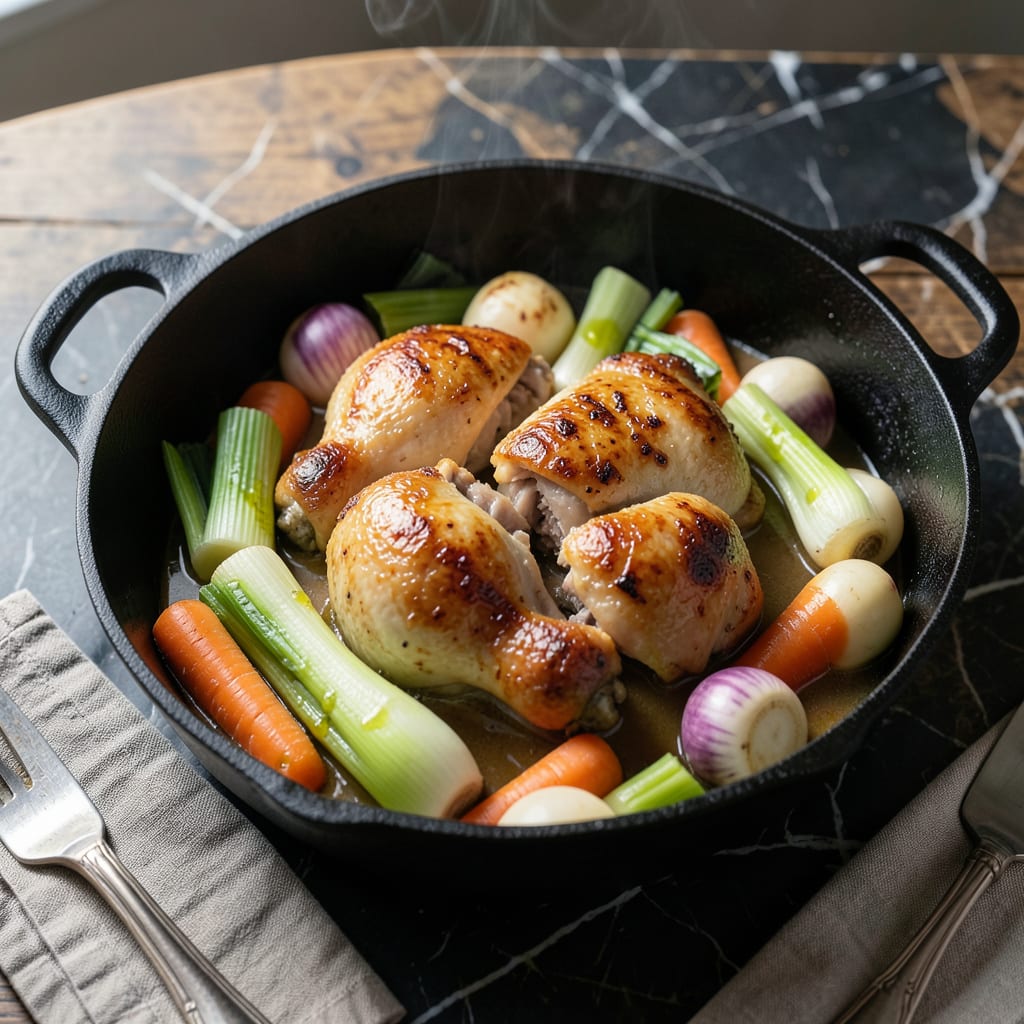
This classic French dish brings rustic, one-pot comfort to your table with minimal effort. The slow simmering coaxes maximum flavor from simple ingredients, creating a meal that’s both nourishing and deeply satisfying.
The traditional method ensures tender chicken, perfectly cooked vegetables, and a rich broth that forms the heart of this timeless recipe. It’s a celebration of French home cooking at its most authentic and approachable.
Ingredients for Poule Au Pot
Traditional French comfort requires just these humble, flavorful ingredients for authentic one-pot heartiness.
| Ingredient | Amount | Notes |
|---|---|---|
| Whole Chicken 🍗 | 3 lb | Cut into 8 pieces, skin-on |
| Chicken Stock 🥣 | 8 cups | Low-sodium preferred for control |
| Leeks 🧅 | 2 whole | White and light green parts only, sliced |
| Carrots 🥕 | 4 whole | Peeled and cut into chunks |
| Celery Ribs 🌿 | 3 whole | Cut into 2-inch pieces |
| Turnips 🥔 | 2 whole | Peeled and quartered |
| Garlic Cloves 🧄 | 6 cloves | Smashed lightly |
| Fresh Thyme Sprigs 🌿 | 4 whole | Plus 2 tsp chopped leaves |
| Bay Leaves 🍃 | 2 whole | Dried, for aromatic depth |
| Black Peppercorns 🌶️ | 1 tsp | Whole, for broth infusion |
| Kosher Salt 🧂 | 1 ½ tsp | Adjust to taste at serving |
| Parsley sprigs 🌿 | 1 cup | Fresh, for garnish and broth |
| Butter 🧈 | 2 tbsp | Unsalted, for finishing |
| Egg Noodles 🍜 | 8 oz | For serving with broth |
The chicken is the foundation—seek out a high-quality, free-range bird for superior flavor and texture. Whole Foods or local butchers often carry excellent options. For the stock, homemade is ideal (save those chicken bones!), but a quality low-sodium brand like Better Than Bouillon works in a pinch. The vegetables should be fresh and firm; wilted leeks or soft carrots won’t deliver the right texture.
No fresh thyme? Dried thyme at one-third the amount works, though the flavor profile shifts slightly. Swap turnips for parsnips or rutabaga if you prefer their sweeter notes. For the noodles, any egg-based pasta holds up well, but avoid delicate shapes like angel hair. The butter at the end isn’t traditional but adds a luxurious finish—omit if you’re keeping it strictly authentic.
This keeps beautifully for 3-4 days in the fridge, and the flavors deepen overnight. Freeze without the noodles for up to 3 months—add fresh pasta when reheating. The broth can be strained and frozen separately for future soups or sauces.
Why You’ll Love This Recipe
- One Pot Wonder: I toss in the chicken, veggies, and stock, then let the oven do the work—minimal cleanup, maximum flavor.
- Rich Broth Magic: The leeks and carrots soak up the stock until every bite tastes like home.
- Sunday or Wednesday: Honestly, it’s just as good for a lazy weekend as it is for a quick weeknight dinner.
- Leftovers for Days: I stretch one chicken into three meals—soup, sandwiches, you name it.
Step-by-Step Instructions for Poule Au Pot
This traditional one-pot method delivers rich, aromatic broth with tender chicken and vegetables.
Step 1: Prepare and Brown the Chicken
Cut the 3 lb Whole Chicken into 8 pieces, keeping the skin on for depth of flavor. Pat the pieces dry with paper towels—this ensures even browning and prevents steaming in the pot.
In a large Dutch oven, melt the 2 tbsp Butter over medium-high heat. Brown the chicken pieces in batches, skin-side down first, for 4-5 minutes per side until deep golden brown. Don’t overcrowd the pot; this step builds the fond that flavors the broth. Remove and set aside.
Step 2: Build the Aromatic Base
In the same pot, add the sliced 2 whole Leeks, 4 whole Carrots, 3 whole Celery Ribs, and 2 whole Turnips. Sauté for 5-6 minutes until the vegetables begin to soften and develop color.
Add the 6 cloves Garlic Cloves, 4 whole Fresh Thyme Sprigs, 2 whole Bay Leaves, 1 tsp Black Peppercorns, and 1.5 tsp Kosher Salt. Stir to combine, allowing the aromatics to bloom in the residual fat for 1-2 minutes until fragrant.
Step 3: Simmer to Perfection
Return the chicken to the pot and pour in the 8 cups Chicken Stock. The liquid should just cover the chicken and vegetables. Bring to a boil, then reduce to a gentle simmer. Skim any foam that rises to the surface during the first 10 minutes.
Partially cover and simmer for 45-50 minutes until the chicken is cooked through and the vegetables are fork-tender. The internal temperature of the chicken should reach 165°F.
Step 4: Finish and Serve
Remove the chicken and vegetables from the broth with a slotted spoon and transfer to a serving platter. Strain the broth through a fine-mesh sieve to remove solids, then return it to the pot. Adjust seasoning with additional Kosher Salt if needed.
Cook the 8 oz Egg Noodles directly in the broth for 8-10 minutes until al dente. Serve the noodles in bowls, topped with the chicken and vegetables. Garnish with the 1 cup Parsley sprigs for a fresh finish.
Pro Tips For Making Poule Au Pot
- Simmer, Don’t Boil: Keep the heat low enough to maintain a gentle simmer—aggressive boiling toughens the chicken and turns the stock cloudy. I learned this the hard way after my first few attempts yielded dry meat.
- Tie the Chicken: Truss the bird with kitchen twine before adding it to the pot to ensure even cooking and a neater presentation. Sounds fussy, but it actually changes the outcome.
- Salt the Stock: Use well-seasoned chicken stock, or your poule au pot will taste flat. Homemade is ideal, but if using store-bought, reduce it by half first to intensify the flavor.
- Prep Veggies Last: Chop your leeks, carrots, and celery right before adding them to the pot to prevent browning and keep their flavors fresh. I used to prep everything first and wondered why my dish lacked brightness.
Make-Ahead Tips for This Dish
Overnight Flavor Boost
This dish tastes even better the next day. I always make it in the morning and let it cool completely before refrigerating. The flavors meld and deepen overnight, creating a more complex broth by dinner the following day. 💪
Chicken Prep Ahead
You can cut and brown the 3 lb chicken up to 24 hours in advance. Store the browned pieces in an airtight container in the fridge. This saves time and ensures you’re not rushing the browning process.
Vegetable Prep
All the vegetables—leeks, carrots, celery, and turnips—can be washed, trimmed, and cut the night before. Keep them in separate containers with damp paper towels to maintain freshness. This makes assembly quick and easy.
Broth Storage
If you want to serve this over multiple days, strain and store the broth separately in the fridge for up to 4 days. Reheat it gently with fresh egg noodles each time. The broth actually improves in flavor as it sits. ❄️
Freezing for Later
This freezes beautifully without the noodles. Portion the chicken, vegetables, and broth into freezer-safe containers, leaving 1-inch headspace. It keeps well for up to 3 months. Thaw overnight in the fridge before reheating.
Reheating Tips
Reheat gently on the stovetop over medium-low heat to preserve the chicken’s tenderness. If the broth seems thin, simmer uncovered for 5-10 minutes to reduce slightly. Add fresh parsley at the end for brightness.
Nutrition Facts
Frequently Asked Questions
What’s the best pot for this dish?
A heavy Dutch oven or enamel-coated cast iron pot works best. These distribute heat evenly and retain it well for consistent simmering.
Can I use chicken breasts instead of a whole chicken?
Yes, but use bone-in, skin-on breasts for better flavor. Reduce simmering time to 25-30 minutes to prevent dryness. Thighs are also a great alternative.
How do I know when the vegetables are done?
Pierce them with a fork—fork-tender means they’re ready. Carrots and turnips typically need the full 45-50 minutes of simmering.
Can I make this in a slow cooker?
Brown the chicken first, then transfer everything to the slow cooker. Cook on low for 6-7 hours or high for 3-4 hours.

- 4C Bread Crumbs Meatballs Recipe: Crispy Crust and Juicy Centers - September 25, 2026
- 6 Oz Chocolate Chip Cookie Recipe: Perfectly Balanced Crispy Edges and Chewy Hearts - September 25, 2026
- 6-Inch Coffee Cake Recipe: Vanilla Bean Swirls and Buttery Streusel Topping - September 25, 2026