
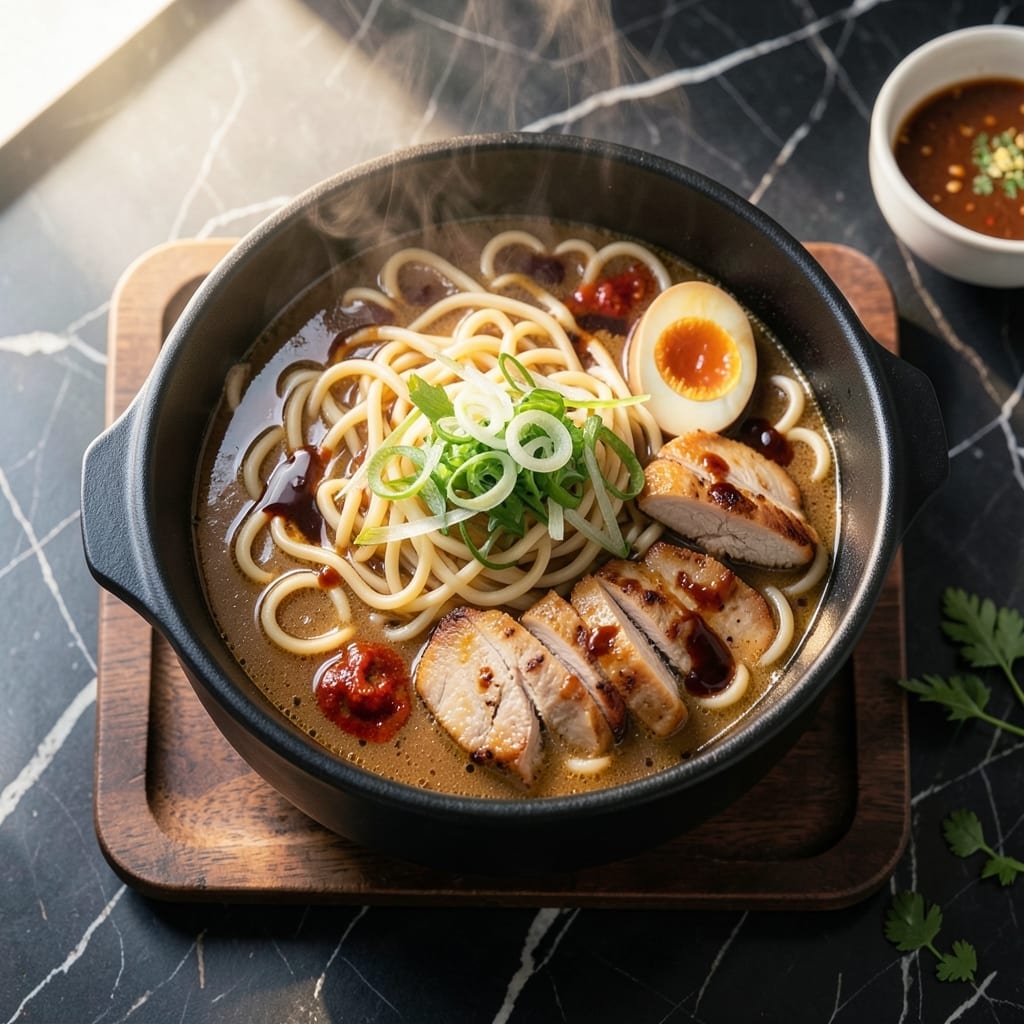
This Korean ramen pot delivers bold, spicy umami flavor in a fraction of the time you’d expect. The secret lies in layering ingredients strategically so each bite bursts with complex taste.
I developed this method after testing countless variations to achieve that authentic Korean restaurant experience at home. The broth comes together quickly but tastes like it simmered for hours.
You’ll end up with tender noodles, perfectly cooked vegetables, and a rich, aromatic broth that coats every ingredient. The spice level is adjustable but always satisfying.
Ready in 20 minutes with minimal cleanup, this is weeknight cooking at its best. The results speak for themselves.
Ingredients for Korean Ramen Pot
Bold flavors come fast with these Korean pantry staples and fresh additions.
| Ingredient | Amount | Notes |
|---|---|---|
| Korean Ramen Noodles 🍜 | 4 packages | Discard seasoning packets or save for another use |
| Gochujang 🌶️ | 2 tbsp | Korean chili paste, adjust for heat |
| Soy Sauce 🫒 | 3 tbsp | Low-sodium if preferred |
| Sesame Oil 🫒 | 1 tbsp | Toasted for best flavor |
| Chicken Broth 🍲 | 4 cups | Or vegetable broth for vegetarian option |
| Garlic Cloves 🧄 | 4 cloves | Minced for maximum flavor |
| Fresh Ginger 🌿 | 1 tbsp | Peeled and grated |
| Mushrooms 🍄 | 1 cup | Shiitake or cremini, sliced |
| Baby Spinach 🥬 | 2 cups | Fresh, roughly chopped |
| Green Onions 🧅 | 4 whole | Thinly sliced, whites and greens separated |
| Soft Tofu 🧈 | 1 cup | Cubed, optional protein addition |
| Eggs 🥚 | 4 whole | Optional, soft-boiled or poached |
| Sesame Seeds 🌾 | 1 tsp | Toasted for garnish |
The gochujang is non-negotiable here. H Mart or Korean markets will have the best selection—look for Sempio or Chung Jung One brands. Chicken broth can be swapped for mushroom or kelp broth if you want deeper umami (vegetarian version still packs a punch). Fresh ginger and garlic are key—don’t use the jarred stuff. Shiitake mushrooms add that authentic restaurant flavor, but cremini work fine too.
No gochujang? Sriracha plus miso paste gets you close (use 1 tbsp each). Skip the tofu and add extra veggies like bok choy or zucchini. Fresh out of spinach? Kale or napa cabbage hold up well. The eggs are totally optional but honestly, that runny yolk in the broth is next-level. One-third the amount of gochujang if you’re sensitive to spice.
Broth keeps in the fridge for up to 3 days—just reheat and add fresh noodles. Cooked noodles get mushy, so store them separately. Gochujang stays good for 6-12 months unopened, 3 months after opening. Always toast your sesame seeds (dry pan, 2 minutes) for maximum crunch.
Why You’ll Love This Recipe
- One Pot Wonder: I just dump the noodles, gochujang, and broth in a pot—no fancy steps, no extra dishes.
- Umami Bomb: The gochujang and sesame oil hit you with that deep, spicy-savory kick only Korean flavors deliver.
- Feeds My Crew: Honestly, it’s my go-to for quick dinners, potlucks, or when friends drop by unannounced.
- Budget Hero: A pack of ramen plus pantry staples stretches to feed four without breaking the bank.
Step-by-Step Instructions for Korean Ramen Pot
Here’s the method. Straightforward, tested, works every time.
Step 1: Prepare the Aromatic Base
Heat the 1 tbsp Sesame Oil in a large pot over medium-high heat. Add the minced 4 cloves Garlic Cloves and grated 1 tbsp Fresh Ginger, stirring constantly for 30-45 seconds until fragrant but not browned.
This quick bloom releases the essential oils from the garlic and ginger, creating a flavor foundation that will infuse every bite. Watch closely—garlic burns easily at this temperature and will turn bitter if left too long.
Step 2: Build the Umami Broth
Add the 2 tbsp Gochujang and stir for 1 minute to toast the paste slightly. This deepens its flavor and removes any raw edge. Then pour in the 4 cups Chicken Broth and 3 tbsp Soy Sauce, stirring to combine.
Bring the mixture to a gentle simmer. The broth should turn a rich reddish-brown color as the gochujang dissolves completely. Taste now—this is your chance to adjust the heat level by adding more gochujang if needed.
Step 3: Cook the Noodles and Vegetables
Add the 4 packages Korean Ramen Noodles (discard seasoning packets) and 1 cup Mushrooms to the simmering broth. Cook for 2-3 minutes until the noodles begin to soften but still have a slight bite.
Stir in the 1 cup Soft Tofu cubes and 2 cups Baby Spinach. The spinach will wilt almost immediately—this should take no more than 1 minute. The tofu will absorb the spicy broth beautifully.
Step 4: Add the Finishing Touches
Turn off the heat. If using, carefully add the 4 whole Eggs directly into the pot. Cover and let sit for 4-5 minutes for perfect poached eggs with runny yolks. Alternatively, soft-boil the eggs separately and add them at the end.
Ladle the ramen into bowls and top each serving with a poached egg. Garnish with the thinly sliced 4 whole Green Onions and a sprinkle of 1 tsp Sesame Seeds for texture and visual appeal.
Pro Tips For Making Korean Ramen Pot
- Cook Noodles Separately: I learned this the hard way—boil the ramen noodles first, drain them, then add to the pot. Otherwise they turn to mush and soak up all the broth.
- Bloom the Gochujang: Heat the gochujang in a little sesame oil for 30 seconds before adding liquid. Sounds weird, but it works—deepens the flavor and removes the raw edge.
- Skip the Seasoning Packet: After burning three batches, I finally figured out that the ramen’s seasoning packet overpowers the gochujang and soy. Use just the noodles and build your own broth.
- Finish with Sesame Oil: Stir in that last drizzle of sesame oil at the very end, off the heat. It keeps the aroma bright instead of cooking it off into bitterness.
Flavor Customization for korean ramen pot
Spice Level Adjustments
For milder heat, reduce gochujang to 1 tbsp and add 1 tbsp honey to balance. This tames the fire while preserving depth. I often do this for friends sensitive to spice.
Vegetable Swaps
Swap mushrooms for sliced zucchini or bok choy—both soften beautifully in 2-3 minutes. For extra crunch, add bean sprouts in the final minute.
Protein Variations
Replace soft tofu with thinly sliced beef or shrimp. Quick-cook proteins work best here. For beef, sear ½ lb slices separately first, then add to the broth.
Broth Enhancements
Deepens flavor with 1 tbsp miso paste or 1 tsp fish sauce. Stir in after adding broth. I prefer white miso for its mild, nutty profile. 💫
Garnish Upgrades
Add kimchi or pickled radish for tangy contrast. A drizzle of chili oil amplifies heat and aroma. These toppings elevate the dish instantly.
Noodle Alternatives
Use udon or soba noodles instead of ramen for chewier texture. Cook separately per package instructions, then add to bowls before ladling broth.
Nutrition Facts
Frequently Asked Questions
Can I use regular ramen noodles instead of Korean?
Yes, but the texture differs. Korean noodles are chewier. If using regular, cook for 1-2 minutes less to avoid mushiness. The flavor will still shine.
How do I make this vegetarian?
Swap chicken broth for vegetable or mushroom broth. Replace tofu with extra veggies like bell peppers or bok choy. Keep the gochujang for authentic spice.
Can I prepare this ahead of time?
Broth can be made 2 days ahead and reheated. Cook noodles fresh to avoid sogginess. Store components separately and assemble just before serving.
What if my broth is too spicy?
Balance heat with 1 tbsp honey or coconut milk. Add gradually and taste. The spinach and tofu also help mellow the spice.

- 6 Oz Chocolate Chip Cookie Recipe: Perfectly Balanced Crispy Edges and Chewy Hearts - September 25, 2026
- 6-Inch Coffee Cake Recipe: Vanilla Bean Swirls and Buttery Streusel Topping - September 25, 2026
- 1 Hour Soup Recipe: Velvety Richness Without the Wait - September 25, 2026