
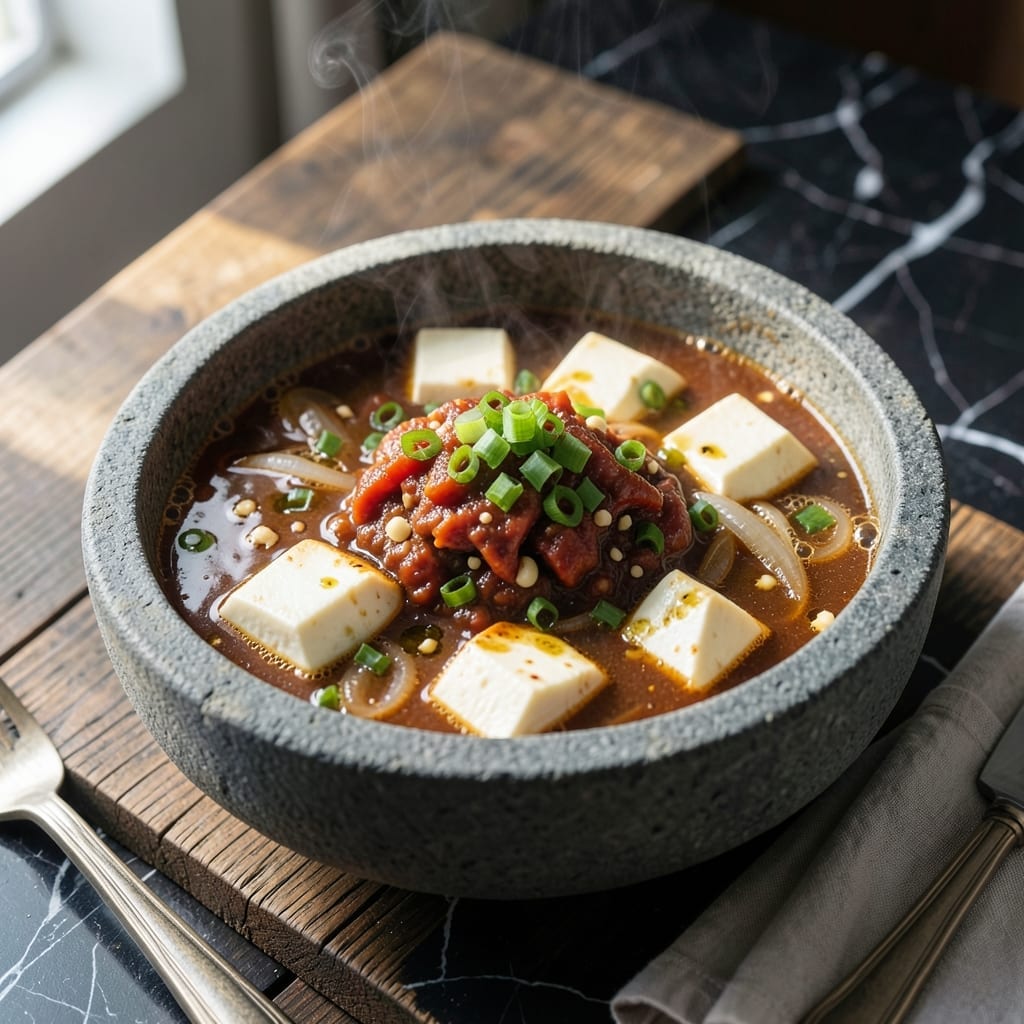
This Korean tofu pot delivers bold flavors in a comforting, one-pot meal. The combination of spicy kimchi, soft tofu, and aromatic vegetables creates a dish that’s both hearty and nourishing.
I’ve refined this recipe to balance heat with depth, using gochujang for its signature kick and kimchi for tangy complexity. The tofu stays silky while soaking up the rich, savory broth.
What makes this stew special is its simplicity—just simmer everything together for a restaurant-quality result at home. It’s naturally vegan and packed with protein and vegetables.
Serve with steamed rice to complete the meal. Here’s how to make it.
Ingredients for Korean Tofu Pot
Silky tofu, spicy kimchi, and aromatic vegetables create this bold, comforting one-pot meal.
| Ingredient | Amount | Notes |
|---|---|---|
| Soft Tofu 🧈 | 14 oz | Silken variety preferred |
| Kimchi 🥬 | 1 ½ cups | Well-fermented for best flavor |
| Gochujang 🌶️ | 2 tbsp | Korean red pepper paste |
| Onion 🧅 | 1 whole | Thinly sliced |
| Garlic Cloves 🧄 | 4 cloves | Minced for maximum flavor |
| Green Onions 🌱 | 4 whole | Thinly sliced, white and green parts separated |
| Mushrooms 🍄 | 8 oz | Shiitake or cremini, sliced |
| Vegetable Broth 🥣 | 3 cups | Low-sodium preferred for control |
| Soy Sauce 🫒 | 2 tbsp | Use tamari for gluten-free |
| Sesame Oil 🫒 | 1 tbsp | Toasted for depth |
| Sugar 🍚 | 1 tsp | Balances the heat and acidity |
| Zucchini 🥒 | 1 whole | Sliced into half-moons |
| Red Pepper Flakes 🌶️ | ½ tsp | Adjust to taste for spice level |
The tofu is non-negotiable here—soft or silken gives that melt-in-your-mouth texture (firm just won’t do). H Mart or Korean markets will have the best kimchi selection, but look for refrigerated, not shelf-stable at regular grocery stores. Gochujang brands vary wildly; I trust Sempio or Chongga for consistent heat and depth. The mushrooms should be fresh, not canned, for proper texture.
No kimchi? Sauerkraut plus a splash of vinegar gets you close in a pinch, but the flavor won’t be the same. Out of gochujang? Miso paste plus chili paste at half the amount works. Vegetable broth can be swapped for water plus a bouillon cube, but homemade or low-sodium is best. The zucchini can be swapped for eggplant if you prefer.
The stew tastes even better the next day once flavors meld. Stores in the fridge for 3-4 days or freezes for up to 3 months. Reheat gently to keep the tofu intact (it’s delicate once cooked).
Why You’ll Love This Recipe
- One Pot Wonder: I just toss in the tofu, kimchi, and gochujang with some onion and garlic—no fancy prep, no mess.
- Flavor Bomb: The gochujang and kimchi bring this deep, spicy-savory kick that’s honestly hard to resist.
- Weeknight Savior: Between us, it’s my go-to when I need something warm and ready in 20 minutes flat.
- Budget Friendly: Soft tofu and kimchi stretch far, and I’ll be real: it tastes way fancier than the cost.
Step-by-Step Instructions for Korean Tofu Pot
This method delivers authentic flavor with perfectly balanced heat and umami in every bowl.
Step 1: Build the Aromatic Base
Heat the sesame oil in a large pot over medium-high heat. Add the onion and cook for 3-4 minutes until it begins to soften and turn translucent at the edges. This creates the flavor foundation for your stew.
Add the garlic cloves and cook for 30 seconds until fragrant, stirring constantly to prevent burning. Immediately add the mushrooms and cook for 5-6 minutes until they release their moisture and begin to brown lightly.
The aroma should be rich and savory at this stage, with the garlic’s pungency mellowing into the onions’ sweetness. This base ensures every bite of your creation carries depth.
Step 2: Develop the Spicy-Savory Broth
Stir in the gochujang and cook for 1 minute, allowing it to darken slightly and deepen in color. This step intensifies the paste’s fermented complexity. Add the kimchi with its juices, breaking up larger pieces with your spoon.
Pour in the vegetable broth, soy sauce, sugar, and red pepper flakes. Bring to a gentle boil, then reduce heat to maintain a steady simmer. The liquid should look vibrant and slightly frothy as the flavors begin to meld.
Simmer for 10 minutes to allow the kimchi to soften further and the broth to take on its tangy, spicy character. Taste and adjust seasoning if needed—this is your moment to ensure balance.
Step 3: Add Vegetables and Tofu
Gently stir in the sliced zucchini and simmer for 5 minutes until it softens but still retains a slight bite. The zucchini should turn bright green and begin to absorb the broth’s flavors.
Carefully add the soft tofu in chunks, distributing them evenly throughout the pot. Avoid stirring vigorously to keep the tofu intact. The tofu should float gently in the simmering broth, heating through without breaking apart.
The stew is nearly ready when the tofu is heated through and the zucchini is tender, typically after 3-4 minutes. The surface should have a gentle shimmer with small bubbles breaking occasionally.
Step 4: Finish and Garnish
Remove the pot from heat and let it sit for 2 minutes to allow the flavors to settle. The tofu will become more tender as it absorbs the warm broth.
Ladle into serving bowls and garnish with the sliced green onions, using both the white and green parts for color contrast. The stew should have a rich, reddish-orange hue from the gochujang and kimchi, with visible chunks of tofu and vegetables.
Serve immediately while hot, with extra green onions on the side for those who want to adjust the freshness. The broth should be robust and slightly thickened from the tofu’s starch, coating the spoon lightly.
Pro Tips For Making Korean Tofu Pot
- Simmer Gently: Keep the heat at a low simmer once the tofu goes in—boiling it hard will break the soft tofu into a mushy mess. I learned this the hard way after stirring too vigorously and ending up with tofu soup instead of chunks.
- Drain the Kimchi: Squeeze out most of the liquid from the kimchi before adding it to the pot, or your stew will be watery. Sounds weird, but it works: the flavor stays concentrated without diluting the broth.
- Add Tofu Last: Wait until the broth is hot and seasoned before adding the soft tofu—adding it too early makes it absorb too much salt or gochujang and turn rubbery. About 5 minutes at the end is perfect.
- Bloom the Gochujang: Cook the gochujang with the onions and garlic for 1-2 minutes before adding liquids to deepen its flavor. My grandmother swore by this, and she was right: it removes the raw edge and makes the stew taste richer.
Essential Equipment for This Recipe
The Right Pot
I always use a heavy-bottomed Dutch oven for this stew—it distributes heat evenly and prevents scorching. My go-to is a 5-6 quart enameled cast iron from Le Creuset. The weight helps maintain steady heat, which is crucial for developing those deep, complex flavors. 🔥
Wooden Spoons
Since you’re working with non-stick surfaces and delicate tofu, a wooden spoon is essential. It won’t scratch your pot like metal utensils might, and it gently stirs without breaking apart the soft tofu. I keep a bamboo spoon dedicated just for my Korean cooking.
Plus, wood doesn’t conduct heat like metal, so it’s safer for longer cooking sessions.
Sharp Knife
A good 8-inch chef’s knife makes quick work of all the vegetable prep. I recommend Wüsthof or Victorinox for home cooks. The onion, garlic, and mushrooms need to be uniformly sliced for even cooking, and a sharp blade makes this effortless.
Measuring Tools
Precision matters with the bold flavors in this dish. I use stainless steel measuring spoons for the gochujang and spices—1 tsp sugar or ½ tsp red pepper flakes can make or break the balance. A liquid measuring cup ensures accurate broth portions.
Serving Bowls
For serving, I love wide, shallow rice bowls that let the vibrant colors shine. The reddish-orange broth against the white tofu and green vegetables looks stunning. Plus, the shape makes it easier to ladle every last bit of that flavorful liquid. 🥗
Nutrition Facts
Frequently Asked Questions
Can I use firm tofu instead of soft?
Soft or silken tofu is ideal for that melt-in-your-mouth texture. Firm tofu will hold its shape but won’t absorb the broth as well. For best results, stick with soft tofu as specified.
How do I adjust the spice level?
Start with ½ tsp red pepper flakes and taste before adding more. Reduce or omit gochujang for milder heat. For extra spice, add more gochujang or flakes gradually.
Can I make this ahead of time?
The flavors deepen overnight in the fridge. Store in an airtight container for up to 3-4 days. Reheat gently to avoid breaking the tofu.
What can I substitute for kimchi?
In a pinch, use sauerkraut with a splash of vinegar. The flavor won’t be identical, but it adds needed tang. Miso paste plus chili paste also works well.

- 6 Oz Chocolate Chip Cookie Recipe: Perfectly Balanced Crispy Edges and Chewy Hearts - September 25, 2026
- 6-Inch Coffee Cake Recipe: Vanilla Bean Swirls and Buttery Streusel Topping - September 25, 2026
- 1 Hour Soup Recipe: Velvety Richness Without the Wait - September 25, 2026