
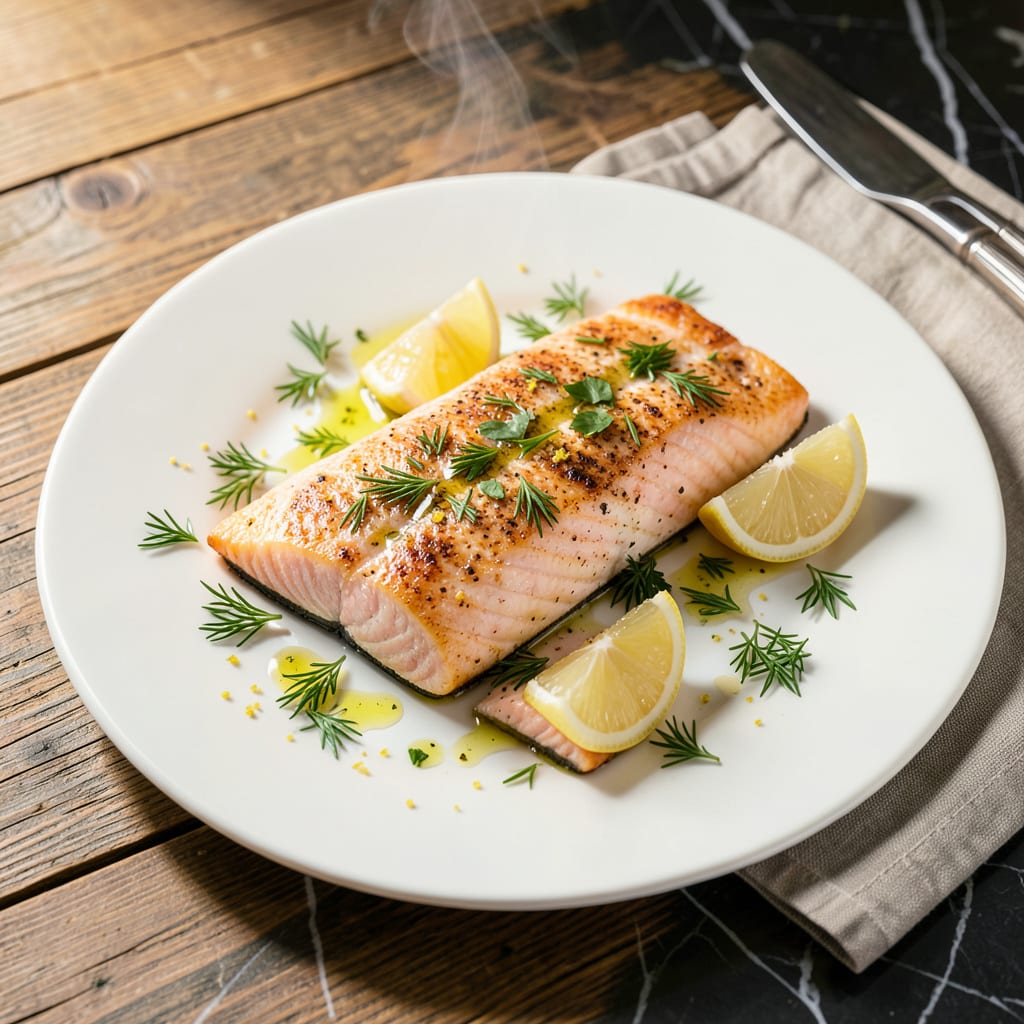
This baked salmon delivers flaky, tender results with minimal added fat, letting the natural richness of the fish shine through.
Simple preparation with lemon zest and herbs enhances flavor without extra calories. Ready in 20 minutes at 400°F, it pairs perfectly with steamed vegetables or quinoa.
Ingredients for Low Fat Baked Salmon
Wild-caught salmon, bright citrus, and fresh herbs create a light yet flavorful dish.
| Ingredient | Amount | Notes |
|---|---|---|
| Salmon Fillets 🐟 | 1 ½ lb | Skin-on or skinless, wild-caught preferred |
| Lemon Zest 🍋 | 2 tbsp | From 2 medium lemons |
| Fresh Lemon Juice 🍋 | 2 tbsp | From 1 medium lemon |
| Extra-Virgin Olive Oil 🫒 | 1 tbsp | Light coating only |
| Fresh Dill 🌿 | 2 tbsp | Chopped, stems removed |
| Fresh Parsley 🌿 | 2 tbsp | Chopped, for garnish |
| Garlic Cloves 🧄 | 3 cloves | Minced finely |
| Dijon Mustard 🟡 | 1 tbsp | Smooth, not whole grain |
| Sea Salt 🧂 | ½ tsp | Fine grain preferred |
| Black Pepper 🌶️ | ½ tsp | Freshly ground |
| Paprika 🌶️ | ¼ tsp | Sweet or smoked variety |
| Low-Sodium Soy Sauce 🫒 | 1 tbsp | Or tamari for gluten-free |
Optimal quality salmon should be wild-caught—look for vibrant, glossy fillets at Whole Foods or Trader Joe’s. Skin-on fillets hold together better during baking, but skinless works if preferred. The lemon matters too: organic lemons have thicker zest with more aromatic oils. Fresh herbs are non-negotiable here; dried won’t deliver the same bright, clean flavor.
No fresh dill? Fresh tarragon or chives offer a similar delicate anise note. Short on lemon? Lime zest and juice work in a pinch (though flavor will be slightly different). For the mustard, whole grain Dijon adds texture if you prefer it. The soy sauce can be replaced with coconut aminos for a lower-sodium, gluten-free alternative.
Bake immediately after seasoning—salmon doesn’t like sitting in salt. Leftovers keep for 2 days refrigerated (best reheated gently in a 300°F oven). For meal prep, portion before baking and store raw for 1 day maximum.
Why You’ll Love This Recipe
- I’ll be real: it’s my go-to for busy Tuesdays, but fancy enough for company.
- One Pan Wonder: Between us, it’s just salmon, lemon, and dill on a sheet pan—no fuss, no extra dishes.
- Bright & Zesty: The lemon zest and fresh dill make every bite ridiculously good, not bland like some “healthy” dishes.
- Weeknight Hero: I’ll be real: it’s my go-to for busy Tuesdays, but fancy enough for company.
Step-by-Step Instructions for Low Fat Baked Salmon
Here’s the method. Straightforward, tested, works every time.
Step 1: Prepare the Salmon Fillets and Aromatics
Pat the 1.5 lb salmon fillets dry with paper towels to ensure optimal browning and flavor absorption. Place them on a plate and season both sides evenly with 0.5 tsp sea salt, 0.5 tsp black pepper, and 0.25 tsp paprika. This dry rub will create a light crust while keeping the dish low in fat.
In a small bowl, combine the 2 tbsp lemon zest, 2 tbsp fresh lemon juice, 1 tbsp extra-virgin olive oil, 3 cloves minced garlic, 1 tbsp Dijon mustard, and 1 tbsp low-sodium soy sauce. Whisk until fully emulsified. The acidity from the lemon and tang from the mustard will tenderize the fish while adding depth of flavor.
Step 2: Coat and Marinate the Salmon
Pour the lemon-garlic mixture over the salmon fillets, ensuring they are evenly coated on all sides. Gently rub the marinade into the flesh to maximize contact. The extra-virgin olive oil in the mixture provides just enough fat for moisture without compromising the low-fat goal.
Sprinkle 2 tbsp chopped fresh dill over the fillets, pressing it lightly into the marinade so it adheres. Dill’s bright, grassy notes complement the salmon’s natural richness. Allow the salmon to marinate at room temperature for 15 minutes—this short rest period lets the flavors penetrate without over-softening the fish.
Step 3: Bake Until Flaky and Light
Preheat your oven to 375°F. Line a baking sheet with parchment paper to prevent sticking and make cleanup effortless. Place the marinated salmon fillets on the prepared sheet, skin-side down if using skin-on fillets. This positioning ensures even cooking and easy release from the parchment.
Bake for 12-15 minutes, depending on the thickness of your fillets. The salmon is done when it reaches an internal temperature of 145°F and flakes easily with a fork. Look for the flesh to turn from translucent to opaque and pull apart with minimal resistance. Avoid overbaking, as this will dry out the fish.
Step 4: Garnish and Serve Immediately
Remove the salmon from the oven and transfer to a serving platter. Sprinkle with the remaining 2 tbsp fresh parsley for a pop of color and freshness. The parsley not only enhances the presentation but also adds a clean, herbal note that balances the dish.
Serve the salmon immediately while hot. The fillets should be moist, tender, and flaky, with a subtle crust from the paprika and a bright, citrusy aroma from the lemon and dill. This method guarantees a light yet flavorful result that highlights the salmon’s natural richness without excess fat.
Pro Tips For Making Low Fat Baked Salmon
- Pat It Dry: Always blot the salmon fillets with a paper towel before baking—excess moisture steams the fish instead of letting it roast, and you’ll lose that nice flaky texture.
- Skip the Overcrowding: Leave space between fillets on the baking sheet so heat circulates evenly; otherwise, the salmon steams in its own juices and ends up soggy.
- Use Thin Fillets: Choose evenly cut, center-cut fillets about 1 inch thick—they cook through in 12–15 minutes at 400°F without drying out.
- Zest Before Juicing: Grate the lemon zest first, then juice it—once you’ve cut the lemon open, it’s nearly impossible to zest cleanly, and you’ll waste half the flavor.
Flavor Customization for low fat baked salmon
Herb Variations
Swap the dill for 2 tbsp fresh tarragon for a more anise-forward flavor, or use chives for a milder onion note. I love tarragon with salmon—it reminds me of French bistro dishes I enjoyed in Paris. 🌿
Citrus Twists
Try lime zest and juice instead of lemon for a brighter, slightly tropical taste. Or mix 1 tbsp orange zest with the lemon for a more complex citrus profile. The acidity still tenderizes the fish beautifully.
Spicy Kick
Add ¼ tsp cayenne pepper or ½ tsp red pepper flakes to the dry rub for heat. A pinch of smoked paprika instead of sweet adds depth. I often add a dash of sriracha to the marinade for extra spice. 🔥
Sweet Glaze
Stir 1 tbsp honey or maple syrup into the marinade for a touch of sweetness that balances the acidity. The salmon caramelizes slightly in the oven, creating a beautiful glaze. Just reduce the soy sauce to ½ tbsp to compensate.
Mediterranean Flair
Replace the dill with 2 tbsp chopped fresh oregano and add 1 tsp dried thyme. A sprinkle of crumbled feta after baking adds a salty tang. This variation transports me to a seaside taverna in Greece.
Asian-Inspired
Swap the lemon for 1 tbsp rice vinegar and add 1 tsp grated ginger to the marinade. Use cilantro instead of parsley for garnish. A drizzle of sesame oil before serving adds authentic aroma.
Nutrition Facts
Frequently Asked Questions
What temperature should the oven be for baking?
Preheat your oven to 375°F for even cooking. This temperature ensures the salmon cooks through without drying out while developing a light crust.
How long does it take to bake salmon?
Bake for 12-15 minutes, depending on thickness. The fish is done when it reaches 145°F internally and flakes easily with a fork.
Can I use frozen salmon?
Yes, but thaw it completely first in the refrigerator. Pat it very dry before seasoning to prevent steaming instead of baking.
What if my salmon sticks to the pan?
Always use parchment paper or a well-seasoned baking sheet. If it sticks, wait 1-2 minutes after removing from the oven – it will release more easily.

- 8 Bean Soup Recipe Crock Pot: Hearty Vegetable Medley in One Pot - September 25, 2026
- 4C Bread Crumbs Meatballs Recipe: Crispy Crust and Juicy Centers - September 25, 2026
- 6 Oz Chocolate Chip Cookie Recipe: Perfectly Balanced Crispy Edges and Chewy Hearts - September 25, 2026