
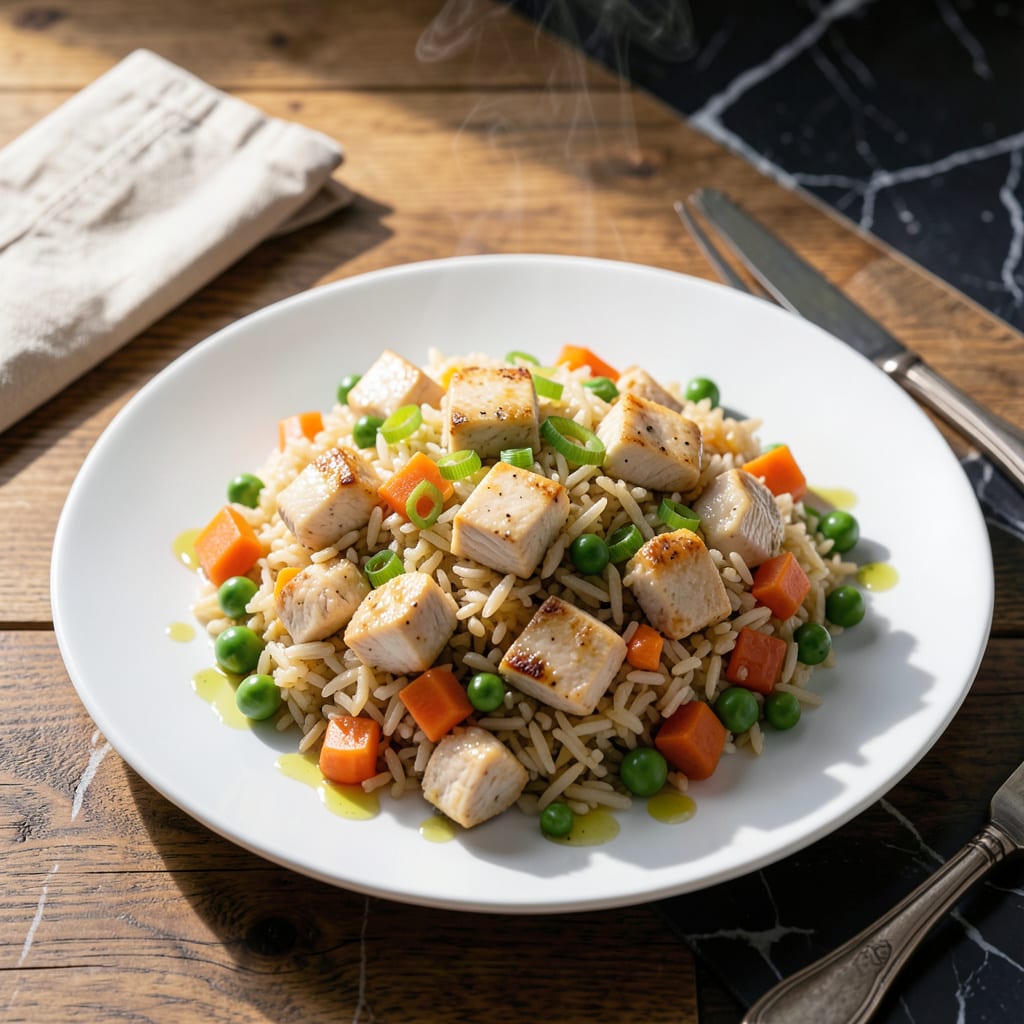
Achieving restaurant-quality fried rice without excess oil is possible with the right technique. This dish delivers all the savory depth you expect, using minimal fat without sacrificing flavor or texture.
The secret lies in pre-cooking the rice and using high heat to create that signature wok-tossed consistency. Lean chicken breast and an abundance of vegetables keep it light while maintaining satisfying heartiness.
Ingredients for Low Fat Chicken Fried Rice
Lean protein, vibrant vegetables, and pre-cooked rice create this light yet satisfying dish.
| Ingredient | Amount | Notes |
|---|---|---|
| Boneless Skinless Chicken Breast 🍗 | 1 lb | Diced into small cubes |
| Long-Grain White Rice 🍚 | 2 cups | Day-old, cooked and chilled |
| Large Eggs 🥚 | 2 whole | Lightly beaten |
| Carrots 🥕 | ¾ cup | Finely diced |
| Frozen Peas 🌱 | ¾ cup | Thawed |
| Green Onions 🧅 | ½ cup | Thinly sliced, white and green parts separated |
| Garlic Cloves 🧄 | 3 cloves | Minced |
| Low-Sodium Soy Sauce 💧 | 3 tbsp | Or tamari for gluten-free |
| Sesame Oil 🫒 | 1 tsp | Toasted, for finishing |
| Olive Oil Cooking Spray 🫒 | 1 can | For non-stick surface |
| Ginger Root 🌿 | 1 tbsp | Freshly grated |
| Salt 🧂 | ½ tsp | Kosher or sea salt |
| Black Pepper 🌶️ | ½ tsp | Freshly ground |
The chicken breast must be lean and fresh—look for uniform color without graying. Pre-cooked, chilled rice is non-negotiable for texture; jasmine or basmati work best. For the vegetables, organic carrots and peas from Whole Foods or Trader Joe’s offer superior flavor and color. The soy sauce should be low-sodium to control seasoning precisely, with Kikkoman being a reliable brand choice.
No chicken? Shrimp or firm tofu work well (adjust cook time accordingly). Tamari or coconut aminos can replace soy sauce for dietary needs. Short on fresh ginger? Ground ginger at one-third the amount works, though fresh is preferred. Frozen peas are ideal here, but fresh or canned (drained) can substitute. The eggs can be omitted for a lower-cholesterol version.
Store cooked chicken in the fridge for up to 3 days before using. The fried rice is best enjoyed immediately but keeps for 2-3 days refrigerated. For longer storage, freeze portions for up to 3 months—reheat in a skillet to restore texture.
Why You’ll Love This Recipe
- One Pan Wonder: I love that everything cooks together—chicken, rice, eggs, and veggies—in a single skillet with minimal cleanup.
- Crave-Worthy Flavor: The combo of tender chicken breast and slightly charred carrots with peas gives that classic fried rice taste without the guilt.
- Meal Prep Hero: Honestly, this reheats beautifully for lunches all week, and I can swap in whatever veggies I have on hand.
- Budget Stretch: A pound of chicken breast and a bag of rice feeds my family for two meals, and frozen peas keep it affordable year-round.
Step-by-Step Instructions for Low Fat Chicken Fried Rice
Achieve perfect texture and flavor while keeping this dish light and satisfying.
Step 1: Prepare and Cook the Chicken
Spray a wok or large non-stick skillet with the olive oil cooking spray and heat over medium-high heat. Add the diced boneless skinless chicken breast and season with 0.5 tsp salt and 0.5 tsp black pepper. Cook for 5-6 minutes, stirring occasionally, until the chicken is no longer pink and the edges begin to lightly brown.
Transfer the cooked chicken to a clean plate and set aside. This two-stage cooking method prevents overcooking while ensuring the chicken develops flavor without excess fat. The residual heat in the pan will continue cooking the chicken slightly as it rests.
Step 2: Scramble the Eggs and Aromatics
In the same wok, add the minced garlic cloves and freshly grated ginger root. Sauté for 30-45 seconds until fragrant—be careful not to let the garlic burn. Immediately pour in the lightly beaten large eggs and scramble quickly with a spatula.
Cook the eggs for 1-2 minutes until just set but still slightly runny. They’ll finish cooking in the next step. This technique creates soft, fluffy egg bits that blend seamlessly into the rice rather than forming large, rubbery chunks.
Step 3: Combine Rice and Vegetables
Add the day-old cooked and chilled long-grain white rice to the wok, breaking up any clumps with your spatula. Stir-fry for 2-3 minutes until the rice is heated through and begins to sizzle. The chilled rice is crucial—it prevents mushiness and allows for that desired slightly chewy texture.
Incorporate the finely diced carrots, thawed frozen peas, and the white parts of the thinly sliced green onions. Stir-fry for another 2-3 minutes until the vegetables are tender-crisp. The peas will soften slightly while the carrots retain a gentle bite.
Step 4: Finish with Sauce and Garnish
Return the cooked chicken to the wok and pour in the low-sodium soy sauce. Stir everything together for 1-2 minutes until the chicken is heated through and the sauce is evenly distributed. Taste and adjust seasoning if needed, though the soy sauce typically provides sufficient saltiness.
Remove from heat and drizzle with the toasted sesame oil. Garnish with the green parts of the green onions. The sesame oil adds a nutty aroma that ties all the flavors together, while the green onions provide a fresh, vibrant finish.
Pro Tips For Making Low Fat Chicken Fried Rice
- Chill the Rice: Use day-old, refrigerated rice—it’s drier and fries up fluffier instead of mushy. I learned this the hard way after my first few batches turned into a sticky mess.
- Prep Chicken Small: Cut the boneless skinless chicken breast into tiny, even pieces (about ½-inch cubes) so they cook through quickly without drying out in the hot pan.
- Skip the Overcrowding: Cook the chicken in batches if needed—overcrowding the pan steams the meat instead of browning it, and that kills the texture.
- Freeze Peas First: Toss the frozen peas straight into the pan without thawing; they’ll heat through fast and keep their bright color and snap. Sounds weird, but it works.
Regional Styles of This Recipe
Chinese Cantonese Style
This version emphasizes lightness by using 1 tsp peanut oil instead of cooking spray, with shaoxing wine for depth. I add ½ cup bean sprouts and ¼ cup shredded cabbage for extra crunch. The key is high heat—wok hei is everything. 🔥
Thai-Inspired Variation
Swap soy sauce for 2 tbsp fish sauce and add 1 tbsp lime juice plus 1 tsp brown sugar. Toss in ¼ cup chopped cilantro and 1 minced Thai chili at the end. This brings bright, tangy flavors that feel fresh and exciting.
Japanese Yakimeshi
Use short-grain rice for stickier texture, and add 1 tbsp mirin with the soy sauce. I include ½ cup diced bell peppers for color and sweetness. Top with a drizzle of sriracha mayo for a modern touch.
Korean Kimchi Twist
Stir in ½ cup chopped kimchi with its juices and 1 tbsp gochujang for heat. The fermented kimchi adds probiotics and a sour punch. Garnish with toasted sesame seeds and extra green onions. ✨
Vietnamese Lemongrass
Marinate the chicken in 1 tbsp minced lemongrass and 1 tsp fish sauce before cooking. Add ¼ cup shredded purple cabbage for visual appeal. The citrusy lemongrass makes this version uniquely aromatic.
Nutrition Facts
Frequently Asked Questions
Can I use fresh rice instead of day-old?
Fresh rice is too moist and will turn mushy. Always use chilled, day-old rice for the best texture.
What if my dish turns out soggy?
Sogginess usually comes from overcrowding the pan. Cook in batches if needed and keep the heat at medium-high.
Can I make this vegetarian?
Swap chicken for firm tofu or extra veggies like bell peppers. Adjust cook time to 3-4 minutes for tofu.
How do I store leftovers?
Keep in an airtight container in the fridge for up to 3 days. Reheat in a skillet for best texture.

- 8 Bean Soup Recipe Crock Pot: Hearty Vegetable Medley in One Pot - September 25, 2026
- 4C Bread Crumbs Meatballs Recipe: Crispy Crust and Juicy Centers - September 25, 2026
- 6 Oz Chocolate Chip Cookie Recipe: Perfectly Balanced Crispy Edges and Chewy Hearts - September 25, 2026