
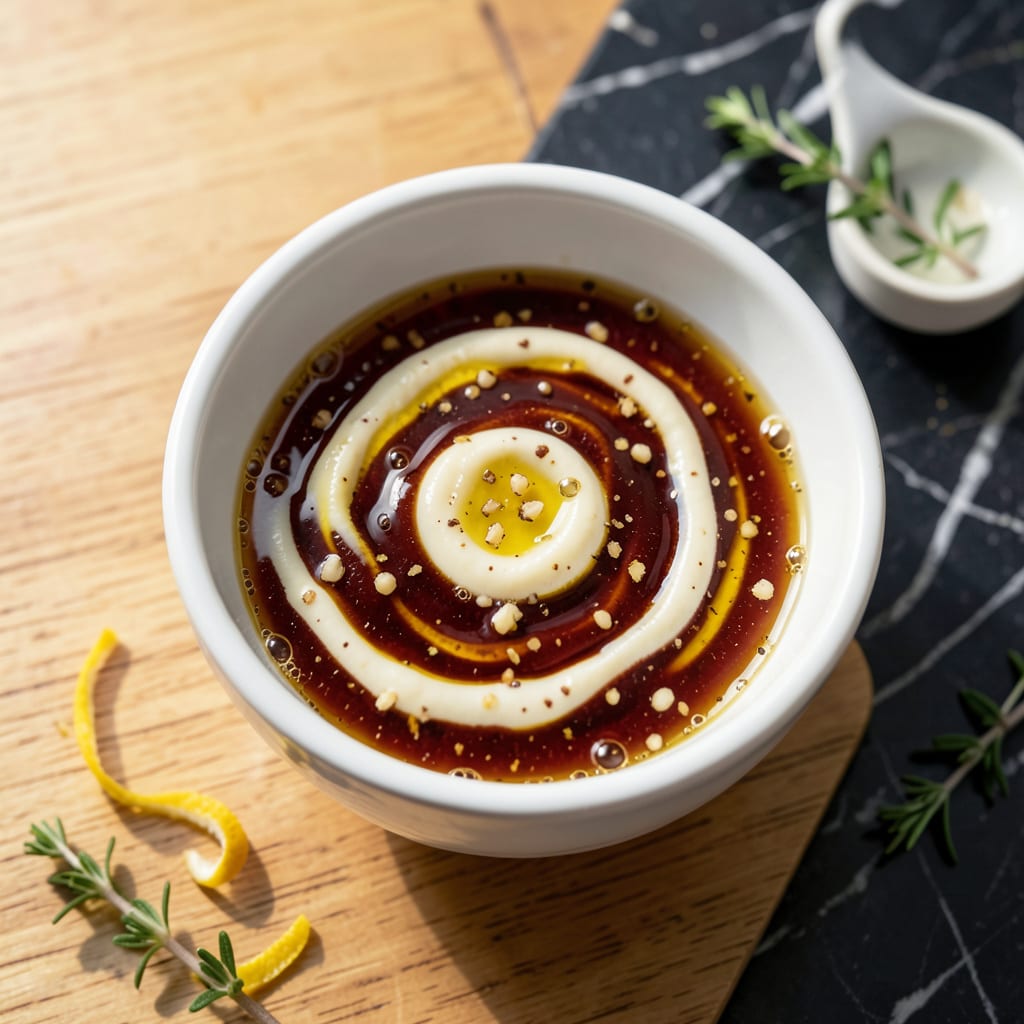
This vinaigrette delivers bold flavor without the extra oil, proving that healthy dressings don’t have to sacrifice taste. A simple ratio of vinegar to minimal oil creates a light, tangy base that clings perfectly to greens.
With just a whisk and 5 minutes, you’ll have a versatile dressing that brightens any salad. The key is balancing acidity with herbs and a touch of sweetness for depth.
Ingredients for Low Fat Vinaigrette Salad Dressing
Nine simple ingredients create this light, tangy dressing that clings to greens beautifully.
| Ingredient | Amount | Notes |
|---|---|---|
| Red Wine Vinegar 🍷 | ½ cup | Sharp and tangy foundation |
| Extra-Virgin Olive Oil 🫒 | 2 tbsp | Reduced quantity for low-fat |
| Dijon Mustard 🟡 | 1 tbsp | Emulsifies and adds depth |
| Honey Substitute 🍯 | 1 tbsp | Agave or maple syrup |
| Fresh Lemon Juice 🍋 | 2 tbsp | Brightens the acidity |
| Minced Garlic 🧄 | 1 clove | Freshly minced preferred |
| Dried Oregano 🌿 | ½ tsp | Mediterranean herb note |
| Dried Basil 🍃 | ½ tsp | Sweet herbal complement |
| Salt 🧂 | ¼ tsp | Sea salt or kosher |
| Black Pepper 🌶️ | ¼ tsp | Freshly ground preferred |
The vinegar is doing most of the work here—red wine vinegar gives that bold tang, but apple cider or balsamic work too if you want to switch it up. Trader Joe’s has great affordable options. The olive oil is minimal (just enough to carry the flavors), so use high-quality extra-virgin. That cheap stuff in the big plastic bottles won’t cut it for this.
No honey? That’s fine—agave or maple syrup keeps it vegan and adds the same sweet balance. Fresh herbs like parsley or dill can replace the dried oregano and basil (use three times the amount). If you’re out of Dijon, whole-grain mustard works in a pinch, though the texture will be slightly different.
This keeps for about 1 week in the fridge. The flavors actually improve after a day as everything melds together. Shake well before each use—oil and vinegar separate naturally.
Why You’ll Love This Recipe
- Whisk & Done: Honestly, just shake the ingredients in a jar—no cooking, no fuss, just instant vinaigrette ready for drizzling.
- Bright & Zesty: The red wine vinegar and lemon juice give that tangy kick, while the Dijon mustard adds a depth that makes every bite sing.
- Meal Prep Hero: I make a big batch on Sunday and it keeps all week for salads, grain bowls, or even a quick marinade.
- Light on Guilt: A little olive oil goes a long way here, so I can enjoy that bold flavor without the heavy calories.
Step-by-Step Instructions for Low Fat Vinaigrette Salad Dressing
Here’s my foolproof method for creating a bright, tangy dressing that clings perfectly to greens.
Step 1: Combine Acidic Base Components
In a medium bowl, whisk together the ½ cup red wine vinegar and 2 tbsp fresh lemon juice. This combination creates the bright, tangy foundation that defines a proper vinaigrette. The vinegar provides sharpness while the lemon juice adds a fresh, citrusy note.
I always use a bowl with high sides to prevent splashing as you whisk. You’ll notice the liquids will start to slightly froth as you combine them—this is normal and indicates you’re incorporating air, which helps with emulsification later.
Step 2: Incorporate the Emulsifiers and Sweetener
Add the 1 tbsp Dijon mustard and 1 tbsp honey substitute to the vinegar mixture. The mustard acts as your primary emulsifier, helping to bind the oil and vinegar together, while the honey substitute balances the acidity with a touch of sweetness.
Whisk vigorously for 30-45 seconds until the mixture becomes slightly thickened and uniform in color. You should see the mustard fully dispersed throughout the liquid with no visible separation. This step is crucial for creating a stable emulsion that won’t separate immediately.
Step 3: Season with Aromatics and Herbs
Stir in the 1 clove minced garlic, ½ tsp dried oregano, and ½ tsp dried basil. The garlic adds a pungent depth while the herbs contribute that classic Mediterranean character. Make sure to mince the garlic finely—no one wants a chunk of raw garlic in their dressing.
Then add the ¼ tsp salt and ¼ tsp black pepper. The salt enhances all the flavors while the pepper adds a subtle heat. I always use freshly ground black pepper when possible—it makes a noticeable difference in the final flavor profile.
Step 4: Slowly Emulsify with Oil
Begin whisking the mixture again while very slowly drizzling in the 2 tbsp extra-virgin olive oil. This is the critical emulsification step where the oil and vinegar come together. The slow addition allows the mustard to properly bind the two liquids.
You should see the dressing begin to thicken and turn a pale, creamy color as the oil incorporates. If it starts to separate, don’t panic—just whisk more vigorously. The final dressing should coat the back of a spoon but still be pourable. This reduced amount of oil is what makes this a low-fat option while still delivering that classic vinaigrette texture.
Step 5: Rest and Adjust Seasoning
Let the dressing sit at room temperature for 10-15 minutes to allow the flavors to meld together. I know it’s tempting to taste immediately, but this short rest makes a significant difference in the final flavor.
After resting, give it a final whisk and taste. At this point, you can adjust the seasoning if needed—maybe a pinch more salt or a squeeze of lemon. The dressing should be tangy with balanced sweetness and a pronounced herbaceous note. Store in an airtight container in the refrigerator for up to 5 days.
Pro Tips For Making Low Fat Vinaigrette Salad Dressing
- Whisk Vigorously: I learned this the hard way—drizzle the olive oil in slowly while whisking hard to emulsify properly, otherwise it separates in minutes.
- Use Room Temp Oil: Cold olive oil resists blending. Let it sit out for 10 minutes first, or the dressing will look greasy instead of smooth.
- Skip the Salt: Dijon mustard already adds saltiness. Taste before adding extra, or you’ll overpower the bright vinegar and lemon.
- Swap in Shallot: Sounds weird, but it works: a teaspoon of minced shallot adds depth without oil—soak it in the vinegar for 5 minutes to mellow the bite.
Creative Variations of This low fat vinaigrette salad dressing
Citrus Variations
Swap the red wine vinegar for rice vinegar and add 1 tbsp orange zest for a bright, Asian-inspired twist. I love this version with mandarin oranges and sliced almonds on a bed of butter lettuce. The citrus oils add a fragrant depth that pairs beautifully with the minimal oil. 🌟
Herb-Infused Options
Replace the dried herbs with 2 tbsp fresh dill and 1 tbsp fresh tarragon for a French-style dressing. I finely chop the herbs to release their oils. This works wonderfully with delicate greens like bibb or arugula.
Spicy Kick
Add ½ tsp red pepper flakes or 1 tsp sriracha to the base recipe for some heat. The capsaicin balances the sweetness from the honey substitute. I find this variation particularly addictive with blackened chicken salads. 🔥
Creamy Style
Blend in 2 tbsp low-fat Greek yogurt after emulsifying the oil for a creamy texture without excess fat. This creates a rich mouthfeel that clings beautifully to heartier greens like kale or spinach. The yogurt also adds a subtle tang.
Fruit-Infused
Muddle ¼ cup fresh raspberries or strawberries with the vinegar before adding other ingredients. Strain out the seeds if you prefer a smoother dressing. This fruity version is my go-to for summer salads with goat cheese and pecans.
Umami Boost
Stir in 1 tsp soy sauce or 1 tbsp nutritional yeast for a savory depth. This works particularly well with the garlic and herbs. I often use this variation for hearty grain salads or as a marinade for grilled vegetables.
Nutrition Facts
Frequently Asked Questions
Can I use a different vinegar?
Try apple cider or balsamic vinegar for unique flavors. Each brings its own character while keeping the tangy base intact.
How do I keep it from separating?
Whisk vigorously when adding oil, and store in an airtight container. Shake well before each use—this helps redistribute the minimal oil.
What’s the best way to sweeten it without honey?
Agave or maple syrup work perfectly. Use the same 1 tbsp measurement for balanced sweetness.
Can I make this ahead of time?
Yes! It keeps for up to 5 days in the fridge. Flavors actually improve after 24 hours as they meld together.

- 8 Bean Soup Recipe Crock Pot: Hearty Vegetable Medley in One Pot - September 25, 2026
- 4C Bread Crumbs Meatballs Recipe: Crispy Crust and Juicy Centers - September 25, 2026
- 6 Oz Chocolate Chip Cookie Recipe: Perfectly Balanced Crispy Edges and Chewy Hearts - September 25, 2026