
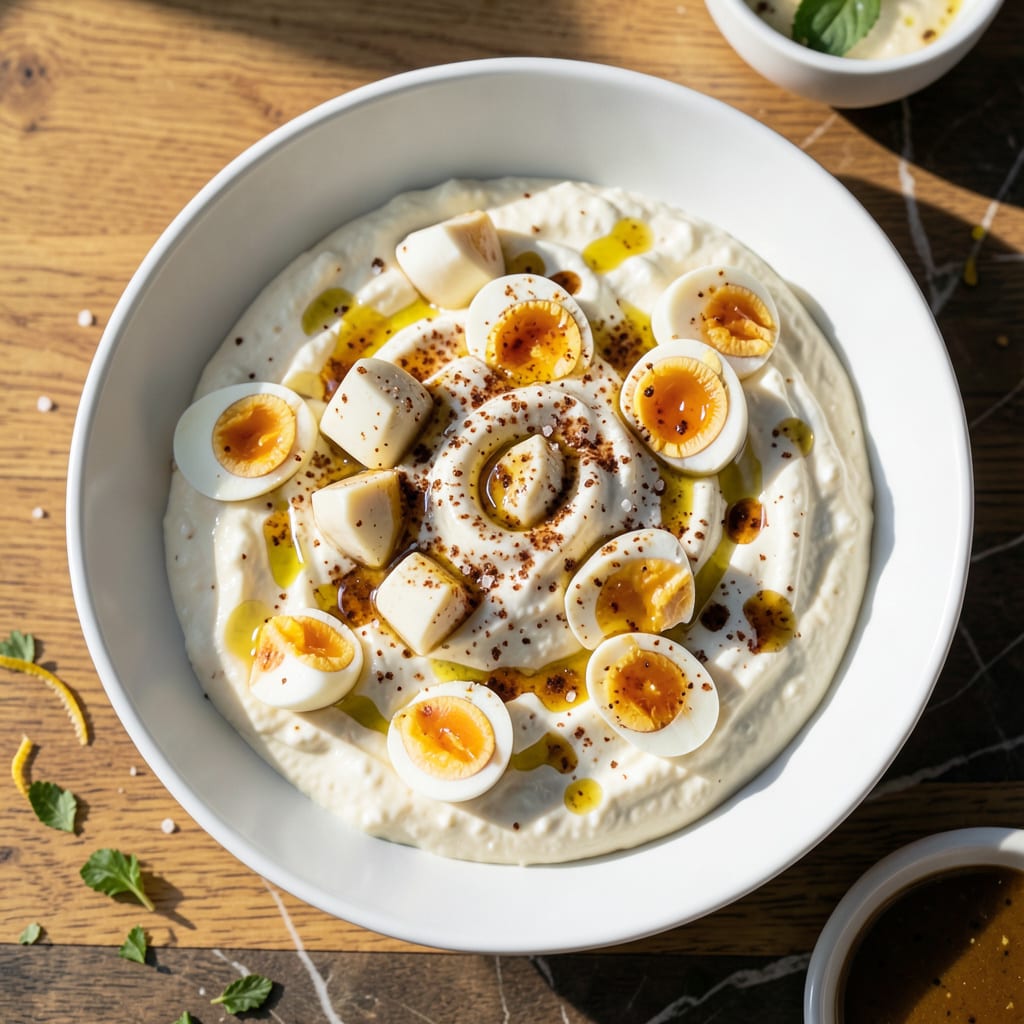
I’ve perfected a lighter version of classic egg mayonnaise that keeps all the creamy richness without the guilt. By swapping traditional mayo with Greek yogurt, this sauce delivers the same smooth texture with a fraction of the fat.
This simple blend of hard-boiled eggs, tangy yogurt, and a touch of mustard creates a velvety condiment perfect for sandwiches, salads, or dipping. It’s a foolproof way to enjoy a healthier twist on a beloved classic.
Ingredients for Low Fat Egg Mayonnaise
Nine simple ingredients transform into a creamy, tangy condiment you’ll want on everything.
| Ingredient | Amount | Notes |
|---|---|---|
| Hard-Boiled Eggs 🥚 | 6 whole | Peeled and chopped |
| Plain Greek Yogurt 🥛 | 1 cup | Full-fat for creaminess |
| Dijon Mustard 🟡 | 1 tbsp | Or whole-grain mustard |
| White Wine Vinegar 🍷 | 1 tbsp | Or lemon juice |
| Extra-Virgin Olive Oil 🫒 | 1 tbsp | For richness |
| Salt 🧂 | ½ tsp | Kosher or sea salt |
| Black Pepper 🌶️ | ¼ tsp | Freshly ground preferred |
| Fresh Dill 🌿 | 1 tbsp | Chopped, optional |
| Paprika 🌶️ | ¼ tsp | Sweet or smoked variety |
The Greek yogurt is doing most of the heavy lifting here. Fage or Chobani are my go-tos—thick, tangy, and just the right texture. If you grab a different brand, drain it in a sieve for 10 minutes to remove excess water. Hard-boiled eggs should be fresh (the whites peel easier) but older eggs actually peel cleaner—weird but true. Look for organic or free-range if you’re feeling fancy.
No Dijon? Yellow mustard at the same amount works fine, but it’s milder. White wine vinegar can be swapped for apple cider vinegar or lemon juice. Out of fresh dill? Dried dill at one-third the amount or skip it entirely. The paprika is mostly for color, so feel free to omit if you don’t have it. The olive oil adds richness, but you can skip it if you’re really cutting calories.
This keeps for 4-5 days in the fridge, but it’s best fresh. Store it in a sealed jar. If it separates a bit, just give it a good stir before using. Doubles easily—just scale everything up. Perfect for meal prep.
Why You’ll Love This Recipe
- 5-Minute Mix: I just mash the eggs, stir in the yogurt, mustard, and vinegar, and it’s done—no fuss, no blender.
- Tangy Kick: The Dijon and white wine vinegar give it that sharp, bright zing that makes it taste way more interesting than regular mayo.
- Sandwich Saver: Honestly, this keeps my lunches exciting all week—spread it on whole grain toast or tuck it into wraps.
- Pantry Hero: I always have these ingredients on hand, so it’s my go-to when I need something quick and light without extra shopping.
Step-by-Step Instructions for Low Fat Egg Mayonnaise
This lighter version comes together quickly with a few simple mixing steps for a creamy result.
Step 1: Prepare the Hard-Boiled Eggs
Peel all 6 whole hard-boiled eggs and chop them into small, even pieces. I like to use a sharp knife and cut them into ¼-inch cubes for consistent texture. The smaller the chop, the creamier your final spread will be.
Place the chopped eggs in a medium mixing bowl. This is your base, so make sure they’re completely cooled before mixing—warm eggs can make the yogurt thin out. If you’re making the eggs fresh, chill them in ice water for 5 minutes after boiling to stop the cooking process.
Step 2: Whisk the Wet Ingredients
In a separate bowl, combine the 1 cup plain Greek yogurt, 1 tbsp Dijon mustard, 1 tbsp white wine vinegar, and 1 tbsp extra-virgin olive oil. Whisk vigorously until completely smooth and emulsified—this takes about 1 minute of steady whisking.
The olive oil might seem to separate at first, but keep whisking. You’ll see it transform into a silky, uniform mixture. This is the magic that gives your mayonnaise its rich, creamy texture without the extra fat of traditional recipes.
Step 3: Combine and Season
Pour the yogurt mixture over the chopped eggs. Gently fold everything together with a spatula until the eggs are fully coated. I always start with a light hand—you can mix more aggressively later if needed, but you can’t un-mix overworked eggs.
Add the 0.5 tsp salt, 0.25 tsp black pepper, 1 tbsp fresh dill, and 0.25 tsp paprika. Fold again to distribute the seasonings evenly. Taste and adjust the salt if needed, but remember flavors will meld as it chills.
Step 4: Chill and Develop Flavors
Cover the bowl with plastic wrap and refrigerate for at least 1 hour. This chilling time is crucial—it allows the flavors to meld together and the yogurt to thicken slightly, creating that perfect spreadable consistency.
I know it’s tempting to dig in right away, but the texture improves dramatically after chilling. The paprika will also deepen in color during this time, giving your mayonnaise a beautiful, appetizing hue.
Give it a final stir before serving. The mixture should be thick but still scoopable, with visible flecks of egg and herbs throughout. Serve on sandwiches, as a dip for veggies, or as a creamy topping for grilled meats.
Pro Tips For Making Low Fat Egg Mayonnaise
- Chill the Eggs: I learned this the hard way—peel your hard-boiled eggs only after they’ve sat in ice water for 10 minutes. It stops the yolks from turning that unappetizing greenish-gray.
- Strain the Yogurt: Drain plain Greek yogurt in a fine-mesh sieve for 15 minutes to remove excess whey—this makes the mayo thicker and prevents a watery mess.
- Skip the Warm Oil: Resist the urge to use warm olive oil; cold or room temperature blends better with the yogurt and keeps the mayo from separating.
- Mash the Yolks: Press the cooked yolks through a fine sieve or mash them with a fork before mixing—this guarantees a silky-smooth texture without lumps.
Health Benefits of These Flavors
Lower Calorie Count
This version cuts calories dramatically compared to traditional mayo. A 2-tbsp serving of classic mayo has about 190 calories, while this recipe delivers the same creamy satisfaction for roughly 50 calories per serving. The Greek yogurt swap makes all the difference.
Protein Boost
Each serving packs about 3 grams of protein thanks to the eggs and Greek yogurt. Traditional mayo has virtually no protein, so this version helps keep you fuller longer. I notice I don’t crave more when I use this on sandwiches.
Healthy Fats
The olive oil provides heart-healthy monounsaturated fats, while the eggs contribute essential nutrients. You’re getting the good fats without the saturated fat overload of regular mayonnaise. Fage or Chobani yogurts add probiotics too. 💪
Reduced Saturated Fat
Traditional mayo can have 2.5 grams of saturated fat per serving. This version slashes that to under 1 gram while maintaining richness. The yogurt base naturally contains less saturated fat than oil-based mayos.
Vitamin Enrichment
Eggs provide vitamin D, B12, and choline—nutrients completely absent in regular mayo. The olive oil adds vitamin E. I love that I’m getting actual nutrition, not just empty calories, from my sandwich spread.
Digestive Benefits
The live cultures in Greek yogurt support gut health. Unlike commercial mayo with preservatives, this homemade version contains beneficial bacteria. Just ensure your yogurt label says “live and active cultures” for maximum benefit. 🥗
Nutrition Facts
Frequently Asked Questions
Can I use low-fat Greek yogurt instead of full-fat?
Yes, but full-fat yields the creamiest texture. Low-fat works in a pinch, though the result may be slightly thinner.
How long can I store this in the fridge?
It keeps well for 4-5 days in an airtight container. Stir before using if separation occurs.
Can I make this without olive oil?
Skip it for even fewer calories, though the oil adds richness. The texture will be slightly less silky.
Why does my mixture look watery?
This usually happens if the eggs weren’t fully cooled or the yogurt wasn’t drained. Chill for 1 hour and stir again.

- 8 Bean Soup Recipe Crock Pot: Hearty Vegetable Medley in One Pot - September 25, 2026
- 4C Bread Crumbs Meatballs Recipe: Crispy Crust and Juicy Centers - September 25, 2026
- 6 Oz Chocolate Chip Cookie Recipe: Perfectly Balanced Crispy Edges and Chewy Hearts - September 25, 2026