
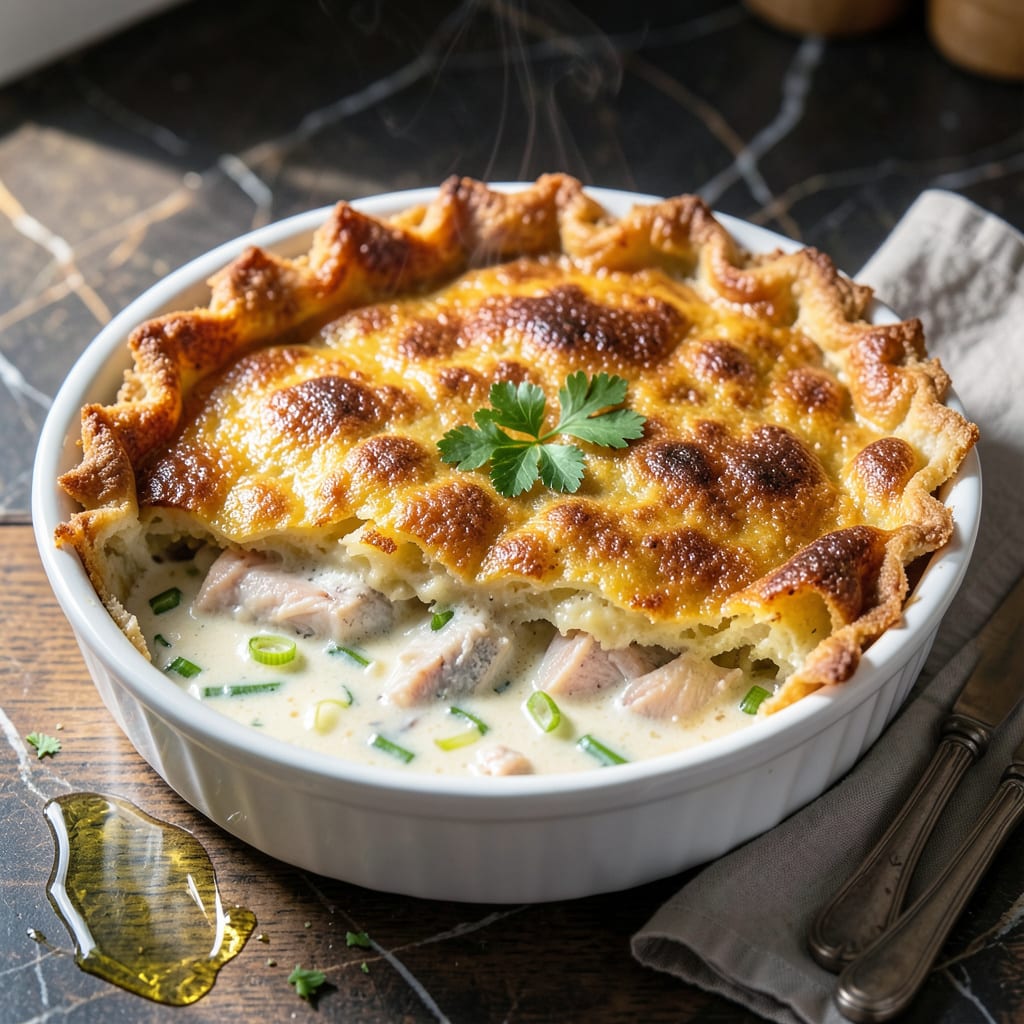
This professional approach to fish pie delivers flaky fillets in a light cream sauce without sacrificing flavor or texture. The secret lies in careful ingredient selection and precise cooking times.
By using low-fat milk and a minimal amount of butter, this dish achieves a velvety sauce that complements the fish perfectly. The result is a satisfying main course that’s both nutritious and delicious.
Ingredients for Low Fat Fish Pie
Flaky fish and a velvety sauce come together with these carefully chosen ingredients.
| Ingredient | Amount | Notes |
|---|---|---|
| White Fish Fillets 🐟 | 1 ½ lb | Cod or haddock, skinless |
| Smoked Haddock Fillet 🐟 | ½ lb | Undyed preferred |
| Low-Fat Milk 🥛 | 2 cups | 2% or skim for lightness |
| All-Purpose Flour 🌾 | ¼ cup | For thickening sauce |
| Unsalted Butter 🧈 | 1 tbsp | Minimal amount for richness |
| Leek 🧅 | 1 whole | White and light green parts only, thinly sliced |
| Carrot 🥕 | 1 whole | Peeled and diced |
| Celery Stalk 🌿 | 1 whole | Finely chopped |
| Fresh Parsley 🌿 | ¼ cup | Chopped, for garnish |
| Dijon Mustard 🟡 | 1 tbsp | For depth of flavor |
| Lemon Juice 🍋 | 1 tbsp | Freshly squeezed |
| Bay Leaf 🍃 | 1 whole | For aromatic infusion |
| Salt 🧂 | 1 tsp | Divided to taste |
| Black Pepper 🌶️ | ½ tsp | Freshly ground |
| Potatoes 🥔 | 1 ½ lb | Russet or Yukon Gold, peeled and sliced |
[recipeingredientscaler]
The fish is non-negotiable here. Cod or haddock give that perfect flake—avoid anything too oily like salmon. For smoked haddock, undyed keeps the color clean (find it at Whole Foods or a good fishmonger). The milk needs to be low-fat—2% or skim—to keep the sauce light but still creamy. Potatoes? Russets hold shape best, but Yukon Golds add a buttery note even with minimal butter.
No leek? Shallots or white onion work fine, just cook them gentle so they don’t brown. Swap the haddock for pollock or halibut if that’s what’s fresh. Fresh parsley can be dried at one-third the amount, but honestly, it’s worth grabbing a bunch—it brightens everything up. Low-fat milk sub? Unsweetened almond milk thinned with water, but dairy gives the best texture here.
Assemble and bake right away, or prep the sauce and fish separately up to 1 day ahead. Leftovers keep 3-4 days in the fridge—reheat gently so the fish doesn’t overcook. The topping’s best fresh, but honestly, I’ve never had leftovers last that long.
Why You’ll Love This Recipe
- One Pot Wonder: I love that this comes together in a single dish—just layer the fish, pour the low-fat milk sauce, and let the oven do the work.
- Smoky Depth: The smoked haddock adds this rich, almost bacony flavor that makes every bite feel indulgent, even with the lighter sauce.
- Weeknight Hero: Between us, I’ve served this for dinner parties and random Tuesdays—it’s that adaptable.
- Budget Stretcher: White fish and haddock are affordable, and the low-fat milk keeps costs down without sacrificing creaminess.
Step-by-Step Instructions for Low Fat Fish Pie
Here’s how to build this dish layer by layer for maximum flavor and perfect texture.
Step 1: Prepare and Parboil the Potatoes
Peel the 1.5 lb Potatoes and slice them into ¼-inch thick rounds. I prefer Yukon Gold for their buttery texture, but Russets work too. Place them in a pot of cold, salted water and bring to a boil.
Cook for 8-10 minutes until the slices are just tender when pierced with a knife but not falling apart. You want them slightly underdone since they’ll finish cooking in the oven. Drain carefully and set aside—this prevents them from turning mushy in the final bake.
Step 2: Create the Light Cream Sauce Base
In a large saucepan, melt the 1 tbsp Unsalted Butter over medium heat. Add the thinly sliced 1 whole Leek, diced 1 whole Carrot, and finely chopped 1 whole Celery Stalk. Cook for 5-7 minutes until softened but not browned.
Sprinkle in the 0.25 cup All-Purpose Flour and stir for 1 minute to cook off the raw taste. Gradually whisk in the 2 cups Low-Fat Milk, then add the 1 whole Bay Leaf, 1 tsp Salt, and 0.5 tsp Black Pepper. Simmer for 3-4 minutes until the sauce thickens enough to coat the back of a spoon.
Step 3: Add the Fish and Flavor Boosters
Cut the 1.5 lb White Fish Fillets and 0.5 lb Smoked Haddock Fillet into 1-inch chunks. Gently fold them into the sauce along with the 1 tbsp Dijon Mustard and 1 tbsp Lemon Juice. The acid from the lemon brightens the flavor and balances the richness of the smoked haddock.
Cook for 2-3 minutes on low heat—just enough to poach the fish slightly. You’ll know it’s ready when the edges of the fish turn opaque but the centers remain slightly translucent. Remove the pan from heat immediately to prevent overcooking. Discard the bay leaf at this point.
Step 4: Assemble and Bake to Perfection
Transfer the fish and sauce mixture to a 9×13-inch baking dish. Arrange the parboiled potato slices on top in a single, slightly overlapping layer. Press down gently to submerge the edges into the sauce—this helps them crisp up in the oven.
Bake at 400°F for 20-25 minutes until the potatoes are golden brown at the edges and the sauce is bubbling around the sides. The fish should flake easily with a fork when tested in the center. Let it rest for 5 minutes before serving to allow the sauce to set slightly.
Step 5: Garnish and Serve
Sprinkle the chopped 0.25 cup Fresh Parsley over the top just before serving. The parsley adds a fresh, bright contrast to the creamy sauce. Serve the pie in squares, making sure each portion has plenty of fish and crispy potato topping.
This dish delivers on the promise of flaky fish every time. The key is in the gentle cooking and the light sauce that lets the fish shine without being weighed down by excess fat.
Pro Tips For Making Low Fat Fish Pie
- Poach Fish First: Gently simmer the white fish and haddock in the low-fat milk for 5-6 minutes before assembling the pie—it keeps the fish moist and infuses the sauce with extra flavor without adding fat.
- Use Cold Butter: When making the roux, start with cold unsalted butter and add it in small chunks to the flour. I learned this the hard way—it prevents lumps and gives the sauce a silky texture even with low-fat milk.
- Skip Overmixing Sauce: Stir the flour-butter mixture just until smooth, then slowly whisk in the milk. Overmixing can make the sauce gummy, and nobody wants a gluey fish pie.
- Boost Flavor Early: Add a bay leaf and a few peppercorns to the milk while poaching the fish. Sounds simple, but it actually changes the outcome—especially important when cutting back on fat.
Regional Styles of This Recipe
British Classic
In the UK, fish pie traditionally uses a mix of cod and haddock with a creamy sauce thickened with flour and milk. The British often add hard-boiled eggs and peas to the filling for extra heartiness, though I skip these for a lighter version. The topping is usually mashed potatoes, but sliced potatoes work beautifully too. 🗺️
French Influence
The French version, called hachis Parmentier, uses a mashed potato crust and often includes white wine in the sauce for depth. I’ve adapted this by using low-fat milk and a touch of Dijon mustard to keep it light while still rich in flavor. The French also love adding gruyère cheese on top, but I omit it here.
New England Style
In coastal New England, fish pie often features local catches like haddock or pollock, and the sauce is typically lighter, sometimes with a hint of lemon. I’ve borrowed this approach by using a minimal amount of butter and 2% milk to keep it creamy but not heavy. The topping is often a simple layer of potatoes or breadcrumbs.
Scandinavian Twist
Scandinavian fish pies often include dill and white fish like cod, with a sauce made from milk and flour. I’ve kept the dill out to let the fish shine, but you could add 1 tbsp fresh dill to the sauce if you love that Nordic flavor. The Scandinavians also sometimes use rye breadcrumbs for the topping, which adds a nice earthy note.
Mediterranean Light
For a Mediterranean take, I’d swap the leek for fennel and add zucchini to the sauce for extra veggies. The sauce would still be light, with low-fat milk and a touch of lemon zest for brightness. The topping could be a mix of potatoes and cauliflower for a lower-carb option.
Nutrition Facts
Frequently Asked Questions
Can I use frozen fish for this pie?
Yes, but thaw it completely in the fridge overnight first. Pat the fillets dry to remove excess moisture, which prevents a watery sauce.
How can I make the topping crispier?
Brush the potato slices lightly with 1 tsp olive oil before baking. This adds crunch without much extra fat.
What’s the best way to reheat leftovers?
Cover with foil and warm at 350°F for 15-20 minutes. Avoid microwaving, as it can make the potatoes soggy.
Can I swap the potatoes for another topping?
Try cauliflower mash or whole wheat breadcrumbs for a lower-carb option. Adjust baking time as needed.

- 8 Bean Soup Recipe Crock Pot: Hearty Vegetable Medley in One Pot - September 25, 2026
- 4C Bread Crumbs Meatballs Recipe: Crispy Crust and Juicy Centers - September 25, 2026
- 6 Oz Chocolate Chip Cookie Recipe: Perfectly Balanced Crispy Edges and Chewy Hearts - September 25, 2026