
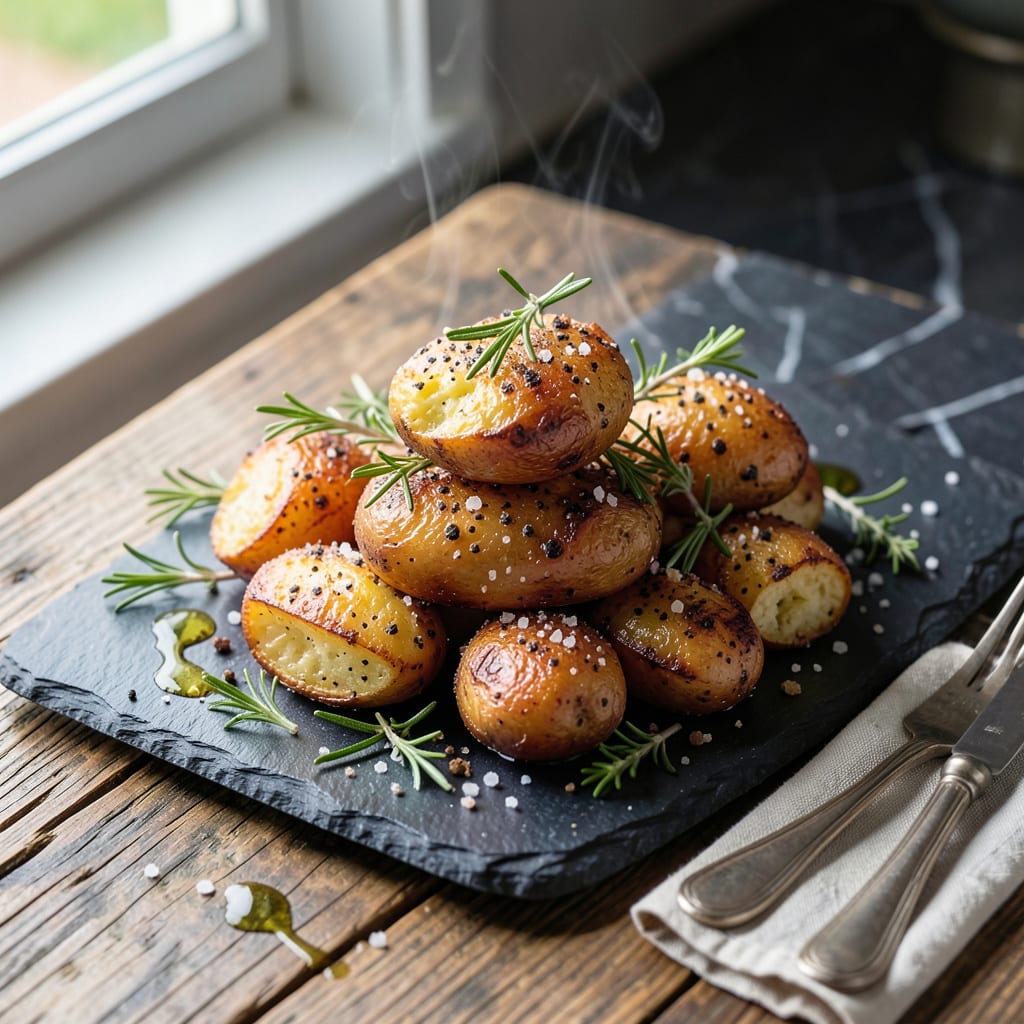
There’s a reason chefs swear by duck fat for roasting potatoes—it delivers an unmatched crispy exterior and rich, golden flavor that vegetable oil simply can’t match.
This method transforms humble potatoes into a restaurant-worthy side with minimal effort. The high smoke point of duck fat ensures perfectly browned edges every time.
Ingredients for Duck Fat Potatoes
These humble ingredients transform into a restaurant-worthy side with duck fat’s golden magic.
| Ingredient | Amount | Notes |
|---|---|---|
| Russet Potatoes 🥔 | 2 lb | Peeled and cut into even chunks |
| Duck Fat 🦆 | ½ cup | Rendered and strained for purity |
| Kosher Salt 🧂 | 1 ½ tsp | Diamond Crystal preferred for texture |
| Freshly Ground Black Pepper 🌶️ | 1 tsp | Coarse grind for boldness |
| Fresh Rosemary 🌿 | 2 tbsp | Finely chopped for even distribution |
| Fresh Thyme Leaves 🍃 | 2 tbsp | Stripped from stems before use |
| Garlic Cloves 🧄 | 4 cloves | Minced for maximum flavor infusion |
| Shallot 🧅 | 1 whole | Finely diced for subtle sweetness |
| Dijon Mustard 🟡 | 1 tbsp | For depth of flavor in seasoning |
| Apple Cider Vinegar 🍏 | 1 tbsp | Balances richness of duck fat |
The duck fat is non-negotiable for that signature crisp. Render your own from duck legs (save the meat for confit) or buy pre-rendered from D’Artagnan or Maple Leaf Farms. Look for a smooth, pale golden color—dark or grainy fat has impurities. Russet potatoes are ideal for their high starch content, which yields the fluffiest interior. Avoid waxy varieties like red or new potatoes.
No duck fat? Beef tallow comes closest in flavor and smoke point. For a vegetarian option, use avocado oil (high smoke point) but expect less depth. Rosemary and thyme can be swapped for sage or oregano at equal amounts. Shallots not on hand? Red onion at half the quantity works, though it’s sharper. Always use fresh herbs if possible.
Rendered duck fat keeps in the fridge for 6 months or freezes for 1 year. Store in an airtight container away from strong odors. The roasted potatoes are best served immediately but can be reheated in a 400°F oven for 10 minutes to revive crispness.
Why You’ll Love This Recipe
- I’ll be real: these disappear fast at dinners, potlucks, or even as a fancy weeknight side.
- One Pan Wonder: Honestly, just toss the potatoes in melted duck fat, season, and roast—minimal effort, maximum payoff.
- Crave-Worthy Crisp: That golden crust from the duck fat with rosemary-kissed edges? I could eat the whole tray myself.
- Feeds a Crowd: I’ll be real: these disappear fast at dinners, potlucks, or even as a fancy weeknight side.
Step-by-Step Instructions for Duck Fat Potatoes
This method guarantees ultra-crispy edges with a golden, flavorful exterior every time.
Step 1: Parboil and Season the Russet Potatoes
Place the 2 lb Russet Potatoes in a large pot and cover with cold water by 1 inch. Add 1 tablespoon of the 1.5 tsp Kosher Salt and bring to a boil. Reduce heat to maintain a gentle simmer for 8-10 minutes until the potatoes are just fork-tender but not fully cooked through.
Drain the potatoes and return them to the pot. Add the 1 tbsp Dijon Mustard, 1 tbsp Apple Cider Vinegar, remaining ½ tsp Kosher Salt, and 1 tsp Freshly Ground Black Pepper. Toss gently to coat evenly—the vinegar and mustard will help create that perfect crust.
Step 2: Infuse the Duck Fat with Aromatics
While the potatoes parboil, combine the 0.5 cup Duck Fat with the 2 tbsp Fresh Rosemary, 2 tbsp Fresh Thyme Leaves, 4 cloves Garlic Cloves, and 1 whole Shallot in a small saucepan. Heat over low heat for 5-7 minutes until the shallots soften and the herbs become fragrant.
Do not let the garlic brown—this would make it bitter. Strain the mixture through a fine-mesh sieve directly into a large roasting pan, reserving the infused duck fat and discarding the solids. The aromatics will have released their essence into the fat.
Step 3: Roast the Potatoes to Crispy Perfection
Add the parboiled potatoes to the roasting pan with the infused duck fat. Toss thoroughly to ensure every piece is coated in the fragrant fat. Arrange the potatoes in a single layer, leaving space between each piece to promote even browning.
Roast in a preheated 425°F oven for 45-50 minutes, flipping the potatoes halfway through. They’re done when the edges are deep golden brown and crispy, and the interiors are tender when pierced with a fork.
Step 4: Rest and Serve Immediately
Remove the potatoes from the oven and let them rest in the pan for 5 minutes. This allows the crust to set and the flavors to meld. The potatoes will crisp further as they cool slightly.
Serve immediately while hot and crispy. The combination of the rich duck fat, aromatic herbs, and tangy seasoning creates a perfectly balanced bite with a shatteringly crisp exterior and fluffy interior. These potatoes won’t stay crispy for long, so enjoy them fresh from the oven.
Pro Tips For Making Duck Fat Potatoes
- Parboil First: Boil the russets in salted water for 8-10 minutes before roasting—they’ll get crispy on the outside while staying fluffy inside. I learned this the hard way after too many dense, undercooked batches.
- Heat the Fat: Melt the duck fat in the pan first until it’s shimmering but not smoking, about 350°F. Cold fat just soaks into the potatoes instead of crisping them up.
- Dry the Potatoes: Pat the parboiled potatoes completely dry with a towel before they hit the fat—any moisture turns to steam and ruins the crust. Sounds tedious, but it actually changes the outcome.
- Crush, Don’t Cube: Lightly crush the potatoes with the bottom of a glass before roasting to create more surface area for crispy edges. It’s messier, but the result is worth the extra cleanup.
Common Mistakes When Making duck fat potatoes
Overcrowding the Pan
Potatoes need space to crisp up properly. If you crowd the pan, they’ll steam instead of roast. Use a large roasting pan and arrange potatoes in a single layer with at least ½ inch between pieces. I often use two pans for 2 lb to ensure maximum crispiness. 🔥
Skipping the Parboil
This step is crucial for achieving that perfect fluffy interior. Parboiling for 8-10 minutes softens the potatoes just enough so they crisp up in the oven without drying out. Don’t skip it, even if you’re short on time.
Using Cold Duck Fat
Cold fat won’t coat the potatoes evenly and can lead to uneven browning. Warm your ½ cup duck fat gently with the aromatics first, then toss the potatoes while the fat is still warm. This helps create that beautiful golden crust.
Underseasoning
Potatoes need more seasoning than you think. Don’t be shy with the 1.5 tsp Kosher Salt—the majority gets washed away during parboiling. Taste and adjust before roasting, remembering that duck fat is rich but not salty.
Not Flipping Halfway
For even browning, flip the potatoes after 20-25 minutes. Use a metal spatula to turn them carefully, keeping that crispy crust intact. This ensures all sides get equal time in the 425°F heat.
Letting Them Sit Too Long
These potatoes are best served immediately. After 5 minutes of resting, the crust starts to soften. If you must hold them, keep them warm in a 200°F oven for up to 15 minutes, but expect some loss of crispness.
Nutrition Facts
Frequently Asked Questions
Can I use another type of potato?
Stick with Russets for the fluffiest interior. Waxy varieties like red potatoes won’t crisp as well and may turn gluey.
What if I don’t have duck fat?
Beef tallow is the closest substitute for flavor and smoke point. For a vegetarian option, avocado oil works but lacks depth.
How do I store leftover duck fat?
Strain and cool, then store in an airtight container in the fridge for up to 6 months. It freezes well for 1 year.
Can I make these ahead?
Parboil and season the potatoes 1 day ahead, but roast just before serving. Reheat at 400°F for 10 minutes to revive crispness.

- 8 Bean Soup Recipe Crock Pot: Hearty Vegetable Medley in One Pot - September 25, 2026
- 4C Bread Crumbs Meatballs Recipe: Crispy Crust and Juicy Centers - September 25, 2026
- 6 Oz Chocolate Chip Cookie Recipe: Perfectly Balanced Crispy Edges and Chewy Hearts - September 25, 2026