
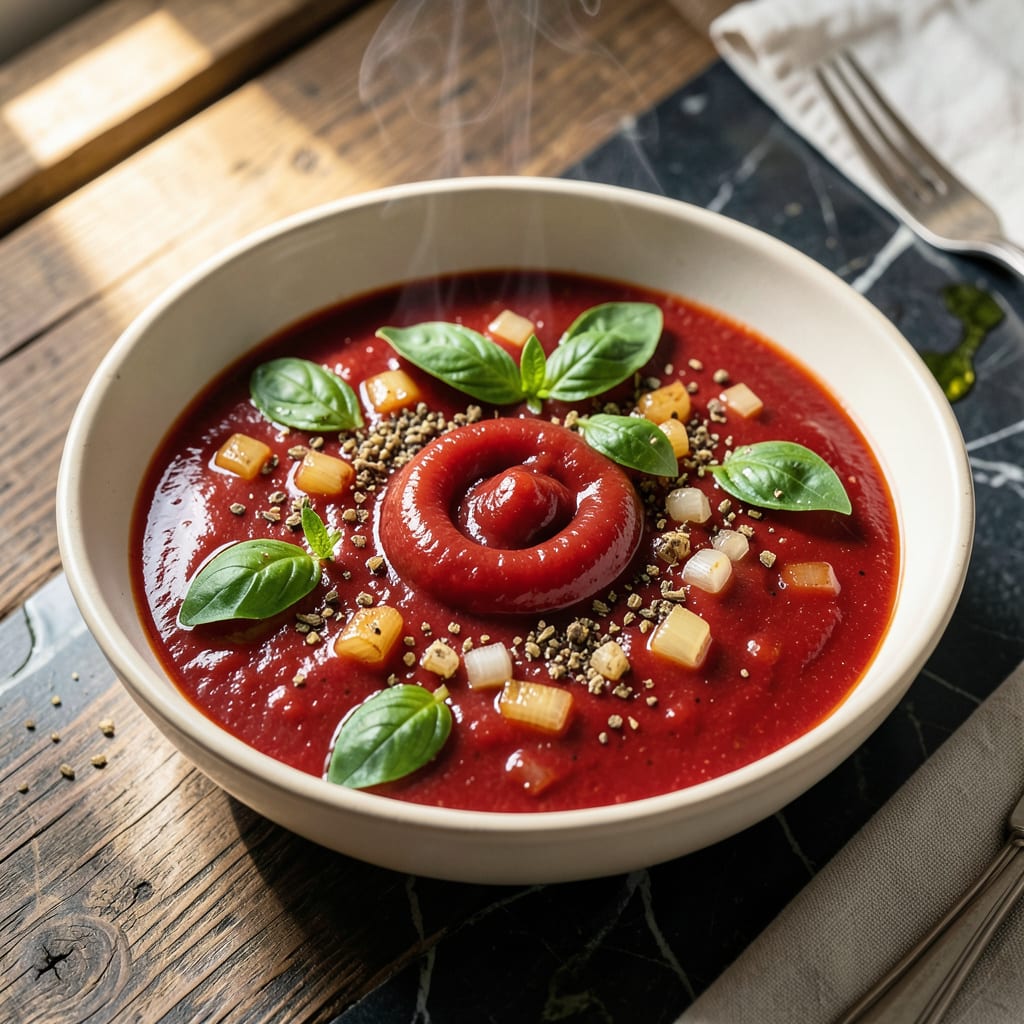
This sauce delivers the rich, velvety tomato flavor you crave without any added oil. I developed it to prove that healthy doesn’t mean sacrificing depth or satisfaction. The secret lies in slow simmering to concentrate natural flavors.
It comes together with simple pantry staples and creates a smooth, deeply flavorful base that clings perfectly to pasta. Store leftovers in the fridge for up to a week, or freeze for longer freshness.
Ingredients for Low Fat Pasta Sauce
Pantry staples transform into a rich, oil-free sauce that clings beautifully to pasta.
| Ingredient | Amount | Notes |
|---|---|---|
| Canned San Marzano Tomatoes 🍅 | 28 oz | Whole peeled, undrained |
| Tomato Paste 🍅 | 3 tbsp | Double-concentrated preferred |
| Yellow Onion 🧅 | 1 whole | Finely diced for base |
| Garlic Cloves 🧄 | 4 cloves | Minced for depth |
| Fresh Basil Leaves 🌿 | ½ cup | Packed, torn by hand |
| Dried Oregano 🍃 | 1 tsp | Mediterranean variety preferred |
| Red Pepper Flakes 🌶️ | ½ tsp | Adjust to heat preference |
| Vegetable Broth 🥕 | ½ cup | Low-sodium for control |
| Balsamic Vinegar 🍷 | 1 tbsp | Aged for complexity |
| Sea Salt 🧂 | 1 tsp | Fine grain for even distribution |
The tomatoes are everything here. San Marzano cans from Eataly or Italian markets give that authentic sweetness and low acidity. Look for the DOP label if you want the real deal (worth the splurge). The tomato paste is your flavor concentrator—double-concentrated tubes from Mutti pack more punch than standard cans. Fresh basil should be vibrant green with no wilting (farmers markets have the best in season).
No San Marzano? Any whole peeled tomatoes work in a pinch—just avoid pre-diced (they’re watery). Out of fresh basil? Dried basil at one-third the amount keeps it going. Need more depth? A pinch of umami powder or nutritional yeast bridges the gap. The balsamic adds sweetness and acidity—apple cider vinegar can sub in equal parts if needed.
This sauce actually improves overnight as flavors meld. Keeps 5-7 days in the fridge or freeze for 3 months (portion into ice cube trays for easy use). The lack of oil means it won’t separate, so just stir and reheat gently.
Why You’ll Love This Recipe
- One Pot Wonder: I just dump the canned San Marzano tomatoes, tomato paste, and aromatics in a single pot and let it simmer.
- Sunshine in a Jar: The San Marzano tomatoes and fresh basil make it taste like summer, even in January.
- Weeknight Hero: I make a double batch on Sunday and use it for pasta, pizza, and soup all week.
- Pantry MVP: Five simple ingredients I always have on hand, so dinner’s never far away.
Step-by-Step Instructions for Low Fat Pasta Sauce
This method delivers rich, velvety flavor without any added oil—simple, healthy, and delicious.
Step 1: Build the Aromatic Base
Heat a heavy-bottomed pot over medium heat. Add the finely diced yellow onion and cook for 5-6 minutes, stirring occasionally, until it turns translucent and golden. I use a splash of the vegetable broth to deglaze the pan if the onion starts to stick—this prevents burning and builds flavor.
Once the onion softens, add the 4 minced garlic cloves and cook for 1 minute until fragrant. Be careful not to let the garlic brown, as it can turn bitter. The 1 tsp sea salt goes in now to help draw out moisture and deepen the flavor of the aromatics.
Step 2: Develop the Tomato Foundation
Stir in the 3 tbsp tomato paste and cook for 2 minutes, stirring constantly. This step is critical—it caramelizes the natural sugars in the paste, creating a rich, concentrated base. You’ll notice the color darken slightly and the mixture thicken.
Next, add the 28 oz canned San Marzano tomatoes, crushing them by hand as they go into the pot. This breaks them down and releases their juices, ensuring a smooth, cohesive sauce. Include all the liquid from the can—it’s packed with flavor.
Step 3: Season and Simmer to Perfection
Add the 1 tsp dried oregano, 0.5 tsp red pepper flakes, 0.5 cup vegetable broth, and 1 tbsp balsamic vinegar. The vinegar adds a subtle depth and balances the acidity of the tomatoes. Stir well to combine all the ingredients.
Bring the mixture to a gentle simmer, then reduce the heat to low. Let it cook uncovered for 25-30 minutes, stirring occasionally. You’ll know it’s ready when the sauce thickens and the flavors meld into a rich, cohesive blend.
Step 4: Finish with Fresh Basil
Remove the pot from heat and stir in the 0.5 cup fresh basil leaves, torn by hand. The basil should wilt slightly but retain its bright, aromatic qualities. This final touch adds freshness and a vibrant pop of color to the sauce.
Taste and adjust seasoning if needed, though the sea salt added earlier should provide a well-balanced base. Let the sauce sit for 5-10 minutes before serving to allow the flavors to fully harmonize. This rest period ensures every bite is infused with the essence of the ingredients.
Pro Tips For Making Low Fat Pasta Sauce
- Sauté Onions Slow: Cook the onions on medium-low for 8-10 minutes until translucent—I learned this the hard way when my sauce tasted raw and harsh.
- Use Paste Generously: Add 2 tablespoons of tomato paste and let it brown slightly in the pan before adding tomatoes; it deepens the flavor without extra fat.
- Skip the Oil: Sauté the onion and garlic in a splash of water or low-sodium broth instead of oil to keep it light but still flavorful.
- Add Basil Last: Stir in fresh basil leaves just before serving—adding them earlier turns them bitter and dulls their bright, herby punch.
Serving Suggestions for low fat pasta sauce
Pasta Pairings
This sauce clings beautifully to whole wheat spaghetti or chickpea pasta for extra protein. I love it with rigatoni too—the ridges trap the velvety tomato essence perfectly. Cook pasta 1 minute less than package instructions for ideal texture.
Protein Additions
For a heartier meal, stir in grilled chicken breast or shrimp during the last 5 minutes of reheating. White beans add plant-based protein and creaminess—just 1 can drained and rinsed does the trick. 💪
Fresh Garnishes
A sprinkle of freshly grated Parmesan adds umami without excess fat. I always finish with extra basil leaves for color. For heat lovers, red pepper flakes at the table let everyone customize their bowl.
Side Dish Ideas
A simple arugula salad with lemon dressing cuts through the richness. I toss 4 cups greens with 1 tbsp olive oil and 1 tsp lemon juice. Garlic bread made with whole grain bread stays light yet satisfying.
Serving Temperature
Serve this sauce hot over warm pasta—it absorbs best that way. If using leftovers, reheat gently on medium-low heat for 5-7 minutes, stirring occasionally. The flavors taste even better the next day. 🔥
Nutrition Facts
Frequently Asked Questions
Can I use fresh tomatoes instead of canned?
Yes, but you’ll need about 3 lbs of fresh tomatoes. Blanch, peel, and seed them first for the best texture. Canned tomatoes are preferred for consistent flavor and thickness.
Why does the sauce need to simmer so long?
The 25-30 minute simmer concentrates flavors and reduces excess liquid. This builds depth without added fat, creating that rich, velvety texture you want.
Can I make this sauce ahead of time?
It keeps for 5-7 days in the fridge or 3 months frozen. The flavors actually improve overnight as they meld together.

- 8 Bean Soup Recipe Crock Pot: Hearty Vegetable Medley in One Pot - September 25, 2026
- 4C Bread Crumbs Meatballs Recipe: Crispy Crust and Juicy Centers - September 25, 2026
- 6 Oz Chocolate Chip Cookie Recipe: Perfectly Balanced Crispy Edges and Chewy Hearts - September 25, 2026