
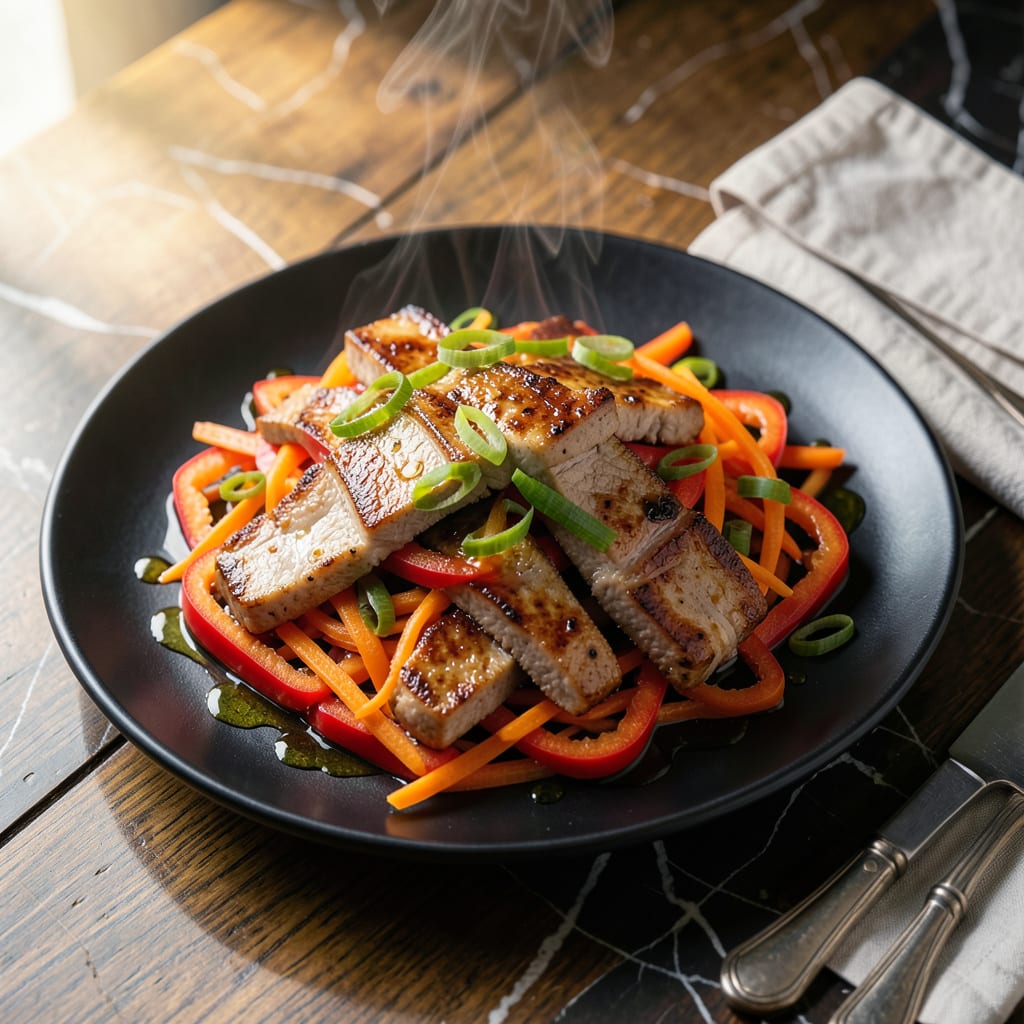
This lean pork stir fry delivers all the bold Asian flavors you love without the extra fat. I’ve perfected a method that keeps the dish light yet satisfying by using minimal oil and lean cuts of pork.
The secret is high-heat cooking and a well-balanced sauce that enhances the natural taste of the ingredients. You’ll get tender pork, crisp vegetables, and a dish that’s as nutritious as it is delicious.
Ingredients for Low Fat Pork Stir Fry
Lean cuts, vibrant veggies, and a punchy sauce make this dish pop.
| Ingredient | Amount | Notes |
|---|---|---|
| Pork Tenderloin 🥩 | 1 lb | Trimmed of visible fat, thinly sliced |
| Soy Sauce 🫒 | 3 tbsp | Low-sodium preferred for control |
| Rice Vinegar 💧 | 1 tbsp | For tangy brightness in sauce |
| Sesame Oil 🫒 | 1 tsp | Toasted variety for nutty depth |
| Honey 🍯 | 1 tbsp | Balances savory and salty notes |
| Fresh Ginger 🌿 | 1 tbsp | Peeled and finely grated |
| Garlic Cloves 🧄 | 3 cloves | Minced for aromatic base |
| Red Bell Pepper 🌶️ | 1 whole | Thinly sliced for crunch |
| Broccoli Florets 🥦 | 2 cups | Fresh or frozen, thawed if frozen |
| Carrot 🥕 | 1 whole | Julienned for quick cooking |
| Green Onions 🧅 | 3 whole | Thinly sliced for garnish |
| Olive Oil 🫒 | 1 tbsp | For cooking, minimal amount |
| Cornstarch 🌾 | 1 tbsp | For thickening sauce slightly |
| Red Pepper Flakes 🌶️ | ¼ tsp | Optional for subtle heat |
| Toasted Sesame Seeds 🌿 | 1 tsp | For garnish and texture |
The pork is the star here. Pork tenderloin is the leanest cut you can get—avoid anything labeled shoulder or butt (they’re fattier). I grab mine from Whole Foods or Costco when it’s on sale. Trim any visible fat yourself for the leanest result. For the veggies, look for firm bell peppers and bright green broccoli—they should feel heavy for their size.
No rice vinegar? Apple cider vinegar at the same amount works in a pinch. Out of honey? Brown sugar dissolved in a teaspoon of warm water does the trick. Fresh ginger is ideal, but ground ginger at one-quarter the amount works too (just add it directly to the sauce). Frozen broccoli’s fine if that’s what you’ve got—thaw and pat dry first so it doesn’t water down the stir fry.
This reheats surprisingly well—store leftovers in the fridge for up to 4 days. The sauce thickens as it cools, so thin with a splash of water when reheating. Best eaten fresh, but freezes for 2 months if you need to stash some away.
Why You’ll Love This Recipe
- One Pan Meal: I love that everything cooks together in one skillet—pork tenderloin, sauce, and veggies all in under 25 minutes.
- Umami Bomb: The soy sauce and sesame oil hit that perfect savory-sweet balance, with just enough honey to round it out.
- Weeknight Hero: Honestly, it’s my Tuesday night lifesaver—quick enough for a busy evening but impressive enough for company.
- Budget Stretcher: Pork tenderloin stays lean and affordable, and the sauce ingredients last for multiple meals.
Step-by-Step Instructions for Low Fat Pork Stir Fry
Here’s my foolproof method for a quick, healthy dinner that’s packed with flavor.
Step 1: Prepare and Marinate the Pork
Start by slicing the 1 lb Pork Tenderloin into thin strips, about ¼-inch thick. This ensures quick, even cooking. Trim any visible fat—the tenderloin is already lean, so this keeps it extra light.
In a bowl, whisk together the 3 tbsp Soy Sauce, 1 tbsp Rice Vinegar, 1 tsp Sesame Oil, 1 tbsp Honey, 1 tbsp Fresh Ginger, and 3 cloves Garlic Cloves. Add the pork strips and toss to coat evenly. Let it marinate for 10 minutes—just enough to infuse flavor without making the meat mushy.
Step 2: Prep and Cook the Vegetables
While the pork marinates, slice the 1 whole Red Bell Pepper into thin strips and julienne the 1 whole Carrot. Cut the 2 cups Broccoli Florets into bite-sized pieces if they’re large. I like to keep the veggies uniform so they cook at the same rate.
Heat the 1 tbsp Olive Oil in a large nonstick skillet or wok over medium-high heat. Add the broccoli, bell pepper, and carrot. Stir-fry for 4-5 minutes until the vegetables are tender-crisp and the edges start to brown slightly. Remove the veggies from the skillet and set aside.
Step 3: Cook the Pork and Thicken the Sauce
In the same skillet, add the marinated pork (reserve the marinade). Cook over medium-high heat for 5-6 minutes, stirring occasionally, until the pork is no longer pink and lightly browned. Avoid overcrowding the pan—work in batches if needed to ensure even cooking.
Pour the reserved marinade into the skillet and sprinkle the 1 tbsp Cornstarch over the pork. Stir well and cook for 1-2 minutes until the sauce thickens slightly and coats the meat. The cornstarch gives it a glossy finish without adding fat.
Step 4: Combine and Finish
Return the cooked vegetables to the skillet with the pork. Add the 0.25 tsp Red Pepper Flakes if using, and stir-fry for another 2 minutes to heat everything through. Taste and adjust seasoning if needed—the soy sauce should provide enough saltiness, but you can add a pinch more if desired.
Transfer the stir-fry to a serving platter and garnish with the 3 whole Green Onions (thinly sliced) and 1 tsp Toasted Sesame Seeds. The green onions add a fresh crunch, while the sesame seeds bring a nutty finish. Serve immediately over rice or noodles for a complete meal.
Pro Tips For Making Low Fat Pork Stir Fry
- Slice Against Grain: Cut the pork tenderloin into thin strips against the grain—this shortens the muscle fibers so your stir fry stays tender without needing extra fat.
- Heat the Pan First: Get your wok or skillet screaming hot before adding oil or pork. I learned this the hard way after too many soggy stir fries.
- Skip the Overcrowding: Cook pork in batches if needed—crowding the pan steams the meat instead of searing it, and you’ll end up with a watery mess.
- Bloom the Aromatics: After removing the pork, toss in garlic, ginger, or veggies first to release their flavors into the oil before adding the sauce. Sounds small, but it actually changes the outcome.
Wine and Beer Pairings for This low fat pork stir fry
Light Beer Pairings
A crisp Asian lager like Sapporo or Asahi complements the savory-sweet balance perfectly. The light body won’t overpower the lean pork, while the subtle malt notes enhance the soy and ginger flavors. 🍺
White Wine Choices
For white wine lovers, try a Riesling from Washington State—its slight sweetness contrasts beautifully with the umami-rich sauce. I prefer Chateau Ste. Michelle for its consistent quality and $10 price point.
Red Wine Options
If you insist on red, go for a light-bodied Pinot Noir from Oregon. The A to Z Wineworks version has bright acidity that cuts through the dish’s richness without overwhelming the subtle pork flavor.
Non-Alcoholic Pairing
A chilled jasmine green tea with a squeeze of lemon mirrors the dish’s Asian inspirations. The floral notes complement the ginger and garlic, while the light bitterness cleanses your palate between bites.
Sparkling Water
For zero calories, try San Pellegrino with a splash of lime. The effervescence refreshes your palate, and the citrus enhances the rice vinegar in the stir fry. I find this especially satisfying on warmer days. ✨
Nutrition Facts
Frequently Asked Questions
What’s the leanest cut of pork for stir fry?
Pork tenderloin is your best bet—it’s naturally low in fat and stays tender when cooked quickly. Trim any visible fat before slicing into thin strips for even cooking.
Can I use frozen vegetables instead of fresh?
Thaw and pat them completely dry first to prevent excess moisture in your pan. They’ll cook faster than fresh, so add them at the very end.
How do I prevent the pork from drying out?
Marinate for just 10 minutes—longer can make it mushy. Cook over medium-high heat in 1-2 batches to avoid overcrowding, which steams instead of sears.
Is there a good substitute for soy sauce?
Coconut aminos work as a 1:1 replacement with a slightly sweeter taste. For saltier flavor, use tamari, but reduce the amount by 25% since it’s stronger.

- 8 Bean Soup Recipe Crock Pot: Hearty Vegetable Medley in One Pot - September 25, 2026
- 4C Bread Crumbs Meatballs Recipe: Crispy Crust and Juicy Centers - September 25, 2026
- 6 Oz Chocolate Chip Cookie Recipe: Perfectly Balanced Crispy Edges and Chewy Hearts - September 25, 2026