
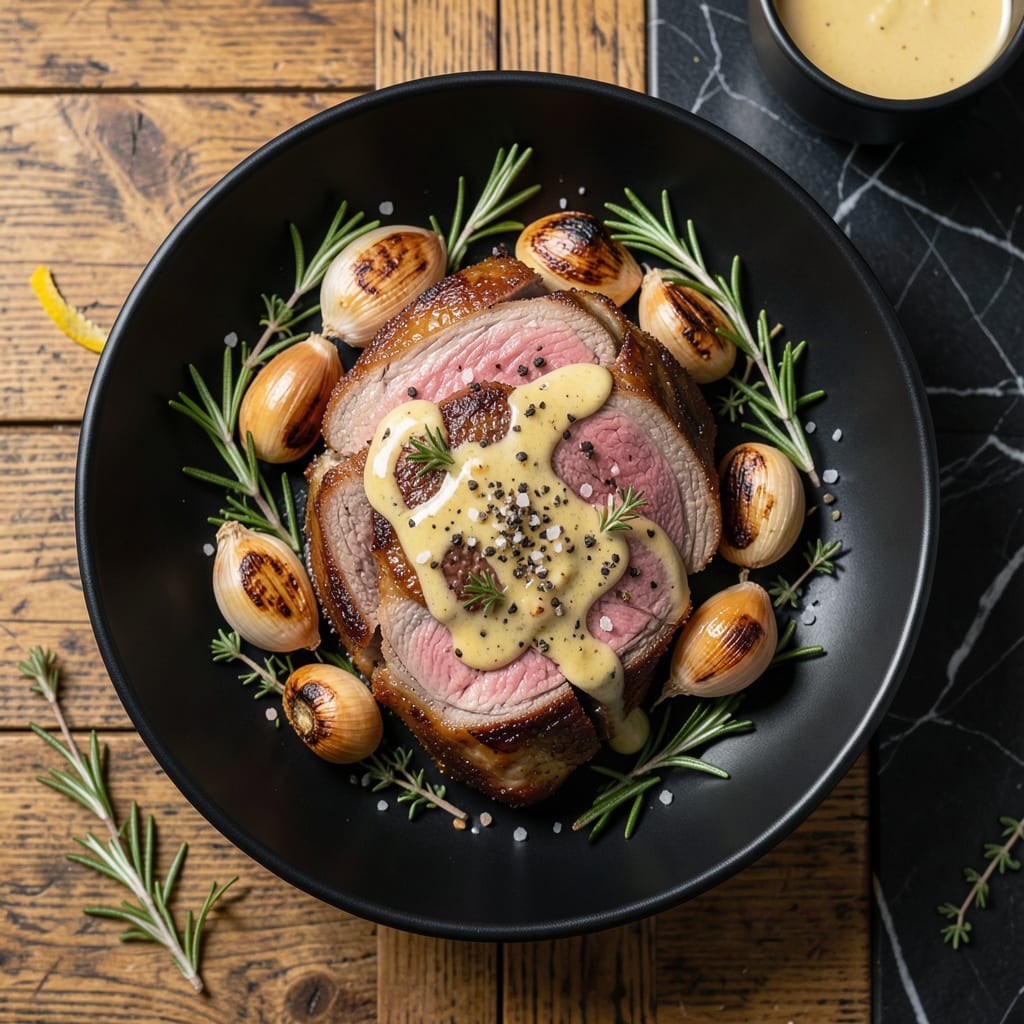
Achieving tender, flavorful roast beef with minimal fat is absolutely possible with the right cut and technique. This method uses lean beef and smart cooking to deliver savory results without excess grease.
By selecting a lean cut like top round and using proper seasoning, you’ll create a dish that’s both healthy and delicious. The oven does most of the work, ensuring a perfect finish every time.
Ingredients for Low Fat Roast Beef
Lean top round and aromatic herbs create this savory, low-fat oven masterpiece.
| Ingredient | Amount | Notes |
|---|---|---|
| Top Round Beef Roast 🥩 | 2 ½ lb | Trimmed of visible fat |
| Kosher Salt 🧂 | 2 tsp | Diamond Crystal preferred |
| Freshly Ground Black Pepper 🌶️ | 1 ½ tsp | Coarse grind recommended |
| Garlic Cloves 🧄 | 6 cloves | Smashed, not minced |
| Fresh Rosemary Sprigs 🌿 | 3 whole | Stems included for infusion |
| Fresh Thyme Sprigs 🍃 | 4 whole | Stems included for infusion |
| Dijon Mustard 🟡 | 2 tbsp | Whole grain acceptable |
| Red Wine Vinegar 🍷 | 1 tbsp | Apple cider as substitute |
| Extra-Virgin Olive Oil 🫒 | 2 tbsp | For searing and moisture |
| Low-Sodium Beef Broth 🥣 | 1 cup | Homemade or quality brand |
| Yellow Onion 🧅 | 1 whole | Roughly chopped for roasting |
| Carrots 🥕 | 3 whole | Peeled, cut into chunks |
| Celery Stalks 🥬 | 2 whole | Cut into large pieces |
The beef selection is critical for lean results. Top round offers the best fat-to-flavor ratio—avoid marbled cuts like ribeye. Whole Foods and ButcherBox offer excellent pre-trimmed options, but any reputable grocery store butcher can prepare it to specification. Look for a deep red color with minimal visible fat, and ask for the external fat cap to be removed entirely (the good stuff, not the pre-cut steaks).
No fresh rosemary or thyme? Dried herbs work at one-third the amount, though the flavor won’t infuse as deeply. For the Dijon, whole grain mustard adds great texture. Beef broth can be swapped for mushroom broth for a vegetarian-friendly version of the cooking liquid. The vinegar is flexible—balsamic or apple cider both complement the beef beautifully without adding fat.
This roast keeps beautifully in the fridge for 3-4 days and reheats without drying out if stored in its juices. For longer storage, slice and freeze portions in airtight containers for up to 3 months. The aromatic vegetables lose texture when frozen, so they’re best enjoyed fresh.
Why You’ll Love This Recipe
- Hands-Off Cooking: I just season, pop it in the oven, and let the top round do its thing—no babysitting required.
- Rosemary-Garlic Magic: That aroma of fresh rosemary and roasted garlic hits you the second you walk in the door.
- Meal Prep Hero: Sliced thin, it’s my lunch for days—tastes even better in sandwiches or salads.
- Lean & Filling: I serve this to my health-conscious friends and no one misses the extra fat.
Step-by-Step Instructions for Low Fat Roast Beef
Achieve tender, flavorful results with this precise method for lean beef preparation.
Step 1: Prepare and Season the Beef
Pat the 2.5 lb top round beef roast completely dry with paper towels. This lean cut benefits from thorough drying to ensure proper browning. Trim any remaining visible fat—this is already a low-fat cut, but removing excess surface fat prevents chewiness.
Rub the beef all over with 2 tsp kosher salt and 1.5 tsp freshly ground black pepper. I press the seasoning firmly into the meat to create a flavorful crust. Place the roast on a wire rack set over a plate and let it sit at room temperature for 45 minutes to take the chill off.
Step 2: Create the Herb and Aromatic Paste
In a small bowl, combine 2 tbsp Dijon mustard, 1 tbsp red wine vinegar, and 2 tbsp extra-virgin olive oil. The vinegar’s acidity tenderizes the lean meat while the mustard adds depth without extra fat.
Smash 6 cloves garlic cloves and add them to the paste along with 3 whole fresh rosemary sprigs and 4 whole fresh thyme sprigs. Coat the roast evenly with this mixture, ensuring all sides are well covered. The herbs will infuse the meat during roasting.
Step 3: Sear and Build the Roasting Environment
Preheat your oven to 325°F. In a large oven-safe roasting pan or Dutch oven, arrange the roughly chopped yellow onion, 3 whole carrots, and 2 whole celery stalks in a single layer. These vegetables create a natural roasting rack and add moisture to the cooking environment.
Place the seasoned beef on top of the vegetables. Pour 1 cup low-sodium beef broth into the pan around the vegetables—not over the beef. The liquid will steam the vegetables and prevent the lean meat from drying out during the long cooking process.
Step 4: Roast to Perfect Doneness
Transfer the pan to the preheated oven. Roast uncovered for 2 to 2.5 hours, or until an instant-read thermometer inserted into the thickest part registers 135°F for medium-rare to medium doneness. For this lean cut, I recommend not exceeding 140°F to prevent toughness.
Baste the roast with the pan juices every 45 minutes during cooking. This step is crucial for low-fat cuts, as it compensates for the lack of internal marbling by adding moisture and flavor to the exterior.
Step 5: Rest and Slice for Serving
Remove the roast from the oven and transfer it to a cutting board. Tent loosely with foil and let it rest for 15-20 minutes. This resting period allows the juices to redistribute throughout the meat, which is especially important for lean cuts that can become dry if carved too soon.
Slice the beef against the grain into ¼-inch thick slices. The grain in top round runs lengthwise, so you’ll want to cut perpendicular to those muscle fibers. Serve with the roasted vegetables and some of the pan juices spooned over the top for added moisture and flavor.
Pro Tips For Making Low Fat Roast Beef
- Use a Meat Thermometer: Top round is lean, so pull it at 130°F for medium-rare—any higher and it’ll dry out. I learned this the hard way after ruining two roasts by guessing.
- Score the Fat Cap: Even with a low-fat cut, a thin layer of fat exists. Score it in a crosshatch pattern so the salt, garlic, and rosemary actually penetrate the meat.
- Skip the Cold Roast: Let the top round sit at room temperature for 30-45 minutes before roasting. Sounds weird, but it works—cold meat seizes up and cooks unevenly.
- Rest Before Slicing: Give it a solid 15 minutes under foil after roasting. I was skeptical until I tried it, and now the juices stay in the meat, not on the cutting board.
Health Benefits of This Recipe
Lean Protein Power
This creation delivers high-quality protein with about 50 grams per 4-ounce serving, supporting muscle maintenance and repair. The top round cut ensures you get all nine essential amino acids without excess saturated fat that heavier marbled cuts contain. 💪
Heart-Healthy Benefits
By using lean beef and trimming visible fat, you reduce saturated fat intake significantly compared to traditional roast beef. A 4-ounce serving contains only about 4 grams of saturated fat, making it a heart-smart choice for regular meals.
Iron and Zinc Boost
Beef is naturally rich in heme iron and zinc, nutrients that are more easily absorbed by your body than plant-based versions. This dish provides about 20% of your daily iron needs per serving, helping prevent fatigue and supporting immune function.
Vitamin B Complex
You’ll get a healthy dose of B vitamins, particularly B12 and B6, which are crucial for energy metabolism and nervous system health. These nutrients are abundant in beef and help your body convert food into usable energy efficiently.
Low Calorie Density
With lean top round as the base, this meal offers great flavor satisfaction at about 200 calories per 4-ounce serving. The aromatic herbs and vegetables add volume and nutrients without significantly increasing calorie count. 🌟
Balanced Nutrition
This dish pairs protein with fiber-rich vegetables like carrots and celery, creating a balanced meal. The combination helps maintain steady blood sugar levels and keeps you feeling full longer after eating.
Nutrition Facts
Frequently Asked Questions
Which beef cut works best for a lean roast?
Top round is ideal for a lean roast. It has minimal marbling and great flavor when cooked properly. Avoid ribeye or other fatty cuts for this purpose.
How do I prevent lean beef from drying out?
Baste with pan juices every 45 minutes and don’t overcook past 140°F. Resting for 15-20 minutes after roasting also helps retain moisture.
Can I use dried herbs instead of fresh?
Yes, use 1/3 the amount of dried herbs. While effective, fresh rosemary and thyme infuse more deeply.
What’s the best way to store leftovers?
Store in an airtight container with juices for 3-4 days in the fridge. For longer storage, freeze sliced portions for up to 3 months.

- 8 Bean Soup Recipe Crock Pot: Hearty Vegetable Medley in One Pot - September 25, 2026
- 4C Bread Crumbs Meatballs Recipe: Crispy Crust and Juicy Centers - September 25, 2026
- 6 Oz Chocolate Chip Cookie Recipe: Perfectly Balanced Crispy Edges and Chewy Hearts - September 25, 2026