
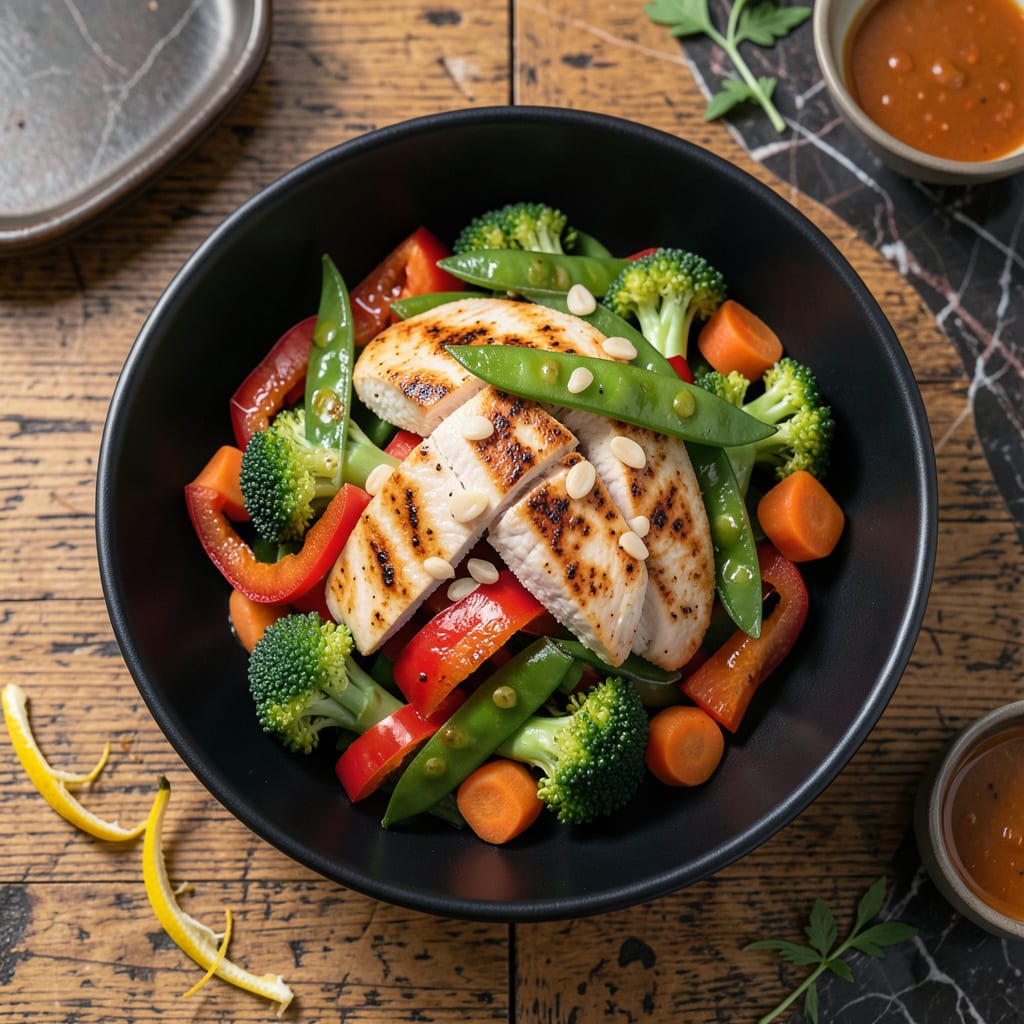
This wok-tossed stir fry delivers veggie-packed flavor without the guilt of excess oil. I’ve refined the technique to use minimal fat while maximizing taste and texture.
The key is high heat, quick cooking, and a light sauce that clings to every bite. You’ll achieve restaurant-quality results with a fraction of the calories, all in under 20 minutes.
Ingredients for Low Fat Stir Fry
Pantry staples and fresh veggies make this light, flavorful dish sing with minimal oil.
| Ingredient | Amount | Notes |
|---|---|---|
| Boneless Skinless Chicken Breast 🍗 | 1 lb | Sliced into thin strips |
| Red Bell Pepper 🌶️ | 1 whole | Thinly sliced into strips |
| Broccoli Florets 🥦 | 3 cups | Fresh or frozen, thawed |
| Carrots 🥕 | 2 whole | Julienned or thinly sliced |
| Snap Peas 🌱 | 1 cup | Fresh or thawed frozen |
| Garlic Cloves 🧄 | 3 cloves | Minced finely for even flavor |
| Fresh Ginger Root 🌿 | 1 tbsp | Peeled and grated |
| Low-Sodium Soy Sauce 🫒 | 3 tbsp | Or tamari for gluten-free |
| Rice Vinegar 🍋 | 1 tbsp | Unseasoned variety preferred |
| Sesame Oil 🫒 | 1 tsp | Toasted for depth of flavor |
| Cornstarch 🌾 | 1 tbsp | For thickening sauce |
| Water 💧 | ¼ cup | To thin sauce consistency |
| Honey 🍯 | 1 tbsp | Or agave for vegan option |
| Red Pepper Flakes 🌶️ | ½ tsp | Adjust to spice preference |
The chicken is key here—look for air-chilled at Whole Foods or Costco for better texture and less water content. Fresh ginger and garlic are non-negotiable; the pre-minced stuff lacks punch. Bell peppers should be firm and vibrant in color (no wrinkles or soft spots). For broccoli, I grab the pre-cut florets from Trader Joe’s to save time, but a whole head works too if you’re chopping anyway.
Swapping proteins? Shrimp or tofu work great—just adjust cooking time. No soy sauce? Coconut aminos are a solid sub. Missing rice vinegar? Apple cider vinegar in a pinch (flavor shifts slightly). Frozen veggies? Totally fine—just thaw and pat dry first so they don’t steam the pan. The honey can be skipped if you prefer less sweetness.
Leftovers keep 3-4 days in the fridge, but the veggies soften over time. Reheat in a skillet with a splash of water to revive the texture. Doesn’t freeze well—the sauce separates. Best made fresh, which is easy since it’s 20 minutes start to finish.
Why You’ll Love This Recipe
- One Pan Wonder: I toss everything—chicken, bell peppers, snap peas—in one pan and let the wok do the work.
- Crave-Worthy Crunch: The broccoli florets and carrots stay crisp while soaking up that light garlic-ginger sauce.
- Meal Prep Magic: I make a double batch on Sunday, and it reheats beautifully for lunches all week.
- Budget Stretcher: Honestly, a pound of chicken breast and seasonal veggies feeds my family for two meals.
Step-by-Step Instructions for Wok-Tossed Veggie-Packed Goodness
Here’s how I nail this every time—quick, healthy, and packed with flavor.
Step 1: Prep and Velouté the Proteins and Aromatics
Slice the 1 lb Boneless Skinless Chicken Breast into thin strips against the grain for maximum tenderness. I like to place my hand flat on top of the breast and slice at a 45-degree angle—this creates more surface area for the marinade to penetrate.
In a bowl, combine the sliced chicken with the 3 tbsp Low-Sodium Soy Sauce, 1 tbsp Honey, and 1 tbsp Cornstarch. The cornstarch acts as a velouté, ensuring the chicken stays moist during high-heat cooking. Let it marinate for 10-15 minutes while you prep the vegetables.
Slice the 1 whole Red Bell Pepper into thin strips, julienne the 2 whole Carrots, and separate the 3 cups Broccoli Florets into bite-sized pieces. Mince the 3 cloves Garlic Cloves and grate the 1 tbsp Fresh Ginger Root—this fine texture ensures even distribution in the dish.
Step 2: Create the Stir-Fry Sauce Foundation
In a small bowl, whisk together the remaining 2 tbsp Low-Sodium Soy Sauce (from your original 3 tbsp), 1 tbsp Rice Vinegar, 1 tsp Sesame Oil, 0.5 tsp Red Pepper Flakes, and the 0.25 cup Water. The vinegar adds brightness that cuts through the richness of the dish.
I always taste the sauce at this point—it should be balanced with a slight tang from the vinegar and a subtle heat from the red pepper flakes. If you prefer more heat, now’s the time to add an extra pinch, but remember the flakes will intensify as they cook.
Step 3: Stir-Fry in Batches for Optimal Texture
Heat a large non-stick skillet or wok over high heat until a drop of water sizzles and evaporates immediately. Add the marinated chicken in a single layer—don’t overcrowd the pan or it’ll steam instead of sear. Cook for 3-4 minutes until the chicken is opaque and lightly browned on all sides.
Remove the chicken to a plate and add the 1 cup Snap Peas, bell pepper, and carrots to the hot pan. Stir-fry for 2-3 minutes until the vegetables are crisp-tender and the carrots start to soften. The snap peas should still have a slight bite—they’ll continue cooking when returned to the heat.
Add the broccoli florets, minced garlic, and grated ginger. Stir-fry for another 2 minutes until the broccoli turns vibrant green and the garlic is fragrant but not browned. Garlic burns easily, so keep it moving in the pan.
Step 4: Combine and Finish with Sauce
Return the chicken to the pan with the vegetables. Pour the sauce mixture over everything and stir to combine. Cook for 1-2 minutes until the sauce thickens slightly and coats all the ingredients. The cornstarch in the marinade will help create a glossy, clinging sauce.
The dish is done when the chicken is cooked through (no longer pink inside) and the vegetables are tender-crisp. I like to let it sit off heat for 1 minute before serving—this allows the flavors to meld and the sauce to thicken just a bit more from the residual heat.
Pro Tips For Making Low Fat Stir Fry
- Crank the Heat: Use the highest heat your pan can handle—low fat means you need that searing temperature to prevent soggy veggies and rubbery chicken. I learned this the hard way after too many limp stir fries.
- Slice Chicken Thin: Cut the chicken breast into ¼-inch strips so it cooks through in 2-3 minutes. Any thicker and you’ll either overcook the veggies waiting for it or end up with dry meat.
- Skip the Overcrowding: Cook in batches if needed—tossing all the chicken and veggies in at once steams them instead of stir-frying. Sounds tedious, but it actually changes the outcome.
- Par-cook the Broccoli: Blanch the broccoli florets for 1 minute in boiling water before stir-frying. This guarantees they’ll be tender-crisp by the time everything else is done, not rock-hard or mushy.
Creative Variations of low fat stir fry
Vegetarian Delight
Swap the chicken for 14 oz extra-firm tofu, pressed and cubed. Toss it with the same marinade of 3 tbsp soy sauce, 1 tbsp honey, and 1 tbsp cornstarch. Stir-fry until golden and crispy, then proceed with the veggies as usual. I love the texture contrast here. ✨
Spicy Thai Twist
Add 1 tbsp Thai red curry paste to the sauce mixture for a bold, aromatic kick. Use 1 can light coconut milk instead of water for creaminess without excess fat. Garnish with fresh cilantro and lime wedges for that authentic Thai flavor.
Sweet & Sour
Replace the rice vinegar with 2 tbsp apple cider vinegar and add ½ cup pineapple chunks along with the bell peppers. Increase the honey to 2 tbsp for balance. The sweetness pairs perfectly with the tangy vinegar.
Protein-Packed Shrimp
Use 1 lb peeled shrimp instead of chicken, reducing marinating time to 5 minutes since shrimp cooks quickly. Add the shrimp to the pan just before combining with the sauce to prevent overcooking. It’ll turn opaque in just 2-3 minutes. 💪
Mushroom Medley
Add 2 cups sliced shiitake mushrooms with the bell peppers for an umami boost. Sauté until they release their moisture and turn golden. This variation works well with either chicken or tofu for a meaty, satisfying dish.
Low-Carb Option
Replace the honey with 1 tsp erythritol or monk fruit sweetener and add 1 cup cauliflower rice at the end. Stir-fry for 2 minutes until tender. This keeps the dish light while adding volume and texture.
Nutrition Facts
Frequently Asked Questions
What’s the best oil for a light stir fry?
Use a non-stick pan with just 1 tsp of high-smoke-point oil like avocado or grapeseed. A well-seasoned wok can skip oil entirely with a splash of water or broth to prevent sticking.
Can I use frozen vegetables?
Yes, but thaw and pat them dry first to avoid steaming. Frozen veggies work well if added later in cooking, as they release moisture that can dilute flavors.
How do I prevent a soggy stir fry?
Cook in batches to avoid overcrowding the pan. Use high heat and keep ingredients moving constantly. The sauce should coat, not drown, your veggies.
What’s a good vegetarian protein swap?
Try 14 oz extra-firm tofu or tempeh, pressed and cubed. Marinate with the same sauce for maximum flavor absorption.

- 8 Bean Soup Recipe Crock Pot: Hearty Vegetable Medley in One Pot - September 25, 2026
- 4C Bread Crumbs Meatballs Recipe: Crispy Crust and Juicy Centers - September 25, 2026
- 6 Oz Chocolate Chip Cookie Recipe: Perfectly Balanced Crispy Edges and Chewy Hearts - September 25, 2026