
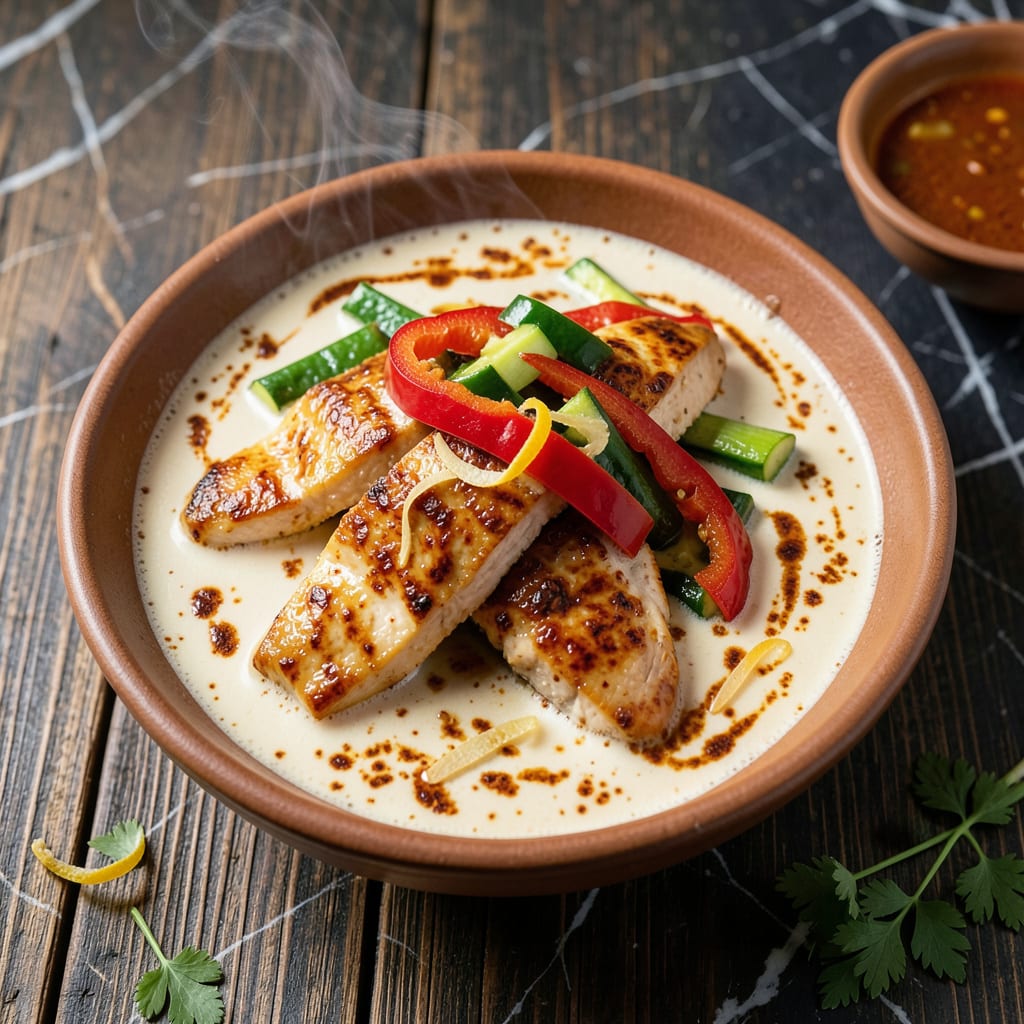
This Thai curry delivers all the bold, aromatic flavors you love without the excess oil. The secret lies in using fresh herbs and spices to build depth while keeping it light.
With a few smart techniques, you can create a rich, flavorful curry that feels indulgent yet stays true to healthier cooking. Every bite proves that low-fat doesn’t mean low on taste.
Ingredients for Low Fat Thai Curry
Fresh herbs and smart swaps keep this dish light but packed with Thai flavors.
| Ingredient | Amount | Notes |
|---|---|---|
| Light Coconut Milk 🥥 | 1 can | Reduced-fat, well-shaken |
| Red Curry Paste 🌶️ | 2 tbsp | Check for no added oil |
| Chicken Breast 🍗 | 1 ½ lb | Boneless, skinless, sliced thin |
| Bell Peppers 🌶️ | 2 whole | Thinly sliced, any color |
| Zucchini 🥒 | 2 whole | Medium, sliced into half-moons |
| Fresh Ginger 🌿 | 1 tbsp | Peeled and minced |
| Garlic Cloves 🧄 | 4 cloves | Minced for depth |
| Fresh Basil Leaves 🌿 | ½ cup | Thai basil preferred |
| Fresh Cilantro 🍃 | ¼ cup | Chopped, for garnish |
| Lime 🍋 | 1 whole | Juiced and zested |
| Fish Sauce 🐟 | 1 tbsp | Low-sodium preferred |
| Low-Sodium Soy Sauce 🥄 | 1 tbsp | Or tamari for gluten-free |
| Brown Sugar 🍚 | 1 tsp | Light or dark works |
| Chicken Broth 🍲 | ½ cup | Low-sodium for control |
The coconut milk is key—light canned versions from Thai Kitchen or Native Forest work best, just avoid the cartons (too thin). For curry paste, Maesri or Thai Kitchen brands are widely available at Whole Foods or Asian markets. Look for ones without added oil. Fresh ginger and garlic are non-negotiable here; the pre-minced jars just don’t have the same punch (and often contain preservatives).
No chicken? Shrimp or tofu work great—just adjust cook times. Swap bell peppers for bamboo shoots or snap peas if you prefer. Fish sauce can be tricky for vegetarians—soy sauce plus a pinch of salt mimics the umami. If you’re out of fresh basil, dried at one-third the amount works, but fresh really shines here (and it’s usually cheap at Trader Joe’s).
Leftovers keep well for 3-4 days in the fridge. The flavors actually deepen overnight, so it’s great for meal prep. Freeze for up to 3 months—just thaw in the fridge before reheating. Always add fresh cilantro and lime right before serving to keep them bright.
Why You’ll Love This Recipe
- One Pot Wonder: I toss everything in, simmer, and dinner’s ready—no extra pans to scrub.
- Rich Without Guilt: The light coconut milk and red curry paste pack all the creamy, spicy depth without the heavy calories.
- Meal Prep Magic: I make a big batch on Sunday, and it reheats beautifully for lunches all week.
- Wallet-Friendly Feast: Chicken breast and seasonal veggies keep it affordable, but it tastes like a restaurant dish.
Step-by-Step Instructions for Low Fat Thai Curry
Here’s how I create this aromatic dish with all the flavor and none of the excess oil.
Step 1: Build the Flavor Base with Aromatics
Heat a large non-stick skillet over medium heat and add the 2 tbsp red curry paste directly to the dry pan. Stir constantly for 1-2 minutes until it becomes fragrant and deepens slightly in color.
Immediately add the 1 tbsp fresh ginger and 4 cloves garlic cloves, stirring for another 30 seconds until the mixture smells incredibly aromatic. This step wakes up the flavors without needing any oil. Watch carefully—if it starts to stick, add a splash of the 0.5 cup chicken broth to deglaze.
Step 2: Create the Creamy Curry Foundation
Pour in the 1 can light coconut milk, stirring constantly to combine with the curry paste mixture. The reduced-fat version still creates that signature creamy texture but with fewer calories. Bring to a gentle simmer over medium-low heat.
Add the 1 tbsp fish sauce, 1 tbsp low-sodium soy sauce, 1 tsp brown sugar, and the juice from 1 whole lime. Stir well and let it simmer for 3-4 minutes until the flavors begin to meld together. You’ll notice the sauce thicken slightly as it reduces.
Step 3: Cook the Chicken and Vegetables
Add the 1.5 lb chicken breast slices to the simmering sauce. Stir to coat the chicken pieces completely in the curry mixture. Cook for 5-6 minutes until the chicken turns opaque and is just cooked through.
Next, add the 2 whole bell peppers and 2 whole zucchini. Stir everything together and cook for another 4-5 minutes until the vegetables are tender-crisp. The bell peppers should be vibrant and slightly softened, while the zucchini should retain a bit of bite.
Step 4: Finish with Fresh Herbs and Serve
Remove the skillet from heat and stir in the 0.5 cup fresh basil leaves. The residual heat will wilt the basil slightly while preserving its bright, fresh flavor. Taste and adjust seasoning if needed—you might want a bit more lime juice for brightness.
Ladle the curry into bowls and garnish each serving with a sprinkle of 0.25 cup fresh cilantro. The cilantro adds a pop of color and a fresh finish. Serve immediately while hot, with steamed rice or cauliflower rice to keep it light. The sauce should coat each piece of chicken and vegetable beautifully without being greasy.
Pro Tips For Making Low Fat Thai Curry
- Sear the Chicken First: I learned this the hard way—cook the diced chicken breast in a dry pan first until just white on the outside, then add it back later. It keeps the curry from getting watery while still giving the meat flavor.
- Bloom the Paste: Heat the red curry paste in the pan for 1-2 minutes before adding liquid. Sounds weird, but it works: this deepens the flavor so your low-fat version doesn’t taste flat.
- Skip the Boil: Once you add the light coconut milk, keep it at a gentle simmer—never a rolling boil. After burning three batches, I finally figured out that high heat makes coconut milk separate.
- Slice Veggies Thin: Cut the bell peppers and zucchini into thin strips, about ¼-inch thick. They’ll cook through in the same 5-6 minutes the chicken needs, so everything finishes together.
Essential Equipment for low fat thai curry
Non-Stick Skillet
A high-quality non-stick skillet is essential for oil-free cooking. I use a 12-inch Scanpan Classic—its durable ceramic-titanium coating lets me toast curry paste without sticking. Look for PFOA-free options at Bed Bath & Beyond. 🔥
Wooden Spoon
Wooden spoons won’t scratch your non-stick surface while stirring. I keep a bamboo spatula from OXO just for curries. The flat edge helps scrape up all those flavorful bits from the bottom of the pan.
Sharp Chef’s Knife
A 8-inch chef’s knife makes quick work of slicing chicken and veggies. My Victorinox Fibrox stays razor-sharp and handles thin slices of bell peppers perfectly. Always use a cutting board to protect your countertops.
Microplane Grater
For the freshest ginger flavor, a Microplane grater is unbeatable. It creates a fine, almost paste-like consistency from 1 tbsp fresh ginger that blends seamlessly into the curry. I found mine at Williams Sonoma for under $15.
Citrus Juicer
A simple handheld citrus juicer gets every last drop from your 1 whole lime. The OXO Good Grips model has a built-in strainer to catch seeds. Fresh lime juice makes all the difference in balancing the curry’s richness.
Measuring Spoons
Precision matters with strong flavors like red curry paste and fish sauce. I use magnetic stainless steel measuring spoons from Cuisinox. They nest together and won’t rust like cheaper versions. 💡
Nutrition Facts
Frequently Asked Questions
Can I use full-fat coconut milk instead?
Yes, but it will add about 200 calories per serving. Light coconut milk keeps the dish creamy with far less fat. For best results, stick to the light canned version to maintain the recipe’s balance.
How do I make it spicier?
Add 1/2 tsp red pepper flakes with the curry paste or include 1 sliced Thai chili. Remove seeds for milder heat. Taste as you go to avoid overdoing it.
What if my curry is too thick?
Thin it with 1/4 cup extra chicken broth or water. Simmer for 2-3 minutes to let flavors meld. Light coconut milk can also work but adds richness.

- 8 Bean Soup Recipe Crock Pot: Hearty Vegetable Medley in One Pot - September 25, 2026
- 4C Bread Crumbs Meatballs Recipe: Crispy Crust and Juicy Centers - September 25, 2026
- 6 Oz Chocolate Chip Cookie Recipe: Perfectly Balanced Crispy Edges and Chewy Hearts - September 25, 2026