
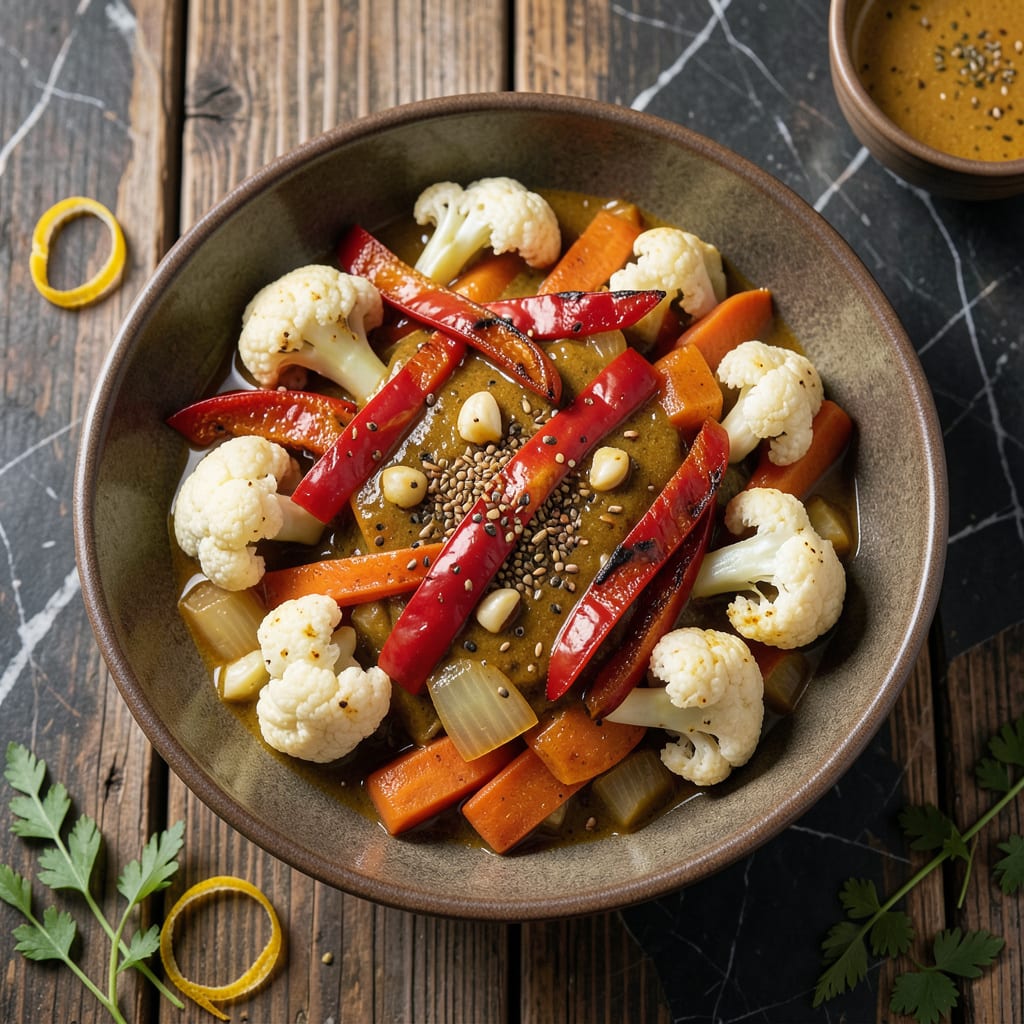
This low-fat vegetable curry proves that flavor doesn’t need oil to shine. Aromatic spices toasted in a dry pan create a rich, complex base that transforms humble vegetables into something extraordinary.
With a focus on fresh produce and carefully balanced seasonings, this dish delivers restaurant-quality taste with a fraction of the fat. The secret lies in layering flavors through proper spice toasting and slow simmering.
Ingredients for Low Fat Veg Curry
Aromatic spices and fresh vegetables create a restaurant-quality dish with minimal fat and maximum flavor.
| Ingredient | Amount | Notes |
|---|---|---|
| Cauliflower 🥬 | 4 cups | Cut into small florets |
| Carrots 🥕 | 2 whole | Peeled, sliced into coins |
| Red Bell Pepper 🌶️ | 1 whole | Diced into 1/2-inch pieces |
| Yellow Onion 🧅 | 1 whole | Finely diced |
| Garlic Cloves 🧄 | 4 cloves | Minced fine |
| Fresh Ginger 🌿 | 1 tbsp | Peeled, grated |
| Cumin Seeds 🌿 | 1 tsp | Dry-toasted until fragrant |
| Coriander Seeds 🌿 | 1 tsp | Lightly crushed |
| Ground Turmeric 🌶️ | 1 tsp | For color and earthiness |
| Garam Masala 🌶️ | 1 ½ tsp | Freshly ground if possible |
| Cayenne Pepper 🔥 | ¼ tsp | Adjust to heat preference |
| Diced Tomatoes 🍅 | 1 can | 14.5 oz can, undrained |
| Unsweetened Coconut Milk 🥥 | 1 can | 13.5 oz can, light variety |
| Vegetable Broth 🥣 | 1 ½ cups | Low-sodium preferred |
| Fresh Cilantro 🌿 | ¼ cup | Chopped, for garnish |
The spices are the foundation here. Penzeys or bulk bins at natural food stores offer the freshest options. Toast cumin and coriander seeds in a dry pan until fragrant—this unlocks their essential oils. For garam masala, Whole Foods 365 brand is a reliable choice. The turmeric should be vibrant orange, indicating potency (dull color means it’s old).
Need to swap something? Ground cumin at half the amount works if you skip the seeds. No fresh ginger? Ground ginger at one-quarter the quantity. Light coconut milk can replace full-fat, but the texture will be slightly thinner. For heat, red pepper flakes at half the cayenne amount give similar results.
Store dry spices in airtight containers away from light—they stay potent for 6-12 months. Fresh ginger keeps in the freezer for 6 months (grate frozen). The curry tastes even better the next day—store in the fridge for up to 4 days.
Why You’ll Love This Recipe
- I’ll be real: this fills us up for pennies, using humble veggies that last in the fridge.
- One-Pot Wonder: I toss the cauliflower, carrots, and bell pepper into a single pan—no fancy prep, just chop and drop.
- Garlic Kick: The garlic cloves and onion build a deep, aromatic base that makes every bite crave-worthy.
- Meal Prep Hero: Honestly, it reheats beautifully for lunches all week without losing flavor or texture.
Step-by-Step Instructions for Low Fat Veg Curry
Master this oil-free method for a richly spiced, aromatic curry that doesn’t compromise on flavor.
Step 1: Toast and Prepare the Whole Spices
Heat a dry, heavy-bottomed pot over medium heat. Add the 1 tsp Cumin Seeds and 1 tsp Coriander Seeds, stirring constantly for 45-60 seconds until they release their fragrance and turn slightly darker. This dry-toasting technique intensifies their essential oils, creating a more robust foundation for your curry.
Immediately transfer the toasted spices to a mortar or spice grinder and crush lightly. I find that lightly crushing the coriander seeds before toasting helps release more flavor. Be careful not to burn them—burnt spices will impart a bitter taste to the final dish.
Step 2: Sauté Aromatics Without Oil
In the same pot, add the finely diced Yellow Onion with a splash of the 1.5 cups Vegetable Broth to prevent sticking. Cook over medium heat for 5-6 minutes, stirring frequently, until the onion becomes translucent and begins to caramelize slightly.
Add the 1 tbsp Fresh Ginger and 4 cloves Garlic Cloves, stirring constantly for 1-2 minutes until fragrant. Then, add the 1 tsp Ground Turmeric, 1.5 tsp Garam Masala, and 0.25 tsp Cayenne Pepper, stirring for 30 seconds to bloom the spices. The mixture should form a thick paste that coats the bottom of the pot.
Step 3: Build the Curry Base with Vegetables
Add the 4 cups Cauliflower (cut into small florets), 2 whole Carrots (peeled and sliced into coins), and 1 whole Red Bell Pepper (diced into 1/2-inch pieces) to the pot. Stir to coat the vegetables in the spice mixture, then pour in the remaining Vegetable Broth and 1 can Diced Tomatoes (undrained).
Bring the mixture to a simmer, then reduce heat to medium-low. Cover and cook for 15 minutes, stirring occasionally, until the carrots are nearly tender. The cauliflower should begin to soften but still retain some texture.
Step 4: Finish with Coconut Milk and Simmer
Pour in the 1 can Unsweetened Coconut Milk, stirring to combine. The light coconut milk will create a creamy texture without the need for added oil. Bring the curry back to a gentle simmer, then reduce heat to low.
Cover and cook for an additional 10-12 minutes, until all vegetables are tender and the flavors have melded together. The sauce should thicken slightly, coating the back of a spoon. Taste and adjust seasoning if needed, though the spices should provide ample flavor.
Step 5: Rest and Garnish for Serving
Remove the pot from heat and let the curry rest, covered, for 5 minutes. This resting period allows the flavors to deepen and the sauce to reach its optimal consistency. The vegetables will also absorb some of the liquid, enhancing their flavor.
Garnish with the 0.25 cup Fresh Cilantro just before serving. The fresh cilantro adds a bright, herbal note that balances the warm spices. Serve hot over steamed rice or with naan for a satisfying, low-fat meal.
Pro Tips For Making Low Fat Veg Curry
- Sauté Onions Slow: Cook the yellow onion and garlic on medium-low for 8-10 minutes until golden—I learned this the hard way when my curry tasted raw and harsh from rushed onions.
- Cut Veggies Evenly: Chop the cauliflower, carrots, and bell pepper into similar-sized pieces so they cook at the same rate, no one wants crunchy carrots and mushy peppers.
- Skip the Oil Frying: Use a splash of water or vegetable broth to sauté the veggies instead of oil, it keeps the dish low-fat and prevents sticking just as well.
- Toast Your Spices: Dry-toast the curry spices for 30 seconds before adding liquids, it wakes them up and makes the flavors pop without any extra fat.
Troubleshooting This Dish
Spices Burning Quickly
If your spices taste bitter, they likely burned during dry toasting. Lower the heat to medium-low and stir constantly. Toast Cumin Seeds and Coriander Seeds just until fragrant—about 30-45 seconds. I pull my pan off heat while crushing them to prevent carryover cooking. 💡
Curry Too Thin
For a thicker consistency, mash some Cauliflower florets against the pot side. Alternatively, simmer uncovered for 5-7 minutes to reduce. Light Unsweetened Coconut Milk is thinner than full-fat, so expect a slightly looser sauce.
Vegetables Not Soft
Cut Carrots into smaller pieces or extend cooking time by 5-10 minutes. Ensure the pot is covered during simmering to trap steam. If using frozen veggies, thaw completely first to avoid waterlogging the dish.
Spices Taste Flat
Old spices lose potency. Replace any over 6 months old, especially Ground Turmeric and Garam Masala. I store mine in airtight containers away from light. Toast whole spices just before using for maximum aroma.
Too Much Heat
Reduce Cayenne Pepper to ⅛ tsp next time or omit entirely. Balance heat with cooling elements like ½ cup plain yogurt stirred in at the end. Remember, the heat builds as it simmers, so taste early and often.
Sauce Separating
If the coconut milk separates, whisk vigorously to reincorporate. This often happens if the curry boils too hard. Keep heat at a gentle simmer. A splash of Vegetable Broth can help bring the sauce back together. 🌟
Nutrition Facts
Frequently Asked Questions
Can I use frozen vegetables instead of fresh?
Yes, but thaw and drain them first to avoid a watery curry. Add frozen veggies directly to the simmering broth to prevent mushiness.
How do I make this curry creamier without fat?
Blend 1 cup of the cooked vegetables with some broth, then stir back in. This adds thickness naturally. Light coconut milk also helps create a silky texture.
What’s the best way to store leftovers?
Keep in an airtight container in the fridge for up to 4 days. Reheat gently on the stove with a splash of water to restore consistency.
Can I skip the coconut milk entirely?
Yes, replace it with 1 cup additional broth and 2 tbsp cashew butter for creaminess. The flavor will be lighter but still delicious.

- 8 Bean Soup Recipe Crock Pot: Hearty Vegetable Medley in One Pot - September 25, 2026
- 4C Bread Crumbs Meatballs Recipe: Crispy Crust and Juicy Centers - September 25, 2026
- 6 Oz Chocolate Chip Cookie Recipe: Perfectly Balanced Crispy Edges and Chewy Hearts - September 25, 2026