
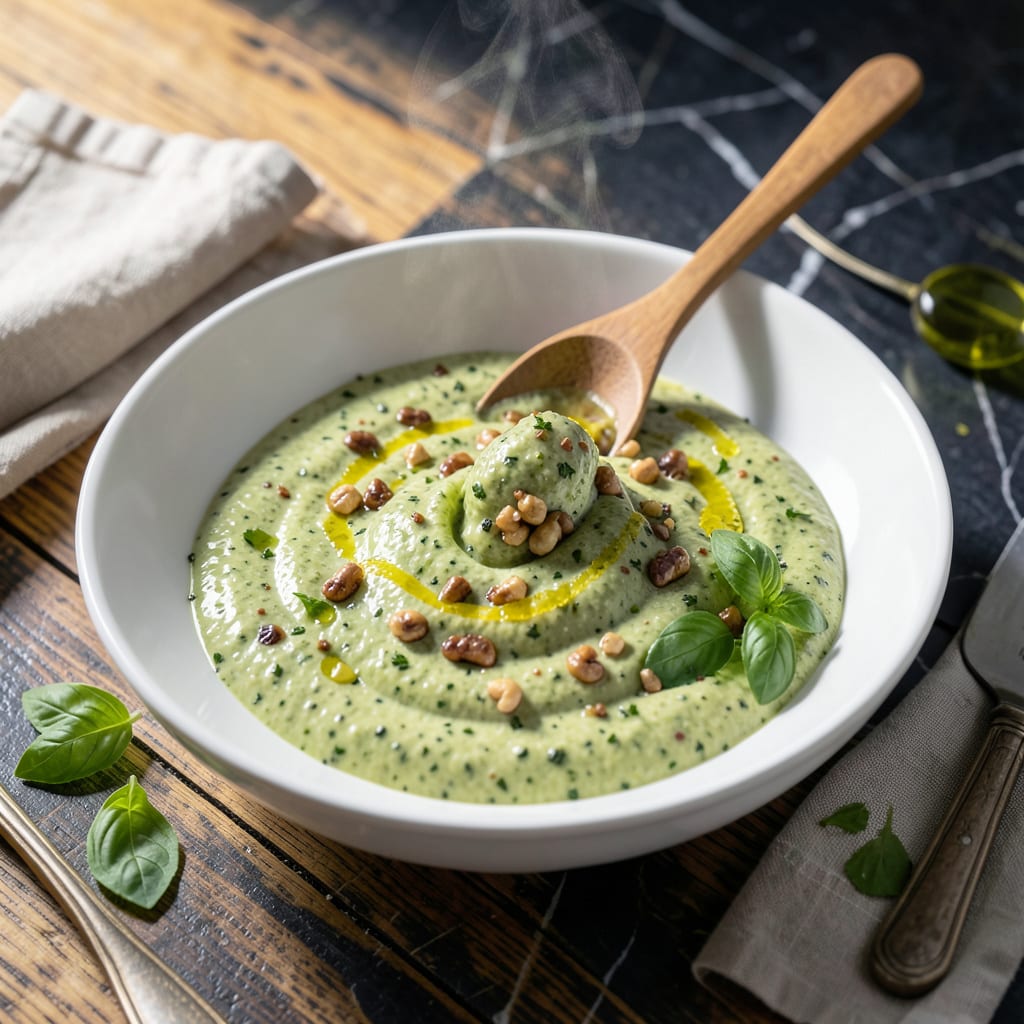
This pesto delivers the bright, herbaceous flavor of traditional basil pesto without the heavy oil content. I developed it to keep all the fresh taste while making it fully plant-based and lower in fat.
By using a clever substitution and focusing on fresh ingredients, this version maintains that signature pesto richness. It works perfectly on pasta, sandwiches, or as a dip for vegetables.
Ingredients for Low Fat Vegan Pesto
Eight plant-based ingredients transform into a bright, rich pesto without excess oil.
| Ingredient | Amount | Notes |
|---|---|---|
| Fresh Basil Leaves 🌿 | 2 cups | Packed, stems removed |
| Raw Cashews 🥜 | ½ cup | Soaked in hot water 15 minutes |
| Garlic Cloves 🧄 | 3 cloves | Peeled, rough chopped |
| Nutritional Yeast 🧀 | ¼ cup | For cheesy depth |
| Lemon Juice 🍋 | 2 tbsp | Freshly squeezed preferred |
| Vegetable Broth 🥣 | ¼ cup | Low-sodium for control |
| Sea Salt 🧂 | ½ tsp | Fine grain preferred |
| Black Pepper 🌶️ | ¼ tsp | Freshly ground preferred |
The cashews replace traditional oil and cheese—raw and unsalted is essential to control sodium and fat. Trader Joe’s or Whole Foods bulk bins offer the best value. For basil, organic often has more concentrated flavor, but any fresh bunch works. Nutritional yeast adds umami depth; Bragg or Bob’s Red Mill are reliable brands with consistent quality.
No cashews? Raw almonds or walnuts work equally well (soak them too). Swap nutritional yeast for white miso paste at half the amount for a different savory note. The vegetable broth can be water in a pinch, but broth boosts flavor. If your basil is slightly wilted, a quick ice bath revives the leaves without sacrificing vibrancy.
Store in an airtight container with a thin layer of water on top to prevent browning. Keeps 5 days refrigerated or 3 months frozen. Portion into ice cube trays for easy single-serving use later.
Why You’ll Love This Recipe
- 5-Minute Blend: I toss everything in the blender—no cooking, no fuss. Honestly, it’s faster than boiling pasta.
- Bright & Zesty: The lemon juice cuts through the cashews’ creaminess, and that fresh basil? Spot-on every time.
- Meal Prep Hero: I slather it on sandwiches, stir into soups, or freeze in ice cube trays for later. Between us, it lasts a week in the fridge.
- Budget Kind: Raw cashews and basil are the priciest bits, but a little goes a long way. I stretch one batch across three meals.
Step-by-Step Instructions for Low Fat Vegan Pesto
This streamlined method preserves the vibrant basil flavor while creating a luscious, oil-free sauce.
Step 1: Prepare the Raw Cashews
Begin by soaking the 0.5 cup Raw Cashews in hot water for 15 minutes. This softening step is essential for achieving a silky-smooth texture without adding oil. Drain thoroughly and pat dry with a clean towel to remove excess moisture.
The soaked cashews will blend more efficiently and create a creamy base that replaces the traditional olive oil. I always use hot water rather than room temperature to accelerate the softening process while maintaining the cashews’ natural sweetness.
Step 2: Process the Aromatic Base
In a food processor, combine the soaked Raw Cashews with the 3 cloves Garlic Cloves and pulse for 30 seconds until finely chopped. Stop to scrape down the sides of the bowl as needed to ensure even processing.
This initial pulsing breaks down the garlic and cashews into small pieces, preventing large chunks in the final pesto. The garlic’s pungent aroma will intensify as it’s processed, creating a robust foundation for your sauce. Be careful not to over-process at this stage—you want texture, not paste.
Step 3: Incorporate the Fresh Basil and Seasonings
Add the 2 cups Fresh Basil Leaves, 0.25 cup Nutritional Yeast, 0.5 tsp Sea Salt, and 0.25 tsp Black Pepper to the processor. Pulse for 1 minute or until the basil is finely chopped and the mixture begins to come together.
The basil will release its fragrant oils as it’s processed, creating that signature pesto aroma. The nutritional yeast adds a cheesy depth without dairy, while the salt and pepper enhance the natural flavors. Stop occasionally to push down any basil leaves that have climbed the sides of the bowl.
Step 4: Emulsify with Liquid Ingredients
With the processor running continuously, slowly pour in the 0.25 cup Vegetable Broth and 2 tbsp Lemon Juice through the feed tube. Process for an additional 1-2 minutes until the mixture becomes smooth and creamy.
The vegetable broth replaces the traditional oil, creating a lighter emulsion while maintaining the pesto’s rich mouthfeel. The lemon juice adds brightness and helps preserve the vibrant green color. The mixture should be thick but pourable—if it’s too thick, add a splash more broth.
Stop the processor and scrape down the sides one final time. Give it a quick pulse to incorporate any remaining bits. The finished pesto should have a vibrant green color with a slightly glossy appearance, indicating proper emulsification.
Pro Tips For Making Low Fat Vegan Pesto
- Soak the Cashews: Cover raw cashews in hot water for 15-20 minutes before blending—this softens them so your pesto becomes creamy without needing extra oil. I learned this the hard way after my first few batches turned out grainy.
- Pack the Basil: Press the basil leaves down when measuring, and use about 2 tightly packed cups. Sounds weird, but it works: this guarantees enough herb flavor to balance the nutritional yeast.
- Skip the Brown Garlic: Resist the urge to roast the garlic first—raw cloves give that sharp, bright kick that cuts through the richness of the cashews. After burning three batches, I finally figured out raw is best here.
- Add Lemon Last: Blend everything else first, then pulse in the lemon juice at the end. This keeps the pesto from turning bitter and lets you control the tang—usually about 1-2 tablespoons does the trick.
Best Sauces and Condiments for This Recipe
Pasta Pairings
Toss this pesto with 12 ounces of whole wheat or chickpea pasta for a protein-packed meal. The nutty flavor of chickpea pasta complements the basil beautifully. I always reserve ½ cup pasta water to thin the pesto if needed.
Sandwich Spread
Use as a spread on ciabatta or sourdough with roasted vegetables and avocado. A thin layer adds big flavor without excess calories. My favorite combo is with roasted red peppers and spinach.
Dipping Sauce
Thin with a bit more vegetable broth for a veggie dip. It pairs especially well with cucumber, bell peppers, and carrot sticks. The bright flavor makes it a hit at parties.
Pizza Base
Swap tomato sauce for this pesto on your next homemade pizza. It works wonderfully with mozzarella-style vegan cheese and cherry tomatoes. I brush it on the crust before baking for extra flavor. 🌟
Salad Dressing
Whisk with 1 tbsp apple cider vinegar and 1 tsp maple syrup to create a creamy dressing. Drizzle over greens with toasted pine nuts for a restaurant-worthy salad.
Soup Swirl
Stir a spoonful into minestrone or tomato soup just before serving. The herbaceous notes brighten up hearty soups. I love this trick for adding freshness to leftovers. 💡
Nutrition Facts
Frequently Asked Questions
Can I use other greens besides basil?
Try spinach, arugula, or kale for different flavors. Spinach gives a milder taste, while arugula adds a peppery kick. Adjust liquid as needed since some greens release more water.
Why use cashews instead of pine nuts?
Cashews blend creamier and are more affordable than pine nuts. They also have a neutral taste that lets the basil shine. Soaking them first ensures a smooth texture without added oil.
How long will it stay fresh in the fridge?
Stored in an airtight container with a thin water layer on top, it keeps for 5 days. For longer storage, freeze in ice cube trays for up to 3 months.

- 8 Bean Soup Recipe Crock Pot: Hearty Vegetable Medley in One Pot - September 25, 2026
- 4C Bread Crumbs Meatballs Recipe: Crispy Crust and Juicy Centers - September 25, 2026
- 6 Oz Chocolate Chip Cookie Recipe: Perfectly Balanced Crispy Edges and Chewy Hearts - September 25, 2026