
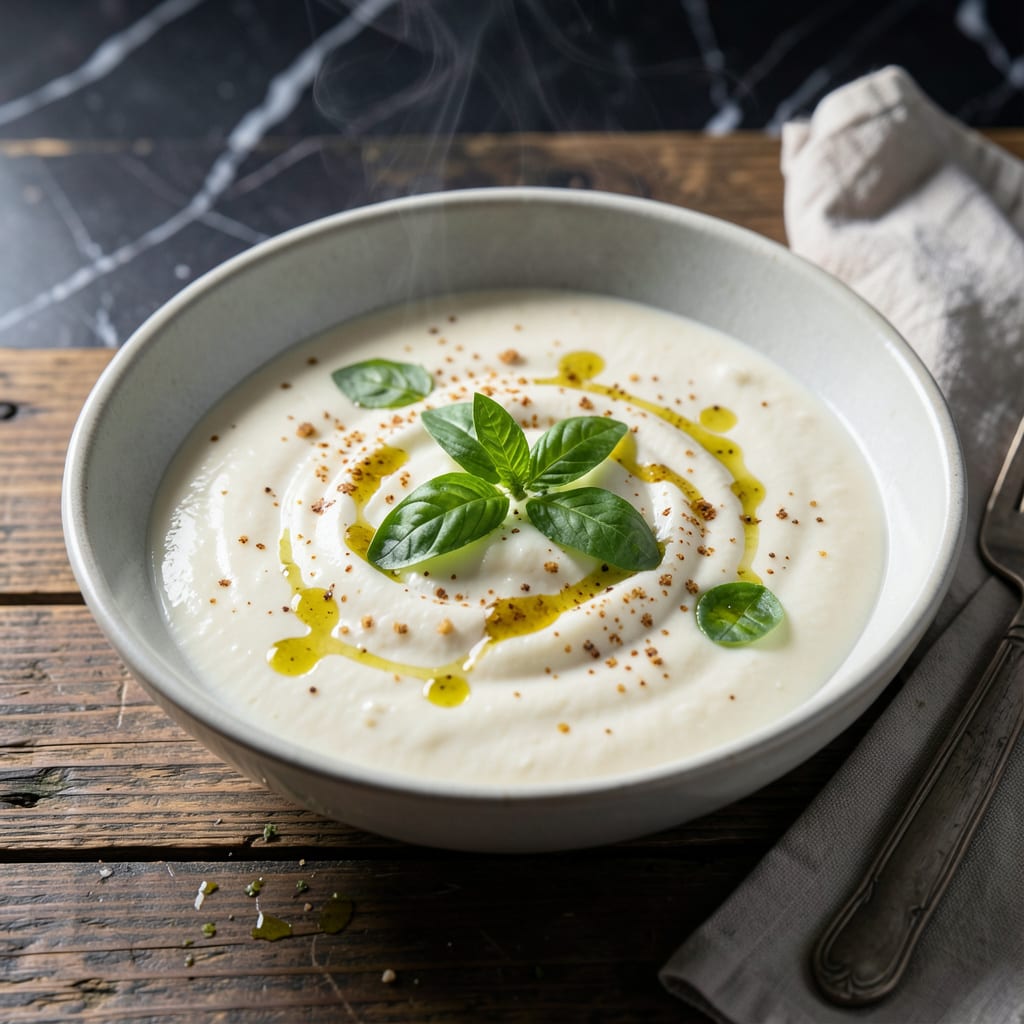
This lightened white sauce delivers velvety smooth richness without the heavy dairy. I developed this version to prove that flavor doesn’t need to be sacrificed for health.
Using simple pantry staples and a proven technique, this sauce coats pasta beautifully while keeping calories in check. It’s the perfect base for countless dishes.
Ingredients for Low Fat White Pasta Sauce
Nine pantry staples create a velvety, dairy-free white sauce perfect for pasta.
| Ingredient | Amount | Notes |
|---|---|---|
| Unsweetened Almond Milk 🥛 | 2 cups | Or any plant-based milk |
| All-Purpose Flour 🌾 | 3 tbsp | For thickening the sauce |
| Olive Oil 🫒 | 1 tbsp | Extra-virgin preferred |
| Garlic Cloves 🧄 | 3 cloves | Minced for depth |
| Vegetable Broth 🥫 | ½ cup | Low-sodium recommended |
| Nutritional Yeast 🧀 | 2 tbsp | For cheesy flavor |
| Dijon Mustard 🟡 | 1 tsp | Adds tanginess |
| White Wine Vinegar 🍷 | 1 tbsp | Brightens the sauce |
| Salt 🧂 | ½ tsp | Adjust to taste |
| White Pepper 🌶️ | ¼ tsp | Subtle heat without color |
The almond milk is the base here—unsweetened vanilla won’t work. Look for Silk or Califia Farms at most supermarkets. The flour needs to be all-purpose; don’t swap for gluten-free blends unless you’re okay with a thinner sauce. For the broth, Better Than Bouillon makes a great vegetable base (just dissolve in hot water). Nutritional yeast is in the bulk section at Whole Foods or near the spices.
No almond milk? Cashew or oat milk work too (soy can be too thin). Skip the nutritional yeast if you can’t find it—add 1 tbsp grated Parmesan at the end instead. For the vinegar, apple cider or lemon juice can substitute. The Dijon mustard isn’t negotiable—it’s doing heavy lifting for flavor. If your sauce is too thick, thin with a splash of warm broth.
Sauce keeps 4-5 days in the fridge. Freeze in ice cube trays for 3 months. Reheat gently—don’t boil or it’ll separate. Stir in a little warm milk if it thickens too much after storage.
Why You’ll Love This Recipe
- One Pan Wonder: I just dump the almond milk, flour, and broth in a saucepan—no blender, no fuss.
- Garlic Lovers Dream: The olive oil and fresh garlic give it that rich, aromatic kick without the heavy cream.
- Weeknight Hero: Honestly, it’s my go-to for quick dinners, pasta bakes, or even as a veggie dip.
- Pantry Friendly: Between us, I always have these ingredients on hand, so it’s a lifesaver when the fridge is bare.
Step-by-Step Instructions for Low Fat White Pasta Sauce
This method ensures a velvety texture while maintaining the light, dairy-free profile you desire.
Step 1: Create the Roux Base for Thickening
Heat the 1 tbsp Olive Oil in a saucepan over medium heat until it shimmers slightly. This visual cue indicates the oil is ready for the flour. Add the 3 tbsp All-Purpose Flour all at once and whisk immediately to form a smooth paste.
Continue whisking constantly for 1-2 minutes until the mixture turns a pale golden color. You’ll notice the raw flour smell dissipating—this is your signal that the roux is properly cooked. The consistency should resemble wet sand at this stage.
Step 2: Gradually Incorporate the Liquids
Slowly pour in the 2 cups Unsweetened Almond Milk while whisking vigorously to prevent lumps from forming. The mixture will initially look thin, but this is normal. Add the 0.5 cup Vegetable Broth in the same manner, maintaining constant motion.
Increase heat to medium-high and continue whisking until the sauce begins to thicken, about 3-4 minutes. You’re looking for a consistency that coats the back of a spoon but still drizzles easily. This gradual incorporation ensures a silky smooth texture without clumps.
Step 3: Develop Flavor with Aromatics and Seasonings
Add the minced 3 cloves Garlic Cloves to the thickening sauce and cook for 30-45 seconds until fragrant. Be careful not to let it brown—garlic burns quickly and becomes bitter. Stir in the 2 tbsp Nutritional Yeast, which provides the cheesy depth characteristic of traditional white sauces.
Immediately add the 1 tsp Dijon Mustard, 1 tbsp White Wine Vinegar, 0.5 tsp Salt, and 0.25 tsp White Pepper. The mustard and vinegar balance the richness while the seasonings enhance the overall flavor profile. Whisk thoroughly to fully incorporate all ingredients.
Step 4: Simmer to Perfection and Adjust Consistency
Reduce heat to medium-low and let the sauce simmer gently for 5-7 minutes. Stir occasionally with a wooden spoon, making sure to reach the bottom of the pan to prevent sticking. The sauce should thicken enough to leave a clear path when you draw a finger through it on the spoon.
If the sauce becomes too thick, add a splash of warm water or additional Unsweetened Almond Milk 1 tbsp at a time until it reaches your desired consistency. The final product should be creamy but still pourable, with a glossy sheen that clings beautifully to pasta.
Taste and adjust seasoning if needed, though the measured amounts should provide perfect balance. Remove from heat and use immediately for the best texture, as it will continue to thicken slightly as it cools.
Pro Tips For Making Low Fat White Pasta Sauce
- Whisk Constantly: Keep whisking the flour and olive oil roux for a full 2-3 minutes—this cooks out the raw flour taste and prevents lumps when you add the almond milk. I learned this the hard way after my first batch tasted like paste.
- Warm the Almond Milk: Heat the unsweetened almond milk in the microwave for 30 seconds before adding it to the roux. Cold milk can make the sauce seize up or turn gluey, and nobody wants that.
- Skip the Boiling: Once the sauce thickens, pull it off the heat immediately—almond milk can separate if it boils too hard. After ruining a batch by walking away, I now stay glued to the stove.
- Bloom the Garlic: Sauté the minced garlic in olive oil for just 20-30 seconds until fragrant, not brown. Burnt garlic turns bitter and overpowers the delicate flavor of this light sauce.
Essential Equipment for Perfect Results
Whisk Selection
I always reach for my OXO Good Grips 11-inch balloon whisk—its large surface area and comfortable grip make quick work of the roux. A flat whisk works too, but I find balloon whisks prevent lumps better in the early stages. 💡
Saucepan Choice
A 2-3 quart heavy-bottomed saucepan is ideal. I use my All-Clad stainless steel because it distributes heat evenly and prevents hot spots that could burn the roux. Avoid nonstick for this recipe—you want to see the color changes clearly.
Accurate Measurement
Precision matters here, so I use measuring spoons and cups for the flour and liquids. For the 3 tbsp flour, I level it off with the back of a knife. A kitchen scale isn’t necessary, but consistent measuring ensures the same results every time.
Temperature Control
An instant-read thermometer helps monitor your sauce temperature. Keep it between 160-180°F during simmering. If it gets too hot, the sauce can scorch. I also keep a wooden spoon handy for stirring and checking consistency.
Storage Solutions
For leftovers, I transfer the sauce to glass mason jars—they’re perfect for storing in the fridge or freezer. The wide mouth makes it easy to scoop out what you need. I’ve found these also reheat more evenly than plastic containers. ❄️
Cleanup Tools
A silicone spatula is my secret weapon for getting every last bit of sauce out of the pan. It’s heat-resistant and won’t scratch your cookware. I also keep a damp towel nearby to quickly wipe up any spills before they dry.
Nutrition Facts
Frequently Asked Questions
Can I use regular milk instead of almond milk?
Yes, you can substitute with skim milk for similar low-fat results. Whole milk works too but adds more calories. The sauce may be slightly richer with dairy milk.
How can I make this sauce gluten-free?
Replace the all-purpose flour with cornstarch or a gluten-free flour blend. Use 1 tbsp cornstarch mixed with 1 tbsp cold water as a slurry instead of the roux.
Why is my sauce lumpy?
Lumps usually form if liquids aren’t whisked in slowly. To fix, blend with an immersion blender or strain through a fine-mesh sieve. Always add liquids gradually while whisking.
Can I add cheese to this recipe?
Yes! Stir in 1/4 cup grated Parmesan at the end for extra flavor. This keeps it lower in fat than traditional cheese sauces.

- 8 Bean Soup Recipe Crock Pot: Hearty Vegetable Medley in One Pot - September 25, 2026
- 4C Bread Crumbs Meatballs Recipe: Crispy Crust and Juicy Centers - September 25, 2026
- 6 Oz Chocolate Chip Cookie Recipe: Perfectly Balanced Crispy Edges and Chewy Hearts - September 25, 2026