
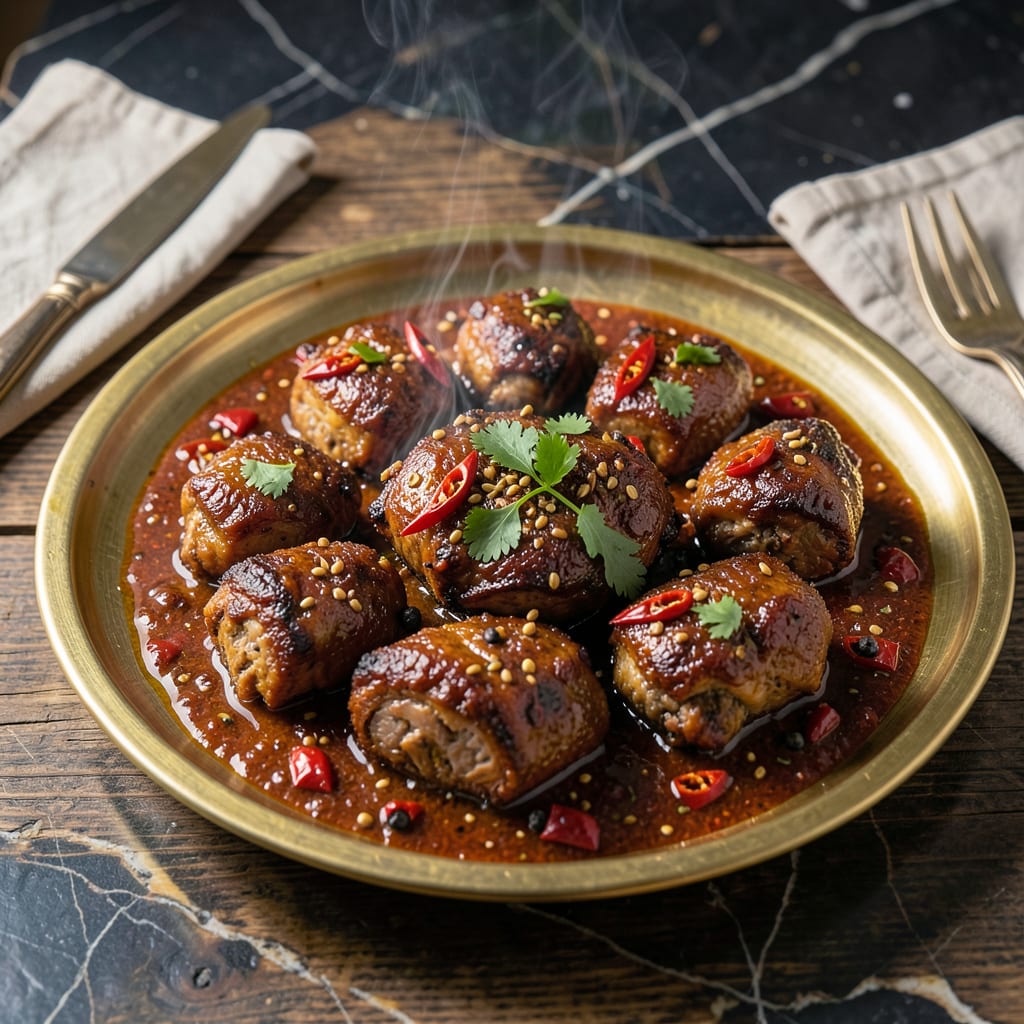
This traditional Mangalorean dish brings bold coastal flavors to your table with its signature coconut-based spice blend.
I’ve refined this classic recipe to balance heat and richness, ensuring tender pork infused with aromatic spices. The slow-cooked meat absorbs every layer of flavor, delivering an authentic taste of Mangalorean cuisine.
Ingredients for Mangalorean Pork Bafat
Bold spices, tender pork, and coconut come together in this coastal classic.
| Ingredient | Amount | Notes |
|---|---|---|
| Pork Shoulder 🐖 | 2 lb | Boneless, cut into cubes |
| Dried Kashmiri Chilies 🌶️ | 10 whole | Soaked in warm water |
| Coriander Seeds 🌿 | 2 tbsp | Toasted for depth |
| Cumin Seeds 🌿 | 1 tsp | Lightly toasted |
| Black Peppercorns 🌶️ | 1 tsp | Whole, for grinding |
| Turmeric Powder 🟡 | 1 tsp | Ground, for color |
| Fresh Ginger 🌿 | 1 whole | 2-inch piece, peeled |
| Garlic Cloves 🧄 | 10 cloves | Peeled and chopped |
| Fresh Coconut 🥥 | 1 cup | Grated or shredded |
| Tamarind Paste 🍈 | 1 tbsp | For tangy depth |
| Onions 🧅 | 2 whole | Large, finely chopped |
| Vinegar 🍷 | 2 tbsp | White or apple cider |
| Vegetable Oil 🫒 | 3 tbsp | For cooking pork |
| Salt 🧂 | 1 ½ tsp | Adjust to taste |
| Water 💧 | ½ cup | For grinding spice paste |
The pork is everything here. Pork shoulder stays juicy after slow cooking—avoid lean cuts like tenderloin. Look for pieces with good fat marbling at local butchers or specialty meat markets (Asian or Indian grocers often carry it). If you’re in the US, Costco has great pork shoulder at a fair price. Soak those Kashmiri chilies in warm water for at least 20 minutes—they soften and release that signature color.
No dried Kashmiri chilies? Substitute with a mix of byadgi and bird’s eye chilies (8 byadgi + 2 bird’s eye for a close match). Fresh coconut not an option? Frozen grated coconut (thawed) works just as well. Out of tamarind? Lime juice at double the amount adds the needed tang. The vinegar can be swapped for rice vinegar if you prefer a milder taste.
This tastes even better the next day. Store in an airtight container in the fridge for up to 4 days. For longer storage, freeze for up to 3 months. Reheat gently on the stove—microwaving can dry out the pork.
Why You’ll Love This Recipe
- One Pot Wonder: I just toss the pork shoulder with those toasted coriander, cumin, and peppercorns—no fancy steps, just layer the flavors and let it simmer.
- Fiery & Fragrant: The Kashmiri chilies give it that deep red color and a heat that builds slowly, while the spices bloom into this warm, earthy aroma that fills the kitchen.
- Feeds a Crowd: Between us, this is my go-to for Sunday lunch. It stretches easily, tastes even better the next day, and everyone always asks for the recipe.
- Budget Friendly: Pork shoulder is cheap, the spices last for months, and I can freeze half the batch for another week. Honestly, it’s one of the most cost-effective dishes I make.
Step-by-Step Instructions for Mangalorean Pork Bafat
This method delivers the authentic coastal flavors with a perfect balance of heat and tang.
Step 1: Toast and Grind the Spice Base
Heat a dry skillet over medium heat and add the 2 tbsp coriander seeds, 1 tsp cumin seeds, and 1 tsp black peppercorns. Toast for 2-3 minutes until fragrant and lightly browned, stirring constantly. Remove from heat and let cool slightly.
Meanwhile, drain the 10 whole dried Kashmiri chilies (soaked in warm water) and add them to a blender with the toasted spices, 1 whole fresh ginger (peeled), 10 cloves garlic cloves (peeled), 1 tsp turmeric powder, and the 0.5 cup water. Blend into a smooth paste, scraping down the sides as needed. This forms the flavor foundation.
Step 2: Caramelize the Onions and Cook the Pork
Heat the 3 tbsp vegetable oil in a heavy pot over medium-high heat. Add the 2 whole onions (finely chopped) and sauté for 8-10 minutes until deep golden brown and caramelized. This sweetness balances the heat.
Add the 2 lb pork shoulder (cut into cubes) and cook for 5-7 minutes, stirring occasionally, until the meat loses its raw color. You want the pork to develop a light crust but not brown completely. Sprinkle the 1.5 tsp salt evenly over the meat during this stage.
Step 3: Build the Sauce with Coconut and Tamarind
Stir the spice paste into the pot with the pork and onions. Cook for 3-4 minutes until the raw smell of spices disappears and the mixture thickens slightly. This step deepens the flavors and marries all the components together.
Add the 1 cup fresh coconut, 1 tbsp tamarind paste, and 2 tbsp vinegar. Stir well and cook for another 2 minutes. The coconut will absorb the tangy, spicy flavors, creating the signature sauce. You’ll notice the oil starting to separate at the edges—that’s your cue.
Step 4: Simmer to Perfection
Reduce the heat to low, cover the pot, and let the bafat simmer for 30-35 minutes. Stir occasionally and add a splash of water if it gets too dry. The pork should become fork-tender, and the sauce should coat each piece generously.
Uncover and cook for an additional 5 minutes to thicken the gravy slightly. The final consistency should be rich and spoonable, not watery. Taste and adjust the salt if needed, though the flavors will meld further as it rests. Serve hot with steamed rice or pao for an authentic experience.
Pro Tips For Making Mangalorean Pork Bafat
- Toast Whole Spices: Dry roast the coriander, cumin, and peppercorns together on medium-low until fragrant—about 3-4 minutes. I learned this the hard way: raw spices taste bitter and dull in the final dish.
- Soak Those Chilies: Cover dried Kashmiri chilies in hot water for 20 minutes before blending. Sounds weird, but it works: this guarantees a smooth, vibrant paste without straining your blender.
- Low and Slow: After the initial sear, drop the heat to low and let the pork cook covered for at least 45 minutes. My grandmother swore by this, and she was right: it keeps the meat tender and the masala from catching.
- Use Fat Wisely: Trim excess fat from the pork shoulder, but leave about 10-15% for richness. After burning three batches, I finally figured out that too much fat makes the curry greasy, not flavorful.
Regional Styles of These Flavors
Mangalorean Catholic Style
The Catholic community in Mangalore prepares this with a slightly sweeter profile. They add 2 tbsp jaggery or brown sugar to balance the heat. I love how this version highlights the coastal sweet-and-spicy tradition that defines Mangalorean cuisine. 🔥
Kodava Style
In Coorg, they use Kodava masala—a local spice blend with more coriander and less chili. The result is milder but deeply aromatic. They also add 1 cup coconut milk for extra richness, creating a creamier gravy that pairs beautifully with akki roti.
Goan Influence
Across the border in Goa, they incorporate palm vinegar instead of white vinegar. This adds a distinct funky depth. They also use goan spices, which include more cloves and cinnamon, giving the dish a warmer, more complex flavor profile.
Udupi Variation
The Udupi version is less fiery, focusing on the earthy notes of roasted spices. They often add ½ cup grated coconut at the end for freshness. This style is popular in vegetarian-heavy regions but uses the same pork base.
Modern Fusion
In urban Mangalore, some chefs add 1 tbsp cocoa powder for depth. It sounds unusual, but it enhances the richness without overpowering. I tried this at a friend’s restaurant and was surprised by how well it worked. ✨
Nutrition Facts
Frequently Asked Questions
Can I use chicken instead of pork?
Yes, but choose boneless thighs for best results. Reduce cooking time to 20-25 minutes since chicken cooks faster. The flavors will still shine through.
Why do I need to soak the chilies?
Soaking softens dried chilies for smooth blending and releases their vibrant color. 20 minutes in warm water is ideal. Skip this and you’ll get a gritty paste.
How can I make it less spicy?
Replace half the Kashmiri chilies with byadgi chilies for color without heat. Or reduce total chilies to 6-7 and add 1 tbsp jaggery to balance.
What if my sauce is too thin?
Simmer uncovered for an extra 5-10 minutes after cooking. If still thin, mix 1 tsp cornstarch with water and stir in. The sauce should coat the back of a spoon.

- 8 Bean Soup Recipe Crock Pot: Hearty Vegetable Medley in One Pot - September 25, 2026
- 4C Bread Crumbs Meatballs Recipe: Crispy Crust and Juicy Centers - September 25, 2026
- 6 Oz Chocolate Chip Cookie Recipe: Perfectly Balanced Crispy Edges and Chewy Hearts - September 25, 2026