
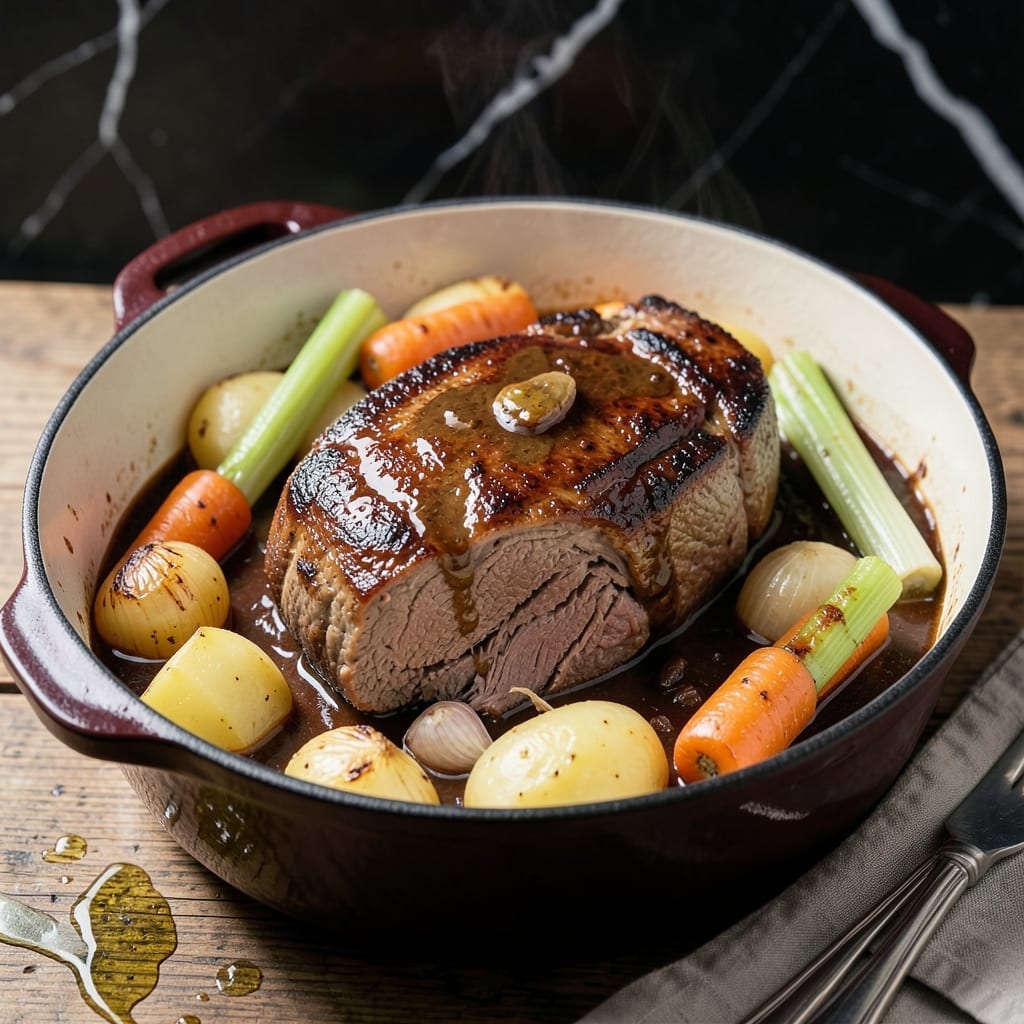
The secret to an unforgettable pot roast lies in selecting the right cut of meat. This dish transforms tough, inexpensive cuts into fall-off-the-bone tender perfection through slow, gentle cooking.
I’ve tested numerous cuts and found that chuck roast consistently delivers the best results. Its marbling melts down during cooking, basting the meat from within and ensuring it stays juicy and rich.
The low and slow method breaks down collagen in the meat, turning it into velvety, tender goodness. Aromatic vegetables and herbs infuse the meat with deep, savory flavors as it cooks.
This approach guarantees a pot roast that’s both hearty and comforting, ideal for any meal where you want to impress with minimal effort.
Ingredients for Meat for Pot Roast
Simple ingredients transform tough cuts into something extraordinary. Just good meat and aromatics.
| Ingredient | Amount | Notes |
|---|---|---|
| Chuck Roast 🥩 | 3 lb | Well-marbled, bone-in preferred |
| Yellow Onions 🧅 | 2 whole | Medium size, quartered |
| Carrots 🥕 | 4 whole | Large, cut into chunks |
| Celery Stalks 🌿 | 3 whole | Cut into 2-inch pieces |
| Garlic Cloves 🧄 | 6 cloves | Smashed, peeled |
| Beef Broth 🥣 | 2 cups | Low-sodium preferred |
| Red Wine 🍷 | 1 cup | Dry variety like Cabernet |
| Tomato Paste 🍅 | 2 tbsp | For depth of flavor |
| Fresh Thyme 🌿 | 4 whole | Sprigs, stems removed |
| Fresh Rosemary 🌿 | 2 whole | Sprigs, stems removed |
| Bay Leaves 🍃 | 2 whole | Dried, whole leaves |
| Olive Oil 🫒 | 2 tbsp | For searing meat |
| Kosher Salt 🧂 | 1 ½ tsp | Adjust to taste |
| Black Pepper 🌶️ | 1 tsp | Freshly ground preferred |
The chuck roast is non-negotiable here. Look for heavy marbling—that fat melts into the meat, keeping it juicy. Bone-in gives extra flavor, but boneless works if that’s what’s available. I grab mine from Costco for big batches or the butcher counter at Whole Foods for smaller portions. Ask for a well-marbled piece if they’re cutting it fresh (worth the extra minute).
No red wine? Beef broth with a splash of balsamic mimics the acidity. Fresh herbs are ideal, but dried at one-third the amount works in a pinch. Substitute turnips or parsnips for carrots if you’re feeling adventurous. The tomato paste adds depth—those squeeze tubes from Trader Joe’s are perfect for using just what you need (no waste).
Leftovers taste even better the next day. Store in the fridge for up to 4 days or freeze for 3 months. The meat shreds beautifully for sandwiches—just reheat with a little broth to keep it moist.
Why You’ll Love This Recipe
- Set and Forget: I brown the chuck roast, dump in the onions, carrots, celery, and garlic, then let the oven do the rest.
- Feeds the Week: One batch gives us dinner, next-day sandwiches, and maybe a stew—honestly, it stretches further than I expect.
- Budget Hero: Chuck roast is cheap, and with just a few veggies, I make a meal that feels way more expensive than it is.
Step-by-Step Instructions for Fall-Off-The-Bone Tender Pot Roast
Here’s how I get that perfect melt-in-your-mouth texture every single time.
Step 1: Sear the Chuck Roast for Deep Flavor
Heat the 2 tbsp olive oil in a Dutch oven over medium-high heat until shimmering. Pat the 3 lb chuck roast dry with paper towels and season aggressively with the 1.5 tsp kosher salt and 1 tsp black pepper on all sides. The dry surface ensures a proper sear, not steam.
Sear the chuck roast for 4-5 minutes per side until deeply browned. Don’t rush this—you want a rich, dark crust that’ll form the flavor base. Use tongs to turn it; a fork will pierce the meat and let juices escape. Transfer the roast to a plate and set aside.
Step 2: Sauté the Aromatics Until Fragrant
In the same pot, add the 2 whole yellow onions, 4 whole carrots, and 3 whole celery stalks. Cook for 5-6 minutes, stirring occasionally, until the onions start to soften and brown at the edges. The fond from the chuck roast will mix with the veggies for incredible depth.
Add the 6 cloves garlic cloves, 2 tbsp tomato paste, 4 whole fresh thyme, 2 whole fresh rosemary, and 2 whole bay leaves. Stir for 1-2 minutes until the tomato paste darkens slightly and the garlic is fragrant. This step builds layers of flavor that’ll infuse the entire dish.
Step 3: Deglaze and Braise Low and Slow
Pour in the 1 cup red wine and scrape up all the browned bits from the bottom of the pot with a wooden spoon. Let it simmer for 2-3 minutes until the liquid reduces by about half. This deglazing step captures all those caramelized flavors.
Return the chuck roast to the pot and pour in the 2 cups beef broth. The liquid should come about halfway up the meat. Bring to a simmer, then cover and transfer to a preheated 325°F oven. Braise for 3-4 hours until the meat is fork-tender and nearly falling apart.
Step 4: Rest and Serve
Carefully remove the chuck roast from the pot and transfer it to a cutting board. Skim any excess fat from the surface of the braising liquid, then shred or slice the meat against the grain. The fibers should separate effortlessly when it’s done right.
Return the meat to the pot to soak up the flavors for 10-15 minutes before serving. The sauce should be rich and velvety, coating the back of a spoon. Serve hot with the braised vegetables for a complete, hearty meal.
Pro Tips For Making Meat For Pot Roast
- Sear the Chuck First: I learned this the hard way—skipping the sear leaves the meat bland. A hot pan with oil for 3-4 minutes per side gives that deep, caramelized crust that makes pot roast unforgettable.
- Cut Veggies Evenly: Sounds tedious, but uniformly sized carrots, celery, and onions cook at the same rate. I used to hack them randomly and ended up with mushy carrots and crunchy celery.
- Don’t Crowd the Pan: Resist the urge to dump all the meat and veggies in at once. Overcrowding steams instead of sears, and your pot roast loses that rich, browned flavor.
- Use a Meat Thermometer: After guessing doneness for years and overcooking the chuck, I finally started using one. Pull it at 195°F for fall-apart tender meat—no more dry, stringy disasters.
Regional Styles of These Flavors
Texas-Style Brisket Cut
In the Lone Star State, they often use beef brisket for their pot roast, which has a tighter grain and richer beef flavor. I slow-cook it with chipotle peppers and cumin for that signature smoky depth. The result is tender but slices beautifully.
New England Boiled Dinner
Up north, they prefer corned beef brisket—cured with spices and slow-cooked with cabbage and potatoes. It’s traditionally served with mustard and rye bread. I love this version for St. Patrick’s Day gatherings.
French Beef Bourguignon
Across the pond, they use chuck roast cut into cubes for this classic. The meat is braised in red wine with pearl onions and mushrooms. I always add a splash of Cognac for extra depth. 💫
Italian Spezzatino
In Italy, they make spezzatino with beef shank or short ribs, slow-simmered in tomato sauce with herbs. The bone-in cuts add incredible richness to the sauce. I use San Marzano tomatoes for authenticity.
Mississippi Pot Roast
This viral recipe uses chuck roast with ranch seasoning, au jus mix, and pepperoncini peppers. It’s cooked in a slow cooker for 8 hours. I was skeptical at first, but the tangy, savory result won me over. 🔥
German Sauerbraten
Traditionally made with rump roast or bottom round, this dish marinated for days in vinegar and spices. I serve it with red cabbage and potato dumplings for a hearty meal.
Nutrition Facts
Frequently Asked Questions
Which cut works best for slow cooking?
Chuck roast is ideal due to its marbling and connective tissue. These break down during 3-4 hours of cooking, creating tender, juicy meat. Brisket or short ribs also work well for similar results.
Can I use a leaner cut to save money?
Avoid lean cuts like sirloin—they dry out during long cooking. Stick with well-marbled options like chuck or round. The fat keeps the meat moist and flavorful.
Should I trim the fat before cooking?
Leave most fat intact for flavor and moisture. Trim only large, uneven pieces. The fat renders down and bastes the meat as it cooks.

- 4C Bread Crumbs Meatballs Recipe: Crispy Crust and Juicy Centers - September 25, 2026
- 6 Oz Chocolate Chip Cookie Recipe: Perfectly Balanced Crispy Edges and Chewy Hearts - September 25, 2026
- 6-Inch Coffee Cake Recipe: Vanilla Bean Swirls and Buttery Streusel Topping - September 25, 2026