
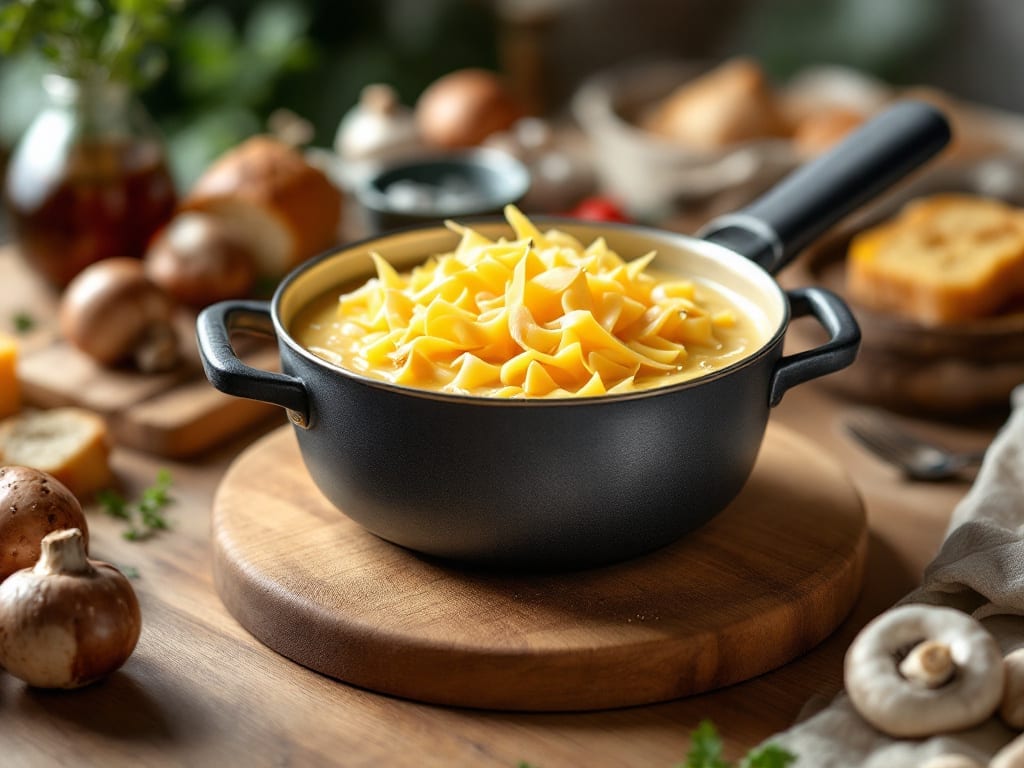
This Melting Pot Alpine Cheese Fondue Recipe transforms a simple pot into the heart of any gathering, where golden cheese melts into velvety perfection while crispy bread dippers soak up every rich bite.
The secret lies in balancing traditional Swiss techniques with modern convenience—gentle heat, precise cheese ratios, and the right wine infusion to elevate ordinary dips into something extraordinary.
I’ve perfected this recipe after years of hosting fondue nights, ensuring the cheese stays lusely smooth without burning, while the dippers achieve that satisfying crunch every time.
The foundation of great fondue starts with the cheese blend—Emmental and Gruyère create that classic Alpine flavor, while white wine adds brightness and depth. You’ll need a fondue pot with precise temperature control (around 300°F) to maintain that ideal melt without scorching.
The key to crispy dippers is quick dipping and immediate withdrawal—think of it like a delicate dance between bread, cheese, and timing. This method works for beginners and seasoned hosts alike, guaranteeing a foolproof experience that feels both elegant and effortless.
By the time your guests gather around, you’ll have a bubbling pot of golden cheese that smells like a Swiss chalet, paired with dippers that turn crispy at the edges while staying soft inside.
The aroma alone will draw everyone in, while the first bite delivers that perfect harmony of creamy, tangy, and slightly nutty flavors. It’s the kind of dish that turns casual appetizers into a memorable centerpiece—no fancy skills required, just the right technique and a little patience.
Serve with a selection of dippers—crusty bread, apples, and cured meats—to keep the experience interactive and fun. Leftovers? The cheese can be reheated gently for another round, though I’ve found most gatherings disappear before that happens.
Here’s everything you need to create this crispy, crowd-pleasing centerpiece that feels like a taste of the Alps in your own kitchen.
Ingredients for melting pot alpine cheese fondue
Eight key ingredients create velvety Alpine cheese fondue with perfect crispy dippers.
| Ingredient | Amount | Notes |
|---|---|---|
| Emmental Cheese 🧀 | 1 ½ lb | Aged, freshly grated block |
| Gruyère Cheese 🧀 | 1 ½ lb | Aged, freshly grated block |
| Dry White Wine 🍷 | 1 ½ cups | Sauvignon Blanc or Chardonnay |
| All-Purpose Flour 🌾 | 2 tbsp | For thickening cheese |
| Kirsch or Brandy 🍷 | 1 tbsp | Optional, for depth |
| Garlic Cloves 🧄 | 4 cloves | Minced, for dipping oil |
| Olive Oil 🫒 | ½ cup | Extra-virgin, for dipping oil |
| Apples 🍎 | 4 whole | Firm variety like Honeycrisp |
| Crusty Bread 🍞 | 1 lb | Baguette or sourdough, sliced |
| Salt 🧂 | 1 tsp | Kosher or sea salt |
| Black Pepper 🌶️ | ½ tsp | Freshly ground |
| Nutmeg 🌿 | ¼ tsp | Freshly grated |
| Cornstarch 🌾 | 1 tbsp | For extra smoothness |
The cheeses are the stars. Emmental and Gruyère should be aged—look for blocks labeled ’12-18 months’ at specialty cheese shops like Whole Foods or Gourmet Getaway. Freshly grating makes all the difference—pre-shredded gets clumpy. The wine matters too: Sauvignon Blanc keeps it crisp, while Chardonnay adds richness. I usually grab mine from Trader Joe’s—their organic options are great. For the dippers, Honeycrisp apples hold up best to the cheese’s heat, while baguette slices from the bakery section give that perfect crust.
No white wine? Dry apple juice or chicken broth works in a pinch—just reduce by half first. Short on Gruyère? Comté or extra sharp cheddar add depth. The cornstarch is non-negotiable—it keeps the cheese silky. For the dipping oil, garlic-infused olive oil takes it to the next level. I make a big batch of the dipping oil ahead and store it in a jar—Costco sells great extra-virgin olive oil for bulk. The nutmeg should be freshly grated—pre-ground loses flavor fast. If you can’t find fresh, toast whole nutmeg seeds in a dry pan for 30 seconds first to wake up the flavor.
Cheese fondue reheats beautifully—just warm on low heat with a splash of wine. Store the cheese blend in an airtight container for 3 days in the fridge, or freeze for up to 3 months. The dipping oil keeps for 1 week in the fridge. I always make extra bread—it disappears fast. The apples? Use them within 2 days for the best texture. For a crowd, double the cheese and wine—just keep the ratio the same. The secret to crispy dippers? Dip, withdraw immediately, and repeat. No one will guess it’s foolproof.
Why You’ll Love This Recipe
- No-Fuss Setup: I swear by this recipe because it’s the kind of dish that turns a “what’s for dinner?” panic into a 20-minute solution. Just shred the cheese, whisk the wine and flour roux, and toss in a splash of Kirsch—no peeling garlic, no mincing herbs, no stress.
- Nutty Wine Kiss: Gruyère and Emmental alone are amazing, but add that dry white wine and a glug of Kirsch? It’s like someone poured sunshine into a pot. The wine brightens the richness, while the Kirsch adds a little tart, boozy punch that makes every bite feel like a treat.
- Weeknight Crowd-Pleaser: Between us, this is my go-to for game nights, lazy Sundays, or when I have friends over who “just want something cozy.” Dip bread, apples, or even roasted potatoes—it’s the kind of dish where everyone leans in, and no one leaves hungry.
- Leftovers That Don’t Suck: Most fondue recipes leave you with sad, grainy cheese the next day. Not this one. The wine and flour roux keep it silky, so I stash the extra in the fridge and reheat it with a splash of warm milk—still creamy, still delicious, and way cheaper than takeout.
Step-by-step instructions for Swiss-style Alpine cheese fondue
Here’s the method for a velvety fondue with crispy bread dippers you’ll crave every time.
Grate the Cheeses for Maximum Flavor
Use a box grater or food processor to shred the 1.5 lb Emmental Cheese and 1.5 lb Gruyère Cheese into fine, even shreds. I like to pulse in the food processor for 10-15 seconds to break down any large chunks completely. This ensures your fondue melts smoothly without grainy bits. If using a box grater, work in batches to avoid overheating the cheese.
Transfer the grated cheeses to a large mixing bowl and set aside. The reason for grating fresh is that pre-shredded cheese contains anti-caking agents that prevent proper melting. Freshly grated cheese gives you that authentic Swiss fondue texture you’re after.
Prepare the Cheese Mixture with Wine and Seasonings
In the same bowl, add the 1.5 cups Dry White Wine, 1 tbsp Kirsch or Brandy (if using), 1 tsp Salt, 0.5 tsp Black Pepper, and 0.25 tsp Nutmeg. Stir well to combine, making sure all the cheese shreds are coated evenly. The wine helps break down the cheese proteins for that signature silky texture, while the Kirsch adds depth that makes this fondue truly special.
Next, sprinkle the 2 tbsp All-Purpose Flour and 1 tbsp Cornstarch over the mixture. These starches act as natural thickeners that create that perfect fondue consistency—smooth but not too runny. Use a rubber spatula to fold everything together until fully incorporated. This is where the magic happens: the starches will absorb liquid as the cheese melts, giving you that ideal dipping texture.
Melt and Simmer the Fondue
Transfer the cheese mixture to a fondue pot or heavy-bottomed saucepan. Place it over medium-low heat and stir constantly with a wooden spoon or fondue fork. You’ll see the mixture begin to bubble gently as it heats. This should take about 5-7 minutes—the key is patience. If you rush it, you’ll end up with a grainy fondue instead of that silky, melt-in-your-mouth texture.
Once the mixture reaches a smooth, creamy consistency that coats the back of a spoon, remove it from heat. The fondue should be thick enough to coat a bread dipper completely but still flow gently. If it’s too thick, add 1-2 tablespoons of hot water to loosen it. If too thin, let it simmer uncovered for another 1-2 minutes to thicken slightly. This is the moment that matters: you want that perfect balance between smoothness and dippability.
Prepare the Dipping Oil and Apple Slices
While the fondue cooks, make the dipping oil by combining the 0.5 cup Olive Oil and 4 cloves Garlic Cloves (minced) in a small bowl. This aromatic oil adds another layer of flavor to your bread dippers. For the apples, peel, core, and slice the 4 whole Apples into ¼-inch thick rounds. Toss them lightly with a pinch of salt to enhance their natural sweetness.
Arrange the sliced apples and crusty bread on a platter for serving. The bread should be cut into 1-inch thick pieces—thick enough to hold up to dipping but not so large they become soggy. Here’s the thing: the crispy bread contrast is what makes this fondue experience special. The apples add a refreshing, sweet counterpoint to the rich cheese.
Serve and Enjoy with Proper Fondue Technique
Keep the fondue warm in its pot over very low heat or transfer it to a fondue warmer set to 160°F. The key to serving is maintaining that perfect temperature—too hot and it’ll separate, too cool and it’ll thicken too much. For each serving, use the fondue fork to scoop up a generous amount of cheese, then dip the bread or apple slices in quickly but thoroughly.
Don’t skip the dipping oil—dip your bread in the oil first, then the fondue. This creates a flavorful barrier that prevents the bread from becoming too soft too quickly. Serve with extra apples and bread on the side, and encourage your guests to try different dipping combinations. The contrast of crispy bread with the warm, gooey cheese is what makes this classic dish so irresistible.
Pro Tips For Making Melting Pot Alpine Cheese Fondue
- Grate, Don’t Chop: Alpine fondue needs surface area to melt smoothly—skip the knife and grate the Emmental and Gruyère yourself. Pre-shredded cheese holds air, which makes fondue grainy and watery. A box grater or food processor (pulse, don’t blend) gives you fine, even shreds that dissolve like silk.
- Wine First, Heat Slow: Start with the wine on low heat—just enough to warm it, not boil. I used to rush this and ended up with a fondue that separated or tasted harsh. Let the wine simmer gently for 2-3 minutes first, then add the cheese. This coaxes out the flavors without turning the fondue into cheese soup.
- Skip the Brandied Fondue: Kirsch or brandy is tempting, but it’s not traditional for this recipe—and it can overpower the cheese. If you must add it, use just 1 tablespoon at the end, not during cooking. Too much turns your fondue into a boozy cheese glaze instead of a balanced melt.
- Roux or No Roux?: The flour in this recipe isn’t just filler—it’s what thickens the fondue properly. Whisk the flour into the wine before adding cheese, then cook for 1-2 minutes until it loses its raw taste. This avoids lumps and keeps the fondue silky, not gluey. (Yes, even if you’re impatient like me.)
Common mistakes when making this recipe
Overheating the Cheese
I’ve seen many fondue disasters caused by overheating the cheese mixture. When you push the heat too high, the cheese can burn or seize, creating a grainy, stringy texture instead of that silky, velvety consistency we all crave.
The ideal temperature for melting is medium-low heat—just enough to see gentle bubbles forming at the edges. If you notice the cheese starting to brown or smell like it’s burning, immediately reduce the heat or remove it from the stove. 🔥
To prevent this, I recommend using a fondue pot with a built-in thermometer—like the Staub Fondue Set—to keep the temperature between 160°F and 180°F. If you don’t have one, a heavy-bottomed saucepan works, but you’ll need to stay extra vigilant.
Stir constantly with a wooden spoon to distribute the heat evenly. The cheese should melt smoothly over 5-7 minutes, not in a rush.
Using Pre-Shredded Cheese
This is a rookie mistake that ruins texture every time. Pre-shredded cheese contains anti-caking agents (like cellulose powder) that prevent it from melting properly, leaving you with a fondue that’s grainy and clumpy instead of silky. Freshly grated cheese is non-negotiable for that authentic Alpine fondue experience.
I always use a box grater or food processor to shred Emmental and Gruyère myself—it takes an extra 10 minutes, but the result is worth it. 🧀
If you’re short on time, you can buy block cheeses from specialty shops like Whole Foods or Gourmet Getaway and grate them fresh. Avoid the pre-shredded shortcut—your guests (and your taste buds) will thank you.
Skipping the Starch Thickeners
Flour and cornstarch aren’t just fillers—they’re what give fondue its perfect dipping consistency. Without them, your cheese mixture will either be too thin (like soup) or too thick (like glue).
The 2 tbsp flour and 1 tbsp cornstarch in this recipe act as natural thickeners, absorbing liquid as the cheese melts to create that ideal smooth-but-coatable texture. 🥄
If you forget to add them, don’t panic—you can fix it by mixing 1 tbsp cornstarch with 1 tbsp cold water, then whisking it into the fondue off the heat.
Stir constantly until it thickens slightly. But honestly, it’s easier to just measure them out upfront and avoid the stress.
Ignoring the Wine Ratio
The wine in fondue isn’t just for flavor—it’s a critical component for breaking down the cheese proteins and creating that signature silky texture. Using too much wine will make your fondue watery, while too little can make it grainy or overly thick.
The recipe calls for 1.5 cups of dry white wine (like Sauvignon Blanc or Chardonnay) for 3 lbs of cheese—that’s the golden ratio for balance. 🍷
If you’re out of wine, you can substitute dry apple juice or chicken broth, but reduce it by half first. And never use sweet wines—they’ll make your fondue taste cloying.
Pro tip: I like to add 1 tbsp Kirsch or brandy for depth, but it’s optional. The key is to stick to the ratio and taste as you go.
Poor Dipper Technique
The magic of fondue isn’t just in the cheese—it’s in the dippers. Too many people either dip too long (turning bread into soggy mush) or don’t dip long enough (missing out on the crispy-cheesy contrast).
The secret is quick dips: hold the bread or apple slice in the oil first, then dip for 2-3 seconds in the fondue, withdraw immediately, and repeat. This creates that perfectly crispy edge with a gooey center. 🥖
Another common mistake is using thin bread slices—they’ll get soggy too fast. Cut your bread into 1-inch thick pieces (like a baguette) for the best texture. And always serve the dipping oil separately—it’s what keeps your bread from turning into a fondue log.
Serving at the Wrong Temperature
Fondue should be served at 160°F—any hotter, and it’ll separate (oily cheese on top, thick base below); any cooler, and it’ll thicken too much. The key is to keep it warm over very low heat or in a fondue warmer set to the right temperature.
If you’re using a stovetop pot, place it over the lowest possible heat setting and stir occasionally to redistribute the heat. ⚡
If your fondue starts to thicken while serving, add 1 tbsp of hot water and stir gently. If it separates, whisk vigorously to recombine the fats. And never let it sit uncovered for too long—cover it with a lid or foil when not in use to retain heat.
Nutrition facts
Frequently asked questions
Can I make this fondue without a fondue pot?
Use a heavy-bottomed saucepan or even a slow cooker on low heat. The key is maintaining 160°F to keep the cheese smooth. For serving, transfer to a heatproof bowl and place it over a candle or tea light (safely!) for that classic fondue experience. A fondue pot is ideal, but creativity works too.
What if I don’t have white wine?
No problem! Use dry apple juice or chicken broth instead, but reduce by half first (e.g., ¾ cup instead of 1.5 cups). Avoid sweet wines—they’ll make the fondue taste cloying. The wine’s job is to break down cheese proteins, so any dry, acidic liquid works in a pinch.
How do I keep the cheese from getting grainy?
Graininess happens when cheese overheats or isn’t stirred enough. Keep heat at medium-low and stir constantly with a wooden spoon. Freshly grated cheese (no pre-shredded!) and the cornstarch/flour combo prevent clumping. If it starts to seize, remove from heat and whisk vigorously to recombine.
Can I make this fondue ahead of time?
Yes! Prepare the cheese mixture (without melting) up to 2 days ahead and store in an airtight container. For the dipping oil, mix ingredients and refrigerate for up to 1 week. Reheat the cheese over low heat with a splash of wine, stirring constantly until smooth. The apples should be sliced fresh day-of for best texture.
What are the best dippers besides bread?
Try crispy potatoes (parboiled, cooled, and sliced), broccoli florets, carrots, or cured meats like prosciutto. For sweets, pears or banana slices work beautifully. The rule: dippers should be sturdy enough to hold up to the cheese without falling apart. Always dip in oil first, then fondue!

- Baked Potatoes in Crock Pot Recipe: Buttery Interiors and Crispy Top Magic - November 1, 2026
- Braised Beef Short Ribs Recipe: Crock Pot Fall-Off-Bone Magic in 6 Hours - November 1, 2026
- Crock Pot Cocoa Recipe: Velvety Warmth With Hidden Spice Magic - November 1, 2026