
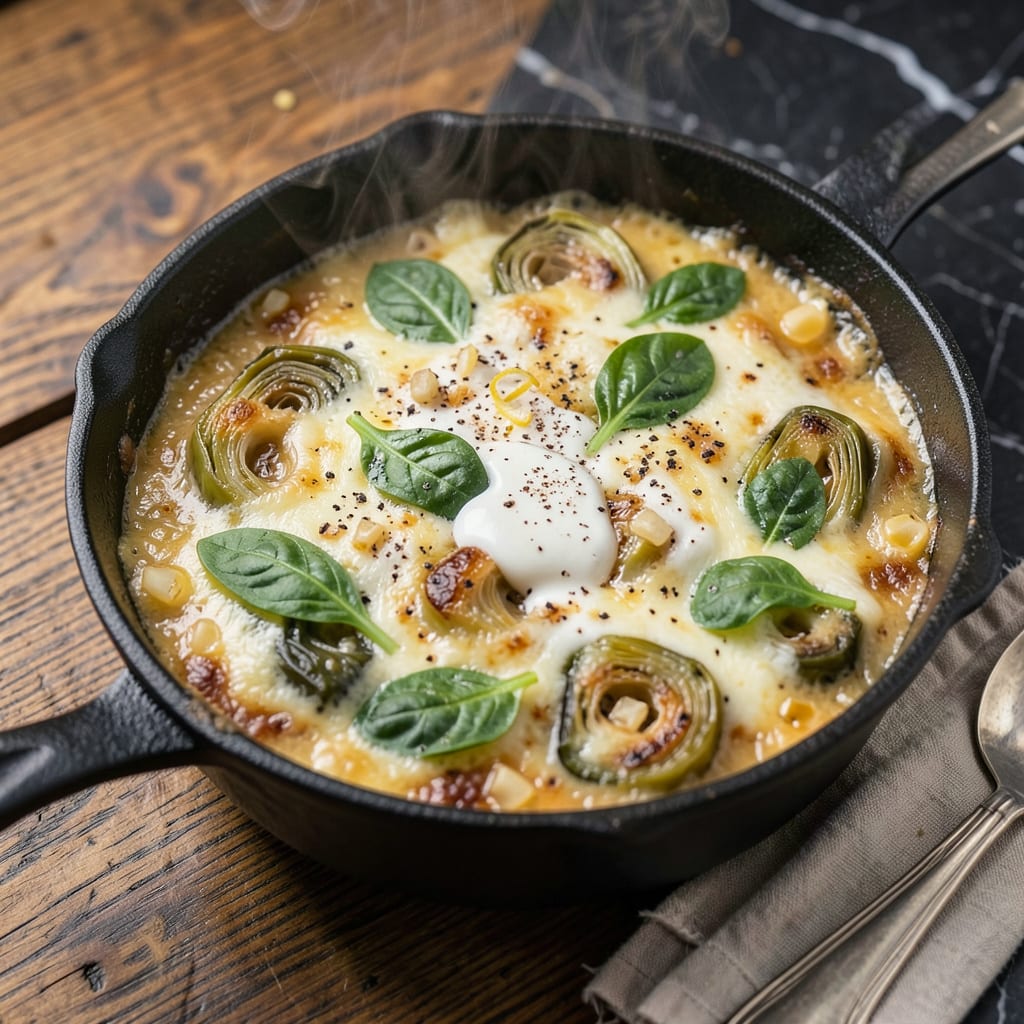
This spinach artichoke fondue delivers the same creamy, restaurant-quality experience you’d find at The Melting Pot—without requiring special equipment. The combination of melted cheeses, tender spinach, and artichoke hearts creates a rich, velvety dip that’s perfect for gatherings or cozy nights in.
The key lies in proper cheese melting technique and preparation. By carefully draining the artichokes and wilted spinach, then gradually incorporating the cheeses, you ensure a smooth, lump-free consistency. Serve with crusty bread, fresh vegetables, or crispy potato wedges for the ultimate shareable appetizer.
Ingredients for Melting Pot Spinach Artichoke Fondue
These carefully selected cheeses and fresh vegetables create the signature creamy texture of this restaurant-quality fondue experience at home.
| Ingredient | Amount | Notes |
|---|---|---|
| Gruyère cheese 🧀 | 8 oz | Freshly grated for smooth melting |
| Emmental cheese 🧀 | 8 oz | Substitute Swiss if unavailable |
| Cream cheese 🧀 | 8 oz | Full-fat, softened to room temperature |
| Heavy cream 🥛 | ½ cup | Minimum 36% fat content |
| Dry white wine 🍷 | ½ cup | Sauvignon Blanc or Chardonnay preferred |
| Garlic cloves 🧄 | 3 cloves | Minced to fine consistency |
| Shallot 🧅 | 1 whole | Finely diced, about 3 tbsp |
| Canned artichoke hearts 🌱 | 14 oz | Quartered, thoroughly drained and patted dry |
| Fresh spinach 🍃 | 10 oz | Baby spinach preferred, chopped |
| Cornstarch 🌾 | 1 tbsp | For stabilizing the fondue |
| Dijon mustard 🟡 | 1 tbsp | Smooth variety, not whole grain |
| Fresh nutmeg 🌰 | ¼ tsp | Microplaned for optimal dispersion |
| Kosher salt 🧂 | ½ tsp | Diamond Crystal preferred for precision |
| White pepper 🌶️ | ¼ tsp | Freshly ground for subtle heat |
| Fresh lemon juice 🍋 | 1 tbsp | Balances richness of cheeses |
Cheese selection is paramount for authentic Melting Pot texture. Gruyère provides nutty depth while Emmental ensures proper meltability—both available at Whole Foods or specialty cheese counters. The cream cheese must be full-fat (Philadelphia brand recommended) for optimal body. Artichokes should be packed in water, not oil; Reese or Trader Joe’s brands offer consistent quality. Fresh nutmeg is non-negotiable for the proper aromatic profile—pre-ground loses volatility within 2 weeks of opening.
For dietary adaptations, vegan cream cheese (Miyoko’s) and cashew-based heavy cream substitutes work at a 1:1 ratio, though texture may require additional cornstarch. White wine can be replaced with dry vermouth or vegetable broth acidified with 1 tsp white vinegar. Shallots may be substituted with half yellow onion, finely minced. The Dijon mustard stabilizes the emulsion—yellow mustard lacks the required acidity and should not be used as a substitute.
Prepare all ingredients immediately before cooking—spinach wilts within 4 hours when chopped, while grated cheeses oxidize visibly after 2 hours at room temperature. The fondue base (without spinach/artichokes) can be refrigerated for 24 hours and gently reheated with additional wine as needed. Completed fondue does not freeze well due to cheese separation. Optimal serving temperature is 160-180°F—use a fondue pot with temperature control for maintaining consistency during service.
Why You’ll Love This Recipe
- One-Pot Magic: Honestly, I love that this comes together in a single pot—no fancy equipment, no mountain of dishes. Just melt the Gruyère and Emmental with the cream cheese, splash in the wine, and let the spinach and artichokes do their thing while you sip whatever’s left in the bottle.
- That First Bite: Here’s what sold me—the way the nutty Gruyère plays against the buttery Emmental, then the cream cheese sneaks in with this velvety richness. The wine doesn’t just deglaze; it brightens everything so the fondue doesn’t sit heavy, just dangerously dip-worthy.
- Party or Pajamas: I’ve served this at girls’ night with crusty bread and at 9 PM on a Tuesday, standing over the stove in sweatpants. It’s equally at home with a charcuterie spread or just a spoon (no judgment). Leftovers? Reheat with a splash of cream, and it’s somehow better the next day over roasted potatoes.
- Cheese Stretch Savings: Between us, good Gruyère isn’t cheap—but a little goes far here. The Emmental melts like a dream, so you’re not drowning in cheese costs, and the cream cheese stretches the volume without sacrificing that resturant-quality melt. My grocery bill stays happy; my taste buds don’t notice.
Step-by-Step Instructions for Spinach Artichoke Fondue
This method ensures a velvety, stable fondue with perfectly balanced flavors and ideal dipping consistency.
Step 1: Prepare the Aromatic Base
In a heavy-bottomed saucepan, combine the 3 cloves garlic cloves (minced to fine consistency) and 1 whole shallot (finely diced) with 0.5 cup dry white wine. Simmer over medium heat for 4-5 minutes until the liquid reduces by half and the shallots become translucent. This reduction concentrates the wine’s acidity while mellowing the garlic’s sharpness.
Add the 14 oz canned artichoke hearts (thoroughly drained and patted dry) and 10 oz fresh spinach (chopped). Cook for 3-4 minutes until the spinach wilts completely and the artichokes soften slightly. The moisture from the spinach will release – continue cooking until the pan is nearly dry. Remove from heat and transfer the mixture to a food processor.
Step 2: Create the Cheese Foundation
In the same saucepan, melt the 8 oz cream cheese (full-fat, softened) over low heat, stirring constantly with a silicone spatula. The cream cheese should become completely smooth with no lumps remaining. This creates the stable base that will prevent graininess in your final fondue.
Whisk in the 1 tbsp cornstarch until fully dissolved, then gradually incorporate the 0.5 cup heavy cream. Increase heat to medium-low and cook for 2-3 minutes until the mixture begins to thicken slightly. The cornstarch activates at this stage, providing the structural foundation for your fondue.
Step 3: Incorporate the Cheeses
Reduce heat to low and begin adding the cheeses in stages. First sprinkle in the 8 oz Gruyère cheese (freshly grated) while whisking constantly in a figure-eight motion. Allow each addition to melt completely before adding more. The Gruyère’s melting point is lower than Emmental’s, so it incorporates first.
Once the Gruyère is fully melted and smooth, repeat the process with the 8 oz Emmental cheese. Maintain the low heat throughout – the ideal temperature range is 160-180°F. If the mixture becomes too thick, add 1-2 teaspoons of the reserved wine reduction to adjust consistency.
Step 4: Finish and Balance the Fondue
Stir in the 1 tbsp Dijon mustard, 0.25 tsp fresh nutmeg (microplaned), 0.5 tsp kosher salt, and 0.25 tsp white pepper. The mustard adds depth while the nutmeg provides warmth. Return the processed artichoke-spinach mixture to the pan and fold it in thoroughly.
Finish by whisking in the 1 tbsp fresh lemon juice off heat. This final acid addition brightens all the rich dairy flavors. The fondue should coat the back of a spoon thickly but still pour in a steady stream. If needed, adjust with additional heavy cream by the tablespoon.
Step 5: Maintain and Serve
Transfer the fondue to a warmed fondue pot or heavy ceramic dish. Keep warm over the lowest possible heat setting – ideal serving temperature is 140-150°F. Stir occasionally to prevent a skin from forming on the surface.
The fondue will maintain optimal consistency for 1-1.5 hours with proper heat maintenance. Serve with an assortment of dippers like crusty bread, blanched vegetables, or roasted potatoes. The texture should remain smooth and creamy throughout the serving period, with no separation or graininess.
Pro Cooking Tips for Perfect Results
Cheese Melting Mastery
The secret to that signature Melting Pot texture lies in temperature control. I always use a heavy-bottomed saucepan on low heat (never above 180°F) and add cheeses gradually. Start with Gruyère first since it melts at a lower temperature, then incorporate Emmental in small handfuls. 🌡️
Whisk constantly in a figure-eight motion—this creates a vortex that helps distribute heat evenly. If you notice the mixture getting too thick, add 1-2 teaspoons of the reserved wine reduction to loosen it. The goal is a smooth, velvety consistency that coats the back of a spoon.
Emulsion Stabilization
Cornstarch is your best friend for preventing graininess. I mix 1 tablespoon with the cheeses before adding them to the pot. The cream cheese base also helps stabilize the emulsion—just make sure it’s completely smooth before adding other ingredients. This combination mimics the professional stabilizers used in restaurants.
If your fondue does start to separate, don’t panic! Remove it from heat immediately and whisk in 1 teaspoon lemon juice or cornstarch slurry (mix 1 tsp cornstarch with 1 tbsp cold water). This usually brings it back together beautifully.
Flavor Layering Technique
Building flavor in stages makes all the difference. I always sauté the shallots and garlic in wine first to develop depth, then cook the spinach and artichokes separately before blending. This prevents the vegetables from releasing too much moisture into your fondue base, which can cause separation.
The Dijon mustard and fresh nutmeg should be added at the very end—their volatile compounds dissipate quickly with heat. I use a microplane for the nutmeg to ensure even distribution without any gritty bits.
Equipment Alternatives
No fondue pot? No problem! A slow cooker on the “warm” setting works perfectly for serving. For cooking, I’ve had great success with a double boiler setup—just place your saucepan over a pot of simmering water. This provides gentler, more controlled heat than direct stovetop cooking.
If using a crockpot, transfer the finished fondue to the insert and keep it covered with the lid slightly ajar. Stir every 15-20 minutes to maintain that perfect creamy texture throughout your gathering.
Serving Temperature Control
Maintaining the right serving temperature is crucial. I aim for 140-150°F—hot enough to stay smooth but not so hot it burns the cheeses. A candle warmer under a ceramic fondue pot works surprisingly well for small gatherings. For larger parties, I use a portable butane burner with adjustable flame.
Always serve with a variety of dippers at room temperature. Cold dippers can cause the fondue to thicken too quickly at the edges of your pot. I like to arrange them on a wooden board for easy access and visual appeal.
Make-Ahead Strategy
You can prepare the fondue base (without spinach/artichokes) up to 24 hours ahead. Store it in an airtight container in the fridge, then gently reheat with 2-3 tablespoons of wine or cream while whisking constantly. The vegetables should be added fresh for best texture and color.
If making the complete fondue ahead, reheat very slowly over low heat with constant stirring. Add a splash of heavy cream if needed to restore the creamy consistency. I’ve found this method maintains quality for up to 4 hours when kept warm properly. 💡
Nutrition Facts
Frequently Asked Questions
Can I make this without a fondue pot?
Use a slow cooker on warm setting or a double boiler for cooking. For serving, a heavy ceramic dish over a candle warmer works perfectly for small gatherings. Stir occasionally to maintain that creamy texture.
Why did my fondue turn grainy?
This usually happens when the temperature gets too high. Remove from heat immediately and whisk in 1 teaspoon lemon juice or a cornstarch slurry (1 tsp cornstarch + 1 tbsp cold water). Keep heat at low next time.
What are the best dippers to serve?
Classic choices include crusty bread, blanched broccoli, and roasted potatoes. For variety, try apple slices or pretzel bites. Serve dippers at room temperature to prevent cooling the fondue too quickly.
Can I prepare this ahead of time?
Yes! Make the cheese base up to 24 hours ahead and refrigerate. Reheat gently with 2-3 tablespoons of wine or cream while whisking. Add fresh spinach and artichokes just before serving for best texture and color.

- 8 Bean Soup Recipe Crock Pot: Hearty Vegetable Medley in One Pot - September 25, 2026
- 4C Bread Crumbs Meatballs Recipe: Crispy Crust and Juicy Centers - September 25, 2026
- 6 Oz Chocolate Chip Cookie Recipe: Perfectly Balanced Crispy Edges and Chewy Hearts - September 25, 2026