
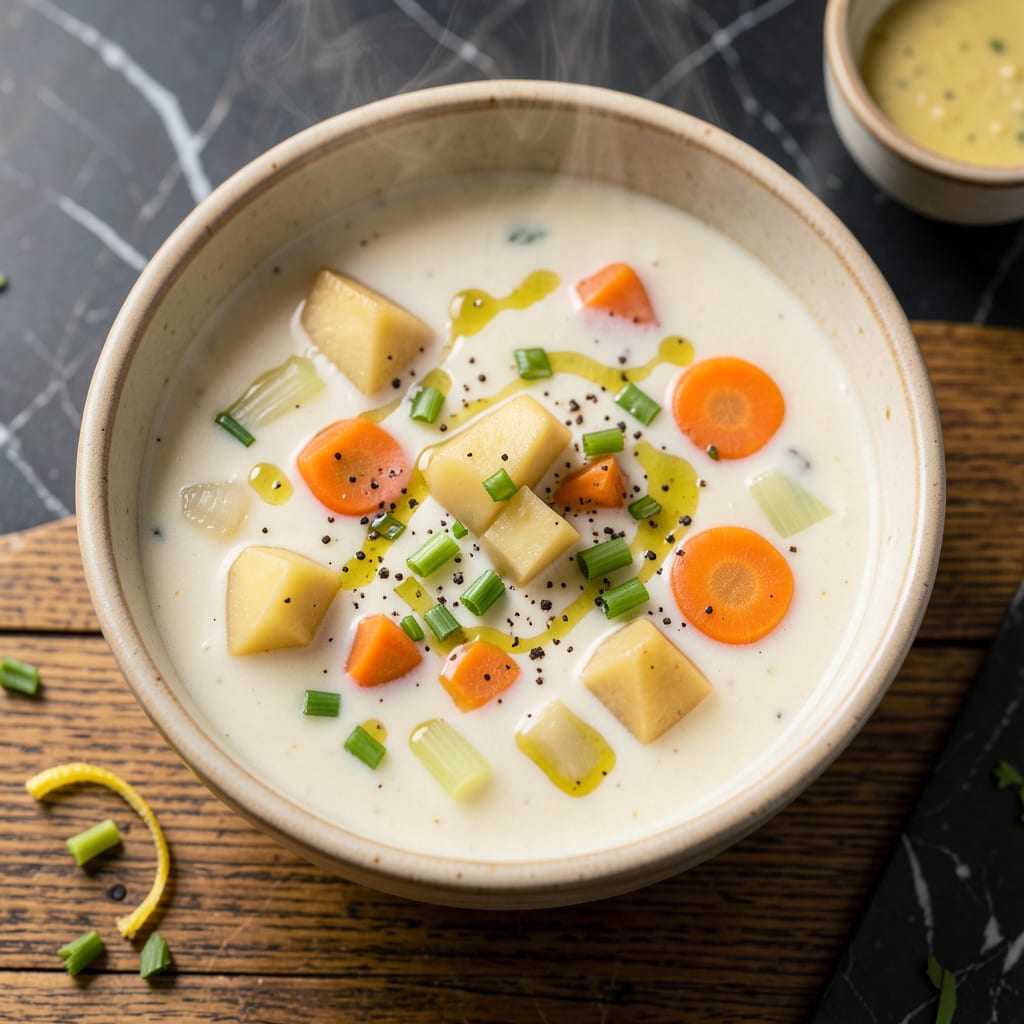
Creamy potato soup without dairy isn’t just possible—it’s a revelation. This recipe transforms humble ingredients into a velvety, satisfying bowl that delivers all the comfort of traditional versions. The secret lies in using full-fat coconut milk and nutritious potatoes to create that signature rich texture naturally.
What you’ll achieve is a soup that’s both hearty and smooth, with tender potato chunks suspended in a creamy base. The method is straightforward: build flavor through aromatic vegetables, then blend just enough to create that perfect consistency. No dairy required, no flavor sacrificed—just pure, comforting satisfaction in every spoonful.
Ingredients for Non Dairy Potato Soup
This velvety soup relies on full-fat coconut milk and aromatic vegetables to achieve its signature creamy texture without dairy.
| Ingredient | Amount | Notes |
|---|---|---|
| Russet potatoes 🥔 | 2 ½ lb | Peeled and cubed into 1-inch pieces |
| Full-fat coconut milk 🥥 | 2 cans | 13.5 oz cans, well-shaken before opening |
| Vegetable broth 💧 | 4 cups | Low-sodium preferred for controlled seasoning |
| Yellow onion 🧅 | 1 whole | Medium, finely diced for even cooking |
| Carrots 🥕 | 2 whole | Medium, peeled and finely diced |
| Celery stalks 🌿 | 2 whole | Finely diced for aromatic base |
| Garlic cloves 🧄 | 4 cloves | Minced to release maximum flavor |
| Extra-virgin olive oil 🫒 | 2 tbsp | First cold-press for optimal aroma |
| Nutritional yeast 🧂 | 3 tbsp | For cheesy, umami depth without dairy |
| Dried thyme 🌿 | 1 tsp | Crushed between fingers to release oils |
| Smoked paprika 🌶️ | 1 tsp | Adds subtle smokiness to balance creaminess |
| Bay leaves 🍃 | 2 whole | Removed before serving |
| Sea salt 🧂 | 1 ½ tsp | Diamond Crystal preferred for precise seasoning |
| Freshly ground black pepper 🌶️ | ½ tsp | Coarse grind for textural contrast |
| Fresh chives 🌿 | ¼ cup | Thinly sliced for garnish and brightness |
The Russet potatoes are essential for their high starch content, which naturally thickens the soup. Opt for organic when possible—their flavor is more pronounced. Full-fat coconut milk must be used (lite versions separate and lack richness); Thai Kitchen or Native Forest brands are reliable. For the vegetable broth, Imagine No-Chicken Broth offers superior depth, but any low-sodium variety works. The nutritional yeast (I recommend Bragg or Bob’s Red Mill) provides the umami backbone that replaces dairy’s savory notes—ensure it’s fortified with B12 for nutritional completeness.
No coconut milk? Cashew cream (blend 1 cup soaked raw cashews with 1 cup water) creates similar richness. For a lower-fat option, silken tofu blended with broth works, though texture will be slightly lighter. Sweet potatoes can replace half the Russets for natural sweetness, but avoid waxy varieties like Yukon Gold—they won’t break down properly. If avoiding nightshades, omit the smoked paprika and add 1/2 tsp ground cumin for warmth. Fresh thyme (3x the dried amount) elevates flavor, but dried is perfectly adequate.
The soup keeps for 5 days refrigerated in an airtight container, though the coconut milk may thicken slightly—thin with broth when reheating. Freeze portions for up to 3 months; omit the chives until serving. Potatoes absorb liquid over time, so expect to adjust consistency. For meal prep, store garnishes (chives, extra pepper) separately to preserve texture. The flavor actually deepens after 24 hours as the aromatics meld—optimal for make-ahead entertaining.
Why You’ll Love This Recipe
- One-Pot Magic: I love that this whole soup comes together in a single pot—no blender, no extra bowls, just chop, simmer, and serve. The russets break down so nicely you barely need to mash them, which means less cleanup and more time to enjoy that first creamy bite.
- Rich Without Dairy: Honestly, the full-fat coconut milk tricks everyone. It gives the soup this velvety texture that’s even better than heavy cream, with a subtle sweetness that balances the earthy potatoes. I’ve served it to dairy lovers who didn’t believe me when I said it was vegan.
- Meal Prep Hero: This soup thickens up beautifully overnight, so I make a double batch on Sundays. It reheats like a dream—just stir in a splash of broth—and tastes even deeper the next day. (Yes, even on a Tuesday night, it feels like a cozy reset.)
- Budget Stretch: Five ingredients, most of which I already have in my pantry. Russets are cheap, carrots and onions last forever, and a can of coconut milk costs less than dairy cream. It’s my go-to when I need to feed a crowd without breaking the bank—or when I’m craving something warm but don’t want to order takeout.
Step-by-Step Instructions for Creamy Non-Dairy Potato Soup
This method ensures velvety texture and rich flavor without any dairy products.
Step 1: Sauté the Aromatic Base
Heat the 2 tbsp extra-virgin olive oil in a large Dutch oven over medium heat. When the oil shimmers, add the finely diced yellow onion, carrots, and celery. Cook for 6-8 minutes, stirring occasionally, until the vegetables soften and the onion becomes translucent.
Add the minced garlic cloves and cook for an additional 1 minute until fragrant but not browned. This aromatic foundation builds depth of flavor that will permeate the entire soup. The vegetables should be tender but not mushy at this stage.
Step 2: Simmer the Potatoes and Broth
Add the 2.5 lb peeled and cubed russet potatoes, 4 cups vegetable broth, 1 tsp dried thyme, 1 tsp smoked paprika, 2 whole bay leaves, 1.5 tsp sea salt, and 0.5 tsp freshly ground black pepper. Bring to a boil over high heat, then reduce to medium-low and simmer uncovered for 15-20 minutes.
The potatoes should be fork-tender when pierced, easily breaking apart. The broth will reduce slightly, concentrating the flavors. Stir occasionally to prevent the potatoes from sticking to the bottom of the pot.
Step 3: Blend and Incorporate Coconut Milk
Remove and discard the bay leaves. Using an immersion blender, purée the soup until completely smooth. For a chunkier texture, blend only half the soup and stir to combine. Return the soup to medium heat and add the 2 cans full-fat coconut milk, stirring constantly to incorporate fully.
Simmer for an additional 5 minutes to allow the flavors to meld. The coconut milk will create a rich, creamy consistency without any dairy. The soup should have a velvety texture and pale golden color at this stage.
Step 4: Finish with Nutritional Yeast and Garnish
Stir in the 3 tbsp nutritional yeast and cook for 2 minutes to allow it to dissolve completely. This adds a subtle cheesy, umami depth that balances the soup’s creaminess. Taste and adjust seasoning if needed, though the sea salt should provide sufficient flavor.
Ladle the soup into bowls and garnish each serving with thinly sliced fresh chives. The bright green chives provide a fresh contrast to the rich soup. Serve immediately while hot, as the texture is best when freshly made.
Essential Equipment for Perfect Results
Dutch Oven Essentials
A heavy 5-6 quart Dutch oven is my top recommendation for this soup. The even heat distribution prevents scorching while the high sides contain splatters during blending. I use my Lodge enameled cast iron—it’s affordable and lasts forever. The tight-fitting lid helps maintain a gentle simmer for perfect potato texture. 🔥
Immersion Blender
For that velvety texture, an immersion blender is non-negotiable. I love my KitchenAid 2-Speed model—it’s powerful enough to purée potatoes smoothly without transferring hot liquid. Blend directly in the pot for minimal cleanup. If you don’t own one, a standard blender works, but you’ll need to process in batches.
Sharp Chef’s Knife
A 8-inch chef’s knife makes quick work of dicing all those vegetables. I use my Wüsthof Ikon—it stays sharp through pounds of potatoes. The weight helps with clean cuts through celery and carrots. Keep it honed before starting; dull knives slip more easily. A good cutting board (I prefer Teakhaus edge-grain) protects both your knife and counters.
Wooden Spoon
Don’t underestimate a simple wooden spoon for stirring. It won’t scratch your pot like metal utensils and helps monitor potato tenderness. I keep a 12-inch olive wood spoon dedicated to soups. The flat edge is perfect for scraping up fond from the bottom. Plus, wood doesn’t conduct heat, so it stays cool to touch during long simmering.
Measuring Tools
Precise measurements matter for balance. I use OXO Good Grips measuring cups for liquids and stainless steel measuring spoons for spices. The magnetic set stays organized in my drawer. For the coconut milk, a can opener with smooth edges prevents metal shavings. A fine-mesh strainer helps if you need to drain any separated coconut water from the cans.
Serving Essentials
Wide, shallow bowls show off the soup’s creamy texture beautifully. I use stoneware bowls that retain heat. Have a microplane ready for extra black pepper at the table. A small ramekin keeps chives fresh for garnishing. For leftovers, glass storage containers with airtight lids maintain flavor best—avoid plastic that absorbs odors. ✨
Nutrition Facts
Frequently Asked Questions
Can I use a different type of potato?
Russets work best for their high starch content, but Yukon Golds can be used for a slightly waxier texture. Avoid red potatoes—they hold their shape too much and won’t create that creamy consistency. For sweetness, swap half the Russets with sweet potatoes.
What can I substitute for coconut milk?
Cashew cream (blend 1 cup soaked cashews with 1 cup water) is the best alternative. For lower fat, use silken tofu blended with broth, though texture will be lighter. Oat milk works in a pinch but may separate when heated—stir constantly.
How do I fix a soup that’s too thin?
Simmer uncovered for 10-15 minutes to reduce. For instant thickening, mash 1 cooked potato and stir it in. A cornstarch slurry (1 tbsp mixed with cold water) works too—add slowly while stirring. Avoid over-blending, which can make it gummy.
Can I make this in a slow cooker?
Yes! Sauté aromatics first, then add everything except coconut milk to the slow cooker. Cook on low for 6-8 hours or high for 4 hours. Blend, then stir in coconut milk and nutritional yeast before serving.
Why does my soup taste bland?
Salt is likely the issue—potatoes need generous seasoning. Add 1/2 tsp sea salt at a time until flavors pop. A splash of lemon juice or extra nutritional yeast boosts umami. Don’t forget the smoked paprika—it adds crucial depth.

- 8 Bean Soup Recipe Crock Pot: Hearty Vegetable Medley in One Pot - September 25, 2026
- 4C Bread Crumbs Meatballs Recipe: Crispy Crust and Juicy Centers - September 25, 2026
- 6 Oz Chocolate Chip Cookie Recipe: Perfectly Balanced Crispy Edges and Chewy Hearts - September 25, 2026