
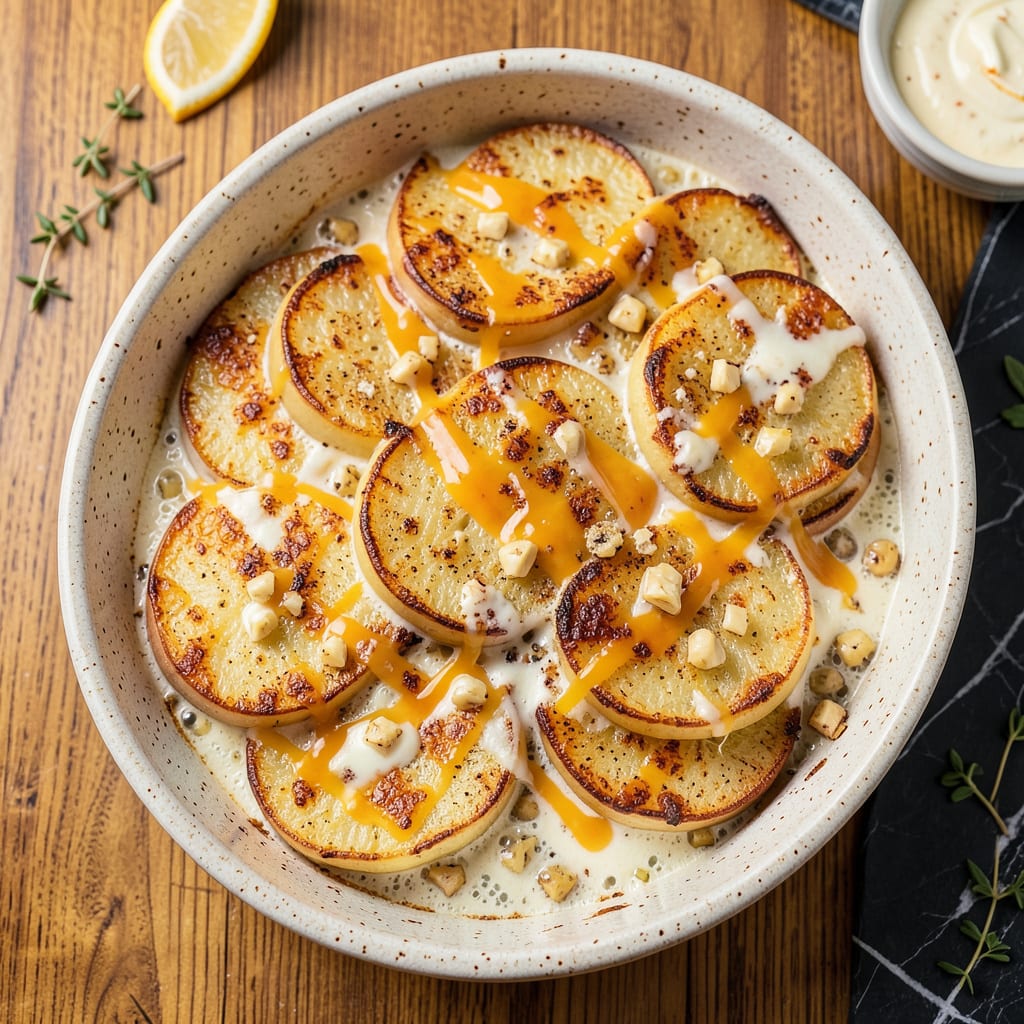
There’s a reason Omaha Steaks’ scalloped potatoes have become legendary—this dish transforms simple ingredients into creamy, cheesy layers that define comfort food. The method relies on precise layering and a perfect balance of sharp cheddar with a velvety cream sauce, creating that signature richness without heaviness.
What sets this version apart is the attention to texture: thinly sliced potatoes that become tender while maintaining structure, and a golden crust that forms during the final 45 minutes of baking. It’s the kind of side that turns a good steak dinner into an unforgettable meal—no shortcuts, just proven technique.
Ingredients for Omaha Steaks Scalloped Potatoes
This recipe transforms basic pantry staples into the legendary creamy, cheesy layers that define Omaha Steaks’ signature side dish.
| Ingredient | Amount | Notes |
|---|---|---|
| Russet Potatoes 🥔 | 3 lb | Peeled, sliced 1/8-inch thick |
| Heavy Cream 🥛 | 3 cups | Full-fat for optimal richness |
| Sharp Cheddar Cheese 🧀 | 2 cups | Freshly grated from block |
| Unsalted Butter 🧈 | 4 tbsp | Divided for sauce and topping |
| All-Purpose Flour 🌾 | 3 tbsp | For roux thickening |
| Garlic Cloves 🧄 | 3 cloves | Minced for aromatic depth |
| Kosher Salt 🧂 | 1 ½ tsp | Diamond Crystal preferred |
| Freshly Ground Black Pepper 🌶️ | 1 tsp | Coarse grind recommended |
| Ground Nutmeg 🌰 | ¼ tsp | Freshly grated for potency |
| Dry Mustard Powder 🧂 | ½ tsp | Enhances cheesy flavor |
| Whole Milk 🥛 | ½ cup | For sauce consistency |
| Parmesan Cheese 🧀 | ½ cup | Freshly grated from wedge |
The potatoes are the foundation—Russet varieties provide the ideal starch content for structural integrity while achieving tenderness. Optimal thickness is 1/8-inch slices; a mandoline ensures precision. For cheese, sharp cheddar from Cabot or Tillamook delivers the necessary tang and meltability. The cream sauce requires full-fat heavy cream (36-40% butterfat) for proper body and richness without separation during baking.
Substitutions must maintain the dish’s textural balance. Yukon Gold potatoes can replace Russets but require slightly longer baking. For a lighter version, substitute half-and-half for the cream, though the sauce will be less velvety. Gruyère or Monterey Jack can replace cheddar at a 1:1 ratio, but avoid pre-shredded varieties (anti-caking agents inhibit melting). Gluten-free flour blends work for the roux, but rice flour requires 25% more for equivalent thickening power.
Assemble the dish immediately before baking to prevent potato discoloration. Refrigerate leftovers in an airtight container for up to 4 days—reheat covered with foil at 350°F until warmed through (20-25 minutes). The unbaked casserole can be prepared 12 hours ahead and refrigerated; add 10 minutes to baking time if starting cold. Freezing is not recommended due to sauce separation upon thawing.
Why You’ll Love This Recipe
- I’ll be real: I make this because of the leftovers. Reheated with a splash of cream, the flavors deepen, and the texture gets even creamier. My lunch game has never been stronger.
- No-Peel Shortcut: I skip peeling the russets—just scrub them clean, slice thin, and let the oven do the work. The skins add texture, and honestly? It saves me 10 minutes of prep time every single time.
- That Cheesy Crust: When the sharp cheddar melts into the heavy cream and bubbles up golden? It’s the reason I double the recipe. The crispy edges with the tender potato layers underneath? My family fights over the corner pieces.
- Steakhouse Side, Home Budget: This costs me about $8 total to make—way cheaper than ordering scalloped potatoes at a restaurant. Pair it with a simple grilled steak, and suddenly it’s a $50 meal for a fraction.
Step-by-Step Instructions for Scalloped Potatoes
This professional method ensures perfectly layered potatoes with a velvety sauce and ideal texture.
Step 1: Prepare the Potatoes and Cheese
Begin by peeling the 3 lb Russet Potatoes and slicing them into uniform 1/8-inch thick rounds. I recommend using a mandoline for precision, but a sharp chef’s knife works equally well with careful attention. Place the sliced potatoes in a bowl of cold water immediately to prevent browning while you prepare the remaining ingredients.
Freshly grate the 2 cups Sharp Cheddar Cheese from a block using the medium holes of a box grater. Pre-grated cheese contains anti-caking agents that prevent smooth melting, so this step ensures optimal creaminess. Similarly, grate the 0.5 cup Parmesan Cheese from a wedge for maximum flavor impact.
Step 2: Create the Creamy Cheese Sauce
In a medium saucepan over medium heat, melt 2 tbsp Unsalted Butter. Add the 3 tbsp All-Purpose Flour and whisk constantly for 1-2 minutes until the mixture forms a smooth, pale roux. This cooking step removes the raw flour taste and creates the base for your sauce.
Gradually whisk in the 3 cups Heavy Cream, ensuring no lumps form. Add the minced 3 cloves Garlic Cloves, 1.5 tsp Kosher Salt, 1 tsp Freshly Ground Black Pepper, 0.25 tsp Ground Nutmeg, and 0.5 tsp Dry Mustard Powder. Cook for 5-7 minutes, stirring frequently, until the sauce thickens enough to coat the back of a spoon. Remove from heat and stir in 0.5 cup Whole Milk to achieve the perfect consistency.
Step 3: Layer and Assemble the Dish
Drain the potatoes thoroughly and pat them dry with clean kitchen towels. In a 9×13-inch baking dish, create your first layer by arranging one-third of the potato slices in an even, slightly overlapping pattern. Pour one-third of the cheese sauce over the potatoes, then sprinkle with one-third of both cheeses.
Repeat this layering process two more times, ending with the remaining cheese mixture on top. Dot the surface with the remaining 2 tbsp Unsalted Butter cut into small pieces. This final butter layer will promote golden browning during baking.
Step 4: Bake to Golden Perfection
Cover the dish tightly with aluminum foil and bake in a preheated 375°F oven for 45 minutes. This initial covered baking allows the potatoes to soften without browning. Then, remove the foil and continue baking for an additional 25-30 minutes until the top is deep golden brown and bubbling vigorously around the edges.
The potatoes are done when a knife inserted in the center meets no resistance and the sauce has thickened between the layers. For optimal texture, let the dish rest for 10 minutes before serving to allow the layers to set.
Step 5: Serve and Enjoy
Cut into generous portions using a sharp knife, ensuring each serving contains layers from top to bottom. The ideal serving should showcase the creamy interior with crisp golden edges. For best results, serve immediately while the cheese is still molten and the sauce maintains its velvety consistency.
This dish pairs exceptionally well with grilled steaks or roasted meats, as the rich, creamy potatoes complement the savory flavors. The serving temperature should be hot but not scalding, allowing the full range of cheesy, garlicky flavors to shine through.
Flavor Customization for These Flavors
Extra Cheesy Upgrade
For an even richer version, add 1 cup Gruyère cheese to the cheddar-Parmesan mix. The nutty, slightly sweet flavor of Gruyère complements the sharpness of cheddar beautifully. I recommend grating it fresh and mixing it evenly between layers for maximum meltiness. 🧀
Herb-Infused Layers
Elevate the flavor by adding 2 tbsp fresh thyme leaves or 1 tbsp chopped rosemary between potato layers. The earthy notes cut through the creaminess while adding complexity. Sprinkle herbs lightly after each sauce layer to distribute evenly throughout the dish.
Spicy Kick Variation
Add ½ tsp cayenne pepper to the cream sauce or layer thinly sliced jalapeños between potatoes for heat. The spice balances the richness while keeping the dish approachable. I love how the warmth builds gradually with each bite—perfect for those who enjoy a little fire. 🌶️
Bacon Lovers’ Twist
Cook 6 slices thick-cut bacon until crispy, then crumble and sprinkle between layers. The smoky saltiness pairs perfectly with the creamy potatoes. For extra depth, reserve 1 tbsp bacon fat to sauté the garlic before adding it to the sauce.
Garlic & Onion Boost
Sauté 1 cup finely diced yellow onion in butter until translucent, then add to the cream sauce. The sweetness of caramelized onions adds wonderful depth. For garlic lovers, double the garlic to 6 cloves—the flavor mellows beautifully during baking.
Crispy Topping Options
For extra crunch, mix ½ cup panko breadcrumbs with 2 tbsp melted butter and sprinkle over the top before baking. Alternatively, crushed buttery crackers or French fried onions create a delightful textural contrast to the creamy layers below. 🔥
Nutrition Facts
Frequently Asked Questions
Can I prepare this dish ahead of time?
Yes! Assemble the casserole completely, cover tightly with foil, and refrigerate for up to 12 hours. When ready to bake, add 10 minutes to the covered baking time since it’ll start cold. Avoid freezing as the sauce may separate.
What’s the best way to slice potatoes evenly?
A mandoline set to 1/8-inch thickness gives perfect uniform slices. If using a knife, cut carefully while resting the potato flat-side down for stability. Uneven slices may cook inconsistently, leaving some pieces underdone.
Why did my sauce turn out grainy?
Graininess usually comes from pre-shredded cheese or overheating the sauce. Always grate cheese fresh from a block, and cook the sauce over medium-low heat while stirring constantly. If it happens, whisk in 1-2 tbsp warm milk to smooth it out.
Can I substitute the heavy cream?
For a lighter version, use half-and-half, but the sauce won’t be as rich. Whole milk works in a pinch but may require an extra 1 tbsp flour for thickening. Avoid skim milk—it lacks the fat needed for proper texture.
How do I know when it’s fully cooked?
The dish is done when a knife inserted in the center meets no resistance, and the top is deep golden brown with bubbling edges. The potatoes should be tender but hold their shape. Let it rest 10 minutes before serving for clean slices.

- 8 Bean Soup Recipe Crock Pot: Hearty Vegetable Medley in One Pot - September 25, 2026
- 4C Bread Crumbs Meatballs Recipe: Crispy Crust and Juicy Centers - September 25, 2026
- 6 Oz Chocolate Chip Cookie Recipe: Perfectly Balanced Crispy Edges and Chewy Hearts - September 25, 2026