
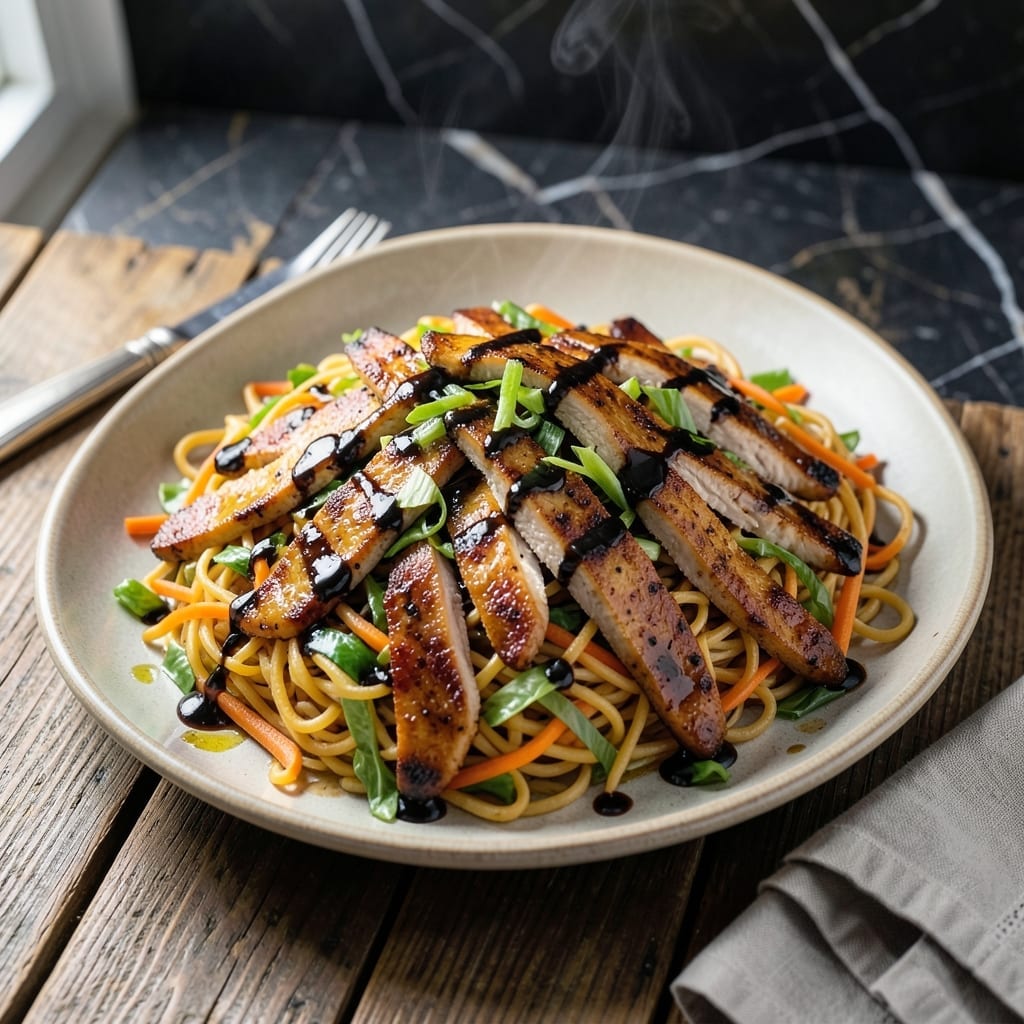
This one-pot method delivers all the bold flavors of takeout chow mein with a fraction of the effort. The secret lies in cooking the noodles directly in the savory sauce, allowing them to absorb maximum flavor while keeping cleanup minimal.
By using simple pantry staples and fresh vegetables, this dish comes together quickly without sacrificing authenticity. The chicken stays tender while the cabbage and carrots retain a satisfying crunch, creating that perfect stir-fry texture.
What emerges is a dish with restaurant-quality taste and texture, all made in a single pot. The noodles soak up the rich soy-ginger sauce, while the vegetables add color and freshness to every bite.
Serve this hot for a meal that’s as convenient as it is delicious. The entire process takes less than 30 minutes from start to finish.
Ingredients for One Pot Chicken Chow Mein
Pantry staples meet fresh veggies for this quick, flavorful one-pot meal.
| Ingredient | Amount | Notes |
|---|---|---|
| Boneless Skinless Chicken Breast 🍗 | 1 lb | Thinly sliced for even cooking |
| Chow Mein Noodles 🍜 | 8 oz | Dry, uncooked weight |
| Green Cabbage 🥬 | 3 cups | Thinly shredded for texture |
| Carrots 🥕 | 2 whole | Julienned or thinly sliced |
| Soy Sauce 🫒 | ½ cup | Low-sodium preferred for control |
| Dark Soy Sauce 🫒 | 1 tbsp | For depth and color |
| Sesame Oil 🫒 | 2 tbsp | Toasted for aroma |
| Fresh Ginger 🌿 | 1 tbsp | Minced or finely grated |
| Garlic Cloves 🧄 | 4 cloves | Minced for sauce |
| Green Onions 🧅 | 4 whole | Sliced, whites and greens separated |
| Vegetable Oil 🫒 | 2 tbsp | High smoke point for stir-frying |
| Chicken Broth 💧 | 1 ½ cups | Low-sodium for balance |
| Granulated Sugar 🧂 | 1 tsp | Balances savory flavors |
| Cornstarch 🌾 | 1 tbsp | Mixed with water for slurry |
| Salt 🧂 | ½ tsp | Adjust to taste at end |
The noodles are key—look for dry chow mein noodles in the Asian aisle at Kroger or Walmart. Avoid the fresh refrigerated kind, as they’ll turn mushy. For chicken, thighs can substitute for breasts if you prefer darker meat (they stay juicier). The cabbage should be crisp and bright green—skip any with wilted outer leaves.
No dark soy sauce? Double the regular soy sauce and add 1 tsp molasses for similar depth. Fresh ginger is ideal, but ground ginger at one-third the amount works fine. The carrots can be pre-shredded (the bagged kind) to save time. If you’re missing green onions, regular onion thinly sliced gets you close, though the flavor’s slightly different.
Leftovers keep 3-4 days in the fridge, though the noodles soften a bit. Reheat in a skillet with a splash of water to revive. Freezing’s not ideal—noodles lose texture—but if you must, 1 month max in airtight containers.
Why You’ll Love This Recipe
- One Pot Wonder: I love that everything—chicken, cabbage, noodles—cooks together in one pan. No extra dishes, no stress.
- Savory Depth: The soy sauce caramelizes with the chicken and veggies, creating that rich umami flavor I crave.
- Weeknight Hero: Honestly, it’s my go-to for busy evenings when I need dinner fast but still want something hearty.
- Budget Friendly: Between us, this stretches a single chicken breast into a filling meal with affordable staples like cabbage and carrots.
Step-by-Step Instructions for One Pot Chicken Chow Mein
This streamlined method delivers all the classic flavors with minimal cleanup and effort.
Step 1: Prepare and Cook the Chicken
Slice the 1 lb Boneless Skinless Chicken Breast into thin strips, about ¼-inch thick for even cooking. Heat 1 tablespoon Vegetable Oil in a large pot or deep skillet over medium-high heat until it shimmers.
Add the chicken and cook for 4-5 minutes, stirring occasionally, until the pieces are no longer pink and have developed light golden edges. Season lightly with 0.5 tsp Salt during cooking. Remove the chicken from the pot and set aside—it will finish cooking later.
Step 2: Sauté the Vegetables
In the same pot, add the remaining 1 tablespoon Vegetable Oil. Add the 3 cups Green Cabbage, 2 whole Carrots, and the white parts of the 4 whole Green Onions. Stir-fry for 3-4 minutes until the vegetables begin to soften but still retain some crispness.
Push the vegetables to one side and add the minced 1 tbsp Fresh Ginger and 4 cloves Garlic Cloves. Cook for 30 seconds until fragrant, then mix everything together. This builds the aromatic base for the dish.
Step 3: Combine Noodles and Sauce
Add the 8 oz Chow Mein Noodles to the pot, breaking them slightly if needed to fit. Pour in the 1.5 cups Chicken Broth, 0.5 cup Soy Sauce, 1 tbsp Dark Soy Sauce, and 1 tsp Granulated Sugar. Stir well to combine.
Bring the mixture to a boil, then reduce heat to medium-low. Cover and simmer for 5-6 minutes, stirring occasionally, until the noodles are nearly tender and have absorbed most of the liquid.
Step 4: Finish with Cornstarch Slurry and Sesame Oil
In a small bowl, mix 1 tbsp Cornstarch with 2 tablespoons of water to create a slurry. Stir this into the pot and cook for an additional 1-2 minutes until the sauce thickens and becomes glossy.
Return the cooked chicken to the pot and stir to combine. Drizzle in the 2 tbsp Sesame Oil and toss everything together. The sauce should coat the noodles and vegetables evenly, with a rich, savory sheen.
Step 5: Garnish and Serve
Remove from heat and stir in the sliced green parts of the 4 whole Green Onions. Let the dish sit for 2 minutes to allow the flavors to meld. Taste and adjust seasoning if needed, though the soy sauces should provide sufficient saltiness.
Serve hot, garnished with additional green onions if desired. The noodles should be tender but not mushy, with a well-balanced sauce that clings to each bite. This one-pot wonder captures all the essence of traditional chow mein with far less effort.
Pro Tips For Making One Pot Chicken Chow Mein
- Dry the Chicken: Pat the chicken breast dry with paper towels before cooking—this guarantees a good sear instead of steamed meat, and I learned this the hard way after too many soggy batches.
- Parboil the Noodles: Boil the chow mein noodles for just 2 minutes before adding to the pot, so they finish cooking in the sauce without turning to mush.
- Skip the Overcrowding: Cook the chicken in a single layer and don’t dump all the veggies in at once, or you’ll end up with a steamed, watery mess instead of that nice stir-fry texture.
- Toast the Noodles: After draining the parboiled noodles, toss them in a little oil and let them sit in the hot pan for 1-2 minutes to develop a nutty flavor—sounds weird, but it works.
Regional Styles of This Recipe
Cantonese Classic Style
Traditional Cantonese chow mein uses fresh egg noodles for a chewier texture, but this one-pot version adapts beautifully with dry noodles. The key is cooking them just until al dente in the savory sauce. I love how the cabbage stays crisp, just like in Hong Kong street food stalls. 🥢
Shanghai-Style Thick Noodles
For a Shanghai twist, swap the thin chow mein noodles for fresh udon or wheat noodles. These thicker noodles soak up more sauce and create a heartier dish. Increase the chicken broth to 2 cups and simmer for 8-10 minutes to soften properly.
Sichuan Spicy Version
Add 1 tbsp Sichuan peppercorns and 1 tsp chili oil to the sauce for that signature tingling heat. I also toss in dried red chilies while sautéing the aromatics. The numbing spice contrasts perfectly with the rich soy-ginger base. 🔥
American Diner Adaptation
This version leans into the crispy texture many Americans love. After cooking, spread the noodles on a baking sheet and broil for 2-3 minutes to create crispy edges. It’s a nod to the chow mein served in classic 1950s diners.
Vegetable-Forward Taiwanese
Taiwanese chow mein often includes more vegetables. Add 1 cup bean sprouts and ½ cup shiitake mushrooms when stir-frying the cabbage. The extra veggies make it lighter while keeping all the bold flavors.
Malaysian Nyonya Style
Incorporate 1 tbsp shrimp paste and 1 stalk lemongrass (bruised) to the sauce for a fragrant, umami-rich twist. Remove the lemongrass before serving. This Peranakan version adds depth that’s uniquely Southeast Asian.
Nutrition Facts
Frequently Asked Questions
Can I use a different protein?
Yes! Shrimp, pork, or tofu work well. For shrimp, cook for 2-3 minutes until pink. Pork should be thinly sliced and cooked to 145°F. Tofu needs pressing first for best texture.
What if my noodles turn out mushy?
Reduce simmer time to 4-5 minutes and check frequently. Use 1 cup less broth for firmer noodles. Stir occasionally to prevent sticking at the bottom.
How do I make it spicier?
Add 1 tsp chili flakes or 1 tbsp sriracha with the sauce. For heat with depth, include 1 minced jalapeño with the ginger and garlic.
Can I prepare this ahead?
Cook noodles al dente, then store separately from sauce. Reheat in a skillet with a splash of water for 3-4 minutes. Best within 2 days.

- 6 Oz Chocolate Chip Cookie Recipe: Perfectly Balanced Crispy Edges and Chewy Hearts - September 25, 2026
- 6-Inch Coffee Cake Recipe: Vanilla Bean Swirls and Buttery Streusel Topping - September 25, 2026
- 1 Hour Soup Recipe: Velvety Richness Without the Wait - September 25, 2026