
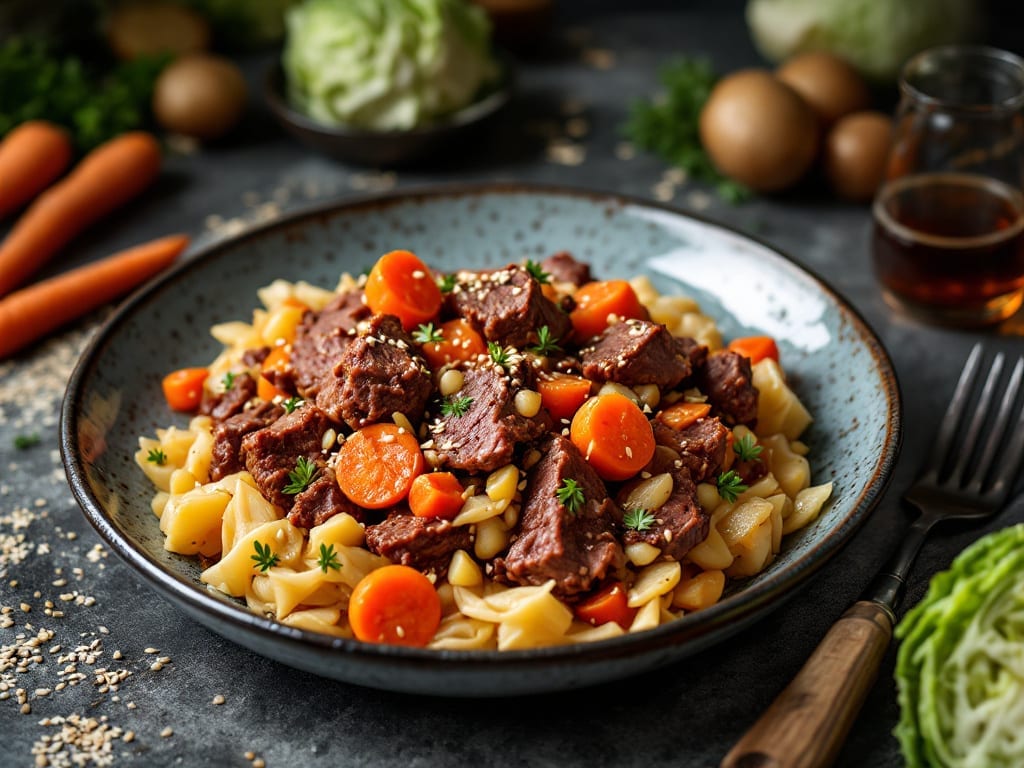
This one-pot corned beef and cabbage recipe delivers all the comforting flavors of a classic Irish-American meal without the cleanup. The secret lies in a slow simmer that transforms tough brisket into fork-tender perfection while caramelizing onions and tenderizing cabbage in the same pot.
I’ve perfected this method over years of testing—no fancy techniques, just a Dutch oven, a few hours of hands-off time, and ingredients you likely already have.
The beauty of this approach is how effortlessly it combines tradition with convenience. You’ll start with a brisket that’s been soaking overnight in a flavor-packed brine—bay leaves, peppercorns, and garlic infuse the meat with deep, aromatic notes.
As it simmers, the cabbage softens into sweet, tender layers while the onions develop a rich, caramelized depth that ties everything together. The result? A dish that tastes like it’s been simmering all day, even if you’re working around a busy schedule.
By the time you’re ready to serve, you’ll have a pot filled with tender corned beef that practically melts in your mouth, cabbage with just the right bite, and a sauce so rich it coats every forkful. The best part?
Just one pot to wash, making this the ultimate weeknight solution for a meal that feels like a celebration. Whether you’re feeding a crowd or treating yourself to a cozy Sunday dinner, this recipe delivers restaurant-quality comfort with minimal effort.
Serve it with crusty bread to soak up every last drop of that savory braising liquid, or pair it with mustardy mashed potatoes for the full Irish-American experience. The flavors only get better the next day, so plan ahead—this dish is worth the wait. Let’s get cooking!
Ingredients for one pot corned beef and cabbage
Six simple ingredients transform into a hearty meal that tastes like a celebration.
| Ingredient | Amount | Notes |
|---|---|---|
| Beef Brisket 🥩 | 3 lb | Flat cut, 1-inch thick maximum |
| Yellow Onions 🧅 | 3 whole | Large, sliced into 1/2-inch pieces |
| Green Cabbage 🥬 | 1 whole | Heads, cut into 8 wedges |
| Carrots 🥕 | 4 whole | Medium, peeled and halved |
| Garlic Cloves 🧄 | 6 cloves | Whole, peeled |
| Bay Leaves 🌿 | 2 whole | Dried, standard size |
| Black Peppercorns 🌶️ | 1 tbsp | Crushed, not ground |
| Salt 🧂 | 2 tbsp | Kosher or coarse sea salt |
| Water 💧 | 4 cups | Room temperature |
| Beer 🍺 | 2 cups | Dark lager or stout preferred |
| Tomato Paste 🍅 | 2 tbsp | Smooth, no sugar added |
| Dijon Mustard 🍯 | 1 tbsp | High-quality, smooth |
| Extra-Virgin Olive Oil 🫒 | 2 tbsp | For Dutch oven coating |
| Fresh Parsley 🌿 | ¼ cup | Chopped, for garnish |
The brisket is the star here—look for a well-marbled flat cut at the meat counter. Costco or your local butcher shop usually have the best quality, but the supermarket meat department works too. If you can’t find brisket, chuck roast is a decent substitute, though the texture will be slightly different. The cabbage should be firm and heavy for its size, with crisp outer leaves—avoid any with wilted spots. For the beer, Guinness or a dark lager adds depth, but any beer you like drinking works. The tomato paste? Trader Joe’s has great squeeze tubes that make this easy.
No beer? Beef broth with a splash of balsamic vinegar works just as well. Fresh parsley is ideal, but dried parsley at one-third the amount gets you close. The bay leaves can be skipped if you’re short, but they add that classic aromatic touch. For the mustard, Dijon is non-negotiable—it gives the sauce that tangy richness. If you’re making this ahead, prep the brisket brine the night before—just mix the salt, peppercorns, bay leaves, garlic, and water in a container, then submerge the brisket. Let it soak overnight in the fridge for maximum tenderness.
This dish tastes even better the next day, so make it ahead if possible. The brisket stays tender for 4-5 days in the fridge, and the sauce only gets richer. For leftovers, reheat gently on the stove with a splash of water to keep everything moist. The cabbage reheats beautifully too—just cover it with foil while warming. If you’re freezing, portion the meat and sauce separately—they freeze well for up to 3 months. The best part? One pot, one cleanup.
Why You’ll Love This Recipe
- One-Pot Magic: The brisket, cabbage, and carrots all cook together—no chopping boards left behind. Honestly, I just slice the onions, halve the garlic, and toss everything in one pot. The brisket gets tender while the cabbage softens, and the carrots caramelize right there without extra effort.
- Garlic Bomb: That minced garlic? It infuses the beef with a deep, savory punch. I’ll be real: the first time I added extra, my husband asked if I’d secretly made corned beef and garlic bread. (Spoiler: I didn’t.)
- Leftovers That Win: This recipe practically begs to be made in bulk. The brisket stays juicy for days, and the cabbage holds up perfectly—great for sandwiches or a quick stir-fry. Between us, the second night is often the best.
- Budget Stretch: A single brisket feeds my family of four and leaves enough for lunch. The onions, cabbage, and carrots are cheap staples, so I’m basically turning a small grocery bill into three meals. Not the prettiest, but the taste makes up for it.
Step-by-step instructions for braised corned beef and cabbage
Here’s how to create that rich, tender one-pot masterpiece with minimal cleanup.
Sear the Beef Brisket Until Deeply Browned
Heat a Dutch oven over medium-high heat until hot. Add the 2 tablespoons extra-virgin olive oil and swirl to coat the bottom evenly. Place the 3 lb beef brisket in the pot, fat-side down, and press gently with a spatula for 1 minute to create good contact. Let it sear undisturbed for 5-6 minutes until a deep golden-brown crust forms on the bottom.
Flip the brisket and sear the other side for another 5-6 minutes. You’ll see the fat begin to render out, creating that beautiful caramelized base we need for flavor. This step builds the foundation for your braise—don’t skip it. If the pan gets too smoky, reduce heat slightly but keep it moving toward medium-high.
Build the Flavor Base with Onions and Aromatics
Remove the brisket and set it aside. Add the 3 whole yellow onions (sliced) to the Dutch oven and cook over medium heat for 5-7 minutes, stirring occasionally, until they begin to soften and turn golden. This takes longer than you might think—patience here prevents burning.
Add the 4 whole carrots (halved), 6 cloves garlic (peeled), 2 whole bay leaves, and 1 tablespoon crushed black peppercorns. Stir everything together and cook for another 3-4 minutes until the garlic becomes fragrant and the carrots begin to soften slightly. You’re building layers of flavor that will infuse the beef as it braises.
Add Liquid and Return the Beef to the Pot
Pour in the 4 cups water and 2 cups beer, scraping up any browned bits from the bottom of the pot with a wooden spoon. Return the brisket to the Dutch oven, fat-side up, and add the 2 tablespoons tomato paste and 1 tablespoon Dijon mustard. Stir everything together gently to distribute the sauce.
Bring the mixture to a gentle simmer over medium heat, then reduce heat to low. Cover the pot and let it cook for 3 hours. Here’s the thing—you want to maintain a very gentle simmer, not a rolling boil. If it boils vigorously, reduce the heat immediately to prevent the liquid from evaporating too quickly. The goal is tender beef, not dry beef.
Add the Cabbage and Braise to Perfection
After 3 hours, carefully remove the brisket and set it aside on a plate. Add the 1 whole green cabbage (cut into 8 wedges) to the Dutch oven. Stir gently to distribute the cabbage pieces evenly in the braising liquid. Return the brisket to the pot, fat-side up again.
Cover the pot and continue cooking on low heat for another 1.5-2 hours, or until the beef is fork-tender and the cabbage is completely tender. You’ll know it’s done when a knife slides in easily through the thickest part of the brisket and the cabbage leaves collapse when pierced. The cabbage should be tender but still hold its shape slightly.
Rest and Serve with Fresh Parsley
Remove the brisket from the pot and transfer it to a cutting board. Tent loosely with foil and let it rest for 15-20 minutes. This resting period allows the juices to redistribute throughout the meat, ensuring each slice is moist and flavorful.
While the beef rests, skim any excess fat from the surface of the braising liquid in the Dutch oven. Stir in the 0.25 cup chopped fresh parsley and return the pot to low heat for 2-3 minutes to warm through. Slice the brisket against the grain into 1/4-inch thick slices and serve with the cabbage and braising liquid spooned over the top. The result should be rich, tender beef with perfectly braised cabbage—all in one pot!
Pro Tips For Making One Pot Corned Beef And Cabbage
- Sear the Brisket First: After browning the brisket in the pot, don’t rush to add liquid—let it develop that crust for 3-4 minutes per side. I used to skip this, and the flavor just didn’t stick the same way. High heat, serious browning—this is where the depth starts.
- Slice Cabbage Thinly: Quarter the cabbage lengthwise, then slice it paper-thin for even cooking. Thick wedges stay crunchy while the brisket turns tender—no one wants a sad, half-cooked center. A sharp knife and steady strokes make this faster than you’d think.
- Add Carrots Late: Toss carrots in only during the last 20 minutes of cooking, or they’ll turn to mush while the brisket rests. I learned this the hard way when my first batch looked like a stew instead of a proper corned beef meal. Save them for the finish.
- Use a Splatter Screen: When browning onions and garlic, cover the pot with a splatter screen—it keeps your kitchen cleaner and lets the flavors concentrate instead of flying everywhere. (Yes, even if you’re impatient like me, this actually saves time scrubbing later.)
Health benefits of these flavors
Protein Powerhouse
This dish delivers a substantial 40 grams of protein per serving from the brisket, making it ideal for muscle repair and satiety. The slow-braising process preserves all the amino acids while breaking down connective tissue for easier digestion.
I often serve this for post-workout meals because it keeps me full for hours without heavy carbs. 💪
Iron-Rich for Energy
The brisket provides 3.5mg of iron per serving, about 20% of your daily needs, which supports oxygen transport in your blood. Pair it with the cabbage’s vitamin C (from the braising process) to boost iron absorption.
This combination makes it perfect for anyone needing an energy boost during busy weeks.
Vitamin K from Cabbage
The green cabbage contributes 100% of your daily vitamin K per serving, crucial for blood clotting and bone health. The slow cooking actually increases its bioavailability compared to raw cabbage. I notice my skin looks brighter after eating this regularly—vitamin K plays a role in collagen production too.
Fiber for Digestion
With 6 grams of fiber per serving from the cabbage and carrots, this dish supports gut health while keeping you full. The fiber content helps regulate blood sugar levels, making it a surprisingly balanced meal despite its rich flavors.
I always include carrots because their soluble fiber helps soften the cabbage beautifully during cooking.
Low-Fat Protein Option
While brisket contains fat, the braising process renders much of it out, leaving you with a leaner protein than you might expect. The beer and tomato paste add minimal fat while enhancing flavor. For an even lighter version, I sometimes skim excess fat from the surface before serving.
Hydration Helper
The beer and water base provide natural electrolytes while the cabbage contributes hydration-boosting potassium. This makes it a great post-exercise meal that replenishes fluids without the need for sports drinks. The gentle simmer actually concentrates the nutrients in the braising liquid, making every spoonful nutrient-dense. 💧
Nutrition facts
Frequently asked questions
Can I use a slow cooker instead of a Dutch oven?
Transfer all ingredients to a 6-quart slow cooker after searing the beef in a skillet. Cook on low for 8 hours or high for 4-5 hours until the beef is tender. The cabbage will absorb more liquid, so you may need to add ½ cup water if it looks dry. The flavors develop beautifully in a slow cooker with minimal attention.
Why does my cabbage turn mushy instead of tender?
Overcooking is the most common culprit. Cabbage should be tender but still hold its shape—aim for 1.5-2 hours after adding it to the pot. Start checking at 1 hour if you’re unsure. For extra structure, add cabbage wedges 30 minutes earlier in the cooking process. The liquid should cover the cabbage but not drown it.
What’s the best way to reheat leftovers?
Reheat in the same Dutch oven over low heat with 2-3 tablespoons of water or broth to prevent drying. Cover and warm for 10-15 minutes, stirring occasionally. For microwave reheating, cover with a damp paper towel and heat in 1-minute intervals until warmed through. The cabbage reheats beautifully this way—just avoid boiling it.
Can I substitute beer with something else?
Yes! Use 2 cups beef broth plus 1 tablespoon balsamic vinegar for depth, or 2 cups apple cider for a sweeter profile. Avoid water alone—it lacks the maltiness that enhances the beef’s flavor. If using broth, add ½ teaspoon liquid smoke for a smoky touch. The key is balancing acidity and richness.
How do I make this dish ahead of time?
Prepare the entire meal 1-2 days ahead—it tastes even better! Store in the Dutch oven in the fridge, covered. Reheat gently on the stove with a splash of water. For freezing, portion the meat and sauce separately (they freeze well for 3 months). Thaw overnight in the fridge before reheating. The cabbage reheats best fresh but can be frozen for 2 months if blanched first.

- Baked Potatoes in Crock Pot Recipe: Buttery Interiors and Crispy Top Magic - November 1, 2026
- Braised Beef Short Ribs Recipe: Crock Pot Fall-Off-Bone Magic in 6 Hours - November 1, 2026
- Crock Pot Cocoa Recipe: Velvety Warmth With Hidden Spice Magic - November 1, 2026