
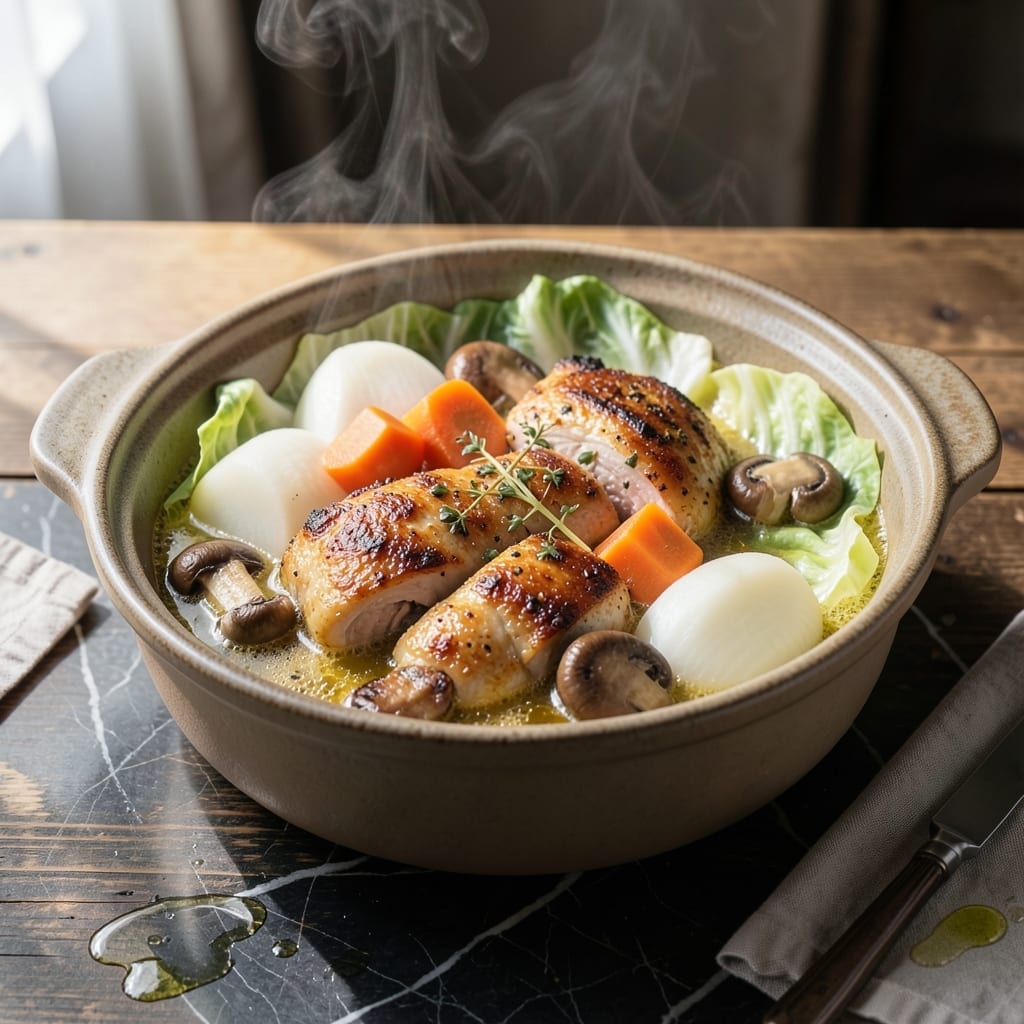
There’s something special about cooking in a donabe that transforms simple ingredients into a deeply flavorful meal.
This traditional Japanese clay pot method brings out the natural sweetness of vegetables and proteins while creating a rich, aromatic broth. The donabe’s porous material distributes heat evenly, ensuring every bite is infused with layered flavors.
You’ll end up with a comforting, traditional dish that’s as satisfying to prepare as it is to eat. The gentle simmer allows ingredients to meld together perfectly.
The beauty of this approach is its versatility—use seasonal vegetables, tofu, or your choice of protein. Serve directly from the pot for an authentic experience.
Ingredients for One Pot Donabe
This traditional clay pot meal requires simple, authentic ingredients for maximum flavor depth.
| Ingredient | Amount | Notes |
|---|---|---|
| Chicken Thighs 🍗 | 1 ½ lb | Boneless, skin-on preferred |
| Napa Cabbage 🥬 | 1 whole | Cored and cut into wedges |
| Daikon Radish 🥕 | 1 whole | Peeled and sliced into rounds |
| Shiitake Mushrooms 🍄 | 8 oz | Fresh, stems removed |
| Carrots 🥕 | 2 whole | Peeled and cut into chunks |
| Dashi Stock 🍲 | 4 cups | Homemade or high-quality instant |
| Soy Sauce 🫕 | ¼ cup | Low-sodium preferred |
| Mirin 🍶 | 2 tbsp | Sweet cooking rice wine |
| Sake 🍶 | 2 tbsp | Dry Japanese rice wine |
| Fresh Ginger 🌿 | 1 tbsp | Grated or minced |
| Garlic Cloves 🧄 | 3 cloves | Thinly sliced |
| Scallions 🧅 | 4 whole | Thinly sliced for garnish |
| Tofu 🧈 | 14 oz | Firm, pressed and cubed |
| Sesame Oil 🫒 | 1 tsp | Toasted, for finishing |
The dashi stock is the foundation here—look for bonito-based brands like Kikkoman or Marukura at Asian markets for authentic flavor. Chicken thighs with skin render fat that enriches the broth (boneless if you prefer easier eating). Napa cabbage and daikon radish are non-negotiable for texture—seek firm, unblemished specimens at specialty grocers. This dish relies on quality base ingredients, so avoid pre-cut or wilted vegetables.
No dashi? Kombu-only dashi works for vegetarians, or use chicken stock with a splash of soy in a pinch. Shiitake mushrooms can be swapped for oyster or cremini. Mirin substitutes include 1 tbsp sugar plus 1 tbsp water per tbsp mirin. The tofu should be firm to hold its shape—silken will disintegrate. Nasoya or House Foods brands are reliable for consistency.
Prep all ingredients before starting—donabe cooks quickly once heated. Leftovers keep for 3 days refrigerated (the flavors deepen overnight). Reheat gently to avoid cracking the pot. For best results, soak new donabe in water for 30 minutes before first use to prevent cracking during cooking.
Why You’ll Love This Recipe
- I’ll be real: it tastes even better the next day, and the broth stretches for two meals with fresh rice or noodles.
- One Pot Wonder: I just toss chicken thighs, napa cabbage, and daikon into the donabe—no juggling pots or pans, just layer and walk away.
- Umami Bomb: Shiitake mushrooms and carrots soak up the dashi, making every bite ridiculously rich and satisfying.
- Weeknight Hero: Honestly, it’s my go-to after work—ready in 40 minutes and fancy enough for guests (yes, even on a Tuesday night).
Step-by-Step Instructions for Traditional Japanese Clay Pot Cooking
This method delivers authentic donabe results with minimal effort and maximum flavor.
Step 1: Prepare and Layer the Base Ingredients
Begin by arranging the 1.5 lb chicken thighs at the bottom of your donabe or heavy pot, skin-side down. This creates a flavorful foundation. Distribute the 2 whole carrots (cut into chunks), 1 whole daikon radish (sliced into rounds), and 8 oz shiitake mushrooms (stems removed) evenly around the chicken.
Add the 3 cloves garlic cloves (thinly sliced) and 1 tbsp fresh ginger (grated) directly on top. These aromatics will infuse the broth with depth. I arrange them deliberately to ensure even distribution throughout the dish.
Step 2: Add Vegetables and Tofu for Texture
Place the 1 whole napa cabbage (cored and cut into wedges) on top of the chicken and vegetables. The wedges should sit upright to allow steam to circulate. Nestle the 14 oz tofu (pressed and cubed) between the cabbage wedges, ensuring it absorbs the surrounding flavors.
This layering technique is crucial. The donabe’s heat will penetrate each layer, allowing the vegetables to soften while the tofu remains tender. The cabbage acts as a natural lid, trapping steam to cook everything evenly.
Step 3: Pour Liquids and Season the Dish
Combine the 4 cups dashi stock, 0.25 cup soy sauce, 2 tbsp mirin, and 2 tbsp sake in a measuring cup or small bowl. Pour this mixture over the layered ingredients, ensuring it covers the chicken and vegetables completely.
Gently press down on the ingredients to submerge them partially in the liquid. This step ensures that every component absorbs the savory-sweet broth. Avoid stirring, as this can break apart the delicate tofu and vegetables.
Step 4: Simmer to Perfection
Cover the donabe with its lid and bring the contents to a gentle simmer over medium heat. Once simmering, reduce the heat to low and cook for 30-35 minutes. The goal is to maintain a steady, gentle simmer without boiling vigorously.
Check occasionally to ensure the liquid hasn’t reduced too much. The chicken should reach an internal temperature of 165°F, and the vegetables should be tender but not mushy. The tofu will soften slightly while retaining its shape.
Step 5: Finish and Serve with Garnish
Once the cooking time is complete, remove the donabe from heat. Let it sit covered for 5 minutes to allow the flavors to meld together. This resting period ensures the chicken remains juicy and the vegetables fully absorb the broth.
Drizzle with the 1 tsp sesame oil and garnish with 4 whole scallions (thinly sliced). Serve directly from the donabe to preserve the communal, traditional experience. Each serving should include a piece of chicken, an assortment of vegetables, and a portion of the flavorful broth.
Pro Tips For Making One Pot Donabe
- Brown the Chicken First: Sear the chicken thighs skin-side down in the donabe until golden before adding liquids—this builds flavor and keeps the meat from getting soggy.
- Slice Daikon Thinly: Cut the daikon radish into ½-inch rounds so it cooks through in the same time as the cabbage and carrots; thicker pieces stay hard.
- Skip the Crowding: Don’t overflow the donabe with cabbage at once; add it in batches so it wilts down evenly and absorbs the broth properly.
- Use Dried Shiitakes: Swap fresh shiitakes for 3-4 dried ones—soak them in the cooking liquid first for an intense umami boost without extra cost.
Serving Suggestions for This Recipe
Traditional Presentation
Serve this dish directly from the donabe at the table for an authentic experience. The clay pot retains heat beautifully, keeping your meal warm throughout the meal. I love how the steam rises when you lift the lid—it’s pure comfort. 💛
Garnishing Tips
Just before serving, drizzle with 1 tsp sesame oil and sprinkle thinly sliced scallions on top. This adds a fresh, aromatic finish. For extra flair, add a few drops of chili oil or a sprinkle of toasted sesame seeds.
Rice Pairing
Steamed Japanese short-grain rice is the perfect companion. The rice soaks up the rich broth, making every bite flavorful. I recommend Koshihikari or Nishiki brands for the best texture.
Beverage Pairings
A cold Asahi Super Dry or Sapporo beer cuts through the richness. For non-alcoholic options, try green tea or a light yuzu-infused soda. These pairings balance the dish’s savory depth. 🍵
Serving Utensils
Use a wooden ladle to serve the broth and ingredients. This keeps the donabe’s surface safe from scratches. I also keep small bowls nearby for individual portions.
Leftovers Tip
If you have leftovers, store them in the donabe in the fridge overnight. The flavors deepen, making it taste even better the next day. Reheat gently on the stove to preserve the texture.
Nutrition Facts
Frequently Asked Questions
Do I need a special pot for this?
A donabe is traditional, but any heavy pot with a tight lid works. Enamel cast iron or Dutch oven are great substitutes. Just avoid thin metal pots that won’t retain heat evenly.
Can I use a different protein?
Swap chicken for pork belly, shrimp, or mushrooms for a vegetarian version. Adjust cooking time to 20 minutes for seafood to prevent overcooking.
Why did my broth turn out bland?
This usually happens with low-quality dashi. Use bonito-based dashi and don’t skip the mirin or sake. Simmering too vigorously can also dilute flavors.
How do I prevent the tofu from breaking?
Press tofu for 15 minutes before cubing, and add it last. Avoid stirring once cooking begins. Firm tofu holds up best in this dish.

- 2lb Fruit Cake Recipe: Boozy Spice Infusion for Holiday Crowds - September 25, 2026
- 5 Spice Roast Chicken Recipe: Fragrant Whole Bird With Crispy Golden Skin - September 25, 2026
- 1.5 Pound White Bread Machine Recipe: Hands-Off Artisan Loaf With Golden Crust - September 25, 2026