
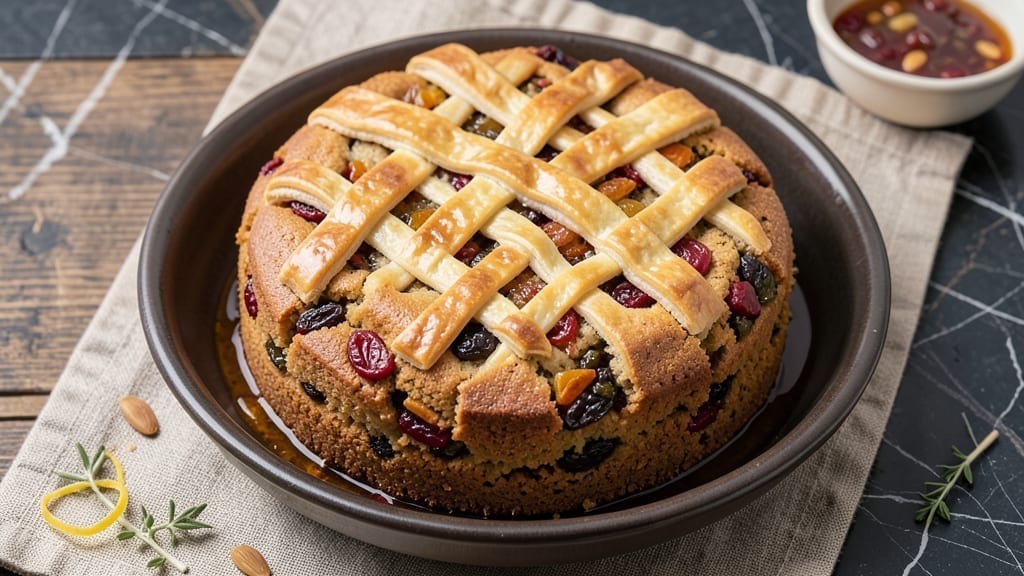
This 2lb fruit cake recipe delivers the rich, spiced perfection of holiday tradition with a modern twist—deeply infused with brandy, citrus marmalade, and warm spices that keep it moist for weeks.
The secret lies in soaking dried fruits overnight in alcohol, which transforms tough dried pieces into tender, flavor-packed bites that elevate every slice. What sets this apart is the balance of sweetness and spice, where cinnamon, nutmeg, and cloves create layers of warmth without overpowering the natural fruit flavors.
Perfect for holiday gatherings or special occasions, this fruit cake bakes up with a golden, crackly top and a dense yet tender crumb that stays moist even after days of resting.
The recipe uses simple pantry staples—flour, sugar, eggs, and butter—along with a few key ingredients like marmalade and brandy that make all the difference. While traditional fruit cakes can dry out quickly, this version includes a moisture-retaining technique that keeps it delicious for weeks when stored properly.
By the time you pull it from the oven, your kitchen will smell like the holidays—warm spices mingling with the sweet aroma of brandy-soaked fruits. The cake improves with age, developing deeper flavors as it rests, making it ideal for baking ahead of time.
Serve slices with a dusting of powdered sugar, a drizzle of caramel, or a pat of whipped cream for the perfect finishing touch.
Whether you’re hosting a festive gathering or simply craving a taste of holiday nostalgia, this 2lb fruit cake delivers restaurant-quality results with minimal effort. The recipe scales easily for larger crowds, and variations like adding nuts or chocolate chips can customize it to your taste.
Here’s how to make it—step by step—for a dessert that’s as impressive as it is delicious.
Ingredients for 2lb fruit cake
Simple pantry staples meet holiday spices for this rich, moist 2lb fruit cake.
| Ingredient | Amount | Notes |
|---|---|---|
| All-Purpose Flour 🌾 | 3 ½ cups | Sifted for even texture |
| Granulated Sugar 🍚 | 2 cups | White or light brown |
| Unsalted Butter 🧈 | 1 ½ cups | Cold, cubed for creaming |
| Large Eggs 🥚 | 4 whole | Room temperature |
| Citrus Marmalade 🍊 | 1 cup | Seville orange preferred |
| Brandy 🍷 | 1 cup | High-proof for infusion |
| Dried Mixed Fruit 🍇 | 2 cups | Chopped, seedless |
| Ground Cinnamon 🌿 | 2 tbsp | Freshly ground preferred |
| Ground Nutmeg 🌿 | 1 ½ tsp | Freshly grated |
| Ground Cloves 🌶️ | 1 tsp | Whole cloves preferred |
| Baking Powder 🧂 | 2 tsp | Aluminum-free |
| Salt 🧂 | ½ tsp | Diamond Crystal preferred |
| Powdered Sugar 🍚 | ½ cup | For finishing |
The brandy and marmalade are non-negotiable for authentic flavor. Gordon’s or E&J brandy delivers the best infusion, while Sloevia marmalade provides that signature citrus tang. For dried fruits, Whole Foods bulk bins offer superior quality—avoid pre-chopped mixes with added sugar. The butter should be cold and cubed to prevent over-creaming, which can lead to a dense crumb. Freshly ground spices (cinnamon, nutmeg, cloves) elevate the cake’s complexity, so invest in a quality grinder if your spice rack is outdated.
No brandy? Apple cider or orange juice works in a pinch, though the alcohol infusion is key for moisture retention. Substitute marmalade with orange marmalade or apricot jam, but reduce by 1 tbsp to account for moisture differences. For nutmeg, pre-ground works but loses potency quickly—whole nutmeg seeds toasted and ground yield superior results. If you lack baking powder, baking soda plus cream of tartar (1 tsp each) serves as a suitable alternative. The dried fruit can be chopped by hand or pulsed briefly in a food processor for even distribution.
Store the cake in an airtight container at room temperature for up to 3 weeks, though it peaks in flavor after 5-7 days. For long-term storage, wrap tightly in plastic and refrigerate for up to 3 months. The cake improves with age, so bake it ahead—2-3 days before serving is ideal. Slice with a serrated knife for clean cuts, and dust with powdered sugar just before serving to maintain freshness. Freeze slices individually for up to 1 month if gifting.
Why You’ll Love This Recipe
- No-Fuss Mixing: I swear by this recipe because it’s literally just creaming butter and sugar, then folding in flour and eggs—no sifting, no fuss. The marmalade swirls in like a dream, and honestly? That’s the hardest part.
- Marmalade Magic: That citrus marmalade isn’t just decoration—it’s the star. The tangy-sweet bursts cut through the richness of the butter and sugar, and the way it caramelizes just a little in the oven? Pure satisfaction.
- Holiday or Snack: Between us, this cake is both your Christmas centerpiece and your 3 PM craving fix. Slice it thin for tea, serve it thick for dessert, or even pack it for lunch—it’s that adaptable.
- Budget Baking Wins: Two pounds of cake for pennies? Yes. The ingredients are pantry staples, and a single batch feeds a crowd or lasts me weeks if I’m honest. Plus, the butter and sugar stretch further than you’d think.
Step-by-step instructions for holiday fruit cake
This method delivers a dense, moist fruit cake with deep spice infusion and brandy richness.
Prepare the Fruit Mixture
In a large mixing bowl, combine the 2 cups of dried mixed fruit with the 1 cup of citrus marmalade and 1 cup of brandy. Let this mixture sit for at least 1 hour at room temperature, stirring occasionally. This soaking process rehydrates the dried fruit and allows the brandy to infuse the marmalade, creating a syrupy base that will keep your cake moist throughout the baking process.
Here’s the thing—don’t skip this step. The fruit needs time to absorb the liquid, which prevents a dry cake. If you’re short on time, you can microwave the mixture for 2 minutes to speed up the process, but the flavor will be less developed. After soaking, drain any excess liquid but reserve it for later use if needed.
Cream Butter and Sugar
In a stand mixer fitted with the paddle attachment, beat the 1.5 cups of cold, cubed unsalted butter with the 2 cups of granulated sugar on medium speed for 3-4 minutes. You’re looking to achieve a light, fluffy texture that nearly doubles in volume. This creaming process incorporates air into the butter, which creates a tender crumb and helps the cake rise properly.
I always use cold butter for this step—it creates smaller air pockets that distribute more evenly. If your butter starts to melt too quickly, reduce the mixer speed to low and let it recover before increasing again. You’ll know you’ve reached the right consistency when the mixture is pale and ribbons form when the paddle is lifted.
Combine Wet and Dry Ingredients
Add the 4 room-temperature large eggs to the butter-sugar mixture, one at a time, mixing on low speed after each addition until fully incorporated. Then add the 1 cup of prepared fruit mixture, mixing on low speed until just combined. In a separate bowl, whisk together the 3.5 cups of sifted all-purpose flour, 2 tbsp of ground cinnamon, 1.5 tsp of ground nutmeg, 1 tsp of ground cloves, 2 tsp of baking powder, and 0.5 tsp of salt.
With the mixer on low speed, gradually add the dry ingredients to the wet mixture, mixing just until the flour is incorporated and no dry spots remain. Be careful not to overmix—the moment the batter comes together is the moment to stop. Overmixing develops gluten, which can make your cake tough instead of tender. The batter should be thick and slightly sticky, with visible fruit pieces distributed throughout.
Bake the Cake
Preheat your oven to 325°F. Grease two 9-inch round cake pans and line the bottoms with parchment paper. Divide the batter evenly between the prepared pans and smooth the tops with a spatula. Bake for 50-60 minutes, or until a toothpick inserted into the center comes out clean. The cake should spring back slightly when pressed in the center, indicating it’s done.
Your oven might run hot, so start checking at the 45-minute mark. If the top browns too quickly, tent the pans with aluminum foil. The internal temperature should reach 205°F for a properly baked fruit cake. Don’t open the oven door during baking—this causes the cake to sink. Once baked, let the cakes cool in the pans for 15 minutes before transferring them to a wire rack to cool completely.
Glaze and Finish
Once the cakes are completely cool, place one cake layer on a serving plate. Sift the 0.5 cup of powdered sugar over the top to create a light dusting. Place the second cake layer on top and gently press down to create a level surface. The powdered sugar glaze adds a delicate sweetness and gives the cake a professional finish.
For the best results, let the cake sit for at least 24 hours before serving. This resting period allows the flavors to meld and the cake to absorb the brandy and marmalade fully. Store any leftovers in an airtight container at room temperature for up to 5 days, or wrap tightly in plastic wrap and refrigerate for up to 2 weeks. The cake will keep well and improve with age, making it perfect for holiday gifting.
Pro Tips For Making 2lb Fruit Cake
- Cream Butter Slowly: DESCRIPTION: I learned this the hard way—dumping cold butter into sugar at once makes a greasy mess. Use a wooden spoon to gently press butter into sugar in small batches until it’s just combined, then whip with a mixer. The goal is tiny, even crumbs, not a gummy lump. (Yes, even if you’re impatient like me.)
- Whisk Eggs Separately: DESCRIPTION: Beat eggs alone first—room temp, no yolk bits—until they triple in volume. Then fold them into the batter last. This keeps the cake light instead of dense, and you’ll see the difference in texture. (Your future self will notice.)
- Don’t Overmix Marmalade: DESCRIPTION: Stir citrus marmalade into the batter just until streaks disappear—overmixing turns it into a gluey paste. Think “marbled swirls,” not “homogeneous goop.” The chunks are what make this cake special.
- Bake Low and Slow: DESCRIPTION: Skip the high-heat rush—2lb cakes need 275°F (135°C) for the first 40 minutes. This prevents a cracked top and lets flavors meld. (I know, it takes longer, but it’s worth it.)
Regional styles of this recipe
British Classic Style
The quintessential British fruit cake is all about deep brandy infusion and layered spice complexity. Traditional versions use Sherry or rum instead of brandy, but I find Gordon’s brandy delivers that signature warmth. The key difference?
British cakes often include almond paste (about ½ cup) folded into the batter for nutty depth. I also recommend adding ½ cup chopped candied peel for extra citrus brightness—a hallmark of British bakeries like Fortnum & Mason. 🍊
American Southern Twist
Southern fruit cakes lean into richer, sweeter flavors with a touch of pecans or walnuts (about 1 cup chopped) for texture. I swap the marmalade for orange marmalade and add ½ cup blackberry jam to the fruit mixture for a deeper berry note.
The spices stay similar, but Southern bakers often include ½ tsp allspice for a subtle warmth. A buttercream frosting (made with ½ cup softened butter and 2 cups powdered sugar) is a common finishing touch—something you won’t find in British versions. 🌟
Australian Winter Warmth
Australian fruit cakes are darker and denser, often baked in loaf pans for a rustic shape. The secret? Golden syrup (about ½ cup) replaces half the marmalade, adding a caramelized depth. I also boost the spices with ½ tsp coriander for a unique twist.
Australians love their cakes steamed for 10 minutes after baking to lock in moisture—a technique I highly recommend. Serve with whipped cream and a sprinkle of toasted coconut flakes for a tropical holiday touch. ❄️
Scandinavian Simplicity
Nordic fruit cakes focus on minimalist elegance—no jam, just dried cranberries and apricots (about 2 cups total) soaked in aquavit (a Scandinavian spirit) instead of brandy. The spice blend is lighter too: 1 tsp cinnamon, ½ tsp cardamom, and a pinch of star anise.
The cakes are often baked in a single 9×13-inch pan for easy slicing, and served with lingonberry jam on the side. This version feels lighter but still packs a bold, spiced punch. 🌨️
Caribbean Rum Infusion
Caribbean fruit cakes are bright and tropical, with dark rum (like Appleton Estate) replacing brandy. I add ½ cup grated pineapple and ½ cup chopped mango to the dried fruit mix for freshness.
The spice blend includes ½ tsp ginger and ½ tsp thyme for a warm, island vibe. A rum glaze (simmer ½ cup rum with 1 cup sugar until thickened) drizzled over the top before serving is a must. Pair with coconut cream** for a truly festive dessert. 🌴
Nutrition facts
Frequently asked questions
Can I substitute brandy with something else?
Yes! For a non-alcoholic version, use 1 cup apple cider or orange juice instead of brandy. If you prefer another spirit, rum or sherry work well—they add distinct flavors that complement the fruit. Just remember, alcohol helps keep the cake moist, so non-alcoholic substitutes may require adding 1-2 tablespoons extra liquid to the fruit mixture.
Why does my fruit cake turn out dry?
Dryness usually happens when the fruit isn’t soaked long enough or the oven temperature is too high. Always soak the dried fruit for at least 1 hour (overnight is best), and bake at 325°F—hotter temps can dry out the cake. Another trick? Wrap the baked cake tightly in plastic wrap while it cools to lock in moisture. If it’s already dry, try brushing slices with simple syrup (equal parts sugar and water, heated until dissolved) before serving.
How do I make this gluten-free?
Replace the all-purpose flour with a 1:1 gluten-free baking flour blend (like Bob’s Red Mill) and add ½ teaspoon xanthan gum to improve texture. For the best results, also swap the baking powder with a gluten-free baking powder. Keep all other ingredients the same, but expect the cake to be slightly denser. Test with a toothpick—it should come out clean, even if the crumb is firmer than traditional versions.
Can I bake this in a single layer instead of two?
Use a 9×13-inch pan and reduce the baking time to 40-45 minutes. The cake will be taller and denser, but the flavor stays the same. For even baking, place an aluminum foil tent over the pan after 20 minutes to prevent browning. Let it cool completely before slicing—this version benefits from the same 24-hour resting period to let flavors meld.
What’s the best way to store leftovers?
For short-term storage (5 days), keep the cake in an airtight container at room temperature. For longer storage (up to 3 months), wrap individual slices tightly in plastic wrap and place them in a sealed container in the freezer. Thaw slices at room temperature for 1-2 hours before serving. The cake actually improves with age, so don’t hesitate to bake it ahead for holidays!

- 6 Bean Chili Recipe: Hearty, Smoky Depth That Gets Richer Over Time - September 26, 2026
- 2 Gallon Red Sangria Recipe: Bold Spice and Fruit Fusion for Crowds - September 26, 2026
- 5 Star Apple Bread Recipe: Spiced Apple Swirl With Buttery Crust - September 26, 2026