
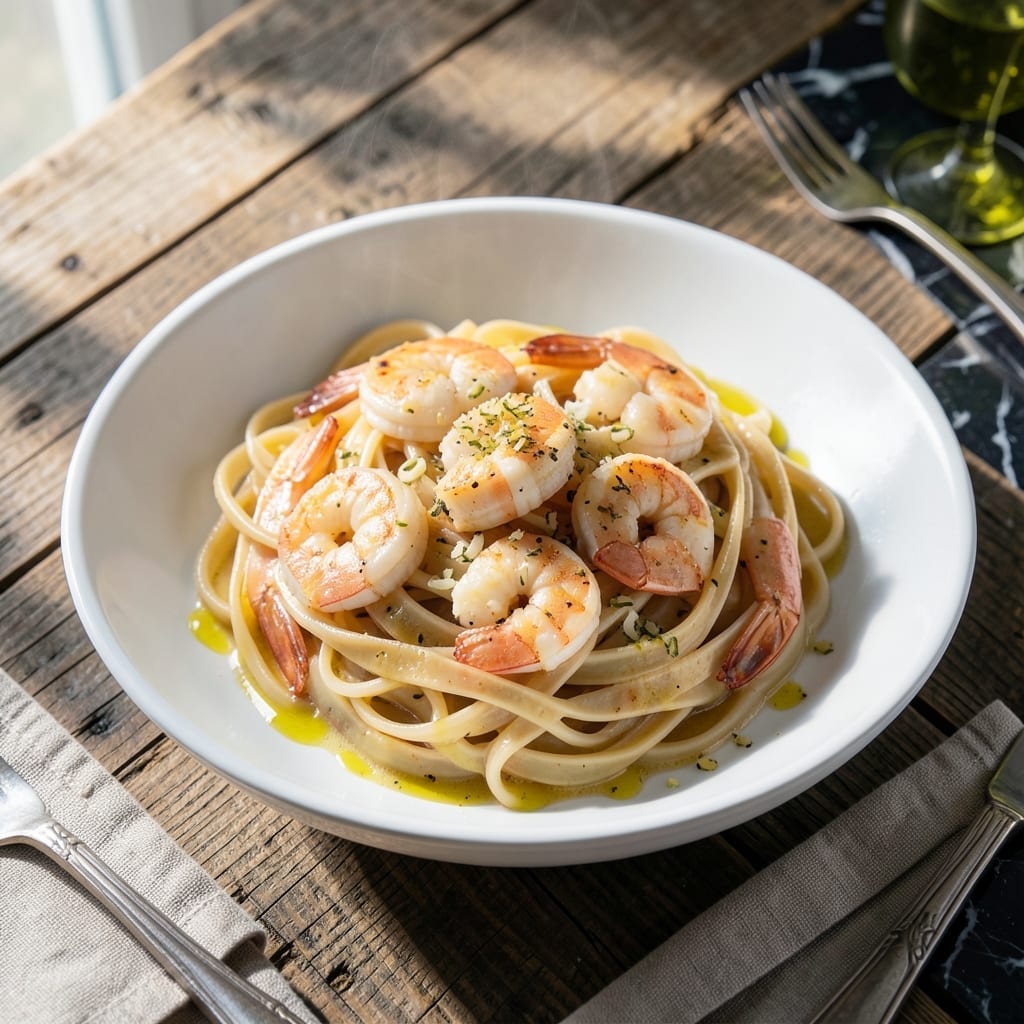
This one-pot shrimp pasta delivers restaurant-quality results with minimal cleanup. The secret lies in cooking everything together, allowing the pasta to absorb the garlicky lemon-infused broth as it cooks.
I developed this method to maximize flavor while keeping things simple. The shrimp cooks directly in the starchy pasta water, creating a rich, velvety sauce that clings to every noodle.
You’ll end up with tender shrimp, perfectly al dente pasta, and a bright, garlicky sauce that’s ready in under 30 minutes. The lemon adds just enough acidity to balance the richness.
Pair with crusty bread to soak up every last drop of sauce. Here’s how to make this foolproof dish.
Ingredients for One Pot Shrimp Pasta
Everything cooks together in one pot for maximum flavor with minimal effort.
| Ingredient | Amount | Notes |
|---|---|---|
| Linguine Pasta 🍝 | 12 oz | Or spaghetti, uncooked |
| Large Shrimp 🍤 | 1 lb | Peeled, deveined, tails on or off |
| Unsalted Butter 🧈 | 4 tbsp | For rich, velvety sauce |
| Garlic Cloves 🧄 | 6 cloves | Minced for bold flavor |
| Lemon Juice 🍋 | ¼ cup | Freshly squeezed preferred |
| Lemon Zest 🍋 | 1 tbsp | From 1-2 lemons |
| Chicken Broth 🥣 | 4 cups | Low-sodium for control |
| Dry White Wine 🍷 | ½ cup | Optional, deglaze pan |
| Red Pepper Flakes 🌶️ | ½ tsp | Adjust for heat preference |
| Fresh Parsley 🌿 | ¼ cup | Chopped, for garnish |
| Parmesan Cheese 🧀 | ½ cup | Freshly grated from block |
| Salt 🧂 | 1 tsp | Kosher or sea salt |
| Black Pepper 🌶️ | ½ tsp | Freshly ground preferred |
The shrimp is the star here. Wild-caught from Trader Joe’s or Whole Foods is my go-to—farm-raised works too (just check the label for additives). Size matters: large or jumbo hold up better to cooking. If buying frozen, thaw in cold water first (the good stuff, not the pre-cooked kind). The pasta soaks up all that garlicky lemon broth, so don’t skimp on quality linguine.
No white wine? Extra broth with a splash of lemon juice gets you close. Fresh parsley can be basil or cilantro if that’s what you’ve got. The Parmesan is optional but worth it—Parmigiano-Reggiano if you’re feeling fancy. For a lighter version, swap butter for olive oil (same amount). The red pepper flakes? Skip if you’re sensitive to heat (or double them if you’re not).
This keeps 3-4 days in the fridge—sauce thickens as it cools, so add a splash of broth when reheating. Freezes well for 2 months (without the shrimp, which gets rubbery). Leftovers taste even better the next day once flavors meld (trust me on this one).
Why You’ll Love This Recipe
- One Pot Wonder: I toss everything in a single pot—linguine, shrimp, butter, garlic—and let it simmer. No colander, no extra bowls, just easy cleanup.
- Garlic Butter Bliss: That first bite with buttery garlic shrimp and a squeeze of lemon? I’ll admit I’ve licked the plate.
- Weeknight Hero: Between us, this is my Tuesday dinner savior—fancy enough for company but fast enough for a harried weeknight.
- Leftovers? Please: Honestly, it tastes even better the next day. The shrimp soak up all that garlicky butter overnight.
Step-by-Step Instructions for One Pot Shrimp Pasta
Easier than it looks—this all comes together in one pot with minimal cleanup.
Step 1: Sauté Shrimp and Aromatics
In a large pot or Dutch oven, melt 4 tbsp unsalted butter over medium heat. Add the 1 lb large shrimp and cook for 2-3 minutes per side until pink and opaque. Don’t overcrowd the pot—work in batches if needed.
Remove the shrimp and set aside. In the same pot, add 6 cloves minced garlic cloves and 0.5 tsp red pepper flakes. Sauté for 30 seconds until fragrant—be careful not to burn the garlic, as it turns bitter quickly.
Step 2: Deglaze and Add Liquids
Pour in 0.5 cup dry white wine to deglaze the pot, scraping up any browned bits from the bottom with a wooden spoon. Let the wine simmer for 2 minutes until reduced by half.
Add 4 cups chicken broth, 0.25 cup lemon juice, and 1 tbsp lemon zest. Stir in 12 oz linguine pasta, ensuring it’s fully submerged in the liquid. Bring to a gentle boil.
Step 3: Simmer Until Pasta is Tender
Reduce heat to medium-low and let the mixture simmer uncovered for 10-12 minutes, stirring occasionally. The pasta should absorb most of the liquid and become al dente.
If the mixture seems dry before the pasta is cooked, add a splash of water or extra broth. The key is to keep the liquid level just enough to cook the pasta through without making it mushy.
Step 4: Finish with Shrimp and Cheese
Return the cooked shrimp to the pot along with 0.5 cup parmesan cheese. Stir gently to combine, allowing the cheese to melt into the sauce. Season with 1 tsp salt and 0.5 tsp black pepper, adjusting to taste.
The sauce should be creamy and coat the pasta evenly. If it’s too thick, add a little more broth or pasta water to loosen it up.
Step 5: Garnish and Serve
Remove from heat and stir in 0.25 cup fresh parsley. Let the dish sit for 2-3 minutes to allow the flavors to meld together.
Serve immediately while hot, garnished with extra parsley and a sprinkle of parmesan cheese if desired. Each serving should have a generous portion of shrimp and pasta with a light, lemony sauce.
Pro Tips For Making One Pot Shrimp Pasta
- Cook Shrimp Last: I learned this the hard way—shrimp cook in 2-3 minutes, so add them only after the pasta is nearly done to avoid rubbery, overcooked shrimp.
- Salt the Pasta Water: Use about 1 tablespoon of salt per 4 quarts of water—more than you think, especially since you’re using unsalted butter.
- Zest Before Juicing: Sounds weird, but it works: zest the lemon first, then juice it, so you can add both to the dish for extra brightness without wasting any.
- Reserve Pasta Water: Before draining, scoop out ½ cup of starchy pasta water—it’s the thing that matters most for loosening the sauce and binding everything together.
Pro Cooking Tips for Great one pot shrimp pasta
Perfect Pasta Timing
Start checking the pasta at 8 minutes—it should be nearly done but still have a slight bite. The residual heat will finish cooking it in the final steps. I use De Cecco linguine for consistent results. 💡
Shrimp Cooking Secret
Don’t overcook the shrimp initially—just 2-3 minutes per side until opaque. They’ll cook further when returned to the pot. Wild-caught shrimp from Trader Joe’s stay tender longest.
Liquid Balance
If your pan looks dry before pasta is done, add ½ cup hot water at a time. The starch released from the pasta should create a silky sauce. I keep a kettle simmering nearby for quick adjustments.
Cheese Melting Tip
Remove from heat before adding ½ cup parmesan to prevent clumping. Use Parmigiano-Reggiano for the best melt. Stir gently to create long, velvety strands of cheese through the dish.
Resting Matters
Let the dish rest off-heat for 2-3 minutes before serving. This allows the sauce to thicken slightly and the flavors to meld. I notice the lemon brightens during this time. 🌟
Stirring Strategy
Stir only when necessary to prevent breaking the pasta. Use tongs to gently lift and turn the noodles. The garlicky butter at the bottom is flavor gold—distribute it well.
Nutrition Facts
Frequently Asked Questions
Can I use frozen shrimp instead of fresh?
Yes, just thaw it completely in cold water first and pat dry. Frozen shrimp works well, but avoid pre-cooked varieties as they’ll turn rubbery.
What if my pasta is still hard before the liquid is gone?
Add ½ cup hot water or broth and continue cooking. The starch from the pasta will help create a creamy sauce as it finishes.
Can I make this ahead of time?
It keeps well for 3-4 days refrigerated, but the pasta absorbs more liquid over time. Add a splash of broth when reheating.
What pasta shapes work best?
Linguine or spaghetti are ideal, but penne or fettuccine also work. Avoid very thick shapes that may not cook evenly.

- 4C Bread Crumbs Meatballs Recipe: Crispy Crust and Juicy Centers - September 25, 2026
- 6 Oz Chocolate Chip Cookie Recipe: Perfectly Balanced Crispy Edges and Chewy Hearts - September 25, 2026
- 6-Inch Coffee Cake Recipe: Vanilla Bean Swirls and Buttery Streusel Topping - September 25, 2026