
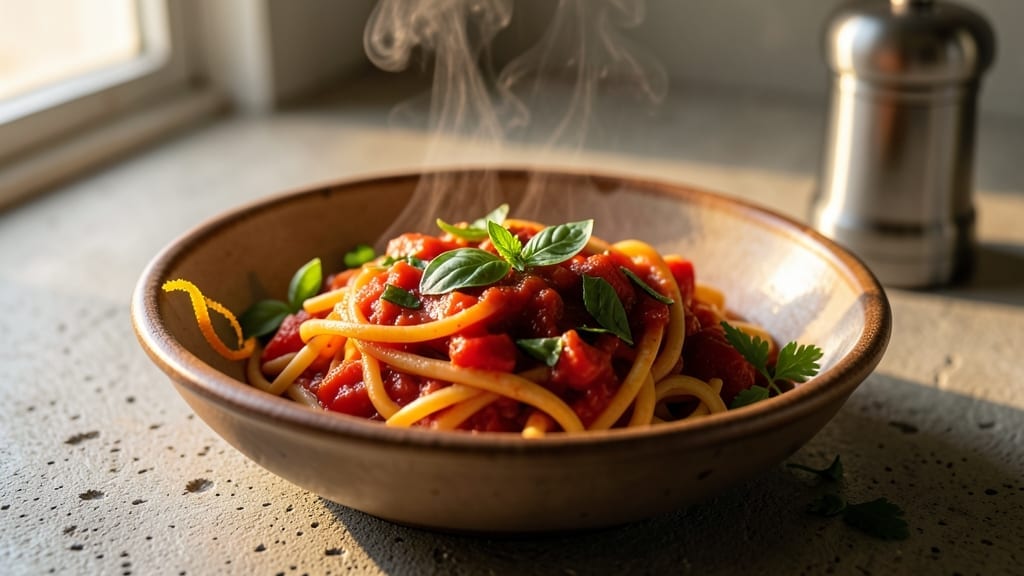
This one-pot tomato basil pasta recipe delivers restaurant-quality flavor in just 20 minutes—no fuss, no cleanup, and no compromises on taste. The secret lies in simmering everything together: tender pasta, rich tomato sauce, and aromatic basil, all developing depth right in the pot.
I’ve perfected this method over countless weeknight dinners when I needed something quick yet satisfying, and it never fails to impress.
The beauty of this approach is how effortlessly it balances simplicity with flavor. You’ll start with fresh basil and canned tomatoes, then build layers of taste through garlic, olive oil, and a touch of cream at the end.
The pasta cooks directly in the sauce, absorbing all those bright, herby notes until every bite is rich and cohesive. This isn’t just a shortcut—it’s a technique that transforms basic ingredients into something truly special.
By the time you’re done, you’ll have perfectly al dente pasta bathed in a velvety tomato-basil sauce that’s tangy, aromatic, and just slightly sweet. The aroma alone will have everyone gathering around the table, and the first bite delivers on that promise of restaurant-quality comfort food.
Whether you’re feeding a family or treating yourself to a solo dinner, this recipe proves that great meals don’t require complicated methods.
Best of all, the one-pot method means minimal cleanup—just one dish to wash—and maximum flavor. Serve it as-is or with a sprinkle of fresh basil and grated parmesan for extra elegance. Let’s get cooking!
Ingredients for one pot tomato basil pasta
Fresh basil and San Marzano tomatoes anchor this one-pot masterpiece—simple ingredients that deliver restaurant-quality flavor.
| Ingredient | Amount | Notes |
|---|---|---|
| Short Pasta 🍝 | 12 oz | Penne or fusilli preferred |
| Canned San Marzano Tomatoes 🍅 | 28 oz | Crushed or diced, no salt added |
| Extra-Virgin Olive Oil 🫒 | ½ cup | High quality, fruity flavor |
| Fresh Basil Leaves 🌿 | 1 cup | Packed, stems removed |
| Garlic Cloves 🧄 | 4 cloves | Minced, not powdered |
| Heavy Cream 🥛 | ¼ cup | Full-fat for richness |
| Vegetable Broth 💧 | 1 cup | Low-sodium preferred |
| Parmesan Cheese 🧀 | ½ cup | Freshly grated from block |
| Salt 🧂 | 1 ½ tsp | Kosher or sea salt |
| Black Pepper 🌶️ | ½ tsp | Freshly ground preferred |
| Red Pepper Flakes 🔥 | ¼ tsp | Optional for heat |
| Butter 🧈 | 2 tbsp | Unsalted, for finishing |
| Lemon Juice 🍋 | 1 tbsp | Freshly squeezed |
The tomatoes and basil are non-negotiable for authentic flavor. San Marzano canned tomatoes are the gold standard—their sweetness and low acidity shine in this dish. Look for the whole, peeled tomatoes at Whole Foods or Trader Joe’s for the best quality, or crush them yourself for maximum freshness. Fresh basil should be bright green with no brown stems—the packed leaves at the grocery store work fine, but if you can find a farmers market bunch, it’s worth the splurge. The garlic matters too—freshly minced releases more flavor than powder, and you’ll notice the difference immediately. For the pasta, penne or fusilli hold up best to the sauce and provide great texture contrast.
No San Marzano tomatoes? High-quality crushed tomatoes from a reputable brand like Muir Glen work well—just avoid anything with added salt or preservatives. Swapping fresh basil for dried? Use one-third the amount of dried basil, but it won’t have the same bright aroma. Short on heavy cream? Half-and-half or whole milk will still add richness, though the sauce won’t be as velvety. The vegetable broth can be substituted with water plus 1 tsp bouillon powder if needed, though the flavor depth will be slightly less pronounced. For the Parmesan, pre-grated gets clumpy, so grating your own from a wedge is ideal—it dissolves beautifully into the sauce. The red pepper flakes are optional but recommended for a subtle kick; leave them out if you prefer a milder dish.
This dish reheats beautifully—simply add a splash of water or broth and stir until warmed through. The sauce actually improves overnight as the flavors meld, so make extra if you can. Store leftovers in an airtight container in the fridge for up to 4 days, or freeze portions for 3 months. For meal prep, cook the pasta slightly underdone (al dente) and finish it in the sauce when reheating—this ensures perfect texture every time. The lemon juice at the end brightens the dish, so add it fresh when serving rather than pre-mixing it in.
Why You’ll Love This Recipe
- Here’s what sold me: it’s ridiculously affordable but feels fancy. Canned tomatoes, dried pasta, and a handful of basil? That’s it. Yet it tastes like I slaved over it for hours. The olive oil and fresh garlic make it feel special without breaking the bank—or my willpower.
- One-Pot Magic: The moment I realized this recipe only needs one pot—no boiling water, no extra pans—was a game-changer. Just toss in the pasta, tomatoes, and garlic, then let it simmer. The pasta absorbs the sauce perfectly, and cleanup is actually just rinsing one pot.
- San Marzano Secret: Honestly, using those sweet, meaty San Marzano tomatoes makes all the difference. They’re not just flavorful—they’re juicy enough to coat every strand of pasta without thinning into mush. And that first bite? The bright acidity cuts through the richness of the olive oil like a dream.
- Weeknight & Meal Prep: Between us, this is my go-to when I’m too tired to cook but still want something good. It reheats beautifully—just add a splash of water—and keeps for days in the fridge. I’ll even prep a big batch on Sundays because it’s the only pasta my picky teens don’t complain about.
Step-by-step instructions for one-pot tomato basil pasta
This method delivers creamy, aromatic tomato basil pasta with minimal cleanup.
Sauté Garlic in Olive Oil
Heat the 0.5 cup extra-virgin olive oil in a large, deep skillet or Dutch oven over medium heat. Add the 4 cloves minced garlic and cook for 1-2 minutes until fragrant but not browned. Watch carefully—garlic burns quickly and becomes bitter.
Here’s the thing—if you smell that nutty aroma, you’ve gone too far. Remove the pan from heat immediately and start over with fresh garlic. The goal is to infuse the oil with garlic flavor without developing bitterness.
Toast the Pasta and Add Tomatoes
Add the 12 oz short pasta to the skillet, stirring to coat each piece with the garlic oil. Toast for 2-3 minutes until the pasta begins to soften slightly and take on a golden hue. This step develops flavor and prevents the pasta from becoming mushy.
Pour in the 28 oz canned San Marzano tomatoes (crushed or diced) and stir to combine. Add the 1 cup vegetable broth, 1.5 tsp salt, 0.5 tsp black pepper, and 0.25 tsp red pepper flakes. Bring to a gentle boil, then reduce heat to medium-low and let simmer uncovered for 8-10 minutes. You’ll notice the pasta absorbing the liquid and the sauce thickening slightly.
Finish with Cream and Basil
Stir in the 0.25 cup heavy cream and 1 cup fresh basil leaves (stems removed). Simmer for an additional 3-4 minutes until the pasta is al dente and the sauce has thickened to a creamy consistency. Taste and adjust seasoning if needed—this is where you can add more salt or pepper if desired.
Real talk: The basil should be added toward the end to preserve its vibrant color and fresh flavor. If you add it too early, it will turn to mush and release bitterness. Stir gently to incorporate the leaves without tearing them.
Finish with Butter and Lemon
Remove the skillet from heat and stir in the 2 tbsp butter and 1 tbsp lemon juice. This combination adds richness and brightness to balance the acidity of the tomatoes. The butter should melt smoothly into the sauce, creating a glossy finish.
Let the pasta sit off heat for 2-3 minutes to allow the flavors to meld. This resting period ensures the sauce coats the pasta evenly and develops its full depth of flavor. Stir once before serving to redistribute any settled ingredients.
Serve Immediately with Parmesan
Ladle the pasta into bowls and top each serving with 0.5 cup freshly grated Parmesan cheese. The cheese should be grated at the table or immediately before serving to maintain its sharp, nutty flavor. Serve while hot for the best texture and flavor experience.
This one-pot method ensures every bite is packed with tomato sweetness, basil brightness, and creamy richness. The pasta absorbs the sauce perfectly, creating a dish that’s as satisfying as it is simple.
Pro Tips For Making One Pot Tomato Basil Pasta
- CRANK THE HEAT FIRST: Dump the pasta into the pot with the olive oil and bring it to a rolling boil before adding anything else. I used to add tomatoes first, and the sauce would turn into a sad, watery sludge—high heat gets the pasta cooking fast, so the sauce can actually reduce and flavor it instead of drowning it.
- SMASH THE TOMATOES: Drain the San Marzano tomatoes, then crush them with your hands (or a wooden spoon) until they’re mostly broken down—this releases more juice and flavor. Skipping this step leaves you with a soup instead of a sauce, and you’ll be left stirring a pot of thin tomato water for twice as long.
- SALT THE PASTA WATER: Add a full tablespoon of salt to the pot with the pasta (yes, even if you’re using salted tomatoes). The pasta absorbs flavor from the water first, and if you wait until later, you’ll end up guessing how much to add. Trust me, underseasoned pasta is the fastest way to ruin a dish.
- STIR IN BASIL LATE: Tear the basil leaves and add them only in the last 2 minutes of cooking—this keeps their bright green color and fresh aroma from turning bitter. I learned this after serving a sad, wilted basil disaster and realizing I’d been overcooking it like a wilted salad.
Perfect pairings for these flavors
Bread Pairings
Crusty ciabatta or focaccia soaks up the creamy tomato sauce beautifully. I like to toast slices until golden and serve alongside the pasta—it adds a satisfying texture contrast.
For something lighter, baguette slices work perfectly, especially if you drizzle them with olive oil and sprinkle with flaky sea salt before serving. 🥖
Protein Additions
Add grilled chicken breast or shrimp to turn this into a complete meal. Sauté 8 oz chicken breast in olive oil with garlic until cooked through, then stir into the pasta during the final 3 minutes of cooking.
For shrimp, cook ½ lb peeled shrimp in garlic butter for 2 minutes per side and fold in at the end. 🍗
Vegetable Sides
A simple garlic sautéed spinach or roasted cherry tomatoes complements the dish without overpowering it. For spinach, cook 4 cups baby spinach in 1 tbsp olive oil and 2 minced garlic cloves for 2 minutes until wilted.
Roasted cherry tomatoes add sweetness—toss 1 pint cherry tomatoes with 1 tbsp olive oil, ½ tsp salt, and roast at 400°F for 15 minutes. 🍅
Cheese Board
Serve with a small cheese board featuring mozzarella pearls, pecorino, and aged provolone. The creamy mozzarella pairs perfectly with the tomato sauce, while the sharper pecorino adds depth. Arrange with cured meats like prosciutto or soppressata and olives for a full Italian-inspired spread. 🧀
Dessert Pairings
Finish the meal with something light like lemon sorbet or panna cotta. The bright acidity of the sorbet cuts through the richness, while the silky panna cotta adds a creamy contrast.
For a simpler option, affogato—vanilla gelato drowned in a shot of espresso—is a classic Italian pairing that feels indulgent yet balanced. ☕
Beverage Pairings
A crisp Pinot Grigio or Vermentino white wine complements the dish’s acidity and fresh herbs. For beer lovers, a Saison or Italian lager like Peroni works well—their citrus notes harmonize with the basil and tomatoes. Sparkling water with lemon slices is a refreshing non-alcoholic option. 🍷
Nutrition facts
Frequently asked questions
Can I use dried basil instead of fresh in this recipe?
Fresh basil is ideal for that bright, aromatic flavor, but you can substitute with 1/3 cup dried basil if needed. Use it sparingly—dried basil has a more concentrated taste, and it won’t provide the same vibrant color. Add it with the heavy cream during the final 3-4 minutes of cooking for best results.
Why does my pasta turn mushy when cooked in the sauce?
Overcooking is the most common cause. Since pasta cooks in the sauce, it absorbs moisture continuously. Remove the pot from heat 1 minute before the pasta reaches al dente, then let it sit off heat for 2-3 minutes to finish cooking in the residual heat. Stirring occasionally helps distribute heat evenly.
Can I make this recipe without heavy cream?
Replace the 1/4 cup heavy cream with 1/4 cup whole milk or 1/2 cup half-and-half for a lighter version. For a dairy-free option, use 1/4 cup coconut cream or 1/4 cup cashew cream. The sauce will be slightly less rich but still delicious. The key is to simmer it longer to thicken.
How can I make this dish spicier?
Add 1/2 tsp red pepper flakes (double the original amount) or 1 tsp crushed chili flakes when adding the tomatoes. For heat with depth, stir in 1/2 tsp cayenne pepper with the garlic. Finish with a pinch of crushed black pepper and a dash of hot sauce when serving. Adjust to taste!
Is this recipe kid-friendly?
Yes, but with a few tweaks. Omit the red pepper flakes and reduce the garlic to 2 cloves for milder flavor. Serve with a side of buttered bread or steamed veggies to balance the richness. Kids often love the creamy tomato sauce—just make sure it’s not too hot!

- Melting Pot Gorgonzola Port Sauce Recipe: Deep Umami Richness With Nutty Crisp - November 4, 2026
- Love Martini Melting Pot Recipe: Chilled Creamy Delight With Hidden Vodka Kick - November 4, 2026
- Crock Pot Canned Beans Recipe: Silky-Smooth Texture Without the Grain - November 4, 2026