
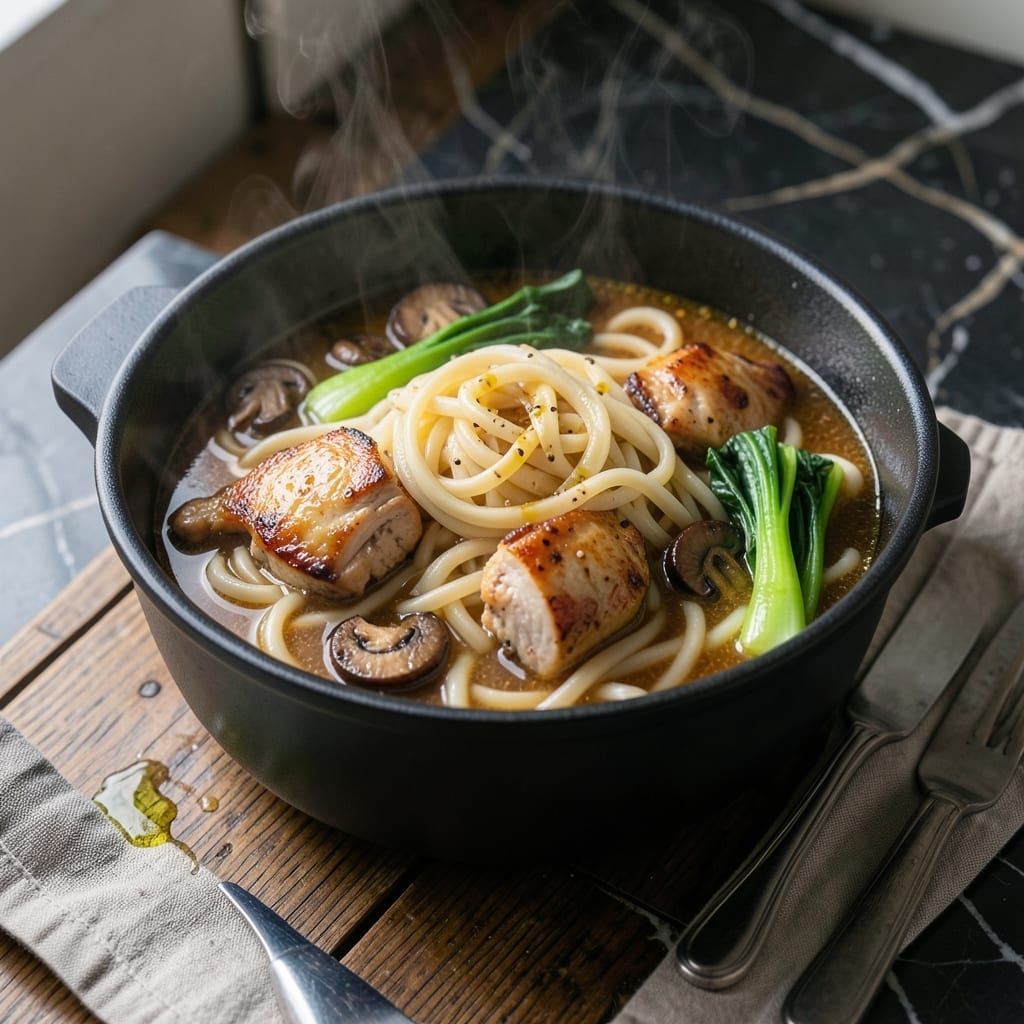
This one-pot udon delivers restaurant-quality results with minimal effort and cleanup. The method simmers noodles directly in a rich, flavorful broth, allowing them to absorb every bit of savory depth while maintaining their signature chewy texture.
I developed this approach after years of struggling to balance broth seasoning with perfectly cooked noodles. The key is timing—adding the udon just as the broth reaches its peak flavor ensures they cook through without turning mushy.
What you get is a bowl of tender udon swimming in a deeply aromatic broth, packed with umami from the first slurp to the last. The one-pot technique means all the flavors meld together beautifully.
Ready in under 30 minutes, this dish proves that weeknight dinners can be both simple and extraordinary.
Ingredients for One Pot Udon
Quality ingredients create restaurant-level depth in this simple one-pot wonder.
| Ingredient | Amount | Notes |
|---|---|---|
| Dried Udon Noodles 🍜 | 8 oz | Thick wheat noodles preferred |
| Dashi Stock 🥣 | 4 cups | Japanese fish stock base |
| Soy Sauce 🫒 | ¼ cup | Low-sodium recommended |
| Mirin 🍶 | 2 tbsp | Sweet rice cooking wine |
| Sake 🍶 | 2 tbsp | Dry Japanese rice wine |
| Miso Paste 🍛 | 1 tbsp | White or red variety |
| Garlic Cloves 🧄 | 3 cloves | Minced for depth of flavor |
| Fresh Ginger 🌿 | 1 tbsp | Peeled and grated fine |
| Green Onions 🧅 | 3 whole | Thinly sliced for garnish |
| Boneless Chicken Thighs 🍗 | 1 lb | Skinless, cut into bite-sized pieces |
| Shiitake Mushrooms 🍄 | 4 oz | Fresh or rehydrated dried |
| Sesame Oil 🫒 | 1 tsp | Toasted variety for aroma |
| Soft Tofu 🧈 | ½ lb | Cubed, optional protein |
| Nori Seaweed Sheets 🌊 | 1 sheet | Cut into strips for garnish |
Dashi is non-negotiable for authentic flavor. Japanese markets carry instant dashi granules—Kallo or Hondashi brands are reliable. For the udon, fresh noodles from the refrigerated section elevate the dish, but dried works perfectly (just boil 1 minute less). Look for low-sodium soy sauce to control seasoning. The mirin and sake should be cooking-grade, not premium drinking varieties.
No dashi? Combine chicken broth with a pinch of MSG for similar umami depth. Swap chicken for shrimp or tofu if preferred. Fresh shiitake mushrooms are ideal, but cremini or white mushrooms work in a pinch. Mirin can be replaced with 1 tbsp sugar + 1 tbsp white wine. The miso paste adds complexity—white miso is milder, red miso more robust.
Store dashi granules in a cool, dark place for up to 1 year. Fresh udon lasts 2-3 days refrigerated. The broth actually improves overnight—make it ahead for deeper flavor. Leftovers keep 3-4 days refrigerated or freeze for 2 months.
Why You’ll Love This Recipe
- One Pot Wonder: I toss in the udon, dashi, and sauces—no extra pans, no fuss.
- Umami Bomb: The combo of mirin and sake with dashi makes the broth ridiculously rich.
- Weeknight Hero: Honestly, it’s my go-to when I need dinner fast but still crave restaurant flavor.
- Budget Friendly: Dried udon and simple pantry staples stretch far without breaking the bank.
Step-by-Step Instructions for One Pot Udon
This streamlined method delivers perfectly chewy noodles in a rich, savory broth with minimal effort.
Step 1: Sauté Aromatics and Protein
Heat the sesame oil in a large pot over medium-high heat. Add the boneless chicken thighs and cook for 4-5 minutes until lightly browned on all sides. This builds a flavor foundation for your broth.
Push the chicken to one side and add the 3 cloves garlic cloves, 1 tbsp fresh ginger, and shiitake mushrooms. Sauté for 2-3 minutes until the mushrooms soften and the aromatics become fragrant. The garlic should be golden but not burnt.
Step 2: Build the Broth Base
Pour in the 4 cups dashi stock, 0.25 cup soy sauce, 2 tbsp mirin, and 2 tbsp sake. Stir to combine and bring to a gentle simmer. The liquid should look lightly colored and smell deeply savory.
Whisk in the 1 tbsp miso paste until fully dissolved. This adds complexity and umami depth to your broth. Reduce heat to medium-low and let the mixture simmer for 5 minutes to meld the flavors.
Step 3: Add Noodles and Protein
Add the 8 oz dried udon noodles to the pot, ensuring they’re submerged in the broth. If using soft tofu, gently add the cubed pieces now as well. The noodles will soften and plump as they absorb the flavorful liquid.
Simmer for 8-10 minutes, stirring occasionally, until the noodles are chewy and tender and the chicken is cooked through. The broth should be slightly reduced and deeply aromatic, coating the back of a spoon.
Step 4: Finish and Garnish
Taste and adjust seasoning if needed. The broth should be well-balanced—savory from the dashi and soy, with a touch of sweetness from the mirin. Remove from heat when the noodles reach your desired texture.
Ladle into bowls and garnish with thinly sliced green onions and strips of nori seaweed sheets. Serve immediately while hot. The noodles will continue to absorb broth, so eat promptly for the best texture.
Pro Tips For Making One Pot Udon
- Pre-Soak the Udon: I learned this the hard way—dried udon needs a 5-minute soak in warm water before cooking, or it’ll stay chewy in the center. Sounds tedious, but it cuts the simmering time in half.
- Bloom the Dashi: Heat your dashi stock to just under a boil before adding anything else. It wakes up the flavor so the broth doesn’t taste flat.
- Skip the Overcrowding: Resist the urge to dump all the noodles in at once—add them in batches if your pot’s small, or they’ll clump and cook unevenly.
- Deglaze with Sake: After browning any proteins or veggies, pour in the sake first to scrape up those sticky bits. It adds a depth that just simmering can’t.
Troubleshooting This Dish
Noodles Too Mushy
This happens when udon cooks too long. Add noodles only after broth simmers for 5 minutes, then cook exactly 8-10 minutes. Use dried udon for better texture control. Test doneness at 8 minutes—they should be chewy, not soft. 💡
Broth Too Bland
Boost umami with 1 extra tbsp miso paste or 1 tsp dashi granules. If using low-sodium soy sauce, add a pinch of salt. Simmer for an additional 5 minutes to meld flavors. Taste frequently and adjust gradually.
Chicken Overcooked
Cut thighs into bite-sized pieces for even cooking. Sear first for 4-5 minutes, then simmer in broth for only 8-10 minutes. Remove chicken early if needed and return before serving. Internal temp should reach 165°F.
Broth Too Salty
Dilute with ½ cup water or extra dashi and simmer another 5 minutes. Avoid adding more soy sauce or miso. Next time, use low-sodium soy sauce and taste broth before adding noodles.
Miso Clumping
Whisk 1 tbsp miso paste with 2 tbsp warm broth in a small bowl before adding to the pot. This creates a smooth slurry. Avoid boiling miso directly—it kills beneficial probiotics and can make it bitter.
Noodles Stick Together
Stir noodles immediately after adding to broth. Use a large pot to give them space. If they still clump, rinse briefly under cold water before cooking. Serve promptly once tender.
Nutrition Facts
Frequently Asked Questions
Can I use fresh udon instead of dried?
Yes, but reduce cooking time to 5-7 minutes. Fresh udon cooks faster and can turn mushy if left too long. Add them during the last stage of simmering.
What if I don’t have dashi stock?
Substitute with 4 cups chicken broth plus 1 tsp MSG or a dash of fish sauce. The flavor won’t be identical but will still be tasty.
How do I store leftovers?
Keep in an airtight container in the fridge for up to 3 days. Reheat gently on the stove with a splash of water to prevent drying.
Can I make this vegetarian?
Swap chicken for tofu or tempeh and use vegetable dashi or mushroom broth. The umami will still shine.

- 6 Oz Chocolate Chip Cookie Recipe: Perfectly Balanced Crispy Edges and Chewy Hearts - September 25, 2026
- 6-Inch Coffee Cake Recipe: Vanilla Bean Swirls and Buttery Streusel Topping - September 25, 2026
- 1 Hour Soup Recipe: Velvety Richness Without the Wait - September 25, 2026