
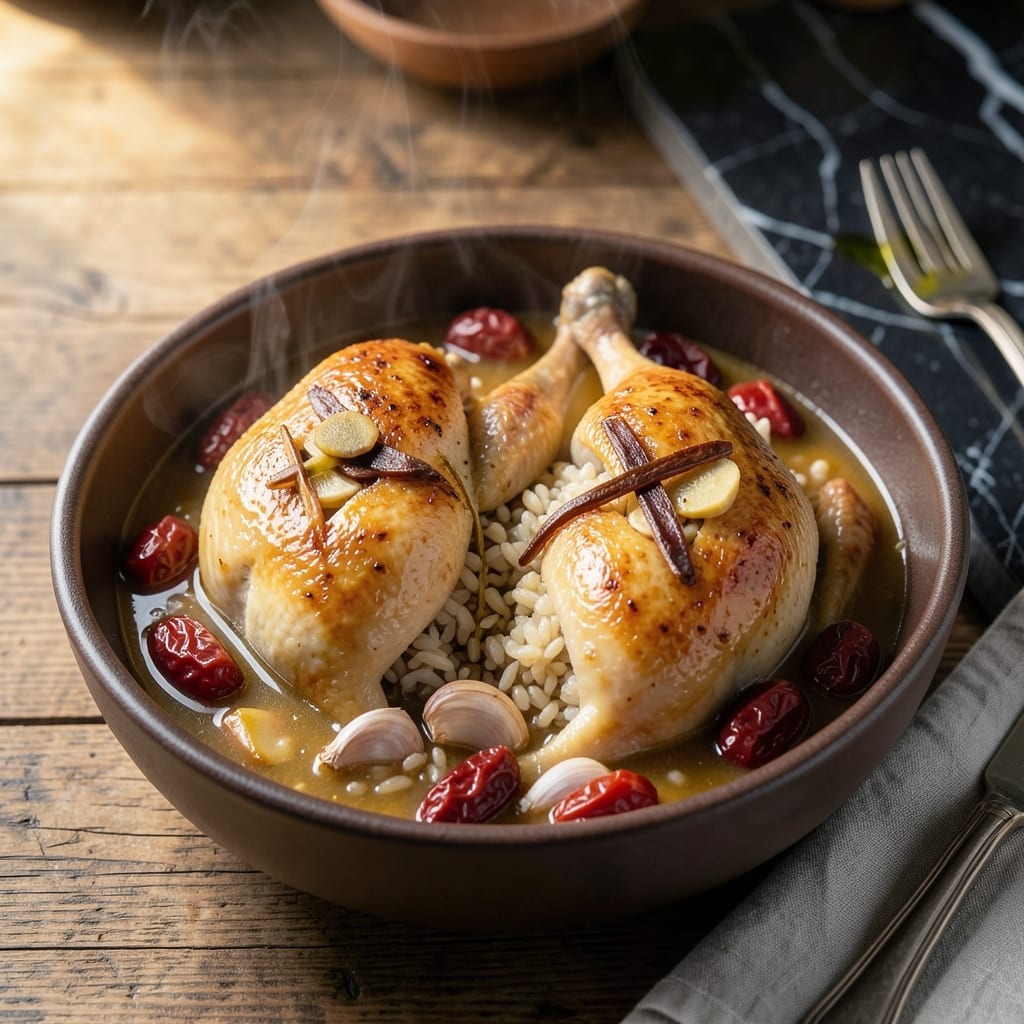
Traditional Korean ginseng chicken soup doesn’t require hours of simmering to achieve its deeply comforting, restorative qualities. This method honors the authentic flavors while adapting to modern cooking.
By using an Instant Pot, the rich broth develops in 40 minutes with the same depth as stovetop versions. The key is layering the ingredients—whole young chicken, glutinous rice, ginseng, and jujubes—to extract maximum flavor.
The result is a nourishing soup with tender chicken, fragrant ginseng, and a broth that’s both light and deeply savory. Every spoonful delivers the warmth and tradition of a dish meant to heal and satisfy.
Perfect for cold days or when you need a meal that feels like a hug in a bowl.
Ingredients for Samgyetang Instant Pot
Whole hens, fragrant ginseng, and jujubes create this healing Korean classic in record time.
| Ingredient | Amount | Notes |
|---|---|---|
| Cornish Hens 🍗 | 2 whole | Whole, about 1.5 lb each |
| Glutinous Rice 🍚 | ¾ cup | Sweet rice, rinsed and soaked |
| Korean Ginseng 🌱 | 4 pieces | Fresh or dried root |
| Jujubes 🍈 | 10 pieces | Dried red dates, pitted |
| Garlic Cloves 🧄 | 6 cloves | Peeled and smashed |
| Fresh Ginger 🌿 | 1 whole | 2-inch piece, sliced |
| Scallions 🧅 | 4 whole | White and green parts separated |
| Soy Sauce 🫒 | 2 tbsp | Low-sodium preferred |
| Sesame Oil 🫒 | 1 tsp | Toasted for aroma |
| Sea Salt 🧂 | 1 tsp | Korean coarse salt preferred |
| Black Peppercorns 🌶️ | 10 pieces | Whole for broth |
| Water 💧 | 6 cups | Or chicken stock for richer broth |
| Gochugaru 🌶️ | ½ tsp | Korean red pepper flakes, optional |
The Cornish hens are non-negotiable for authenticity—look for 1.5 lb each at Whole Foods or Korean markets. Fresh Korean ginseng (insam) is ideal, but dried works too. Jujubes, often labeled as red dates, should be plump and meaty; avoid the hard, dry ones. Glutinous rice is a must (sometimes called sweet rice)—regular rice won’t give the right texture.
No Cornish hens? Small whole chicken (3-4 lbs) works, but adjust cooking time by 10 minutes. Substitute brown rice at half the amount if you can’t find glutinous rice. Fresh ginger can be swapped for ground ginger at a quarter the amount. For extra depth, add 1 tbsp fish sauce (ensure it’s Korean brand for authenticity).
The soup tastes even better the next day. Store in the fridge for up to 4 days or freeze for 3 months. Reheat gently to preserve the chicken’s tenderness. The rice will absorb more liquid over time, so add a splash of water when reheating.
Why You’ll Love This Recipe
- Set and Forget: I toss everything into the Instant Pot, press a button, and let the ginseng and jujubes work their magic while I do laundry.
- Rich Comfort: The Cornish hen falls off the bone, and the glutinous rice soaks up all that garlicky, ginseng-infused broth.
- Feeds the Crew: I make a double batch on Sunday and pack it for lunch all week—my coworkers always ask what smells so good.
- Budget Stretch: One Cornish hen feeds two with leftovers, and the rice and ginseng make it feel like a fancy meal without the price tag.
Step-by-Step Instructions for Korean Ginseng Chicken Soup
Traditional technique meets modern convenience with these precise steps for authentic results.
Step 1: Prepare the Cornish Hens and Aromatics
Rinse the 2 whole Cornish Hens thoroughly under cold water and pat dry with paper towels. I like to trim any excess fat around the cavity for cleaner flavor. Stuff each cavity with 0.75 cup Glutinous Rice, 4 pieces Korean Ginseng, 10 pieces Jujubes, and 3 cloves Garlic Cloves per hen—this ensures even distribution of flavors.
Rub the outside of each hen with 1 tsp Sea Salt and 1 tsp Sesame Oil, massaging gently to coat evenly. This seasoning step is crucial for developing the soup’s base flavor profile.
Step 2: Sear the Hens for Depth of Flavor
Set your Instant Pot to Sauté function on Normal heat. Add the hens and sear for 3-4 minutes per side until the skin turns golden brown. You’ll hear a satisfying sizzle when they’re ready to turn—this creates a fond that will intensify the broth’s richness.
Remove the hens and set aside. Add the remaining 3 cloves Garlic Cloves, the 1 whole Fresh Ginger (sliced), 4 whole Scallions (white parts only), and 10 pieces Black Peppercorns to the pot. Sauté for 1-2 minutes until fragrant, then deglaze with 2 tbsp Soy Sauce.
Step 3: Pressure Cook to Perfection
Return the hens to the Instant Pot, breast-side up. Pour in the 6 cups Water, ensuring the liquid doesn’t exceed the maximum fill line. Secure the lid and set the valve to Sealing. Cook on High Pressure for 20 minutes—this is the optimal time for the hens to become fall-off-the-bone tender while the rice absorbs the ginseng-infused broth.
After cooking, allow a natural pressure release for 10 minutes, then quick-release any remaining pressure. The hens should register 165°F internally when tested with a meat thermometer.
Step 4: Finish with Fresh Aromatics and Seasoning
Carefully remove the hens from the pot and set aside. Skim any excess fat from the broth’s surface using a fine-mesh skimmer. Stir in the 0.5 tsp Gochugaru if using, then taste and adjust seasoning with additional Sea Salt or Soy Sauce as needed.
To serve, place each hen in a bowl and ladle the hot broth over the top. Garnish with the Scallions (green parts, thinly sliced) for a fresh finish. The broth should be clear and aromatic, with a subtle sweetness from the jujubes and a gentle heat from the ginseng.
Pro Tips For Making Samgyetang Instant Pot
- Pre-soak the rice: Glutinous rice needs 30 minutes in cold water before stuffing—otherwise it stays hard and undercooked, even under pressure.
- Sear the hens first: I learned this the hard way: a quick 2-minute sear on each side in the Instant Pot before pressure cooking adds depth and locks in juices.
- Skip the overfilling: Stuff the hens just until plump, not packed—overstuffing bursts the skin and turns your broth murky with loose grains.
- Use fresh ginseng: Dried ginseng works in a pinch, but fresh Korean ginseng (about 1 small root per hen) gives a cleaner, brighter flavor that doesn’t overpower.
Regional Styles of This samgyetang instant pot
Seoul-Style Traditional
In Korea, this dish is often prepared with fresh Korean red ginseng (hongsam) for its superior potency. The ginseng is typically 4-6 years old for optimal sweetness and medicinal properties. I always use Whole Foods for fresh ginseng when I can’t visit my local Korean market.
Jeonju Variation
This regional version includes chestnuts and pine nuts alongside the standard ingredients. The chestnuts add a nutty depth to the broth, while pine nuts provide a subtle crunch. Add ½ cup peeled chestnuts and 2 tbsp pine nuts when stuffing the hens.
Busan Coastal Twist
Near the coast, seafood elements are incorporated. Try adding 4-5 dried anchovies and 1 small piece of dried kelp to the broth for a subtle oceanic umami. These ingredients are staples in Busan markets and enhance the soup’s complexity. 🌊
Modern Fusion
For a contemporary take, some Seoul restaurants add shitake mushrooms and bok choy to the soup. Add ½ cup sliced shitake and 2 baby bok choy in the last 5 minutes of pressure cooking for a fresh, modern twist.
Royal Court Style
The royal version uses white ginseng (baeksam) and omits garlic for a cleaner flavor profile. The broth is lighter but still deeply aromatic. Use white Korean ginseng and reduce garlic to 2 cloves for an authentic royal court experience. 💛
Winter Solstice Special
Traditionally served on Dongji (winter solstice), this version includes black chicken (silkie) for its higher iron content. The dark meat creates a richer, more robust broth. Look for silkie chickens at specialty Asian markets.
Nutrition Facts
Frequently Asked Questions
Can I use regular rice instead of glutinous?
No, glutinous rice is essential for the traditional texture. Regular rice will turn mushy and won’t absorb the broth properly.
What if I don’t have Cornish hens?
Use a 3-4 lb whole chicken and increase pressure cooking time to 25 minutes. The flavor will still be rich and authentic.
Can I skip the ginseng?
You can, but it won’t be true samgyetang. Ginseng adds the signature earthy-sweet depth. For a milder taste, reduce to 2 pieces instead.
How do I know when it’s done?
The chicken should reach 165°F internally. After natural release, check that the meat falls off the bone easily and the rice is tender.

- 6 Oz Chocolate Chip Cookie Recipe: Perfectly Balanced Crispy Edges and Chewy Hearts - September 25, 2026
- 6-Inch Coffee Cake Recipe: Vanilla Bean Swirls and Buttery Streusel Topping - September 25, 2026
- 1 Hour Soup Recipe: Velvety Richness Without the Wait - September 25, 2026