
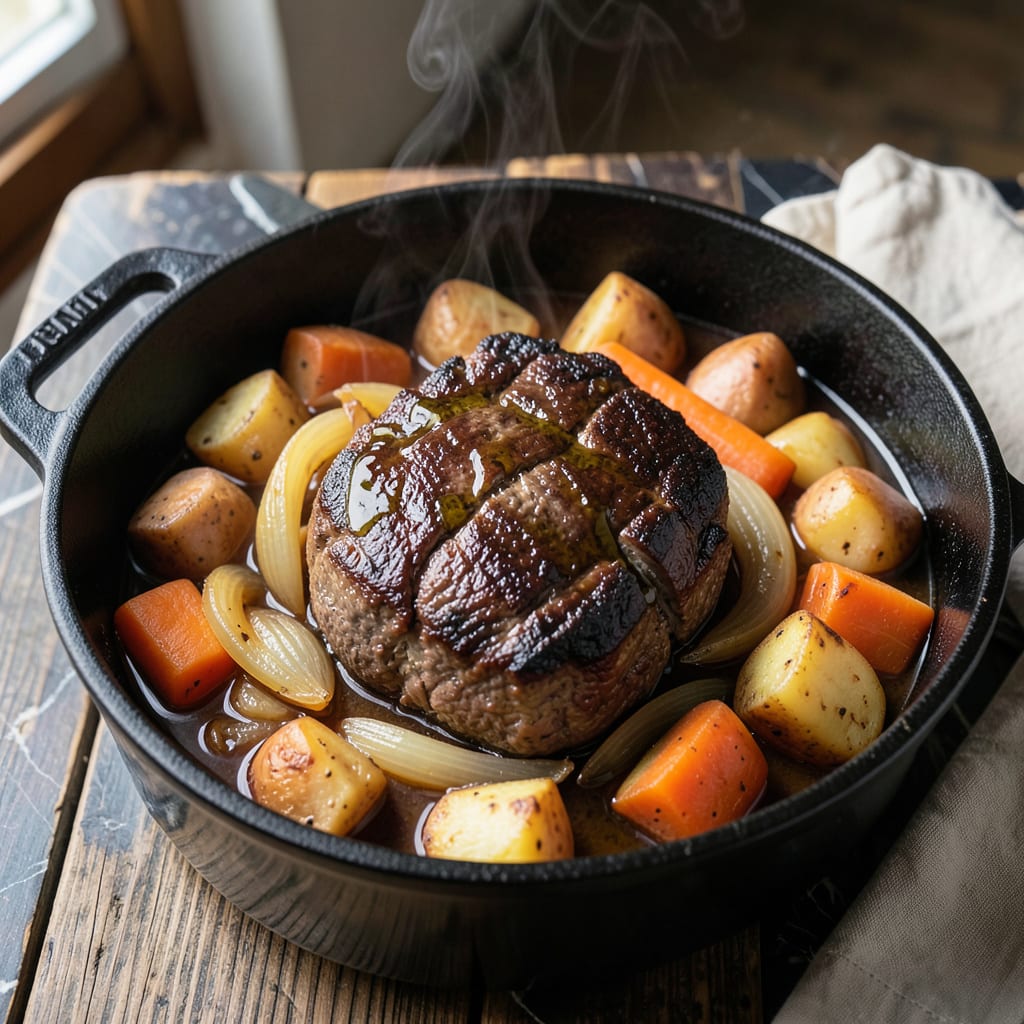
This pot roast transforms tough cuts into fall-apart tender perfection through slow braising. The onions melt into a rich, savory sauce that defines true comfort food.
With a hands-off approach and simple ingredients, this method delivers deep flavor without complicated techniques. Every bite is a reminder that the best meals often come from patience.
Ingredients for Onion Pot Roast
Slow-braised comfort starts with well-marbled beef and layers of sweet, melting onions.
| Ingredient | Amount | Notes |
|---|---|---|
| Chuck Roast 🥩 | 3 lb | Well-marbled, boneless preferred |
| Yellow Onions 🧅 | 4 whole | Large, thinly sliced |
| Carrots 🥕 | 4 whole | Peeled, cut into chunks |
| Russet Potatoes 🥔 | 3 whole | Peeled, quartered |
| Beef Broth 💧 | 2 cups | Low-sodium preferred |
| Red Wine 🍷 | 1 cup | Dry variety like Cabernet |
| Tomato Paste 🍅 | 2 tbsp | Double-concentrated preferred |
| Garlic Cloves 🧄 | 6 cloves | Minced for deep flavor |
| Fresh Thyme Sprigs 🌿 | 4 whole | Or 1 tsp dried thyme |
| Bay Leaves 🍃 | 2 whole | Dried, for aroma |
| Olive Oil 🫒 | 2 tbsp | Divided for searing and sautéing |
| Kosher Salt 🧂 | 2 tsp | Diamond Crystal preferred |
| Black Pepper 🌶️ | 1 tsp | Freshly ground for best results |
| All-Purpose Flour 🌾 | 2 tbsp | For thickening the sauce |
The chuck roast is non-negotiable here. Look for abundant marbling—this fat renders down during the long braise, creating that signature richness. Most butchers at Whole Foods or Local Grocery Stores will cube it for you if asked. The onions should be yellow and firm, as their natural sweetness balances the beef’s depth. Avoid pre-cut onions (they lose moisture too quickly).
No red wine? Substitute additional beef broth with 1 tbsp balsamic vinegar for acidity. Fresh thyme is ideal, but dried works at one-third the amount. If you’re out of tomato paste, 1/4 cup tomato sauce can stand in. For the potatoes, Yukon Golds add a buttery texture, but russets hold their shape better during the long cook.
This tastes even better the next day. Store leftovers in an airtight container for up to 4 days in the fridge, or freeze for 3 months. Reheat gently to preserve the meat’s tenderness (microwave at 50% power).
Why You’ll Love This Recipe
- Set It & Forget It: I toss the chuck roast, onions, and broth in the slow cooker before work and come home to a house that smells like Sunday dinner.
- Onion Love: The yellow onions melt into the beef, turning the broth so rich I sop it up with crusty bread.
- Feeds the Crew: One pot, one meal, and everyone from my picky nephew to my meat-and-potatoes dad asks for seconds.
- Leftovers for Days: Honestly, it tastes even better the next day—shredded over mashed potatoes or stuffed in a sandwich.
Step-by-Step Instructions for Onion Pot Roast
Here’s the method. Straightforward, tested, works every time.
Step 1: Sear the Chuck Roast to Build Flavor
Pat the 3 lb chuck roast completely dry with paper towels—this ensures a proper sear. Season both sides generously with 2 tsp kosher salt and 1 tsp black pepper. Heat 1 tbsp olive oil in a large Dutch oven over medium-high heat until shimmering.
Add the chuck roast and sear undisturbed for 4-5 minutes per side until deeply browned. You’ll know it’s ready to flip when it releases easily from the pot. This step creates the fond that will deepen the sauce’s flavor. Transfer the roast to a plate and set aside.
Step 2: Caramelize the Onions and Aromatics
In the same pot, add the remaining 1 tbsp olive oil if needed. Add the 4 whole yellow onions (thinly sliced) and cook over medium heat for 10-12 minutes, stirring occasionally, until softened and golden.
Stir in the 6 cloves garlic cloves (minced), 2 tbsp tomato paste, 4 whole fresh thyme sprigs, and 2 whole bay leaves. Cook for 2 minutes until the tomato paste darkens slightly. Sprinkle the 2 tbsp all-purpose flour over the onions and stir to coat, cooking for 1 minute to eliminate the raw flour taste.
Step 3: Deglaze and Begin the Braise
Pour in the 1 cup red wine and scrape up all the browned bits from the bottom of the pot with a wooden spoon. This deglazing step captures all the concentrated flavor from the searing process. Let the wine reduce by half, about 3-4 minutes.
Add the 2 cups beef broth, 4 whole carrots, and 3 whole russet potatoes. Return the chuck roast to the pot with any accumulated juices. The liquid should come about halfway up the roast—add a splash of water if needed.
Step 4: Slow-Braise to Tender Perfection
Bring the mixture to a simmer, then reduce the heat to low. Cover the pot and let it braise for 2.5-3 hours, turning the roast occasionally, until the meat is fork-tender. You’ll know it’s ready when the chuck roast shreds easily with a fork.
The onions should be fully caramelized and the vegetables soft. If the sauce seems too thin, remove the lid and simmer for an additional 10-15 minutes to reduce and thicken slightly.
Step 5: Rest and Serve
Transfer the chuck roast to a cutting board and tent with foil. Let it rest for 10 minutes—this allows the juices to redistribute. Skim any excess fat from the sauce and adjust seasoning if needed.
Slice the roast against the grain and serve with the onions, carrots, potatoes, and sauce spooned over the top. The sauce should be rich, deeply flavored, and cling to every piece of meat and vegetables.
Pro Tips For Making Onion Pot Roast
- Sear the Chuck: I learned this the hard way—brown that chuck roast in batches with 2 tablespoons of oil over medium-high until it’s dark mahogany, about 4-5 minutes per side. Skipping this or crowding the pan gives you gray, sad meat instead of a rich, flavorful crust.
- Slice Onions Thin: Sounds tedious, but thinly sliced yellow onions melt into the pot roast and sweeten the broth better than chunks. I use a mandoline now after years of uneven knife work left me with chewy bits.
- Wait to Add Potatoes: Russet potatoes turn to mush if they cook the whole time—add them during the last hour so they stay intact but soak up the beefy broth.
- Deglaze with Broth: After searing, pour in about a cup of beef broth to scrape up all those browned bits—this is where the deep flavor hides, and it’s the easiest upgrade you’ll make all day.
Essential Equipment for This Recipe
Dutch Oven Essentials
A heavy enamel-coated cast iron Dutch oven is non-negotiable for this recipe. I swear by my Le Creuset 5.5-quart—it distributes heat evenly and retains it perfectly for the long braise. The tight-fitting lid traps moisture to transform tough cuts into fall-apart tender perfection. 🔥
Thermometer for Precision
An instant-read thermometer ensures you never guess at doneness. I use the ThermoWorks ThermoPop for its accuracy and speed. Check the thickest part of the roast should reach 195-205°F internally for that ideal melt-in-your-mouth texture.
Wooden Spoon for Deglazing
A sturdy wooden spoon is your best tool for scraping up all those flavorful browned bits after searing. Unlike metal, it won’t scratch your Dutch oven’s surface while you work the red wine and beef broth into the fond.
Sharp Knife for Prep
Invest in a good 8-inch chef’s knife for slicing onions and chopping vegetables. I’ve had my Wüsthof for years—it makes quick work of the 4 yellow onions and 4 carrots in this recipe. A sharp knife is safer than a dull one.
Cutting Board
A large wooden or plastic cutting board gives you space to prep all your vegetables at once. I prefer wood for its gentle surface, but plastic is easier to clean. Either way, make sure it’s big enough to handle the 3 lb chuck roast when it’s time to slice. 💡
Meat Thermometer Probe
For hands-off monitoring, a leave-in probe thermometer like the ThermoWorks Smoke lets you track the roast’s temperature without opening the lid. Set it to alert you when the internal temp hits 195°F so you can check for doneness.
Nutrition Facts
Frequently Asked Questions
What cut of beef works best?
Chuck roast is ideal for its marbling and connective tissue that breaks down beautifully during the long braise. Avoid lean cuts like sirloin—they’ll stay tough.
Can I make this in a slow cooker?
Yes! Sear the meat first, then transfer everything to the slow cooker. Cook on low for 8-10 hours or high for 5-6 hours. The flavor won’t be as concentrated as Dutch oven braising.
Why are my onions not caramelizing?
Patience is key—they need 10-12 minutes on medium heat to properly soften and brown. Stir occasionally but let them develop color. Adding salt too early can draw out moisture and slow the process.
How do I know when it’s done?
The meat should reach 195-205°F internally and shred easily with a fork. If it resists, give it more time—rushing results in tough meat.

- 4C Bread Crumbs Meatballs Recipe: Crispy Crust and Juicy Centers - September 25, 2026
- 6 Oz Chocolate Chip Cookie Recipe: Perfectly Balanced Crispy Edges and Chewy Hearts - September 25, 2026
- 6-Inch Coffee Cake Recipe: Vanilla Bean Swirls and Buttery Streusel Topping - September 25, 2026