
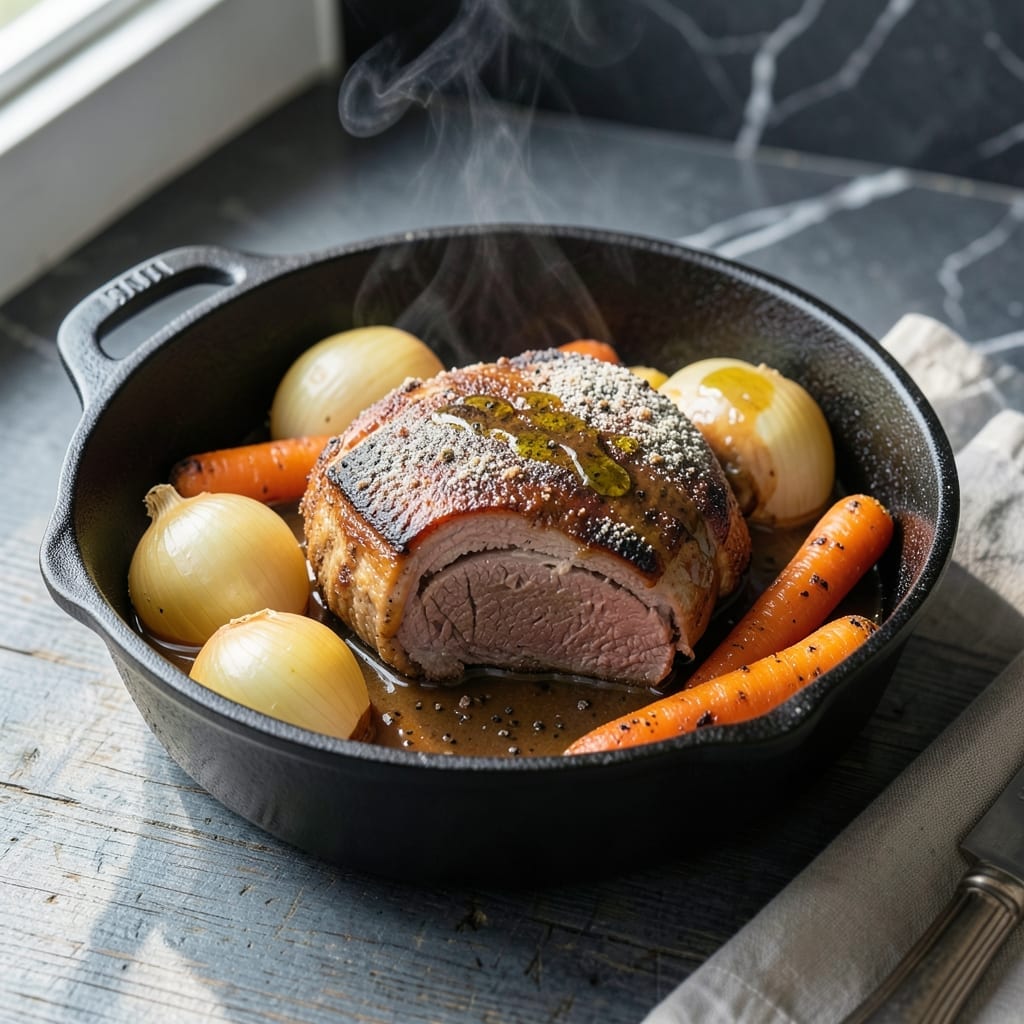
There’s nothing quite like a slow-cooked pot roast to bring the family together for Sunday supper. This method transforms tough cuts into fall-apart tender perfection with minimal effort.
I’ve refined this technique over years of Sunday dinners, focusing on the simple steps that make all the difference. A good sear locks in flavor, while the slow cooker does the rest of the work.
The result is meat that’s rich and juicy, with vegetables that soak up all the savory goodness. It’s the kind of meal that tastes like home and feels like a warm embrace.
Perfect for those relaxed weekend afternoons when you want comfort food without the fuss. Here’s how to make it right.
Ingredients for Pampered Chef Pot Roast
Slow-cooked comfort comes from chuck roast, hearty vegetables, and rich broth for Sunday supper.
| Ingredient | Amount | Notes |
|---|---|---|
| Chuck Roast 🥩 | 3 lb | Boneless, well-marbled preferred |
| Kosher Salt 🧂 | 1 ½ tsp | Diamond Crystal preferred |
| Black Pepper 🌶️ | 1 tsp | Freshly ground |
| All-Purpose Flour 🌾 | ¼ cup | For dredging roast |
| Olive Oil 🫒 | 2 tbsp | Divided for searing and browning |
| Yellow Onions 🧅 | 2 whole | Medium, quartered |
| Carrots 🥕 | 4 whole | Large, cut into chunks |
| Russet Potatoes 🥔 | 1 ½ lb | Peeled, cut into large pieces |
| Garlic Cloves 🧄 | 5 cloves | Smashed, peeled |
| Beef Broth 💧 | 2 cups | Low-sodium preferred |
| Dry Red Wine 🍷 | 1 cup | Bold variety like Cabernet Sauvignon |
| Tomato Paste 🍅 | 2 tbsp | For depth of flavor |
| Fresh Thyme Sprigs 🌿 | 3 whole | Or 1 tsp dried thyme |
| Bay Leaves 🍃 | 2 whole | Dried, for aroma |
| Worcestershire Sauce 💧 | 1 tbsp | Adds umami depth |
The chuck roast is non-negotiable here—look for good marbling at your butcher or Whole Foods meat counter. Well-marbled fat melts during the long cook, creating that signature fall-apart texture. Avoid lean cuts like sirloin; they’ll dry out. I always buy a whole roast and trim it myself for even-sized pieces. The beef broth matters too—low-sodium lets you control the seasoning.
No red wine? Extra beef broth with a splash of balsamic vinegar works in a pinch. Fresh thyme is ideal but dried at one-third the amount is fine. If you’re out of tomato paste, those Trader Joe’s squeeze tubes are perfect (no waste). The potatoes can be Yukon Gold if you prefer creamier texture. Skip the flour dredge if you’re gluten-free—just sear the roast really well.
This tastes even better the next day. Refrigerate in an airtight container for up to 4 days, or freeze for 3 months. Leftovers make incredible sandwiches. The roast can be prepped the night before—just sear and slow-cook in the morning (adds 1 hour to cook time).
Why You’ll Love This Recipe
- Set It & Forget: Honestly, just sear the chuck roast, dust it with flour, and let the oven do the work.
- Feeds the Crew: I stretch one pot roast into sandwiches, tacos, and stew for days.
- Pantry Staples Only: Flour, olive oil, salt, pepper—that’s all you need for this no-fuss recipe.
Step-by-Step Instructions for Slow-Cooked Pot Roast
This method delivers fall-apart tender beef with vegetables infused with deep, rich flavor every time.
Step 1: Season and Sear the Chuck Roast
Pat the 3 lb chuck roast dry with paper towels, then season all sides with the 1.5 tsp kosher salt and 1 tsp black pepper. I press the seasoning into the meat to ensure it adheres well during searing.
Dredge the roast in the 0.25 cup all-purpose flour, shaking off any excess. Heat 1 tbsp olive oil in a large pot over medium-high heat until shimmering. Sear the roast for 4-5 minutes per side until deeply browned. This creates a flavorful crust and prevents sticking during the long cook.
Transfer the seared roast to a plate. The fond left in the pot will become the base of your braising liquid.
Step 2: Sauté Aromatics and Build the Braising Liquid
In the same pot, add the remaining 1 tbsp olive oil and the 2 whole yellow onions, 4 whole carrots, and 1.5 lb russet potatoes. Cook for 8-10 minutes until the onions begin to soften and develop light golden color.
Add the 5 cloves garlic cloves, 2 tbsp tomato paste, 3 whole fresh thyme sprigs, and 2 whole bay leaves. Stir for 1-2 minutes until the tomato paste darkens slightly. This step intensifies the paste’s flavor and prevents a raw taste.
Pour in the 1 cup dry red wine and scrape up any browned bits from the bottom. Simmer for 3-4 minutes until the wine reduces by half.
Step 3: Braise the Roast Until Fork-Tender
Return the seared roast to the pot along with any accumulated juices. Add the 2 cups beef broth and 1 tbsp Worcestershire sauce. The liquid should come about halfway up the roast—add a splash of water if needed.
Bring to a simmer, then reduce heat to low. Cover and cook for 3 to 3.5 hours, turning the roast every 45 minutes to ensure even cooking. The roast is done when it shreds easily with a fork and the vegetables are tender when pierced.
I check the pot occasionally and add a splash of water if the liquid level drops below the vegetables. This maintains consistent moisture throughout the braise.
Step 4: Rest and Serve
Carefully transfer the roast to a cutting board. Skim excess fat from the surface of the braising liquid if desired, though I often leave it for extra flavor. Discard the thyme sprigs and bay leaves.
Slice the roast against the grain or pull it into large chunks. Arrange the meat and vegetables on a serving platter and spoon the braising liquid over the top. Let it rest for 10 minutes before serving to allow the juices to redistribute.
The sauce should be rich and velvety, coating the meat and vegetables beautifully. This dish tastes even better the next day as the flavors continue to meld.
Pro Tips For Making Pampered Chef Pot Roast
- Sear the Meat Hard: Get your olive oil rippling hot before adding the chuck roast—I learned this the hard way after too many pale, steamed-looking roasts. That deep brown crust is what builds the flavor base for the whole dish.
- Pat It Dry: Blot the chuck roast with paper towels before seasoning and searing. Sounds tedious, but wet meat steams instead of browning, and you’ll lose that crucial crust the flour coating is meant to enhance.
- Season the Flour: Mix kosher salt and black pepper into your all-purpose flour before dredging the roast—about 1 teaspoon salt and ½ teaspoon pepper per cup of flour. My grandmother swore by this, and she was right: it sticks better and seasons every bite.
- Don’t Crowd the Pan: Sear the roast in batches if needed, or use a larger pan. After burning three batches, I finally figured out that overcrowding drops the oil temp, turning your beautiful crust into a sad, greasy mess.
Health Benefits of This Recipe
Protein Powerhouse
This dish delivers high-quality protein from the 3 lb chuck roast, with about 60 grams per serving. Protein is essential for muscle repair and immune function, making this meal as nourishing as it is delicious. 💪
Iron and Zinc Boost
Beef is rich in heme iron, which your body absorbs more easily than plant-based iron. A serving provides about 20% of your daily iron needs, plus zinc for immune support. I notice I feel more energized when I include beef in my diet.
Vitamin B Complex
The B vitamins in beef—especially B12, B6, and niacin—support energy metabolism and brain health. This meal is like a natural multivitamin, helping your body function at its best.
Collagen and Connective Tissue
Slow cooking breaks down collagen in the chuck roast into gelatin, which supports joint and skin health. The 3 to 3.5 hours of braising maximizes this benefit, making the meat tender and nutritious. 🌟
Vegetable Nutrients
The carrots and potatoes add fiber, potassium, and vitamin A. Together with the beef, they create a balanced meal that fuels your body with essential nutrients.
Antioxidant Rich
Garlic and onions contain antioxidants that support heart health. The 5 cloves garlic in this recipe provide allicin, a compound known for its immune-boosting properties. This dish is comfort food with hidden benefits.
Nutrition Facts
Frequently Asked Questions
What’s the best cut for this method?
Chuck roast is ideal for its marbling and connective tissue, which break down during the 3 to 3.5 hours of slow cooking. Avoid lean cuts like sirloin, as they’ll dry out.
Can I use a slow cooker instead?
Yes! Sear the roast first, then transfer to a slow cooker with all the liquid and vegetables. Cook on low for 8-10 hours or high for 5-6 hours.
How do I thicken the sauce?
Remove the meat and vegetables, then simmer the liquid on medium-high heat for 5-10 minutes. For a richer texture, mix 1 tbsp cornstarch with water and stir in.
Why is my roast tough?
It likely didn’t cook long enough. The meat needs to reach an internal temp of 195-205°F to become fork-tender. Patience is key!

- 4C Bread Crumbs Meatballs Recipe: Crispy Crust and Juicy Centers - September 25, 2026
- 6 Oz Chocolate Chip Cookie Recipe: Perfectly Balanced Crispy Edges and Chewy Hearts - September 25, 2026
- 6-Inch Coffee Cake Recipe: Vanilla Bean Swirls and Buttery Streusel Topping - September 25, 2026