
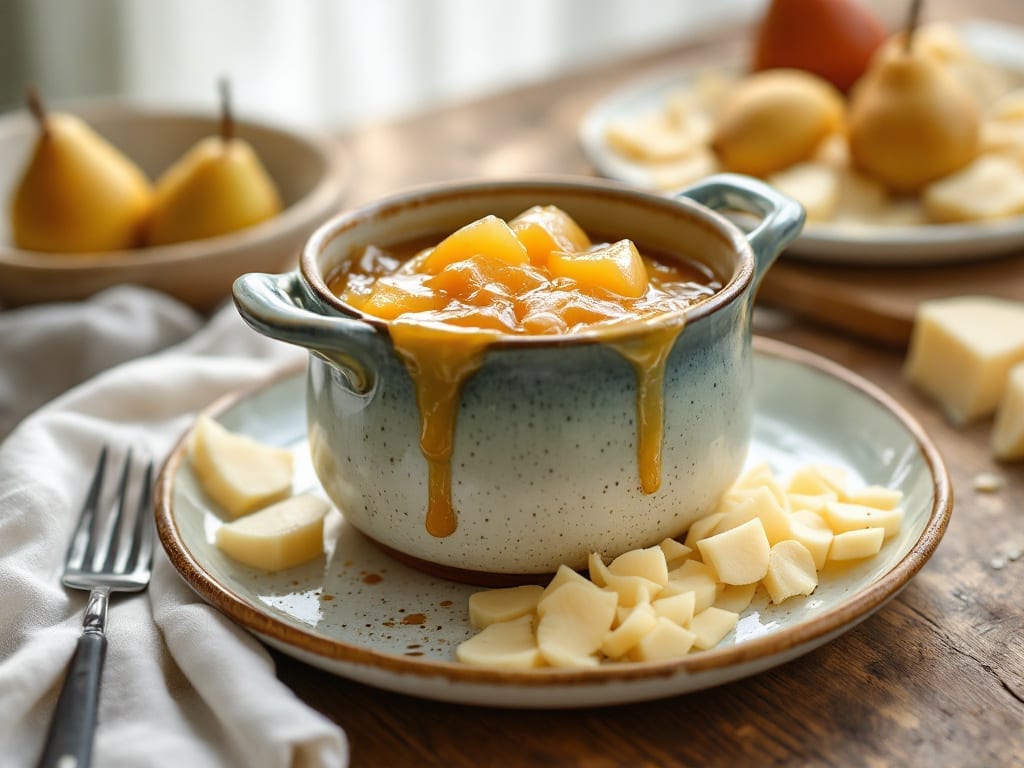
This pear preserves crock pot recipe turns humble pears into a luscious, fragrant spread ideal for toast, charcuterie, or thoughtful gifts. The crock pot method preserves natural sweetness while developing deep spice notes—no burning or babysitting required.
I’ve perfected this recipe over years of canning, and the slow simmer creates that signature jam-like thickness without added pectin.
What sets this apart is the balance of fruit, sugar, and spices—cinnamon for warmth, lemon for brightness, and just enough vanilla to round out the flavors. The crock pot handles the entire process: fruit softens, juices release, and the mixture thickens naturally into a glossy, spreadable preserve.
It’s a foolproof method that yields restaurant-quality results with minimal effort.
By the end, you’ll have a jar of golden preserves with a perfect balance of sweetness and spice, thick enough to cling to spoons but still smooth enough to drizzle.
The aroma alone will make your kitchen smell like autumn, and the versatility means you’ll reach for it again and again. Ready to make this?
These preserves keep for months in the fridge or can be safely canned for long-term storage. Pair them with brie, swirl into yogurt, or use as a glaze for roasted meats. The possibilities are endless, and the process couldn’t be simpler.
Ingredients for pear preserves crock pot
Eight simple ingredients transform fresh pears into aromatic preserves with restaurant-quality depth.
| Ingredient | Amount | Notes |
|---|---|---|
| Ripe Pears 🍐 | 6 medium | Peeled, cored, sliced |
| Granulated Sugar 🍚 | 2 ½ cups | White or light brown |
| Cinnamon Sticks 🌿 | 4 whole | Or 2 tbsp ground cinnamon |
| Fresh Lemon Juice 🍋 | ¼ cup | From 2-3 lemons |
| Pure Vanilla Extract 🥛 | 1 tbsp | High-quality preferred |
| Water 💧 | ½ cup | Or apple juice for depth |
| Ground Cinnamon 🌶️ | 1 tsp | For finishing touch |
| Salt 🧂 | ¼ tsp | Fine sea salt |
The pears are the foundation—choose Bosc or Anjou for their natural sweetness and firm texture. Avoid overly soft or bruised fruit, as it releases more liquid and can make the preserves watery. Local farmers markets often have perfect pears in late summer and early fall, but grocery stores usually carry good options year-round. If you can’t find ripe pears, peel and soak unripe ones in lemon water for 24 hours—they’ll ripen perfectly during the slow cook. For sugar, domestic white sugar works beautifully, but light brown sugar adds subtle molasses notes that complement the pears’ natural caramelization.
No cinnamon sticks? Ground cinnamon works fine—just add it with the sugar at the start. Lemon juice can be substituted with bottled lemon juice, but fresh is always better for brightness. Running out of vanilla extract? Vanilla bean paste or even vanilla sugar (1 tsp) will give you that signature aroma. The water can be swapped for apple cider or white wine (reduce to 0.25 cup) for a sophisticated twist. For a lower-sugar version, reduce sugar by 0.5 cup and add 0.25 cup more water—just monitor thickness closely. The salt balances sweetness, but if you’re avoiding it entirely, omit it completely—the preserves will still be delicious.
This preserve thickens as it cools, so test consistency before canning. Spoon a bit onto a chilled plate—if it wrinkles slightly when pushed, it’s ready. For long-term storage, use sterilized jars and process in a water bath for 10 minutes (or follow your canning guide). In the fridge, it keeps for up to 3 months in an airtight container. The aroma alone makes this worth making ahead—double the batch and give jars as gifts. Freeze portions in ice cube trays for easy single-serving use on toast or yogurt.
Why You’ll Love This Recipe
- Sweet-Spiced Magic: That first spoonful? Warm pears kissed by cinnamon sticks, brightened by lemon juice—it’s like autumn in a jar. Honestly, the vanilla ties it all together so smoothly, you’ll want to eat it straight from the pot.
- Breakfast to Dessert: Slather it on toast for a cozy morning or drizzle it over vanilla ice cream at night. Between us, it’s also my go-to for filling donuts or stuffing apples—because why not make one batch do double duty?
- No-Waste Winner: Use up those slightly bruised pears instead of tossing them, and you’ll end up with jars of goodness that last months. Plus, sugar’s cheap, and a few cinnamon sticks stretch forever—this recipe actually saves me money while feeding my sweet tooth.
Step-by-step instructions for slow-simmered pear preserves
Here’s the method for rich, aromatic preserves that develop deep flavor through gentle heat.
Prepare the Pears for Cooking
Peel and core all 6 medium ripe pears, then slice them into ¼-inch thick rounds. I use a sharp paring knife for this—it gives you more control than a serrated blade. Arrange the sliced pears in a single layer on a baking sheet and let them sit uncovered at room temperature for 15 minutes before cooking. This brief exposure to air helps prevent excessive foaming later in the process.
The reason for this step is simple: fresh fruit releases moisture when heated, and giving it time to settle reduces the risk of overflowing your crock pot. You’ll notice the slices soften slightly at the edges—this is normal and indicates they’re ready for the next phase. If you’re using particularly juicy pears, you might want to pat them dry with a paper towel before proceeding, but don’t press too hard or you’ll bruise the fruit.
Combine Ingredients in the Crock Pot
Add the prepared pear slices to your 6-quart crock pot. In a small bowl, whisk together the 2.5 cups granulated sugar, 1 teaspoon ground cinnamon, and ¼ teaspoon salt until fully dissolved. Pour this sugar mixture evenly over the pears, making sure each slice gets coated. Then add the 4 whole cinnamon sticks, ½ cup water, and ¼ cup fresh lemon juice to the pot.
Gently stir the mixture with a wooden spoon just until the sugar begins to dissolve. You’ll see the pears start to release their juices immediately. The lemon juice serves a dual purpose here—it brightens the flavor profile while also helping to preserve the natural color of the fruit. Don’t worry if the mixture looks thin at this stage; as it simmers, the pears will release more liquid and the preserves will thicken naturally.
Simmer on Low Heat
Place the lid on the crock pot and set it to low heat. Let the preserves cook for 4-5 hours, stirring gently every 30 minutes to prevent sticking. This frequent stirring is crucial—it helps distribute the heat evenly and ensures the cinnamon sticks infuse the mixture fully. You’ll notice the mixture gradually thicken as the pears break down and release their juices.
After 3 hours, taste the preserves to check for doneness. They should be thick enough to coat the back of a spoon but still slightly loose. If they’re not thick enough yet, continue cooking for another 30 minutes to 1 hour. The ideal consistency is somewhere between jam and jelly—thick enough to hold its shape when spooned but still spreadable. If you’re concerned about overcooking, remember that the preserves will continue to thicken slightly as they cool.
Finish with Vanilla and Test for Readiness
Once the preserves reach your desired thickness, remove the cinnamon sticks and discard them. Stir in the 1 tablespoon pure vanilla extract and the remaining 1 teaspoon ground cinnamon. This final step adds depth of flavor and ensures the spices are evenly distributed throughout the preserves. Let the mixture simmer for an additional 10 minutes to allow the vanilla to fully incorporate.
To test for doneness, place a small spoonful of preserves on a chilled plate and refrigerate for 10 minutes. When you return, the preserves should hold their shape but still be spreadable. If they’re too runny, return them to the crock pot and cook for another 15-20 minutes, stirring occasionally. If they’re too thick, you can thin them with a few teaspoons of water or apple juice. The goal is a balance between thickness and spreadability—you want preserves that cling to toast or crackers without being gluey.
Store and Enjoy
Transfer the finished preserves to clean, sterilized jars using a funnel. Fill each jar to within ½ inch of the top to allow for expansion as the preserves cool. Seal the jars tightly and let them cool completely at room temperature before refrigerating. The preserves will continue to thicken as they cool, so don’t be alarmed if they look slightly runnier when you first pour them into the jars.
Once cooled, your preserves will keep in the refrigerator for up to 3 months. For longer storage, you can process the jars in a water bath canner for 10 minutes to create shelf-stable preserves that will last for 1 year. These preserves are perfect for spreading on toast, swirling into yogurt, or drizzling over fresh fruit. The cinnamon and vanilla create a warm, comforting flavor that pairs beautifully with both sweet and savory dishes.
Pro Tips For Making Pear Preserves Crock Pot
- Peel the Pears: DESCRIPTION: Skip the knife and use a vegetable peeler—it’s faster and leaves cleaner strips. I learned this the hard way after struggling with a paring knife and ending up with uneven chunks that cooked unevenly.
- Low and Slow Wins: DESCRIPTION: Set your crock pot to low for 6-8 hours, not high. High heat turns the preserves into syrup too fast, and you’ll miss that perfect jammy texture. I burned through three batches before I finally gave in.
- Crush the Cinnamon: DESCRIPTION: Lightly crush the cinnamon sticks with the flat side of a knife before adding them. This releases more flavor without turning the preserves into a spice-infused sludge. (Yes, I’ve seen it happen.)
- Strain the Seeds: DESCRIPTION: After cooking, strain the pears through a fine-mesh sieve to remove seeds and skin bits—even if you’re keeping it rustic. Skipping this step means you’ll be picking out seeds for weeks. Trust me, it’s not worth it.
Wine and beer pairings for this dish
White Wine Pairings
The bright acidity of dry Riesling cuts through the sweetness of these preserves beautifully. Look for a German or Alsace Riesling with its crisp apple and citrus notes—it mirrors the pear’s natural flavors while adding a refreshing contrast.
I love chilling a bottle of Dr. Loosen Blue Slate Riesling from Germany; its mineral finish complements the cinnamon warmth in the preserves. 🍷
Red Wine Pairings
For a surprising but delicious pairing, try a light-bodied Pinot Noir with subtle earthy notes. The fruitiness of the wine harmonizes with the pear’s sweetness while the tannins balance the richness.
I recommend a Oregon Pinot Noir like Domaine Serene—its red fruit and spice profile enhances the cinnamon and vanilla in the preserves. Serve slightly chilled for an elegant contrast.
Beer Pairings
A Belgian witbier like Hoegaarden brings citrusy brightness that cleanses the palate between bites of preserves. The coriander and orange notes in the beer complement the lemon and vanilla in the preserves perfectly.
For a local option, try a American wheat beer with a touch of honey—it adds a subtle sweetness that rounds out the flavors. 🍺
Spirit Pairings
For a sophisticated twist, serve your preserves with a bourbon or rye whiskey. The caramel and vanilla notes in the whiskey deepen the preserves’ flavor profile, creating a rich, warming combination.
I like sipping a glass of Woodford Reserve alongside a small plate of brie and preserves for an afternoon treat. The alcohol’s warmth also enhances the cinnamon’s aromatic qualities.
Non-Alcoholic Options
Don’t overlook sparkling water or sparkling apple cider as refreshing pairings. The effervescence cuts through the preserves’ richness while highlighting their fruity notes. For a cozy option, try a hot spiced apple cider—the cinnamon and clove aromas echo beautifully with the preserves.
Add a splash of non-alcoholic vanilla syrup for extra depth.
Cheese Pairings
For a perfect charcuterie pairing, serve your preserves with brie or goat cheese. The creamy texture of brie contrasts beautifully with the preserves’ thickness, while the tangy notes of goat cheese balance the sweetness.
I also love pairing them with aged cheddar—the sharpness cuts through the preserves’ richness for a satisfying bite. 🧀
Nutrition facts
Frequently asked questions
Can I use frozen pears instead of fresh?
Frozen pears work perfectly—just thaw them first and drain any excess liquid. The texture will be slightly softer, but the flavor remains rich. For best results, pat the thawed slices dry before adding to the crock pot to prevent a watery preserve.
Why do my preserves turn out too runny?
Runny preserves usually mean the fruit wasn’t cooked long enough or the sugar ratio was off. Simmer an extra 30-60 minutes on low heat, stirring occasionally. If still too thin, reduce the mixture in a saucepan for 5-10 minutes—just watch closely to avoid burning. Alternatively, add 1 tablespoon cornstarch mixed with 1 tablespoon water and stir until thickened.
How do I know when the preserves are fully cooked?
Test for doneness by placing a spoonful on a chilled plate and refrigerating for 10 minutes. If it holds its shape but still spreads slightly, it’s ready. The preserves should coat the back of a spoon but not drip excessively. For a foolproof check, use a candy thermometer—remove from heat when it reaches 220°F.
Can I adjust the sweetness level?
Yes! Reduce sugar by 0.5 cup for a less sweet version, but add 0.25 cup water to maintain balance. For extra sweetness, increase sugar by 0.5 cup. Taste after 3 hours of cooking—adjustments work best before thickening occurs. A splash of honey or maple syrup can also add depth without altering texture.
What’s the best way to store homemade preserves?
For short-term storage, keep in the fridge for up to 3 months in an airtight container. For long-term preservation, can the preserves using a water bath for 10 minutes (follow USDA guidelines). Label jars with the date—properly canned preserves last 1 year unopened. Freeze portions in ice cube trays for single-serving use.

- Baked Potatoes in Crock Pot Recipe: Buttery Interiors and Crispy Top Magic - November 1, 2026
- Braised Beef Short Ribs Recipe: Crock Pot Fall-Off-Bone Magic in 6 Hours - November 1, 2026
- Crock Pot Cocoa Recipe: Velvety Warmth With Hidden Spice Magic - November 1, 2026