
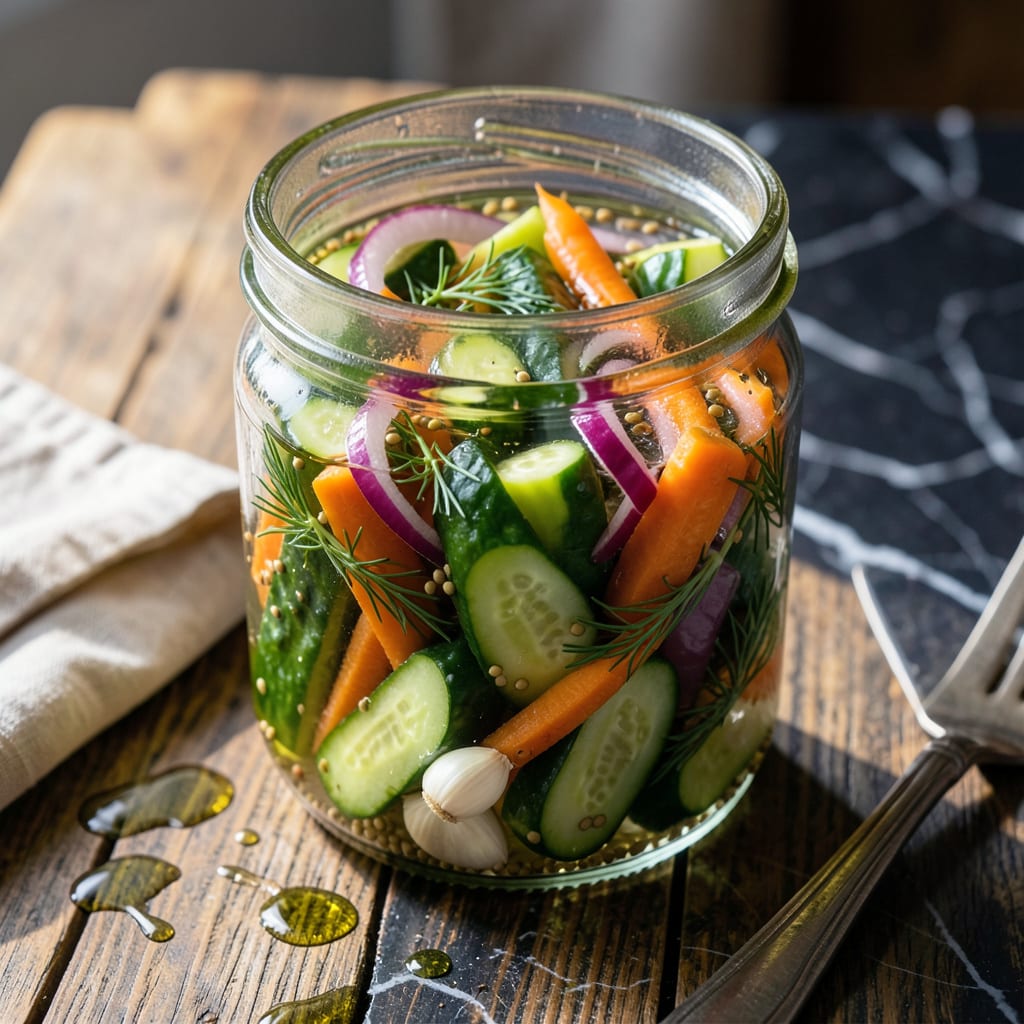
There’s a special satisfaction in creating your own tangy, crunchy pickles at home. This method transforms fresh vegetables into fermented delights with minimal effort and maximum flavor.
With a simple brine and a bit of patience, you’ll achieve that perfect balance of sour and salty. The process preserves the crisp texture while developing complex flavors that store-bought versions can’t match.
Ingredients for Pickle Pot
Fresh veggies and a simple brine create these tangy fermented delights at home.
| Ingredient | Amount | Notes |
|---|---|---|
| Cucumber 🥒 | 2 lb | Kirby or Persian, small firm variety |
| Carrots 🥕 | 3 whole | Peeled, cut into sticks |
| Red Onion 🧅 | 1 whole | Thinly sliced into half-moons |
| Garlic Cloves 🧄 | 6 cloves | Peeled, smashed lightly |
| Dill Sprigs 🌿 | 4 whole | Fresh, with flower heads if available |
| Mustard Seeds 🌶️ | 1 tbsp | Yellow or brown variety |
| Black Peppercorns 🌶️ | 1 tsp | Whole, not pre-ground |
| Bay Leaves 🍃 | 2 whole | Dried, whole leaves |
| Water 💧 | 4 cups | Filtered or distilled preferred |
| Pickling Salt 🧂 | ¼ cup | Non-iodized, fine grain |
| Apple Cider Vinegar 🍏 | 1 cup | Raw, unfiltered for best flavor |
| Red Pepper Flakes 🔥 | ½ tsp | Optional for heat, adjust to taste |
The cucumbers are the star here—Kirby or Persian varieties stay crisp best. Hit up your local farmers market for the freshest picks (the good stuff, not the waxy grocery store ones). Carrots and onion add crunch and color. Don’t skip the dill—fresh sprigs with flower heads pack the most flavor. I grab mine from Whole Foods when my garden’s not cooperating.
No dill? Fresh fennel fronds or celery leaves work in a pinch. Out of mustard seeds? Coriander seeds at the same amount give a different but still great flavor. The vinegar can be swapped for white vinegar, but apple cider adds depth. For heat lovers, add more red pepper flakes (or throw in a sliced jalapeño). No pickling salt? Kosher salt works—just avoid iodized table salt.
These keep fermenting at room temp for 3-5 days, then move to the fridge. They’ll stay crisp and tangy for 2-3 months stored cold. The longer they sit, the more complex the flavor gets (worth the wait).
Why You’ll Love This Recipe
- Minimal Chopping Required: I just slice the cucumbers, carrots, and red onion, toss them in with garlic and dill—no fancy knife skills needed.
- Garlic-Dill Zing: The garlic and fresh dill make every bite bright and tangy, with that crunch I crave.
- Meal Prep Hero: I make a big batch Sunday night and my lunches are sorted for the week. Honestly, it’s my secret weapon.
- Pennywise Pickles: Between us, it costs a fraction of store-bought pickles and tastes way better.
Step-by-Step Instructions for Pickle Pot
This method delivers crisp, tangy vegetables with minimal effort and maximum flavor.
Step 1: Prepare the Vegetables and Aromatics
Wash the 2 lb Cucumber thoroughly and trim off the blossom end (the tiny stem opposite the main stem). This prevents soft pickles. Slice into spears or leave whole if using small Kirby or Persian varieties. Peel the 3 whole Carrots and cut into sticks about the same thickness as your cucumber pieces.
Thinly slice the 1 whole Red Onion into half-moons. Lightly smash the 6 cloves Garlic Cloves—just enough to release their oils without turning them to paste. The 4 whole Dill Sprigs can be left intact; their flower heads add extra flavor if available.
Step 2: Sterilize the Jar and Combine Spices
Wash a large glass jar and its lid with hot, soapy water, then rinse well. I use a wide-mouth quart jar for this, but any clean, airtight container will work. In the bottom of the jar, combine the 1 tbsp Mustard Seeds, 1 tsp Black Peppercorns, and 2 whole Bay Leaves.
Add the 0.5 tsp Red Pepper Flakes if you want a subtle kick. This spice blend forms the foundation of flavor, so distribute it evenly across the jar’s base before adding the vegetables.
Step 3: Layer Vegetables and Create the Brine
Pack the prepared cucumber, carrots, red onion, garlic, and dill sprigs tightly into the jar, alternating layers to ensure even distribution. Press down gently to eliminate air pockets but avoid crushing the vegetables.
In a separate bowl, dissolve the 0.25 cup Pickling Salt in the 4 cups Water until completely incorporated. Stir in the 1 cup Apple Cider Vinegar. The brine should be clear with no salt crystals remaining.
Step 4: Submerge and Seal for Fermentation
Pour the brine over the vegetables until they’re fully submerged. Tap the jar gently on the counter to remove any trapped air bubbles. If the vegetables float above the brine, place a small weight (like a fermentation weight or a zip-top bag filled with water) on top to keep them under the liquid.
Seal the jar loosely to allow gases to escape during fermentation. Store at room temperature, away from direct sunlight, for 3-5 days. You’ll notice the brine becoming cloudy and the vegetables softening slightly—this is normal and a sign of active fermentation.
Step 5: Taste and Refrigerate to Finish
After 3 days, taste a piece of cucumber. It should be tangy with a slight crunch. If it’s not sour enough, let it ferment for up to 2 more days, tasting daily. Once it reaches your preferred flavor, seal the jar tightly and transfer it to the refrigerator.
The pickles will continue to develop flavor as they chill and can be stored for up to 1 month. The texture becomes crisper and the taste more complex with time.
Pro Tips For Making Pickle Pot
- Salt the Cucumbers: Sprinkle sliced cucumbers with 1 teaspoon of salt and let them sit for 30 minutes—this draws out excess water so they stay crisp in the brine. I learned this the hard way after making soggy pickles my first few tries.
- Peel the Garlic: Smash the garlic cloves lightly with the side of your knife before peeling—the skins slip right off, and the exposed cloves infuse the brine better. Sounds weird, but it works.
- Use Ice Cold Water: Always start your brine with ice cold water if you’re making a quick pickle pot recipe—hot brine can soften the veggies too fast. My grandmother swore by this, and she was right.
- Slice Evenly: Cut the carrots and onions into uniform, thin slices so they pickle at the same rate. I was skeptical until I tried it, but now my pickles taste consistent every time.
Flavor Customization for These Flavors
Spice Level Adjustments
For mild pickles, skip the 0.5 tsp Red Pepper Flakes entirely. The base spices provide enough warmth. If you love heat, double the amount or add 1 sliced jalapeño to the jar. I’ve found this adds a nice kick without overpowering the other flavors.
Vinegar Variations
Swap the 1 cup Apple Cider Vinegar for white vinegar for a cleaner, sharper tang. For a more complex profile, try rice vinegar—it adds a subtle sweetness. I prefer apple cider for its depth, but white vinegar is a great neutral option. 💡
Herb Customizations
If dill isn’t your thing, try fresh fennel fronds or celery leaves for a different aromatic twist. I’ve also had success with 1 tsp coriander seeds in place of mustard seeds. Each herb brings a unique character to your creation.
Sweet and Tangy Twist
Add 1 tbsp sugar or 1 tbsp honey to the brine for a touch of sweetness. This balances the sourness beautifully. I like to dissolve it in the warm brine before pouring over the vegetables. It’s a small addition that makes a big difference.
Garlic Variations
For a more pronounced garlic flavor, increase to 8 cloves or add 1 tsp garlic powder to the brine. If you prefer a milder taste, stick with 4 cloves. I smash mine lightly to release the oils without turning them into a paste. 🌶️
Salt Alternatives
If you don’t have pickling salt, use kosher salt at the same amount. Avoid iodized table salt, as it can make the brine cloudy. I always keep a box of Diamond Crystal kosher salt on hand for pickling projects.
Nutrition Facts
Frequently Asked Questions
How long do I need to ferment the pickles?
Ferment at room temperature for 3-5 days. Taste after 3 days—if they need more tang, let them go up to 2 more days.
Can I use regular table salt instead of pickling salt?
Avoid iodized table salt as it can make the brine cloudy. Use kosher salt at the same amount for best results.
What should I do if my vegetables float above the brine?
Use a fermentation weight or a zip-top bag filled with water to keep them submerged. This prevents mold and ensures even fermentation.
How do I store the pickles after fermentation?
Seal the jar tightly and refrigerate. They’ll stay crisp and tangy for up to 1 month. The flavor deepens with time.

- 4C Bread Crumbs Meatballs Recipe: Crispy Crust and Juicy Centers - September 25, 2026
- 6 Oz Chocolate Chip Cookie Recipe: Perfectly Balanced Crispy Edges and Chewy Hearts - September 25, 2026
- 6-Inch Coffee Cake Recipe: Vanilla Bean Swirls and Buttery Streusel Topping - September 25, 2026