
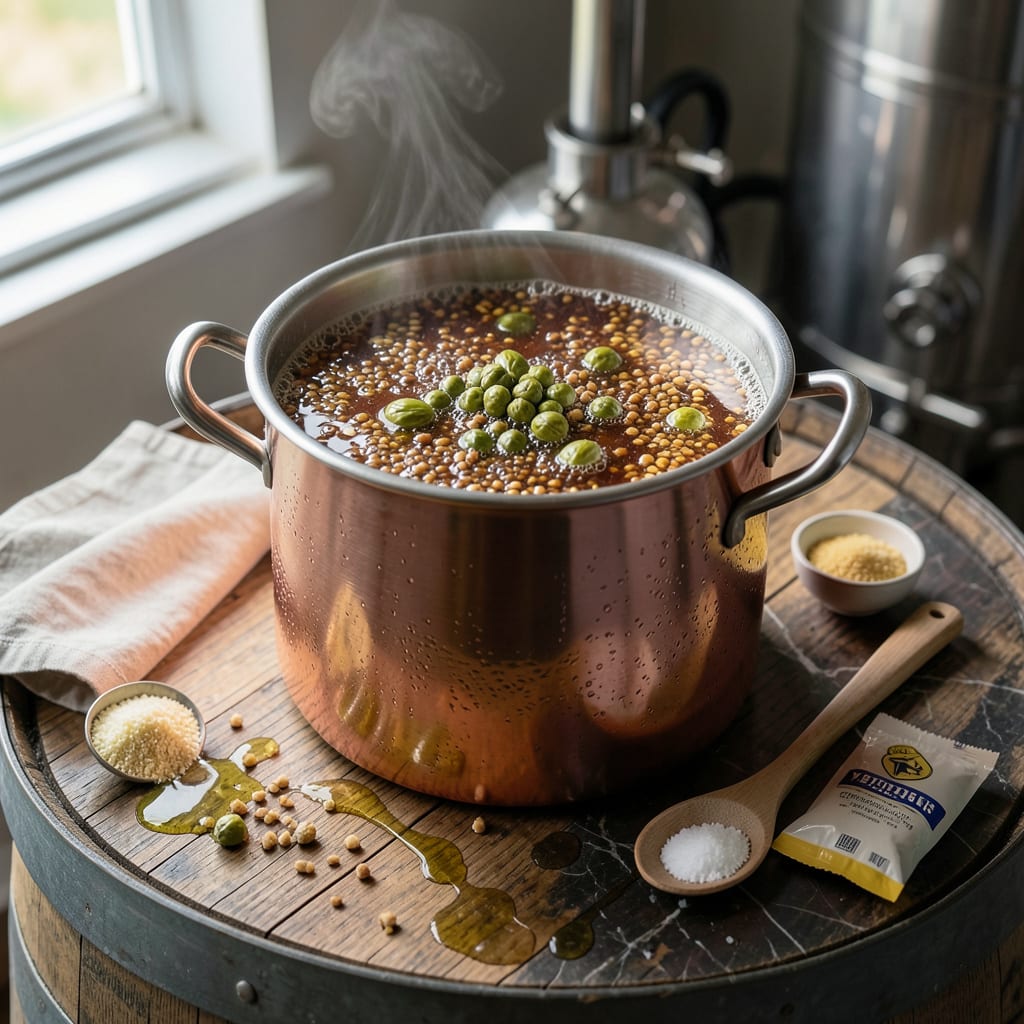
This small-batch brew revives a time-honored tradition with simple ingredients and foolproof techniques. The process transforms basic grains into a lightly hopped, refreshing beverage at home.
Fermentation is key—patience during this stage ensures a clean, balanced flavor. The result is a crisp, drinkable beer that celebrates homemade craftsmanship without complexity.
Ingredients for Pot Beer
Simple grains and hops transform into a crisp, refreshing homemade brew with patience.
| Ingredient | Amount | Notes |
|---|---|---|
| Pale Malt Extract 🌾 | 3 lb | Liquid or dry, light variety |
| Crushed Grain 🌾 | 1 lb | 2-row pale malt or pilsner |
| Hops Pellets 🌿 | 1 oz | Low alpha acid, e.g., Hallertau |
| Dried Brewing Yeast 🍞 | 1 package | Ale yeast, 5-10g packet |
| Priming Sugar 🧂 | ¾ cup | Corn sugar or dextrose |
| Water 💧 | 2 ½ cups | Filtered, for steeping grains |
| Water 💧 | 2 cups | For boiling extract and hops |
| Water 💧 | 3 cups | Cold, for topping off fermenter |
| Irish Moss 🌿 | ½ tsp | Optional, for clarity |
| Sanitizer Solution 🧴 | 1 tbsp | Food-grade, for equipment |
The malt extract is the foundation here. Briess or Muntons brands offer consistent quality for home brewers. For crushed grain, local homebrew shops often have the freshest stock—avoid pre-crushed grain that’s been sitting for months. Yeast selection matters: Safale US-05 is reliable for clean fermentation. Always check the expiration date on yeast packets—old yeast means sluggish or stalled fermentation.
No pale malt extract? Substitute with extra crushed grain (add 1.5 lb) but expect a longer brew day. Hops can be swapped for similar varieties—Fuggle or Tettnang work well. Irish moss is optional but helps clarity; skip it if unavailable. Priming sugar can be replaced with honey or maple syrup (use 1 cup), though flavors may vary slightly. Always use filtered water to avoid off-flavors from chlorine.
Store unopened malt extract in a cool, dark place for up to 2 years. Once opened, use within 3 months. Crushed grain keeps for 6-12 months in sealed bags. Yeast should be refrigerated and used within 6 months of production date. Sanitize all equipment thoroughly before and after use to prevent contamination.
Why You’ll Love This Recipe
- One Pot Wonder: I dump everything—malt extract, crushed grain, hops—into a single pot, and the stove does the rest.
- Craft Brew Taste: Honestly, the balance of pale malt sweetness with those bitter hops pellets tastes like my favorite microbrewery’s pint.
- Weekend Project: Between us, it’s the perfect Saturday afternoon activity, and I end up with beer to share at the next BBQ.
- Penny-Pincher’s Dream: A batch costs me less than a six-pack, and I get way more bottles out of it.
Step-by-Step Instructions for Pot Beer
This traditional method ensures proper fermentation and carbonation for a clean, crisp small-batch brew.
Step 1: Sanitize All Equipment
Begin by preparing a solution with the 1 tbsp Sanitizer Solution and 2.5 cups Water in a clean container. Submerge every piece of equipment that will contact your brew—fermenter, airlock, spoon, and thermometer—for at least 2 minutes.
Sanitation is non-negotiable in brewing. Even microscopic contaminants can ruin an entire batch. I always sanitize immediately before use, never in advance, to prevent recontamination. Rinse with the remaining sanitizer solution but do not rinse with plain water.
Step 2: Steep the Crushed Grain
Heat the 2.5 cups Water to 160-170°F in your brew pot. Once reached, remove from heat and add the 1 lb Crushed Grain in a muslin bag. Steep for 20-30 minutes, maintaining the temperature between 150-160°F.
The grains should release their sugars, turning the water a light amber color. Avoid boiling, as this can extract tannins that create off-flavors. After steeping, remove the grain bag and allow it to drain into the pot—no need to squeeze, as this can introduce unwanted compounds.
Step 3: Boil the Wort with Extract and Hops
Bring the grain water to a rolling boil, then remove from heat and stir in the 3 lb Pale Malt Extract until fully dissolved. Return to heat and bring back to a boil. Once boiling, add the 1 oz Hops Pellets and the 0.5 tsp Irish Moss for clarity.
Boil vigorously for 60 minutes. The hops will contribute bitterness and aroma, while the Irish Moss helps clarify the beer by causing proteins to clump and settle. Stir occasionally to prevent scorching. After 50 minutes, add the remaining 2 cups Water to the boil.
Step 4: Cool and Pitch the Yeast
After boiling, cool the wort as quickly as possible to 70-80°F using an ice bath or wort chiller. Transfer the cooled wort to your sanitized fermenter and top off with the 3 cups Water to reach the desired volume.
Once cooled, sprinkle the 1 package Dried Brewing Yeast evenly over the surface. Seal the fermenter with a sanitized lid and airlock. Store in a dark, temperature-stable location between 68-72°F for fermentation.
Fermentation should begin within 12-24 hours, indicated by bubbles in the airlock. Let it ferment undisturbed for 7-10 days or until bubbling slows to less than one bubble per minute.
Step 5: Bottle with Priming Sugar
Sanitize your bottles, caps, and siphon. Dissolve the 0.75 cup Priming Sugar in 1 cup of boiling water, then add this solution to your sanitized bottling bucket. Siphon the beer from the fermenter into the bucket, leaving sediment behind.
Fill each bottle to 1 inch from the top, cap immediately, and store upright at room temperature for 7-10 days to carbonate. After carbonation, refrigerate for at least 24 hours before serving to improve clarity and flavor.
Pro Tips For Making Pot Beer
- Sanitize Everything: I learned this the hard way—one contaminated spoon can ruin a whole batch. Scrub and sanitize all equipment with a no-rinse solution before it touches your wort.
- Steep Grains Properly: Keep your crushed grain between 150-160°F for 30 minutes—any hotter and you’ll extract bitter tannins, any cooler and you’ll miss out on sweetness.
- Cool Wort Fast: After boiling, chill your wort to yeast-pitching temp (around 70°F) as quickly as possible. I used to let it sit, and my beer always had a weird off-flavor.
- Prime Right Before Bottling: Don’t add priming sugar until you’re ready to bottle—adding it too early can lead to over-carbonation or even exploding bottles. Sounds dramatic, but it happens.
Wine and Beer Pairings for This Recipe
Complementary Beers
Pair your homemade pot beer with a crisp pilsner to highlight its clean, simple character. The light malt profile won’t overpower your brew’s subtle nuances. I love serving this alongside German-style lagers for a side-by-side comparison. 🍺
Food Pairings
This beer shines with hearty, rustic dishes. Try it with soft pretzels dusted with coarse salt or a warm cheddar cheese board. The light body cuts through rich flavors beautifully.
Seasonal Matches
In colder months, pair with roasted sausages and mustard. During summer, serve with grilled chicken or fresh garden salads. The beer’s versatility makes it perfect year-round.
Cheese Pairings
Mild cheeses like Gouda or Havarti complement the beer’s subtle malt notes. For contrast, try a sharp aged cheddar—its bold flavor stands up to the brew’s clean finish.
Dessert Options
Finish your tasting with apple pie or peach cobbler. The beer’s light sweetness enhances the dessert’s fruit flavors without competing. A honey glaze on either would tie everything together. ✨
Nutrition Facts
Frequently Asked Questions
What equipment do I need besides a brew pot?
You’ll need a fermenter with airlock, sanitizer, thermometer, siphon, and bottles. A muslin bag for grains and a bottling bucket are also helpful.
Can I use fresh hops instead of pellets?
Yes, use 3-4 oz of fresh hops to replace 1 oz of pellets. Add them at the same time but strain carefully before fermenting.
How do I know when fermentation is complete?
Check for 3-4 days with no bubbles in the airlock and a stable hydrometer reading. Never rush this stage—patience ensures quality.
What if my beer doesn’t carbonate?
Ensure proper priming sugar amounts and storage at 70-75°F for 7-10 days. Check bottle caps are sealed tightly.

- 4C Bread Crumbs Meatballs Recipe: Crispy Crust and Juicy Centers - September 25, 2026
- 6 Oz Chocolate Chip Cookie Recipe: Perfectly Balanced Crispy Edges and Chewy Hearts - September 25, 2026
- 6-Inch Coffee Cake Recipe: Vanilla Bean Swirls and Buttery Streusel Topping - September 25, 2026