
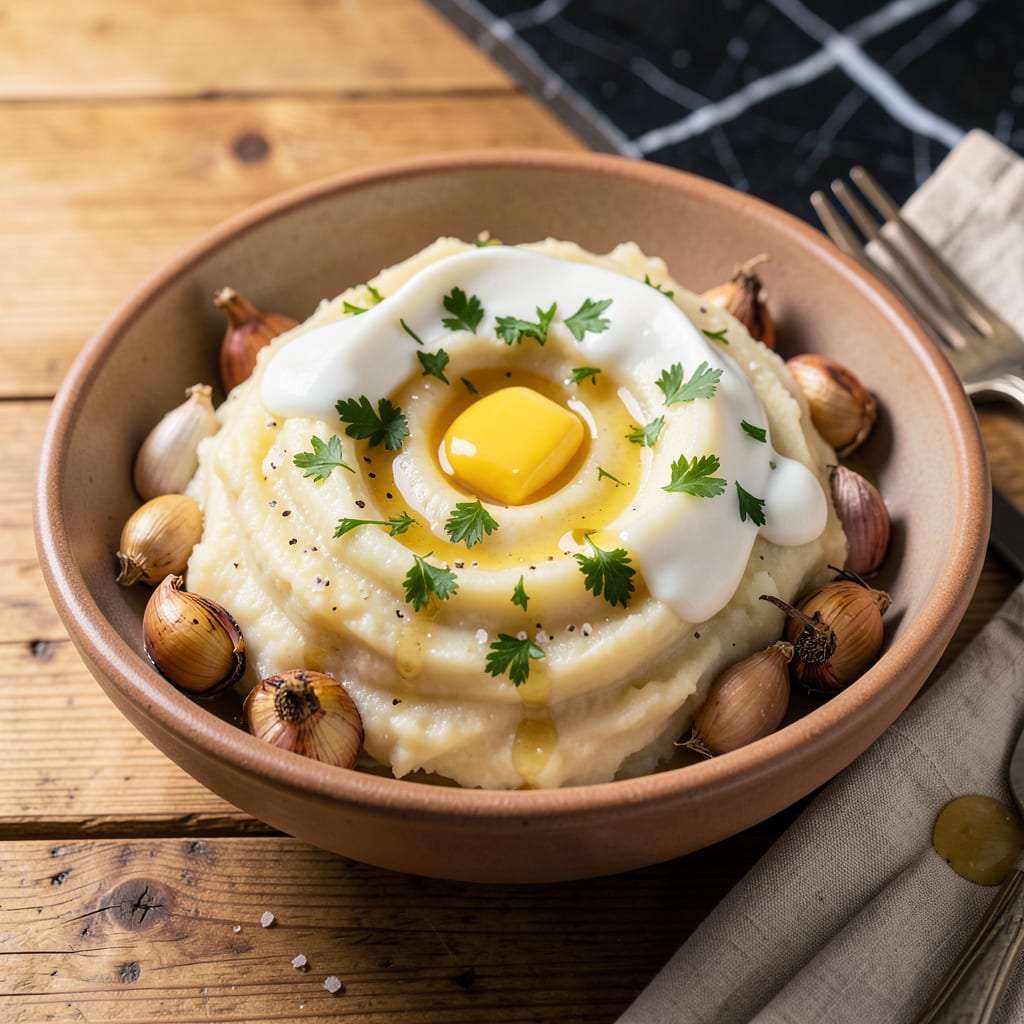
There’s something deeply satisfying about transforming humble potatoes into a dish that feels both comforting and elegant. This Polish-inspired creation delivers perfectly tender potatoes enveloped in a rich garlic butter sauce—proof that simple ingredients can yield extraordinary results. The technique balances tradition with modern efficiency, ensuring every bite is infused with creamy, savory depth.
What sets this recipe apart is its ability to achieve restaurant-quality texture in just 30 minutes. The potatoes absorb the garlic butter while maintaining their structure, creating a side dish that pairs beautifully with roasted meats or stands proudly on its own. No complicated steps—just precise timing and quality ingredients.
Ingredients for Polish Potato
This Polish-inspired dish relies on quality potatoes and dairy for its signature creamy, garlic-infused richness—transforming humble ingredients into something extraordinary.
| Ingredient | Amount | Notes |
|---|---|---|
| Yukon Gold potatoes 🥔 | 2 lb | Peeled and cut into 1-inch cubes |
| unsalted butter 🧈 | ¾ cup | European-style preferred for richness |
| fresh garlic cloves 🧄 | 8 cloves | Minced to fine consistency |
| whole milk 🥛 | ½ cup | Full-fat for optimal creaminess |
| heavy cream 🥛 | ½ cup | Cold, for finishing texture |
| fresh parsley 🌿 | ¼ cup | Finely chopped, for garnish |
| kosher salt 🧂 | 1 ½ tsp | Diamond Crystal brand preferred |
| freshly ground black pepper 🌶️ | ½ tsp | Coarse grind recommended |
| dried marjoram 🌿 | 1 tsp | Polish variety if available |
| fresh dill 🌿 | 2 tbsp | Chopped, for authentic flavor |
| all-purpose flour 🌾 | 1 tbsp | For slight thickening |
| vegetable stock 🍲 | ½ cup | Low-sodium preferred |
The potatoes are fundamental—Yukon Golds offer the ideal balance of waxy texture and buttery flavor. Optimal quality requires selecting firm, unblemished tubers approximately 2-3 inches in diameter. For the dairy components, European-style butter (such as Plugrá or Kerrygold) delivers superior richness due to its higher fat content. The garlic should be fresh and plump; avoid pre-minced varieties, as their flavor profile deteriorates rapidly. Whole milk and heavy cream must be full-fat to achieve the proper emulsion and mouthfeel.
Substitutions require careful consideration to maintain the dish’s integrity. Russet potatoes may be used if Yukon Golds are unavailable, though they require closer monitoring to prevent disintegration. For a lighter version, half-and-half can replace the heavy cream at a 1:1 ratio, though the final texture will be less luxurious. Dried parsley or dill at one-third the quantity may substitute for fresh in emergencies, though fresh herbs are non-negotiable for authentic flavor. Chicken stock is not recommended, as it alters the dish’s vegetarian profile and flavor balance.
Storage considerations are straightforward yet critical. Prepared potatoes maintain optimal quality for 3 days refrigerated in an airtight container, though the sauce may separate slightly upon reheating. For longer storage, the uncooked potato cubes can be submerged in cold water and refrigerated for 24 hours—drain and pat thoroughly dry before cooking. The garlic butter sauce base (without dairy) freezes well for 1 month; thaw and whisk in fresh cream before using.
Why You’ll Love This Recipe
- One-Pot Magic: Honestly, I love that this comes together in a single pot—no colander, no extra bowls, just boil, mash, and mix right in the same pan. The Yukon Golds break down so easily that even my least favorite scrubbing job afterward takes 30 seconds flat.
- Garlic Butter Dream: That moment when warm, creamy potatoes meet melted butter and minced garlic? It’s the reason I double the garlic cloves. The heavy cream adds this velvety richness that makes store-bought mashed potatoes taste like cardboard in comparison.
- Pantry Staples, Fancy Results: Between us, I keep these ingredients on hand always. Five bucks’ worth of potatoes and cream transforms into something that tastes like it took hours. My trick? Let the garlic sit in the warm butter for a full minute before mixing—it’s the lazy cook’s secret to restaurant-worthy flavor.
Step-by-Step Instructions for Polish Potato Perfection
This method ensures velvety texture and balanced flavors with minimal effort.
Step 1: Prepare and Parboil the Potatoes
Place the 2 lb Yukon Gold potatoes in a large pot and cover with cold water by 1 inch. Add 1 tbsp kosher salt from the total 1.5 tsp kosher salt to the water. Bring to a boil over high heat, then reduce to medium and cook for 8-10 minutes until the potatoes are just fork-tender but not falling apart. You want them to hold their shape when pierced with a fork.
Drain immediately in a colander and let them sit for 2 minutes to allow excess moisture to evaporate. This step prevents watery potatoes that would dilute your final dish. The slightly undercooked potatoes will finish perfectly during the final cooking phase.
Step 2: Create the Garlic Butter Base
In a large, heavy-bottomed skillet, melt the 0.75 cup unsalted butter over medium heat. Add the 8 cloves fresh garlic cloves and cook for 2-3 minutes, stirring constantly, until the garlic becomes fragrant and just begins to turn golden. Be vigilant here—garlic burns easily and bitter garlic will ruin the dish.
Sprinkle in the 1 tbsp all-purpose flour and whisk continuously for 1 minute to cook out the raw flour taste. This creates a light roux that will gently thicken your sauce. The mixture should bubble slightly but not brown. Remove from heat immediately after the minute is up to prevent overcooking.
Step 3: Build the Creamy Sauce
Return the skillet to low heat and gradually whisk in the 0.5 cup whole milk, followed by the 0.5 cup heavy cream. Add the remaining 0.5 tsp kosher salt, 0.5 tsp freshly ground black pepper, and 1 tsp dried marjoram. Simmer gently for 3-4 minutes until the sauce begins to thicken slightly and coats the back of a spoon.
Pour in the 0.5 cup vegetable stock and continue simmering for another 2 minutes. The sauce should have a velvety consistency that clings to the spoon. Taste and adjust seasoning if needed, remembering that the potatoes will absorb some salt. The marjoram should be noticeable but not overpowering.
Step 4: Combine and Finish
Add the parboiled potatoes to the sauce and fold gently with a silicone spatula to coat evenly. Cook over medium-low heat for 5-7 minutes, stirring occasionally, until the potatoes are fully tender and have absorbed some of the creamy sauce. The potatoes should glisten with sauce but not be swimming in it.
Remove from heat and let rest for 3 minutes before serving. This brief rest allows the sauce to set slightly and the flavors to meld. The final texture should be creamy with distinct potato pieces that hold their shape when served.
Step 5: Garnish and Serve
Just before serving, sprinkle the 0.25 cup fresh parsley and 2 tbsp fresh dill over the potatoes. The fresh herbs add brightness and authentic Polish flavor. Stir gently once to distribute the herbs throughout the dish.
Serve immediately while hot. The dish should have a glossy, creamy sauce that coats each potato piece evenly. The garlic flavor should be present but not overwhelming, with the marjoram providing a subtle earthy background note. Each bite should offer tender potatoes with just enough resistance, surrounded by rich, velvety sauce.
Pro Cooking Tips for This Recipe
Potato Prep Perfection
Cutting your Yukon Gold potatoes into uniform 1-inch cubes is crucial for even cooking. I use a chef’s knife with a 8-inch blade for clean cuts—this prevents jagged edges that can break apart during cooking. Soak the cubes in cold water for 10 minutes after cutting to remove excess starch, then pat them completely dry before boiling. 💡
Garlic Control Secrets
For the 8 cloves fresh garlic cloves, I recommend using a microplane grater instead of mincing—this creates a finer texture that distributes more evenly in the butter. Cook the garlic over medium-low heat and pull it off just as it turns pale gold. If you see any brown spots, start over—burnt garlic will make your entire dish bitter.
Sauce Temperature Tricks
When adding the 0.5 cup whole milk and 0.5 cup heavy cream, keep the heat at low-medium and whisk constantly. I use a heavy-bottomed skillet (like All-Clad) to prevent scorching. The sauce should reach 160°F but never boil—this is the sweet spot where it thickens without curdling.
Stock Integration Timing
Add the 0.5 cup vegetable stock only after the dairy has emulsified—this prevents the sauce from breaking. I use low-sodium stock so I can control the salt level precisely. Simmer just until the sauce coats the back of a spoon, then remove from heat immediately to maintain that silky texture.
Final Texture Test
After combining the potatoes with the sauce, cook them for exactly 5-7 minutes over medium-low heat. The potatoes should absorb most of the sauce but still glisten slightly. I test doneness by pressing a potato against the skillet side—it should hold its shape but yield easily to pressure.
Herb Freshness Hack
Add the 0.25 cup fresh parsley and 2 tbsp fresh dill at the very last moment to preserve their bright flavor. I chop them just before serving and sprinkle over the top rather than stirring in. This keeps their color vibrant and flavor sharp, making each bite taste as fresh as possible. ✨
Nutrition Facts
Frequently Asked Questions
Can I make this ahead of time?
Yes, but with some adjustments. Prepare the dish completely, then let it cool and store in an airtight container for up to 2 days. Reheat gently on the stovetop with a splash of milk to restore creaminess.
What’s the best potato substitute?
For similar texture, use red potatoes or fingerlings. Avoid russets—they’re too starchy and may turn mushy. If using waxy varieties, increase cooking time by 2-3 minutes to ensure tenderness.
Why did my sauce turn grainy?
This happens when the dairy overheats or the butter separates. Keep heat at low-medium and whisk constantly when adding liquids. If it curdles, blend in an ice cube to smooth it out.
Can I freeze the leftovers?
The sauce doesn’t freeze well—it separates when thawed. Instead, freeze just the cooked potatoes (without sauce) for 1 month. Reheat and make fresh sauce when ready to serve.

- 8 Bean Soup Recipe Crock Pot: Hearty Vegetable Medley in One Pot - September 25, 2026
- 4C Bread Crumbs Meatballs Recipe: Crispy Crust and Juicy Centers - September 25, 2026
- 6 Oz Chocolate Chip Cookie Recipe: Perfectly Balanced Crispy Edges and Chewy Hearts - September 25, 2026