
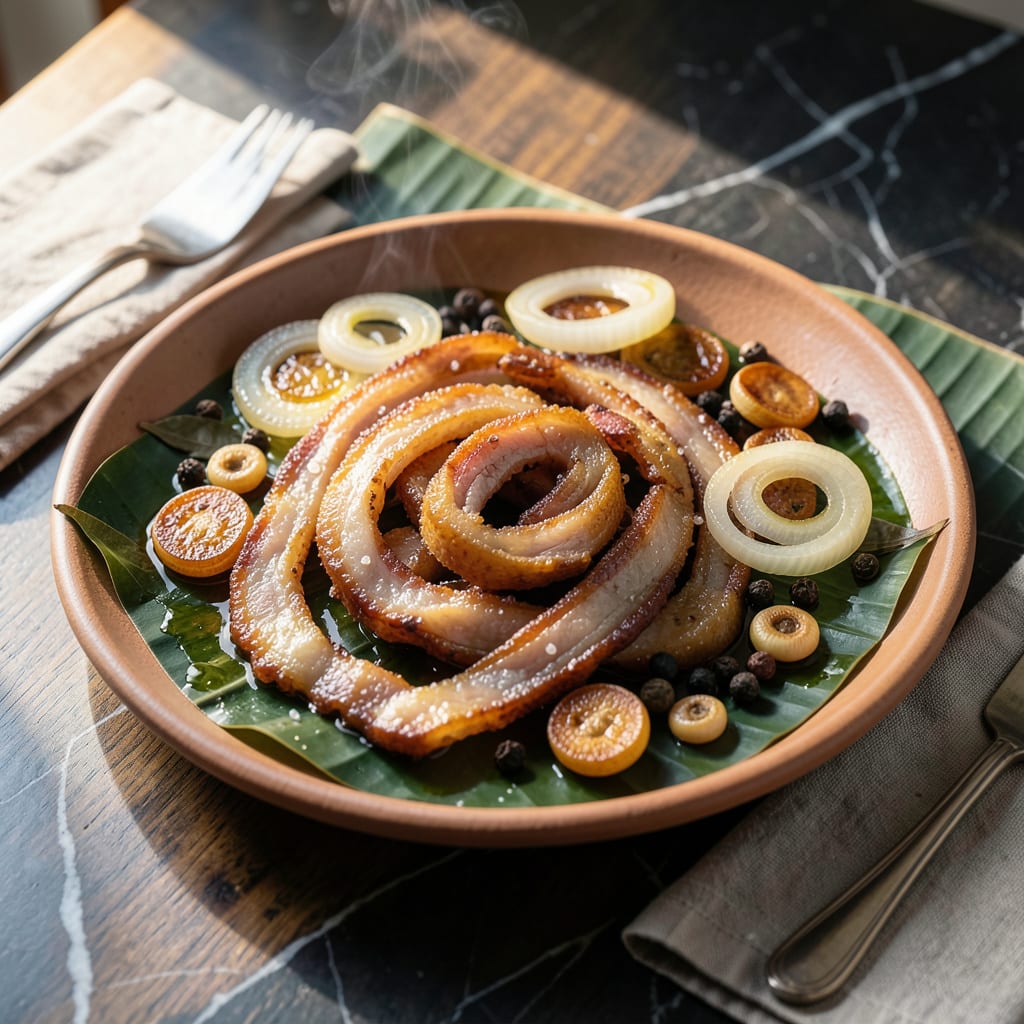
This traditional Filipino chicharon transforms humble pork fat into golden, crispy perfection through a simple rendering and frying process. The method has been passed down through generations in Pinoy kitchens.
What emerges is a snack so light and airy it shatters at the touch, with a rich pork flavor that makes it impossible to resist. Master this technique and you’ll have a staple that’s beloved across the Philippines.
Ingredients for Pork Fat Recipe Pinoy
Transform humble pork fat into golden, crispy perfection with these traditional ingredients.
| Ingredient | Amount | Notes |
|---|---|---|
| Pork Fat 🥓 | 2 lb | Fresh, skin-on, cut into strips |
| Water 💧 | 4 cups | For initial simmering stage |
| Sea Salt 🧂 | 2 tbsp | Fine grain, plus extra for seasoning |
| White Vinegar 🍶 | ¼ cup | For final crisping rinse |
| Vegetable Oil 🫒 | 4 cups | For deep-frying, neutral flavor |
| Black Peppercorns 🌶️ | 1 tsp | Lightly crushed, optional |
| Bay Leaves 🍃 | 2 whole | For aromatic simmering |
| Garlic Cloves 🧄 | 4 cloves | Smashed, for flavoring oil |
| Onion 🧅 | 1 whole | Quartered, for aromatic base |
| Calamansi Juice 🍋 | 2 tbsp | Or substitute lime juice |
The pork fat is non-negotiable—ask your butcher for fresh pork belly skin with a good fat-to-skin ratio (about 1:1). Filipino markets often carry pre-cut strips labeled for chicharon. Look for bright white fat with no gray discoloration. The skin should be thick enough to crisp up properly. Costco and Asian supermarkets are reliable sources for larger quantities.
No calamansi? Lime or lemon juice works in a pinch. For a deeper flavor, some cooks add a splash of soy sauce or fish sauce to the simmering water, but purists skip it. The vinegar rinse is essential—don’t substitute as it removes impurities that prevent crisping. If you’re watching sodium, reduce the salt by half and season to taste after frying.
Store raw pork fat in the fridge for up to 2 days before cooking. Once fried, chicharon keeps in an airtight container at room temperature for 1 week—though it rarely lasts that long. Re-crisp in a 350°F oven for 5 minutes if it softens.
Why You’ll Love This Recipe
- 5-Minute Prep: I just cube the pork fat, boil it with salt and vinegar, and it’s ready—no fancy steps.
- Crispy Salty Bite: The rendered fat gets this melt-in-your-mouth texture with a tangy, salty kick that’s hard to resist.
- Stir-Fry Starter: I keep a jar in the fridge to toss into sinigang, adobo, or even garlic rice for instant depth.
- Pantry Hero: Pork fat is cheap, lasts forever in the fridge, and turns scraps into something ridiculously useful.
Step-by-Step Instructions for Crispy Chicharon With Filipino Flair
This method ensures maximum crispiness and authentic flavor in every batch.
Step 1: Simmer Pork Fat with Aromatics
In a large pot, combine the 2 lb Pork Fat, 4 cups Water, 2 tbsp Sea Salt, 1 tsp Black Peppercorns, 2 whole Bay Leaves, 4 cloves Garlic Cloves, and 1 whole Onion quartered. Bring to a boil over medium-high heat, then reduce to medium-low heat.
Simmer gently for 45-60 minutes until the pork fat becomes tender but still holds its shape. Skim off any impurities that rise to the surface. The fat should appear slightly translucent and yield easily when pierced with a fork. This slow cooking process renders excess fat while infusing the meat with aromatic flavors.
Step 2: Drain and Dry Thoroughly
Carefully drain the pork fat strips in a colander, discarding the cooking liquid. Spread the strips on a wire rack set over a baking sheet. This elevation allows air to circulate on all sides, preventing steaming.
Pat the strips completely dry with paper towels, removing every trace of moisture. Let them air-dry at room temperature for 30-60 minutes or until the surface appears dull and slightly tacky. This drying step is critical for achieving maximum crispiness during frying. Any remaining moisture will cause dangerous oil splatter when frying.
Step 3: Rinse with Vinegar Solution
In a large bowl, combine the 0.25 cup White Vinegar with 2 cups of cold water. Briefly dip each pork fat strip into this solution, then return to the wire rack. The vinegar rinse removes any residual impurities and helps create an extra-crispy exterior.
Allow the strips to dry for an additional 10-15 minutes after the vinegar rinse. You’ll notice the surface becomes slightly more opaque as it dries, which indicates it’s ready for frying. This step is a traditional Filipino technique that enhances both texture and flavor.
Step 4: Deep-Fry to Golden Perfection
In a deep, heavy-bottomed pot, heat the 4 cups Vegetable Oil to 325°F. Working in batches to avoid overcrowding, carefully add the pork fat strips. Fry for 8-10 minutes until golden brown and crispy, stirring occasionally for even cooking.
As the chicharon cooks, you’ll see it puff slightly and develop a beautiful golden color. The oil temperature will drop when you add the pork, so maintain 300-325°F throughout. Use a slotted spoon to transfer the crispy chicharon to a paper towel-lined plate to drain excess oil.
Step 5: Finish and Serve
While still hot, drizzle the crispy chicharon with 2 tbsp Calamansi Juice. This final touch adds the signature Filipino tang that balances the richness. Toss gently to distribute the citrus evenly.
Let the chicharon cool completely before serving. As it cools, it will become even crispier. Store in an airtight container at room temperature for up to 5 days, though it’s best enjoyed fresh. The perfect chicharon should shatter when bitten, with a delicate, airy interior and a satisfying crunch.
Pro Tips For Making Pork Fat Recipe Pinoy
- Render Low and Slow: Start the pork fat on medium-low heat and let it render gradually—rushing it with high heat will burn the bits before the fat melts. I learned this the hard way after a batch turned bitter.
- Soak the Fat First: Rinse the pork fat in cold water and soak it in a vinegar-water mix for 10 minutes to remove impurities. My grandmother swore by this, and it keeps the final dish cleaner.
- Skip the Overcrowding: Cook the pork fat in a single layer so it crisps evenly—piling it up steams instead of fries. After burning three batches, I finally figured out spacing matters.
- Drain on Paper: Transfer the cooked pork fat onto paper towels to drain excess oil while keeping it crispy. Sounds weird, but it works better than any rack I’ve tried.
Flavor Customization for These Flavors
Sweet Glaze Twist
For a sweet-savory variation, toss the crispy chicharon with 2 tbsp honey and 1 tsp soy sauce while still hot. This creates a sticky, caramelized coating that contrasts beautifully with the crisp texture. I often add 1 tsp sesame seeds for extra crunch. 💛
Spicy Kick
Add heat by spritzing with a mix of 1 tbsp chili oil and 1 tsp calamansi juice. Some Filipino cooks also dust with chili powder or siling labuyo for authentic Pinoy heat. The vinegar base of chicharon pairs perfectly with spicy elements.
Garlic-Infused Flavor
For garlic lovers, toss the finished chicharon with 1 tbsp garlic powder and ½ tsp salt. I sometimes add 1 tsp dried oregano for an Italian-Filipino fusion. This variation is popular in Pampanga, the culinary capital of the Philippines.
Sour Cream Dip
Create a dipping sauce by mixing ½ cup sour cream with 1 tbsp calamansi juice and ½ tsp salt. This creamy, tangy dip cuts through the richness of the chicharon. Some add chopped spring onions for freshness.
Cheesy Topping
While still warm, sprinkle with ¼ cup grated Parmesan or queso de bola. The cheese melts slightly from the residual heat, creating a decadent topping. This modern twist is especially popular with younger Filipino food enthusiasts.
Herb-Infused Oil
Before serving, drizzle with 2 tbsp olive oil infused with rosemary or thyme. This adds a sophisticated aromatic note that complements the pork’s natural flavor. I use Filipino-brand olive oil for an authentic touch. ✨
Nutrition Facts
Frequently Asked Questions
What’s the best cut for this recipe?
Use fresh pork belly skin with a 1:1 fat-to-skin ratio. Ask your butcher for skin-on pork fat or look for pre-cut strips at Filipino markets. Avoid lean cuts as they won’t crisp properly.
Why do I need to dry the strips?
Drying removes moisture that causes oil splatter. The 30-60 minute air-dry creates a tacky surface that fries to perfect crispiness. Skipping this risks soggy chicharon.
Can I bake instead of fry?
Yes, but texture differs. Bake at 375°F for 45-60 minutes, flipping halfway. It won’t puff as much but still gets crispy. Use a wire rack for even air circulation.

- 8 Bean Soup Recipe Crock Pot: Hearty Vegetable Medley in One Pot - September 25, 2026
- 4C Bread Crumbs Meatballs Recipe: Crispy Crust and Juicy Centers - September 25, 2026
- 6 Oz Chocolate Chip Cookie Recipe: Perfectly Balanced Crispy Edges and Chewy Hearts - September 25, 2026