
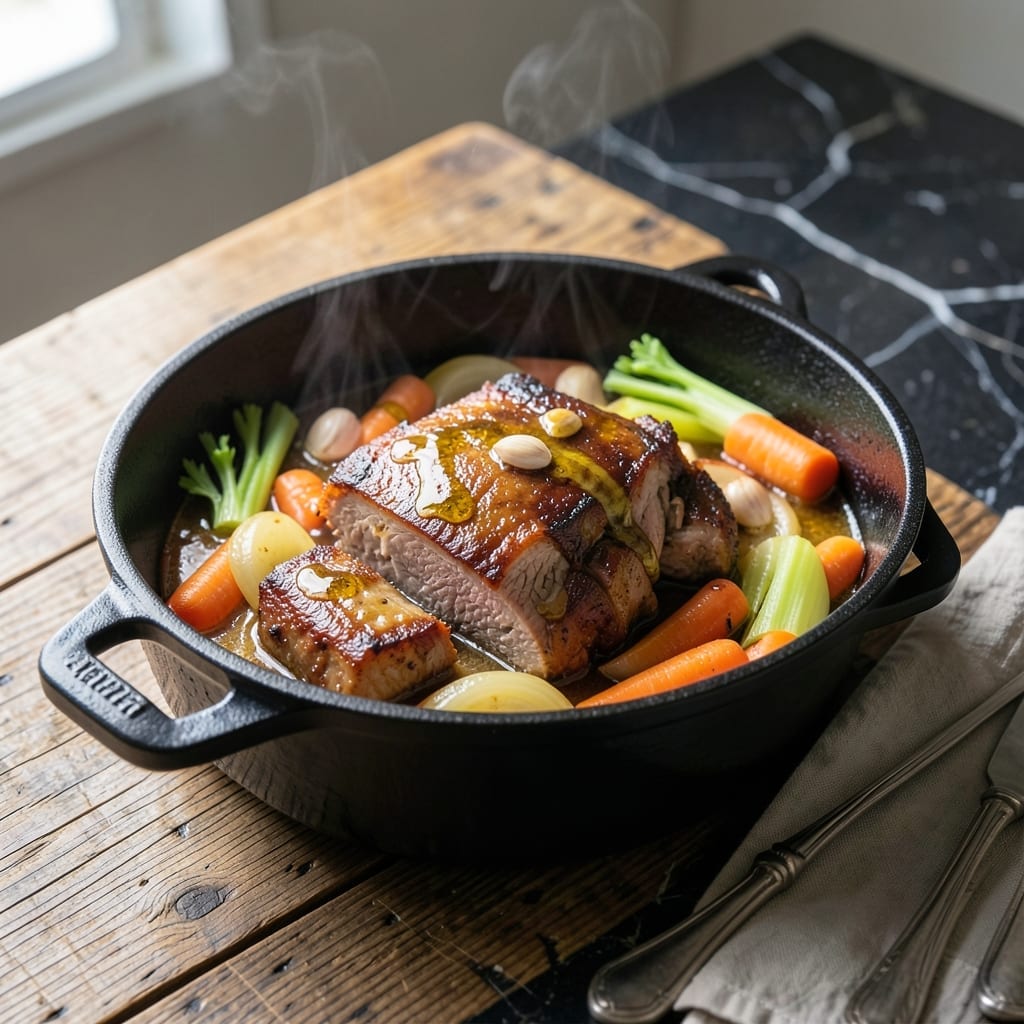
This stove top method delivers melt-in-your-mouth pork pot roast with minimal effort and maximum flavor. A Dutch oven is the key to achieving that perfect braise.
The slow cooking process transforms tough cuts into fork-tender perfection, with every bite infused with rich, savory depth. Simple ingredients create complex results.
You’ll love how the pork absorbs the flavors of the braising liquid while staying moist and tender. The meat practically falls apart when served.
This technique works every time, whether it’s a weeknight dinner or Sunday supper. The Dutch oven locks in moisture for consistent results.
Ingredients for Pork Pot Roast Recipe Stove Top
A Dutch oven, pork shoulder, and a handful of aromatics create fork-tender perfection with minimal effort.
| Ingredient | Amount | Notes |
|---|---|---|
| Pork Shoulder 🥩 | 2 ½ lb | Boneless, cut into large chunks |
| Olive Oil 🫒 | 2 tbsp | Divided for searing and braising |
| Yellow Onion 🧅 | 1 whole | Large, roughly chopped |
| Garlic Cloves 🧄 | 6 cloves | Minced for braising liquid |
| Carrots 🥕 | 3 whole | Peeled, cut into thick pieces |
| Celery Stalks 🌿 | 2 whole | Cut into large chunks |
| Low-Sodium Chicken Broth 💧 | 2 cups | For braising liquid base |
| Dry Red Wine 🍷 | 1 cup | Bold variety like Cabernet |
| Tomato Paste 🍅 | 2 tbsp | For depth of flavor |
| Dried Thyme 🌿 | 1 tsp | Rubbed between fingers to release oils |
| Dried Rosemary 🌿 | 1 tsp | Crushed to release aroma |
| Bay Leaves 🍃 | 2 pieces | Whole, removed before serving |
| Kosher Salt 🧂 | 1 ½ tsp | Plus more to taste |
| Black Pepper 🌶️ | 1 tsp | Freshly ground for best flavor |
| All-Purpose Flour 🌾 | 2 tbsp | For thickening braising liquid |
The pork shoulder is non-negotiable here. Bone-in or boneless both work, but opt for cuts with good marbling—Boston butt is ideal. Most butchers will cube it for you if you ask, or Costco often carries it pre-cut. Look for pieces with a fat cap for self-basting during the long braise. Avoid lean cuts like loin, as they’ll dry out.
No red wine? Substitute beef broth with 1 tbsp balsamic vinegar for similar depth. Fresh herbs can replace dried at three times the amount. Trader Joe’s has pre-minced garlic that saves time (though fresh is superior). The tomato paste can be swapped for crushed tomatoes in a pinch, but reduce the broth by half to compensate for the extra liquid.
The braising liquid freezes beautifully for 3 months. Store cooked pork in its juices in the fridge for up to 4 days—it reheats best gently on the stove. Always remove bay leaves before storing to avoid bitterness. Leftovers make incredible sandwiches or tacos.
Why You’ll Love This Recipe
- One Pan Wonder: I love that this stove top pork pot roast needs just one Dutch oven—no extra pans, no mess.
- My Sunday Staple: Perfect for lazy weekends when I want something hearty without babysitting the oven.
- Leftovers for Days: Honestly, it tastes even better the next day in sandwiches or over rice.
Step-by-Step Instructions for Pork Pot Roast
Here is the method for achieving perfectly tender results with your Dutch oven creation.
Step 1: Sear and Brown the Pork Shoulder
Heat 1 tablespoon olive oil in a Dutch oven over medium-high heat until shimmering. Pat the 2.5 lb pork shoulder chunks dry with paper towels, then season generously with 1.5 tsp kosher salt and 1 tsp black pepper. I always take this extra step to ensure even browning and maximum flavor development.
Sear the pork in batches to avoid crowding, turning occasionally for 5-7 minutes total until all sides develop a deep golden-brown crust. The meat should release easily from the pot when properly browned. Transfer the seared pork to a plate and set aside—this keeps it from overcooking during the next steps.
Step 2: Build the Aromatic Foundation
Reduce heat to medium and add the remaining 1 tablespoon olive oil to the Dutch oven. Add the 1 whole yellow onion, 3 whole carrots, and 2 whole celery stalks, cooking for 5-6 minutes until the vegetables begin to soften and develop color.
Stir in the 2 tbsp tomato paste and cook for 1-2 minutes until it darkens slightly. Add the 6 cloves garlic cloves, 1 tsp dried thyme, 1 tsp dried rosemary, and 2 pieces bay leaves, stirring constantly for 30 seconds until fragrant. This builds complex layers of flavor that define the final dish.
Step 3: Deglaze and Braise the Pork
Pour in the 1 cup dry red wine and scrape up all the browned bits from the bottom of the pot with a wooden spoon. This deglazing step captures all the concentrated pork and vegetable flavors. Let the wine reduce by half, about 3-4 minutes.
Return the pork to the Dutch oven and add the 2 cups low-sodium chicken broth. The liquid should come about halfway up the pork. Bring to a simmer, then reduce heat to low. Cover and cook for 2 to 2.5 hours, turning the pork occasionally, until it becomes fork-tender.
Step 4: Thicken the Braising Liquid
Remove the pork and vegetables to a serving platter and discard the bay leaves. Skim excess fat from the surface of the braising liquid. In a small bowl, whisk together the 2 tbsp all-purpose flour with 2 tablespoons of the hot braising liquid to create a smooth slurry.
Stir the slurry into the remaining braising liquid in the Dutch oven. Cook over medium heat for 3-5 minutes, stirring constantly, until the sauce thickens enough to coat the back of a spoon. Taste and adjust seasoning with additional kosher salt and black pepper if needed. Pour the sauce over the pork and serve immediately.
Pro Tips For Making Pork Pot Roast Recipe Stove Top
- Sear the Pork Hard: Get your pan screaming hot before adding the pork shoulder—about 2 tablespoons of olive oil, then don’t touch it for 3-4 minutes per side to build that deep brown crust. I learned this the hard way after years of gray, steamed meat.
- Cut Carrots Thick: Skip the baby carrots and use whole carrots cut into 2-inch chunks. They hold up better during the long simmer and actually taste like carrots at the end, not mush.
- Resist the Urge to Stir: Once the liquids are in and simmering, leave it alone for at least 30 minutes before checking. Every time you lift the lid, you lose heat and add 10 minutes to the cook time.
- Use a Meat Thermometer: Pork shoulder is done at 195°F, not when it “looks ready.” I was skeptical until I tried it—now I pull it out perfect every time, no guessing.
Storing and Reheating This Dish
Refrigerator Storage
Let the pork pot roast cool for no more than 2 hours before transferring to airtight containers. Store in the fridge at 40°F or below for up to 4 days. The flavors deepen overnight, making leftovers even more delicious. ❄️
Freezer Storage
For longer storage, freeze the pork in its braising liquid in heavy-duty freezer bags. Portion into 1-2 serving sizes and lay flat to save space. It keeps well for up to 3 months without losing quality. Squeeze out excess air to prevent freezer burn.
Stovetop Reheating
Gently reheat in a pot over medium-low heat for 10-15 minutes, stirring occasionally. Add ¼ cup water or broth if the sauce seems thick. This method preserves the fork-tender texture best. 🔥
Microwave Reheating
For quick meals, microwave individual portions covered with a damp paper towel. Use 50% power in 1-minute intervals, stirring between each, until reaching 165°F. This prevents drying out.
Repurposing Leftovers
Shred leftover pork for sandwiches, tacos, or pasta. The braising liquid makes an excellent gravy or soup base. I love using it in pork pot roast sliders with crusty rolls.
Nutrition Facts
Frequently Asked Questions
What cut of pork works best?
Pork shoulder is ideal for this method. Choose a well-marbled 2.5 lb boneless cut like Boston butt for the most tender results. Avoid lean cuts as they dry out during long cooking.
Can I skip the red wine?
Yes! Substitute 1 cup beef broth plus 1 tbsp balsamic vinegar for similar depth. The acidity helps tenderize the meat while adding rich flavor.
How do I know when it’s done?
The pork is ready when it shreds easily with a fork after 2-2.5 hours of braising. If it resists, cook covered for another 30 minutes and check again.
Why is my sauce thin?
Uncover and simmer for 5-10 minutes to reduce. For faster thickening, mix 1 tbsp cornstarch with cold water, then stir into the sauce.

- 6 Oz Chocolate Chip Cookie Recipe: Perfectly Balanced Crispy Edges and Chewy Hearts - September 25, 2026
- 6-Inch Coffee Cake Recipe: Vanilla Bean Swirls and Buttery Streusel Topping - September 25, 2026
- 1 Hour Soup Recipe: Velvety Richness Without the Wait - September 25, 2026