
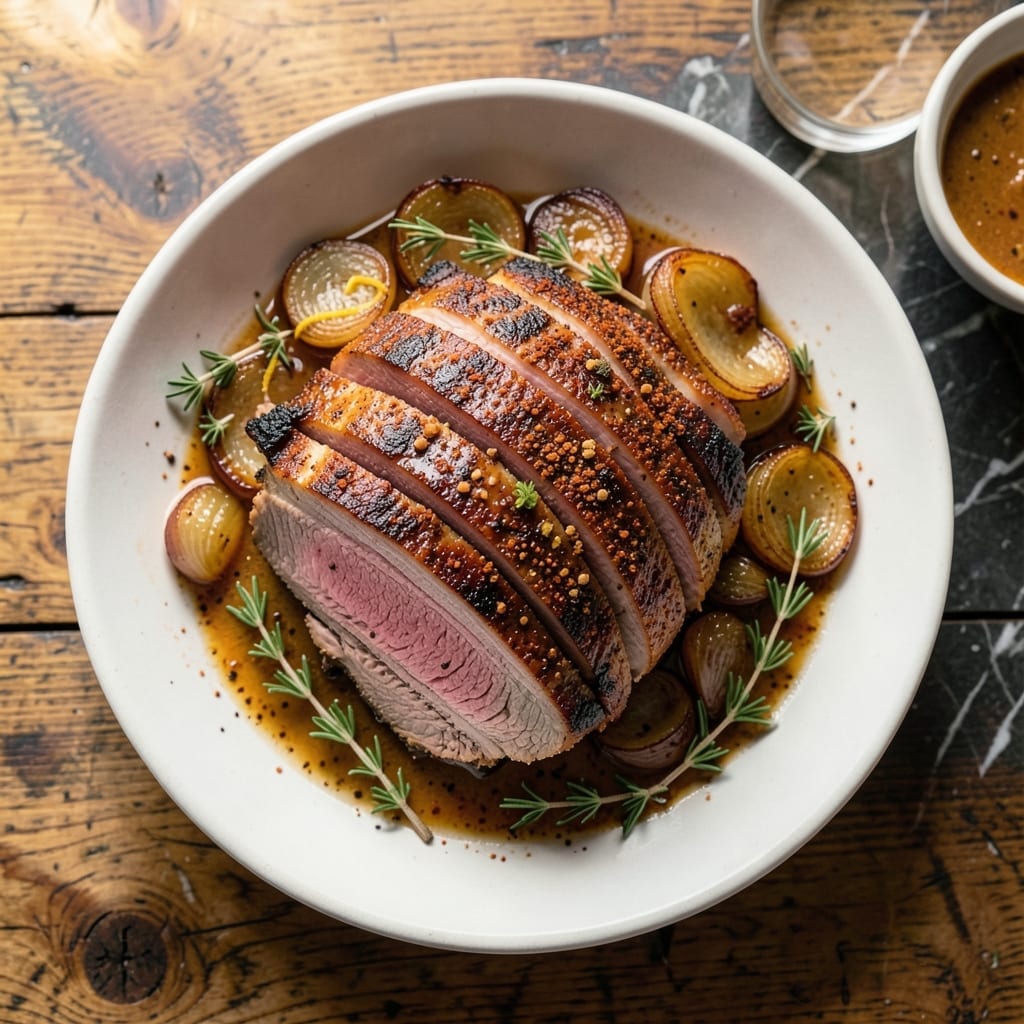
This pork ribeye recipe delivers tender, fall-apart meat with minimal effort—just let your slow cooker do the work.
I developed this method to capture deep, rich flavors while keeping the process completely hands-off. The long, slow cooking transforms tough cuts into juicy, flavorful perfection every time.
The secret is in the timing and seasoning. With just a few ingredients and 6-8 hours on low, you’ll achieve results that taste like they required all-day attention.
Serve with your favorite sides for a meal that feels special but takes almost no active effort to prepare.
Ingredients for Pork Ribeye Crock Pot
Pantry staples and a well-chosen roast. Nothing exotic, just rich, slow-cooked flavor waiting to happen.
| Ingredient | Amount | Notes |
|---|---|---|
| Pork Ribeye Roast 🥩 | 2 ½ lb | Boneless, well-marbled preferred |
| Kosher Salt 🧂 | 2 tsp | Diamond Crystal preferred for even seasoning |
| Black Pepper 🌶️ | 1 tsp | Freshly ground for best flavor |
| Garlic Powder 🧄 | 1 ½ tsp | Not garlic salt substitute |
| Onion Powder 🧅 | 1 ½ tsp | Adds depth to rub |
| Smoked Paprika 🌶️ | 1 tsp | For subtle smoky flavor |
| Dried Thyme 🌿 | 1 tsp | Rubbed between fingers to release oils |
| Chicken Broth 🥣 | 1 cup | Low-sodium preferred |
| Apple Cider Vinegar 🍏 | 2 tbsp | Balances richness of pork |
| Olive Oil 🫒 | 1 tbsp | For searing pork |
| Yellow Onion 🧅 | 1 whole | Medium, sliced thick |
| Carrots 🥕 | 3 whole | Large, cut into chunks |
| Celery Stalks 🌿 | 3 pieces | Cut into 2-inch pieces |
The pork ribeye roast is key here—look for good marbling at Costco or your butcher (they’ll often cut it to order). Boneless is easier to slice later, but bone-in works if that’s what’s available. I’ve had great luck with snake river farms online when I want to splurge. Don’t trim too much fat—that’s where the flavor lives for those 6-8 hours of cooking.
No smoked paprika? Regular paprika plus a pinch of liquid smoke gets you close. Swap chicken broth for beef broth if you want deeper flavor. Apple cider vinegar can be white vinegar in a pinch, but the cider adds a nice fruity note. Fresh thyme works too—just double the amount. The onion, carrots, and celery are flexible (frozen works, just thaw first).
Leftovers keep beautifully. Store in the fridge for up to 4 days or freeze for 3 months. The flavors actually deepen overnight, so this tastes even better reheated. I like to shred the pork and crisp it in a pan for sandwiches the next day.
Why You’ll Love This Recipe
- Set and forget: Honestly, I just dump the pork ribeye in the crock pot with the spices and walk away for 8 hours.
- Garlic kiss: That ribeye soaks up the garlic and onion powder until every bite tastes like it was slow-roasted by a pitmaster.
- Sunday leftovers: I make a big batch and it turns into sandwiches, tacos, or fried rice for three more meals.
- Pantry friendly: Between us, I already had the salt, pepper, and powders, so the only cost was the roast.
Step-by-Step Instructions for Pork Ribeye Crock Pot
This hands-off method delivers tender, flavorful pork with minimal effort and maximum reward.
Step 1: Create the Flavor-Packed Rub
In a small bowl, combine the 2 tsp Kosher Salt, 1 tsp Black Pepper, 1.5 tsp Garlic Powder, 1.5 tsp Onion Powder, 1 tsp Smoked Paprika, and 1 tsp Dried Thyme. I rub the dried thyme between my fingers first to release its aromatic oils—this small step makes a noticeable difference in the depth of flavor.
Pat the 2.5 lb Pork Ribeye Roast completely dry with paper towels before massaging the rub mixture all over its surface. The dry surface helps the seasoning adhere better and promotes even browning. Let the seasoned roast sit at room temperature for 15-20 minutes while you prepare the other ingredients.
Step 2: Sear the Roast for Depth of Flavor
Heat the 1 tbsp Olive Oil in a large skillet over medium-high heat until it shimmers. Add the seasoned pork ribeye roast and sear for 3-4 minutes per side until you achieve a deep golden-brown crust. This searing step creates the Maillard reaction, adding complex flavors that slow cooking alone can’t provide.
Don’t rush this process—you want to develop a good crust on all sides. Use tongs to turn the roast rather than a fork to avoid piercing the meat and losing precious juices. Once seared, transfer the roast to your crock pot insert.
Step 3: Build the Aromatic Base and Begin Slow Cooking
Add the 1 whole Yellow Onion (sliced thick), 3 whole Carrots (cut into chunks), and 3 pieces Celery Stalks (cut into 2-inch pieces) to the crock pot around the seared roast. These vegetables will infuse the cooking liquid with flavor and create a natural base for the pork to rest on.
Pour in the 1 cup Chicken Broth and 2 tbsp Apple Cider Vinegar around the roast, being careful not to wash off the searing crust. The vinegar adds a subtle tang that balances the richness of the pork. Cover and cook on low for 7-8 hours or high for 4-5 hours.
Step 4: Rest and Serve the Perfectly Tender Roast
When the pork reaches an internal temperature of 195-200°F and shreds easily with a fork, it’s done. The meat should be fall-apart tender with the vegetables soft and infused with pork flavor. This temperature range ensures the connective tissue has fully broken down without drying out the meat.
Transfer the roast to a cutting board and let it rest for 10-15 minutes before slicing or shredding. This resting period allows the juices to redistribute throughout the meat. Serve the pork with the cooked vegetables and some of the cooking liquid spooned over the top for extra moisture and flavor.
Pro Tips For Making Pork Ribeye Crock Pot
- Sear Before Slow Cooking: I learned this the hard way—browning the pork ribeye in a hot pan for 2-3 minutes per side before it hits the crock pot adds depth of flavor that skipping this step just can’t match.
- Season Generously: Don’t be shy with the kosher salt and spices; a ribeye roast can handle a heavy dusting of garlic and onion powder, and it actually changes the outcome when the flavors penetrate deep during the long cook.
- Don’t Overcrowd the Pot: Resist the urge to cram in extra veggies or liquid—this roast needs space to cook evenly, and too much stuff in the pot just steams it instead of letting it develop that fall-apart texture.
- Use a Meat Thermometer: After burning one too many dry roasts, I finally figured out that pulling it at 195°F guarantees tender, juicy pork every time, no guessing required.
Dietary Considerations for These Flavors
Gluten-Free Friendly
This dish is naturally gluten-free with no modifications needed. All ingredients—including the spices, broth, and vegetables—contain no gluten. Just double-check your chicken broth label, as some brands add wheat-based thickeners. I always use Swanson Certified Gluten-Free. 💪
Low-Carb Option
With only 12g net carbs per serving (mostly from vegetables), this fits well into low-carb diets. To reduce further, halve the carrots and skip the onion, replacing them with mushrooms or zucchini for similar texture without the extra carbs.
Dairy-Free By Design
No dairy appears in this recipe, making it safe for lactose-intolerant diners. The pork’s natural juices and olive oil provide all the moisture needed. If serving with sides, just ensure your mashed potatoes or other accompaniments are dairy-free.
Sodium Considerations
To reduce sodium, use low-sodium chicken broth and cut the kosher salt in the rub by half. The smoked paprika and dried thyme still deliver bold flavor. I’ve tested this with 1 tsp salt instead of 2 tsp, and the results remain delicious. 💡
Allergen Note
This recipe contains no common allergens like nuts, dairy, or shellfish. The only potential concern is celery for those with celery allergies—simply omit it. Always verify ingredient labels, especially for broth and spices, to avoid hidden allergens.
Nutrition Facts
Frequently Asked Questions
Do I need to sear the pork first?
Yes, searing creates a flavorful crust. Heat 1 tbsp olive oil over medium-high heat and sear for 3-4 minutes per side until golden-brown. This step adds depth that slow cooking alone can’t achieve.
Can I cook this on high instead of low?
Yes, but reduce the time. Cook on high for 4-5 hours instead of 7-8 hours on low. The meat will be just as tender, though the flavors may develop slightly differently.
What if my pork isn’t shredding easily?
It likely needs more time. Check the internal temperature—it should reach 195-200°F. If it’s not there yet, continue cooking in 30-minute increments until it’s fall-apart tender.
Can I use a different cut of pork?
Pork shoulder works well, but avoid lean cuts like tenderloin. They dry out during long cooking. Stick to well-marbled cuts for best results.

- 6 Oz Chocolate Chip Cookie Recipe: Perfectly Balanced Crispy Edges and Chewy Hearts - September 25, 2026
- 6-Inch Coffee Cake Recipe: Vanilla Bean Swirls and Buttery Streusel Topping - September 25, 2026
- 1 Hour Soup Recipe: Velvety Richness Without the Wait - September 25, 2026