
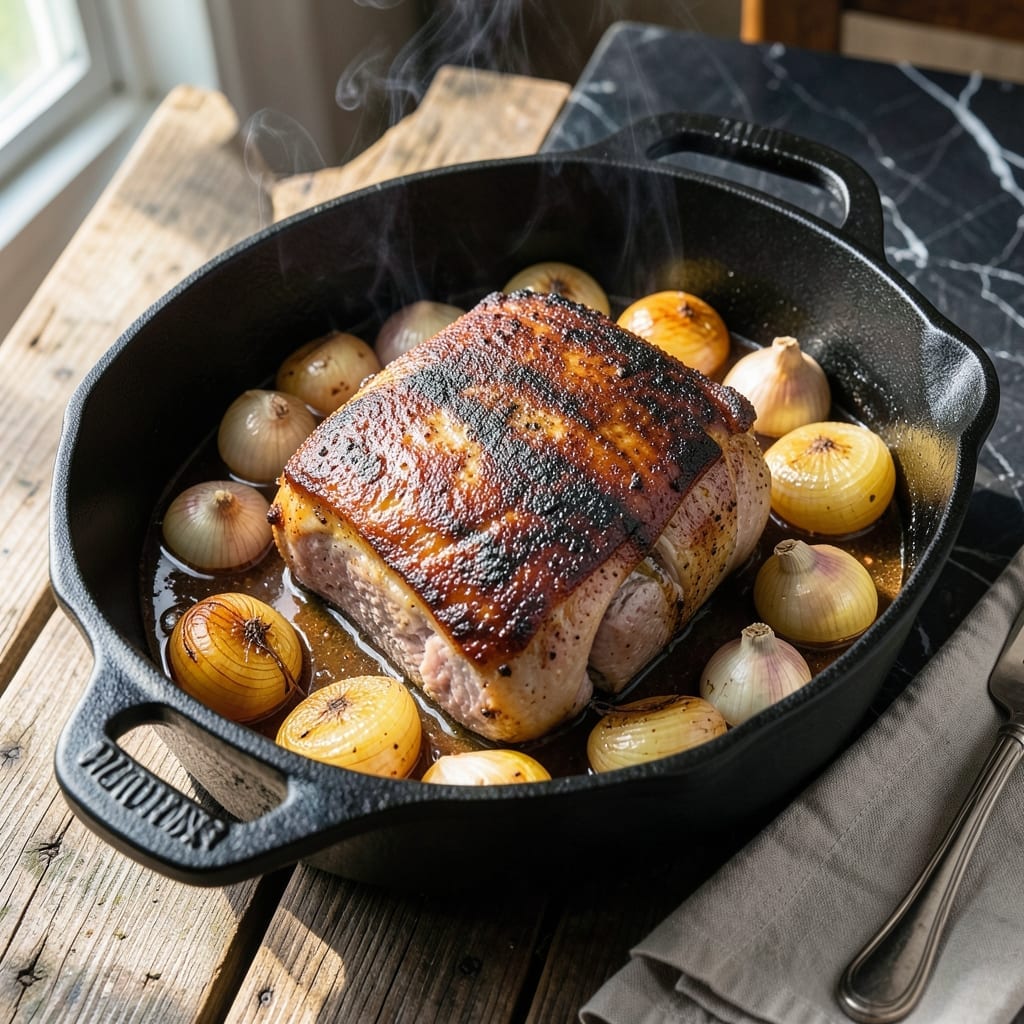
This pork shoulder pot roast transforms a humble cut into a showstopping centerpiece through the magic of slow braising. The low and steady heat works its way through the meat, breaking down tough fibers until they surrender to fork-tender perfection.
What sets this method apart is the combination of dry heat and moisture, which creates an environment where the collagen melts into gelatin, enriching the sauce with natural richness. The result is meat so tender it nearly dissolves at the touch.
As the pork cooks, the vegetables absorb the deep, savory flavors, creating a complete meal in one pot. The aroma alone signals that something extraordinary is happening in your kitchen.
This is the kind of dish that rewards patience with restaurant-quality results every time. Let’s begin the transformation.
Ingredients for Pork Shoulder Pot Roast
Slow-braised perfection starts with these carefully selected ingredients for deep, fork-tender flavor in every bite.
| Ingredient | Amount | Notes |
|---|---|---|
| Pork Shoulder 🥩 | 3 lb | Bone-in, skin-on preferred |
| Kosher Salt 🧂 | 2 tsp | Diamond Crystal preferred |
| Black Pepper 🌶️ | 1 tsp | Freshly ground coarse |
| Smoked Paprika 🌶️ | 1 tbsp | Sweet or hot variety |
| Garlic Cloves 🧄 | 6 cloves | Peeled, smashed |
| Yellow Onions 🧅 | 2 whole | Large, quartered |
| Carrots 🥕 | 4 whole | Peeled, cut into chunks |
| Yukon Gold Potatoes 🥔 | 1 ½ lb | Peeled, halved |
| Chicken Stock 💧 | 2 cups | Low-sodium preferred |
| Red Wine 🍷 | 1 cup | Dry variety like Cabernet |
| Tomato Paste 🍅 | 2 tbsp | Double-concentrated preferred |
| Fresh Thyme Sprigs 🌿 | 4 pieces | Whole sprigs, stems on |
| Fresh Rosemary Sprigs 🌿 | 2 pieces | Whole sprigs, stems on |
| Bay Leaves 🍃 | 2 pieces | Dried, whole |
| Olive Oil 🫒 | 2 tbsp | Extra-virgin for searing |
The pork shoulder is non-negotiable here. Bone-in, skin-on delivers the richest flavor and most luxurious texture as it breaks down. Source from a reputable butcher or look for well-marbled cuts at Whole Foods. The weight is critical—3 pounds ensures even cooking without drying out. For the stock, homemade or high-quality low-sodium prevents oversalting as the liquid reduces.
No red wine? Additional chicken stock with a splash of balsamic vinegar mimics the depth. Smoked paprika can be swapped for regular, but the smokiness complements the pork beautifully. Dried thyme and rosemary at half the quantity work if fresh isn’t available, but fresh herbs elevate the braising liquid significantly. The tomato paste adds umami—don’t skip it even if it seems small.
This roast tastes even better the next day. Store in an airtight container for up to 4 days in the fridge or freeze for 3 months. Reheat gently to preserve the tender texture. The braising liquid makes an incredible sauce—skim off excess fat before serving.
Why You’ll Love This Recipe
- Set and Forget: I toss the pork shoulder with salt, pepper, and smoked paprika in the morning, and by dinner it’s fall-apart tender.
- Smoky Depth: That smoked paprika and garlic combo gives the meat a rich, almost barbecue-like flavor without firing up a grill.
- Feeds the Crew: One shoulder turns into pulled pork sandwiches, tacos, or rice bowls for days—no extra effort.
- Pennywise Comfort: Pork shoulder is cheap, and this recipe stretches it into multiple meals that taste anything but budget.
Step-by-Step Instructions for Pork Shoulder Pot Roast
This method transforms the pork shoulder into fork-tender perfection with rich, layered flavors.
Step 1: Season and Sear the Pork Shoulder
Pat the 3 lb Pork Shoulder dry with paper towels to ensure a proper sear. Season all sides generously with the 2 tsp Kosher Salt, 1 tsp Black Pepper, and 1 tbsp Smoked Paprika. The rub should form a visible crust on the meat.
Heat the 2 tbsp Olive Oil in a heavy Dutch oven over medium-high heat. When the oil shimmers, sear the pork shoulder on all sides until deeply browned, about 4-5 minutes per side. This creates a flavorful fond that will enhance the braising liquid.
Step 2: Build the Aromatic Base
Remove the pork and reduce heat to medium. Add the 2 whole Yellow Onions (quartered), 4 whole Carrots (in chunks), and 6 cloves Garlic Cloves (smashed) to the pot. Cook for 5 minutes, stirring occasionally, until the onions begin to soften and brown.
Stir in the 2 tbsp Tomato Paste and cook for 1-2 minutes until it darkens slightly. This step deepens the umami base of the dish. Add the 1 cup Red Wine and scrape up any browned bits from the bottom of the pot.
Step 3: Braise with Vegetables and Herbs
Return the pork shoulder to the Dutch oven. Add the 1.5 lb Yukon Gold Potatoes (halved), 2 cups Chicken Stock, 4 pieces Fresh Thyme Sprigs, 2 pieces Fresh Rosemary Sprigs, and 2 pieces Bay Leaves. The liquid should come about halfway up the pork.
Bring to a simmer, then cover and transfer to a preheated 325°F oven. Braise for 2.5-3 hours, turning the pork occasionally, until it shreds easily with a fork. The vegetables should be tender and the liquid reduced to a rich sauce.
Step 4: Rest and Serve
Carefully remove the pork shoulder and transfer it to a cutting board. Skim excess fat from the braising liquid if desired, then adjust seasoning with additional salt and pepper to taste.
Shred or slice the pork and return it to the pot to soak up the juices. Serve hot with the braised vegetables and sauce spooned over the top. The meat should be incredibly tender, and the sauce should coat the back of a spoon with a velvety texture.
Pro Tips For Making Pork Shoulder Pot Roast
- Sear It Hard: I learned this the hard way—get your pan screaming hot before searing the pork shoulder, and don’t move it for at least 3-4 minutes per side to develop that deep, caramelized crust.
- Score the Fat: Cut 1/4-inch slits into the fat cap in a crosshatch pattern so the smoked paprika and garlic penetrate deep into the meat.
- Skip the Rush: Resist the urge to crank the heat to speed up cooking; low and slow (around 300°F) for 3-4 hours is what makes pork shoulder fall apart.
- Double the Garlic: Sounds like overkill, but use 8-10 cloves instead of 4—they mellow into sweet, jammy pockets of flavor in the pot roast.
Essential Equipment for This Dish
Dutch Oven Essentials
I never attempt a pot roast without my 5-7 quart enameled cast iron Dutch oven. The heavy base distributes heat evenly, preventing hot spots that can burn your fond. I use Le Creuset for its durability and how it retains heat at 325°F for hours.
Thermometer Matters
An instant-read thermometer is your best friend for pork shoulder. I check internal temp in multiple spots—195-205°F signals perfect doneness. The ThermoWorks Mk4 gives me readings in 3 seconds with pinpoint accuracy. 🌡️
Kitchen Scale
Precision matters with braising liquids. My OXO Good Grips 11lb scale ensures I hit 2 cups chicken stock and 1 cup red wine exactly. This prevents under- or over-reduction during the long cook time.
Wooden Spoon
For scraping up that flavorful fond, nothing beats a good wooden spoon. I keep a 12-inch olive wood spoon dedicated to my Dutch oven. It won’t scratch the enamel and handles high heat beautifully.
Tongs for Turning
Use 12-inch locking tongs to flip the pork during searing and braising. I prefer OXO’s spring-loaded design—it gives me perfect control without crushing the meat. The long handles keep my hands safe from splatters. 🔥
Fat Separator
After cooking, I pour the braising liquid into a 4-cup fat separator. The Norpro model lets me skim off excess fat before making the final sauce. This simple tool makes a huge difference in presentation.
Nutrition Facts
Frequently Asked Questions
What’s the ideal cooking temperature?
Braise at a steady 325°F in the oven for perfect results. This low temperature breaks down collagen slowly without drying the meat.
How do I know when it’s done?
The pork is ready when it shreds easily with a fork, typically after 2.5-3 hours. An internal temperature of 195-205°F confirms doneness.
Can I use a slow cooker instead?
Yes! Sear the pork first, then cook on low for 8-10 hours or high for 5-6 hours. The texture will be similar to oven-braising.
What if my sauce is too thin?
Remove the pork and vegetables, then simmer the liquid uncovered on the stovetop for 10-15 minutes to thicken naturally.

- 6 Oz Chocolate Chip Cookie Recipe: Perfectly Balanced Crispy Edges and Chewy Hearts - September 25, 2026
- 6-Inch Coffee Cake Recipe: Vanilla Bean Swirls and Buttery Streusel Topping - September 25, 2026
- 1 Hour Soup Recipe: Velvety Richness Without the Wait - September 25, 2026