
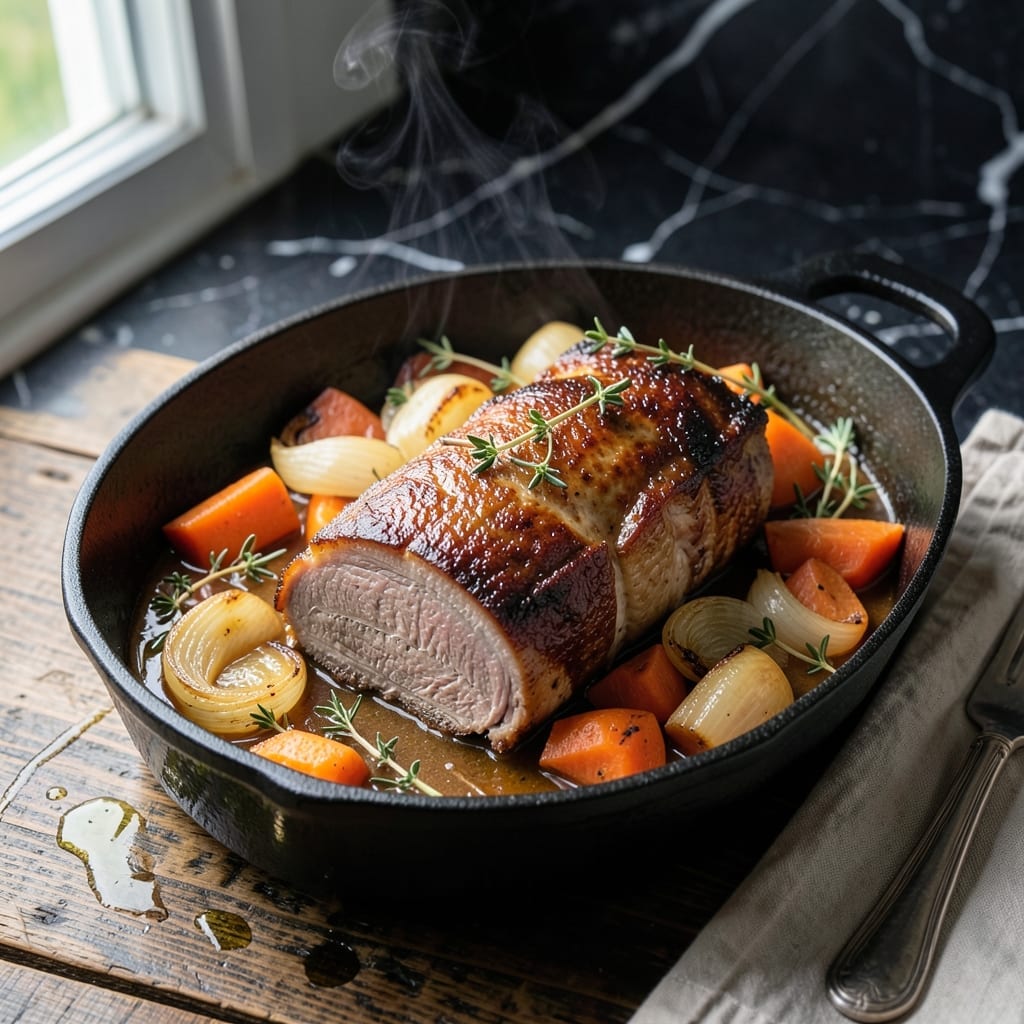
This Dutch oven method transforms pork tenderloin into fork-tender perfection with minimal effort. The slow, even heat breaks down the meat while locking in juices, creating a roast that practically melts in your mouth.
I developed this recipe to achieve restaurant-quality results at home without complicated techniques. A simple sear before roasting adds depth of flavor, while aromatic vegetables and herbs infuse the meat with rich, savory notes.
The result is a succulent pork roast with a golden crust and incredibly moist interior. Each bite delivers the kind of tenderness that makes this dish a family favorite for Sunday dinners or special occasions.
Serve with the pan juices spooned over the top for maximum flavor. This technique ensures consistent, impressive results every time you make it.
Ingredients for Pork Tenderloin Pot Roast
Simple ingredients, restaurant-quality results in your Dutch oven
| Ingredient | Amount | Notes |
|---|---|---|
| Pork Tenderloin 🥩 | 2 lb | Trimmed of excess fat |
| Olive Oil 🫒 | 2 tbsp | Divided for searing and roasting |
| Kosher Salt 🧂 | 2 tsp | Diamond Crystal preferred |
| Black Pepper 🌶️ | 1 tsp | Freshly ground |
| Onion 🧅 | 1 whole | Yellow or sweet, roughly chopped |
| Carrots 🥕 | 3 whole | Peeled, cut into chunks |
| Celery Stalks 🌿 | 3 whole | Cut into large pieces |
| Garlic Cloves 🧄 | 6 cloves | Smashed, peeled |
| Fresh Rosemary 🌿 | 2 tbsp | Chopped, plus extra sprigs |
| Fresh Thyme 🍃 | 2 tbsp | Chopped, plus extra sprigs |
| Dry White Wine 🍷 | 1 cup | Sauvignon Blanc or Pinot Grigio |
| Low-Sodium Chicken Broth 💧 | 1 ½ cups | Or substitute vegetable broth |
| Dijon Mustard 🟡 | 1 tbsp | Whole-grain preferred |
| Bay Leaves 🌿 | 2 whole | Dried, for aroma |
The pork tenderloin is the star—look for a firm, pale pink cut with minimal fat at Whole Foods or your trusted butcher. Avoid anything with a grayish tint (that’s old meat). Most grocery stores carry it pre-trimmed, but I like to grab a whole piece at Costco and portion it myself. The herbs? Fresh rosemary and thyme make a world of difference (the kind in tubes just doesn’t cut it).
No white wine? Apple cider vinegar with a splash of broth mimics the acidity. Short on fresh herbs? Dried at half the amount works, but add them earlier since they take longer to infuse. For the broth, Better Than Bouillon is my go-to for depth. The Dijon can be swapped for regular mustard, but the sharpness of whole-grain really complements the pork.
Leftovers keep 4-5 days in the fridge—shred the pork for sandwiches or tacos. Freeze the cooked meat and juices for up to 3 months (portion it first for easy meals). The veggies? They’ll soften, but that’s kind of the point (perfect for mashing or soups later).
Why You’ll Love This Recipe
- One Pan Wonder: I toss the tenderloin with olive oil, salt, pepper, and onions—then let the oven do the work.
- Rich and Savory: The slow roast coaxes out deep, caramelized flavors from the pork and onions.
- Feeds the Family: It’s my go-to for Sunday dinner or meal prepping lunches for the week.
- Budget Stretcher: A single pork tenderloin serves four generously, and the leftovers taste even better the next day.
Step-by-Step Instructions for Pork Tenderloin Pot Roast
Here’s the method for achieving that melt-in-your-mouth texture you’re after.
Step 1: Sear the Pork Tenderloin
Pat the 2 lb Pork Tenderloin dry with paper towels—this ensures a good sear. Season all over with the 2 tsp Kosher Salt and 1 tsp Black Pepper. Heat 1 tbsp Olive Oil in a Dutch oven over medium-high heat until shimmering.
Sear the pork on all sides for 6-8 minutes total until deep golden brown. Don’t rush this—you want a rich crust that will flavor the entire dish. Transfer the pork to a plate and set aside.
Step 2: Sauté the Aromatics
In the same Dutch oven, add the remaining 1 tbsp Olive Oil. Toss in the 1 whole Onion, 3 whole Carrots, and 3 whole Celery Stalks. Sauté for 5-6 minutes until the vegetables soften and the onion becomes translucent.
Add the 6 cloves Garlic Cloves, 2 tbsp Fresh Rosemary, and 2 tbsp Fresh Thyme. Cook for 1 minute until fragrant. Stir in the 1 tbsp Dijon Mustard and cook for another 30 seconds to deepen its flavor.
Step 3: Deglaze and Braise
Pour in the 1 cup Dry White Wine and scrape up any browned bits from the bottom of the pot. Let it simmer for 2-3 minutes until reduced by half. This step builds layers of flavor.
Return the pork to the Dutch oven. Add the 1.5 cups Low-Sodium Chicken Broth and 2 whole Bay Leaves. The liquid should come about halfway up the pork. Bring to a simmer, then cover and reduce heat to low.
Step 4: Slow Cook to Tenderness
Cook covered for 1.5 to 2 hours, turning the pork occasionally, until it’s fork-tender and an instant-read thermometer registers 195°F internally. The pork should pull apart easily with a fork when done.
This low-and-slow method breaks down the connective tissues, ensuring the meat becomes incredibly tender. Check occasionally and add a splash of broth if the liquid reduces too much.
Step 5: Rest and Serve
Transfer the pork to a cutting board and tent with foil. Let it rest for 10 minutes—this allows the juices to redistribute. Skim any excess fat from the braising liquid if desired.
Slice the pork and arrange on a platter. Spoon the vegetables and some of the braising liquid over the top. Serve immediately with the remaining sauce on the side for an extra flavor boost.
Pro Tips For Making Pork Tenderloin Pot Roast
- Sear It Hard: Get your pan screaming hot before adding the tenderloin—about 2 tablespoons of olive oil, then sear each side for 2-3 minutes until deep golden. I learned this the hard way after my first few attempts came out pale and sad.
- Salt the Pork: Pat the pork dry first, then hit it with kosher salt at least 20 minutes before cooking. Sounds weird, but it works: the salt draws out moisture, then reabsorbs it for juicier meat.
- Don’t Overcrowd: If your pan isn’t big enough for all the onions in a single layer, cook them in batches. Steer clear of dumping them all in at once—steaming instead of browning ruins the flavor.
- Use a Meat Thermometer: Pull the tenderloin at 145°F, then let it rest for 5-10 minutes under foil. My grandmother swore by this, and she was right: it’s the only way to guarantee it’s done but still tender.
Storing and Reheating pork tenderloin pot roast
Refrigerator Storage
Let your pot roast cool for no more than 2 hours before transferring to airtight containers. I use glass containers with locking lids. Store in the fridge at 40°F or below for up to 4-5 days. The flavors actually deepen as it rests. ❄️
Freezer Storage
For longer storage, portion the pork and vegetables with some braising liquid into freezer-safe bags or containers. It freezes well for up to 3 months without losing quality. Leave 1 inch of headspace for expansion. I like using quart-sized freezer bags for easy stacking.
Stovetop Reheating
My preferred method: place portions in a saucepan with a splash of broth or water. Cover and heat over medium-low heat for 8-10 minutes, stirring occasionally. This keeps the meat moist. Add a pat of butter at the end for extra richness. 🔥
Microwave Reheating
For quick meals, place portions in a microwave-safe dish with a damp paper towel cover. Heat on 70% power for 2-3 minutes, stir, then continue in 1-minute intervals until reaching 165°F. The damp towel prevents drying out.
Make-Ahead Tip
This dish actually improves overnight. I often make it the day before serving—just cool, refrigerate, then reheat gently. The pork will be even more tender, and the flavors more developed. Perfect for stress-free entertaining.
Nutrition Facts
Frequently Asked Questions
Why use a Dutch oven for this?
A Dutch oven distributes heat evenly and retains moisture, which is crucial for fork-tender results. The heavy lid traps steam, breaking down the meat fibers slowly without drying it out.
Can I use a slow cooker instead?
Yes, but you’ll miss the deep sear. Brown the pork first in a skillet, then transfer to the slow cooker with all ingredients. Cook on low for 6-7 hours or high for 4-5 hours.
What if my pork isn’t tender after 2 hours?
Check the internal temperature—it should reach 195°F. If not, continue cooking in 30-minute increments, adding more broth if needed. Pork tenderloin can vary slightly in size and density.
What’s the best way to slice it?
Always slice against the grain for maximum tenderness. Look for the natural lines in the meat and cut perpendicular to them. Use a sharp knife and serve with the braising liquid spooned over the top.

- 4C Bread Crumbs Meatballs Recipe: Crispy Crust and Juicy Centers - September 25, 2026
- 6 Oz Chocolate Chip Cookie Recipe: Perfectly Balanced Crispy Edges and Chewy Hearts - September 25, 2026
- 6-Inch Coffee Cake Recipe: Vanilla Bean Swirls and Buttery Streusel Topping - September 25, 2026