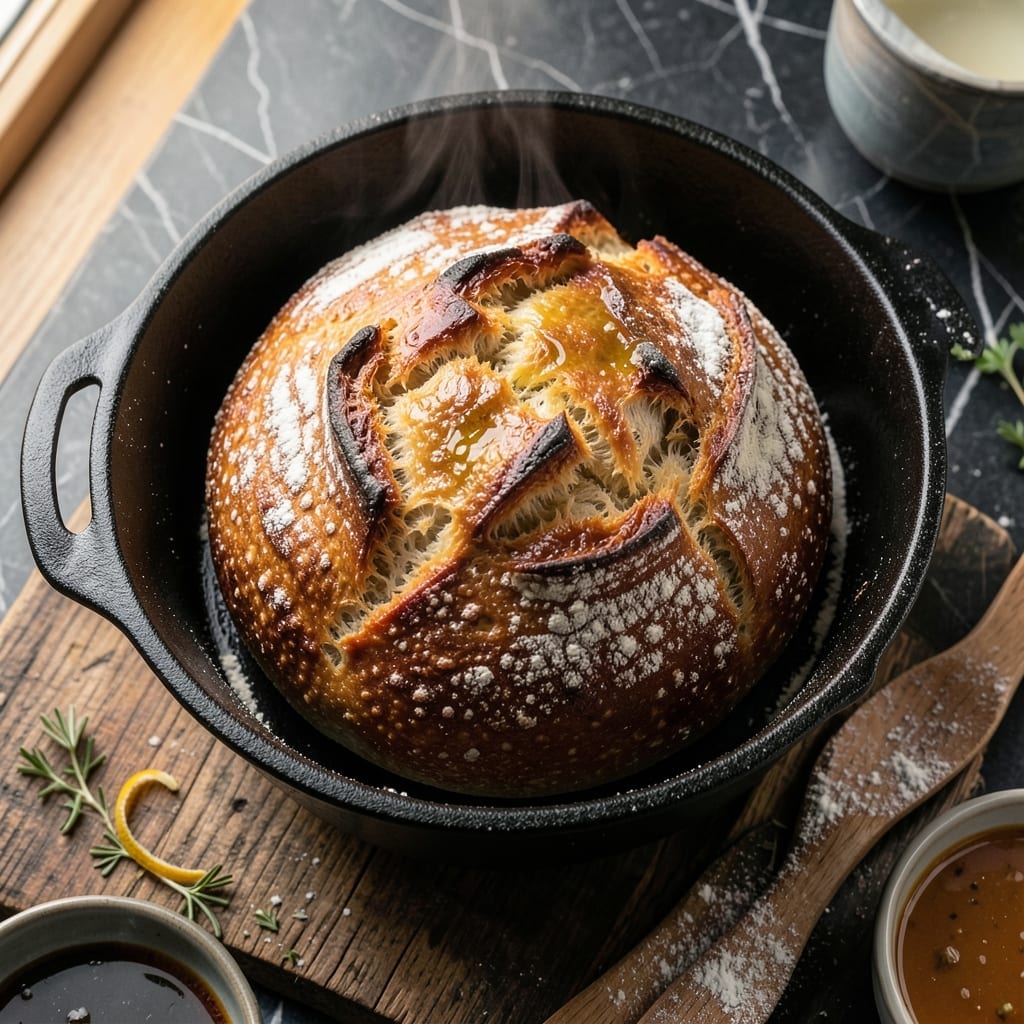
Pot Bread Recipe on Stove: No-Oven Flatbread in Minutes

Pot Bread Recipe on Stove: No-Oven Flatbread in Minutes

There’s something deeply satisfying about making bread without an oven—especially when it comes together in 15 minutes on your stovetop. This flatbread delivers warm, soft results with minimal effort.

The technique is simple yet brilliant: cook the dough in a covered pot, allowing steam to create a tender crumb while the bottom develops a golden crust. No yeast, no waiting, just quick results.

You’ll end up with pillowy bread that’s perfect for scooping, dipping, or serving alongside any meal. The stovetop method ensures even cooking and a texture that rivals oven-baked versions.

Vegan-friendly and incredibly versatile, this bread works for any occasion. Here’s how to make it perfectly every time.

👨‍🍳
Difficulty
Medium
🌿
Diet
Vegetarian
⏱️
Total Time
30 min
🔥
Calories
Med Cal

Ingredients for Pot Bread Recipe on Stove

A handful of pantry staples transforms into warm, pillowy flatbread in minutes.

Ingredient Amount Notes
All-Purpose Flour 🌾 3 cups Plus extra for dusting
Baking Powder 🧂 2 tsp Ensures proper rise
Salt 🧂 1 tsp Fine sea salt preferred
Olive Oil 🫒 2 tbsp Extra-virgin for richness
Water 💧 1 ¼ cups Warm, about 110°F
Neutral Oil 🫒 1 tbsp For greasing pot
Fresh Parsley 🌿 2 tbsp Chopped, for garnish
Garlic Powder 🧄 1 tsp Optional for flavor boost
Onion Powder 🧅 1 tsp Optional for depth
Lemon Zest 🍋 1 tsp Optional for brightness

The flour quality matters here. King Arthur or Bob’s Red Mill all-purpose gives consistent results. Baking powder is your leavening agent—ensure it’s fresh (test by dropping a teaspoon in hot water; it should bubble vigorously). Warm water activates it properly. For the olive oil, California Olive Ranch is a reliable brand at most supermarkets.

No all-purpose flour? Bread flour at a 1:1 ratio works (slightly chewier texture). Out of baking powder? Baking soda plus cream of tartar (1/4 tsp soda + 1/2 tsp cream of tartar per 1 tsp powder). The neutral oil can be avocado or vegetable oil. Parsley can be swapped for cilantro or chives. Garlic and onion powders add depth but aren’t mandatory.

Store flour in an airtight container to prevent moisture. The dough can rest 10 minutes before cooking if you’re prepping ahead. Leftover bread keeps 2-3 days wrapped at room temperature—reheat in a dry skillet to restore softness.

❤️

Why You’ll Love This Recipe

  • One Pan Wonder: I mix flour, baking powder, salt, olive oil, and water right in the pot—no extra bowls, no mess.
  • Warm Comfort: That golden crust with a soft, olive oil-kissed center is pure cozy in every bite.
  • Feed a Crowd: Honestly, it’s my go-to for last-minute gatherings—doubles easily and everyone loves it.

Step-by-Step Instructions for Pot Bread on Stove

This stovetop method delivers tender, golden flatbread without an oven, using just one pot.

Step 1: Combine Dry Ingredients and Create Well

In a large mixing bowl, whisk together the 3 cups All-Purpose Flour, 2 tsp Baking Powder, and 1 tsp Salt until evenly distributed. The baking powder activates with heat, creating lift in your bread even without yeast.

Form a well in the center of the dry mixture. I find this technique prevents overmixing while allowing you to gradually incorporate the wet ingredients. The consistency of your flour mixture should resemble fine sand at this stage.

Step 2: Incorporate Wet Ingredients for Smooth Dough

Pour the 2 tbsp Olive Oil and 1.25 cups Water into the well. Using a wooden spoon or your hands, gradually work the flour into the liquid until a shaggy dough forms. You want a soft, slightly sticky consistency—not dry or crumbly.

If the dough feels too wet, add a sprinkle of flour; if too dry, add a teaspoon of water. The dough should pull away from the sides of the bowl but still cling slightly to your fingers. This hydration level ensures a tender crumb in the finished bread.

Step 3: Knead Briefly and Divide Portions

Turn the dough onto a lightly floured surface and knead gently for 2-3 minutes until smooth. Unlike yeast breads, this requires minimal kneading—just enough to develop the gluten slightly for structure.

Divide the dough into 4 equal portions (about 1 cup each). Roll each into a ball, then flatten into rounds approximately ½-inch thick. The uniform thickness ensures even cooking on the stovetop.

Step 4: Cook in a Greased Pot Until Golden

Heat a heavy-bottomed pot (with lid) over medium-low heat. Add the 1 tbsp Neutral Oil and swirl to coat the bottom. Place one dough round into the pot and cook for 4-5 minutes until the bottom is golden brown with dark spots.

Carefully flip the bread and cook for another 4-5 minutes with the lid on. The steam trapped inside finishes the cooking, while the direct heat creates a crisp, golden crust. Repeat with remaining portions, adding oil as needed.

Step 5: Finish with Aromatic Garnish

Transfer the cooked bread to a wire rack. While still warm, brush the tops with a bit of the olive oil and sprinkle with the 2 tbsp Fresh Parsley, 1 tsp Garlic Powder, 1 tsp Onion Powder, and 1 tsp Lemon Zest for brightness.

The bread should be tender inside with a crisp exterior. Serve immediately for the best texture, or store in an airtight container once cooled. This flatbread pairs perfectly with soups, stews, or as a base for sandwiches.

👨‍🍳

Pro Tips For Making Pot Bread Recipe On Stove

  • Preheat the Pot: Start with a cold pot and medium heat, then let it warm up for 2-3 minutes before adding oil. I learned this the hard way—adding dough to a cold pot gives you gummy, uneven bread.
  • Measure the Oil: Use exactly 2 tablespoons of olive oil—enough to coat the bottom but not so much that the dough fries. Sounds picky, but too much oil makes the bread greasy instead of tender.
  • Skip the Overmixing: Stir the dough just until it comes together, even if it looks shaggy. After ruining a few batches with tough bread, I finally realized overworking the flour develops too much gluten.
  • Cover Tightly: Use a lid that seals well for the first 10 minutes to trap steam. My grandmother swore by this, and she was right: it’s what gives the bread that soft, pillowy texture.

Common Mistakes When Making This Recipe

Overmixing the Dough

Resist the urge to knead beyond 2-3 minutes. Overworking develops too much gluten, making your bread dense instead of tender. I learned this the hard way—my first attempts were tough as hockey pucks. 💪

Incorrect Heat Level

Your stovetop should be at medium-low heat, not high. Too much heat burns the outside before the inside cooks through. If you see smoke, lower the temperature immediately and let the pot cool slightly.

Skipping the Lid

Always cook the second side with the lid on. This traps steam, ensuring the bread cooks evenly and develops that soft, pillowy texture. Without the lid, you’ll end up with dry, undercooked centers.

Uneven Dough Thickness

Roll each portion to ½-inch thickness uniformly. Thicker spots stay raw inside while thin areas burn. Use a ruler or your eye to check consistency before cooking.

Not Greasing Properly

Swirl 1 tbsp Neutral Oil thoroughly to coat the pot bottom. Dry spots cause sticking, ruining the crust. I use a paper towel to spread it evenly before adding the dough.

Rushing the Flip

Wait until the first side is golden brown with dark spots—about 4-5 minutes. Flipping too soon tears the bread. Test by lifting an edge with a spatula to check color. 🔥

Nutrition Facts

Servings 4
Amount Per Serving
Calories 320kcal
% Daily Value
Total Fat 8g10%
Saturated Fat 1g5%
Cholesterol 0mg0%
Sodium 380mg17%
Total Carbohydrate 55g20%
Dietary Fiber 2g7%
Sugars 0g
Protein 7g14%
Percent Daily Values are based on a 2,000 calorie diet. Your daily values may be higher or lower depending on your calorie needs.

Frequently Asked Questions

1

What kind of pot works best?

A heavy-bottomed pot with a tight lid, like a Dutch oven, works perfectly. Medium-low heat prevents burning while the lid traps steam for even cooking.

2

Can I make this without baking powder?

No, baking powder is essential for rise. For a substitute, use ¼ tsp baking soda + ½ tsp cream of tartar per teaspoon needed.

3

Why is my bread dense?

Over-kneading develops too much gluten. Stick to 2-3 minutes of gentle kneading for tender, pillowy results.

4

How do I store leftovers?

Keep in an airtight container at room temperature for 2-3 days. Reheat in a dry skillet to restore softness.

★★★★★4.6(4 reviews)
Patrick Lewis

Pot Bread Recipe on Stove: No-Oven Flatbread in Minutes

Pot Bread Recipe on Stove: No-Oven Flatbread in Minutes

There’s something deeply satisfying about making bread without an oven—especially when it comes together in 15 minutes on your stovetop. This flatbread delivers warm, soft results with minimal effort.

The technique is simple yet brilliant: cook the dough in a covered pot, allowing steam to create a tender crumb while the bottom develops a golden crust. No yeast, no waiting, just quick results.

You’ll end up with pillowy bread that’s perfect for scooping, dipping, or serving alongside any meal. The stovetop method ensures even cooking and a texture that rivals oven-baked versions.

Vegan-friendly and incredibly versatile, this bread works for any occasion. Here’s how to make it perfectly every time.

👨‍🍳
Difficulty
Medium
🌿
Diet
Vegetarian
⏱️
Total Time
30 min
🔥
Calories
Med Cal

Ingredients for Pot Bread Recipe on Stove

A handful of pantry staples transforms into warm, pillowy flatbread in minutes.

Ingredient Amount Notes
All-Purpose Flour 🌾 3 cups Plus extra for dusting
Baking Powder 🧂 2 tsp Ensures proper rise
Salt 🧂 1 tsp Fine sea salt preferred
Olive Oil 🫒 2 tbsp Extra-virgin for richness
Water 💧 1 ¼ cups Warm, about 110°F
Neutral Oil 🫒 1 tbsp For greasing pot
Fresh Parsley 🌿 2 tbsp Chopped, for garnish
Garlic Powder 🧄 1 tsp Optional for flavor boost
Onion Powder 🧅 1 tsp Optional for depth
Lemon Zest 🍋 1 tsp Optional for brightness

The flour quality matters here. King Arthur or Bob’s Red Mill all-purpose gives consistent results. Baking powder is your leavening agent—ensure it’s fresh (test by dropping a teaspoon in hot water; it should bubble vigorously). Warm water activates it properly. For the olive oil, California Olive Ranch is a reliable brand at most supermarkets.

No all-purpose flour? Bread flour at a 1:1 ratio works (slightly chewier texture). Out of baking powder? Baking soda plus cream of tartar (1/4 tsp soda + 1/2 tsp cream of tartar per 1 tsp powder). The neutral oil can be avocado or vegetable oil. Parsley can be swapped for cilantro or chives. Garlic and onion powders add depth but aren’t mandatory.

Store flour in an airtight container to prevent moisture. The dough can rest 10 minutes before cooking if you’re prepping ahead. Leftover bread keeps 2-3 days wrapped at room temperature—reheat in a dry skillet to restore softness.

❤️

Why You’ll Love This Recipe

  • One Pan Wonder: I mix flour, baking powder, salt, olive oil, and water right in the pot—no extra bowls, no mess.
  • Warm Comfort: That golden crust with a soft, olive oil-kissed center is pure cozy in every bite.
  • Feed a Crowd: Honestly, it’s my go-to for last-minute gatherings—doubles easily and everyone loves it.

Step-by-Step Instructions for Pot Bread on Stove

This stovetop method delivers tender, golden flatbread without an oven, using just one pot.

Step 1: Combine Dry Ingredients and Create Well

In a large mixing bowl, whisk together the 3 cups All-Purpose Flour, 2 tsp Baking Powder, and 1 tsp Salt until evenly distributed. The baking powder activates with heat, creating lift in your bread even without yeast.

Form a well in the center of the dry mixture. I find this technique prevents overmixing while allowing you to gradually incorporate the wet ingredients. The consistency of your flour mixture should resemble fine sand at this stage.

Step 2: Incorporate Wet Ingredients for Smooth Dough

Pour the 2 tbsp Olive Oil and 1.25 cups Water into the well. Using a wooden spoon or your hands, gradually work the flour into the liquid until a shaggy dough forms. You want a soft, slightly sticky consistency—not dry or crumbly.

If the dough feels too wet, add a sprinkle of flour; if too dry, add a teaspoon of water. The dough should pull away from the sides of the bowl but still cling slightly to your fingers. This hydration level ensures a tender crumb in the finished bread.

Step 3: Knead Briefly and Divide Portions

Turn the dough onto a lightly floured surface and knead gently for 2-3 minutes until smooth. Unlike yeast breads, this requires minimal kneading—just enough to develop the gluten slightly for structure.

Divide the dough into 4 equal portions (about 1 cup each). Roll each into a ball, then flatten into rounds approximately ½-inch thick. The uniform thickness ensures even cooking on the stovetop.

Step 4: Cook in a Greased Pot Until Golden

Heat a heavy-bottomed pot (with lid) over medium-low heat. Add the 1 tbsp Neutral Oil and swirl to coat the bottom. Place one dough round into the pot and cook for 4-5 minutes until the bottom is golden brown with dark spots.

Carefully flip the bread and cook for another 4-5 minutes with the lid on. The steam trapped inside finishes the cooking, while the direct heat creates a crisp, golden crust. Repeat with remaining portions, adding oil as needed.

Step 5: Finish with Aromatic Garnish

Transfer the cooked bread to a wire rack. While still warm, brush the tops with a bit of the olive oil and sprinkle with the 2 tbsp Fresh Parsley, 1 tsp Garlic Powder, 1 tsp Onion Powder, and 1 tsp Lemon Zest for brightness.

The bread should be tender inside with a crisp exterior. Serve immediately for the best texture, or store in an airtight container once cooled. This flatbread pairs perfectly with soups, stews, or as a base for sandwiches.

👨‍🍳

Pro Tips For Making Pot Bread Recipe On Stove

  • Preheat the Pot: Start with a cold pot and medium heat, then let it warm up for 2-3 minutes before adding oil. I learned this the hard way—adding dough to a cold pot gives you gummy, uneven bread.
  • Measure the Oil: Use exactly 2 tablespoons of olive oil—enough to coat the bottom but not so much that the dough fries. Sounds picky, but too much oil makes the bread greasy instead of tender.
  • Skip the Overmixing: Stir the dough just until it comes together, even if it looks shaggy. After ruining a few batches with tough bread, I finally realized overworking the flour develops too much gluten.
  • Cover Tightly: Use a lid that seals well for the first 10 minutes to trap steam. My grandmother swore by this, and she was right: it’s what gives the bread that soft, pillowy texture.

Common Mistakes When Making This Recipe

Overmixing the Dough

Resist the urge to knead beyond 2-3 minutes. Overworking develops too much gluten, making your bread dense instead of tender. I learned this the hard way—my first attempts were tough as hockey pucks. 💪

Incorrect Heat Level

Your stovetop should be at medium-low heat, not high. Too much heat burns the outside before the inside cooks through. If you see smoke, lower the temperature immediately and let the pot cool slightly.

Skipping the Lid

Always cook the second side with the lid on. This traps steam, ensuring the bread cooks evenly and develops that soft, pillowy texture. Without the lid, you’ll end up with dry, undercooked centers.

Uneven Dough Thickness

Roll each portion to ½-inch thickness uniformly. Thicker spots stay raw inside while thin areas burn. Use a ruler or your eye to check consistency before cooking.

Not Greasing Properly

Swirl 1 tbsp Neutral Oil thoroughly to coat the pot bottom. Dry spots cause sticking, ruining the crust. I use a paper towel to spread it evenly before adding the dough.

Rushing the Flip

Wait until the first side is golden brown with dark spots—about 4-5 minutes. Flipping too soon tears the bread. Test by lifting an edge with a spatula to check color. 🔥

Nutrition Facts

Servings 4
Amount Per Serving
Calories 320kcal
% Daily Value
Total Fat 8g10%
Saturated Fat 1g5%
Cholesterol 0mg0%
Sodium 380mg17%
Total Carbohydrate 55g20%
Dietary Fiber 2g7%
Sugars 0g
Protein 7g14%
Percent Daily Values are based on a 2,000 calorie diet. Your daily values may be higher or lower depending on your calorie needs.

Frequently Asked Questions

1

What kind of pot works best?

A heavy-bottomed pot with a tight lid, like a Dutch oven, works perfectly. Medium-low heat prevents burning while the lid traps steam for even cooking.

2

Can I make this without baking powder?

No, baking powder is essential for rise. For a substitute, use ¼ tsp baking soda + ½ tsp cream of tartar per teaspoon needed.

3

Why is my bread dense?

Over-kneading develops too much gluten. Stick to 2-3 minutes of gentle kneading for tender, pillowy results.

4

How do I store leftovers?

Keep in an airtight container at room temperature for 2-3 days. Reheat in a dry skillet to restore softness.

★★★★★4.6(4 reviews)
Patrick Lewis