
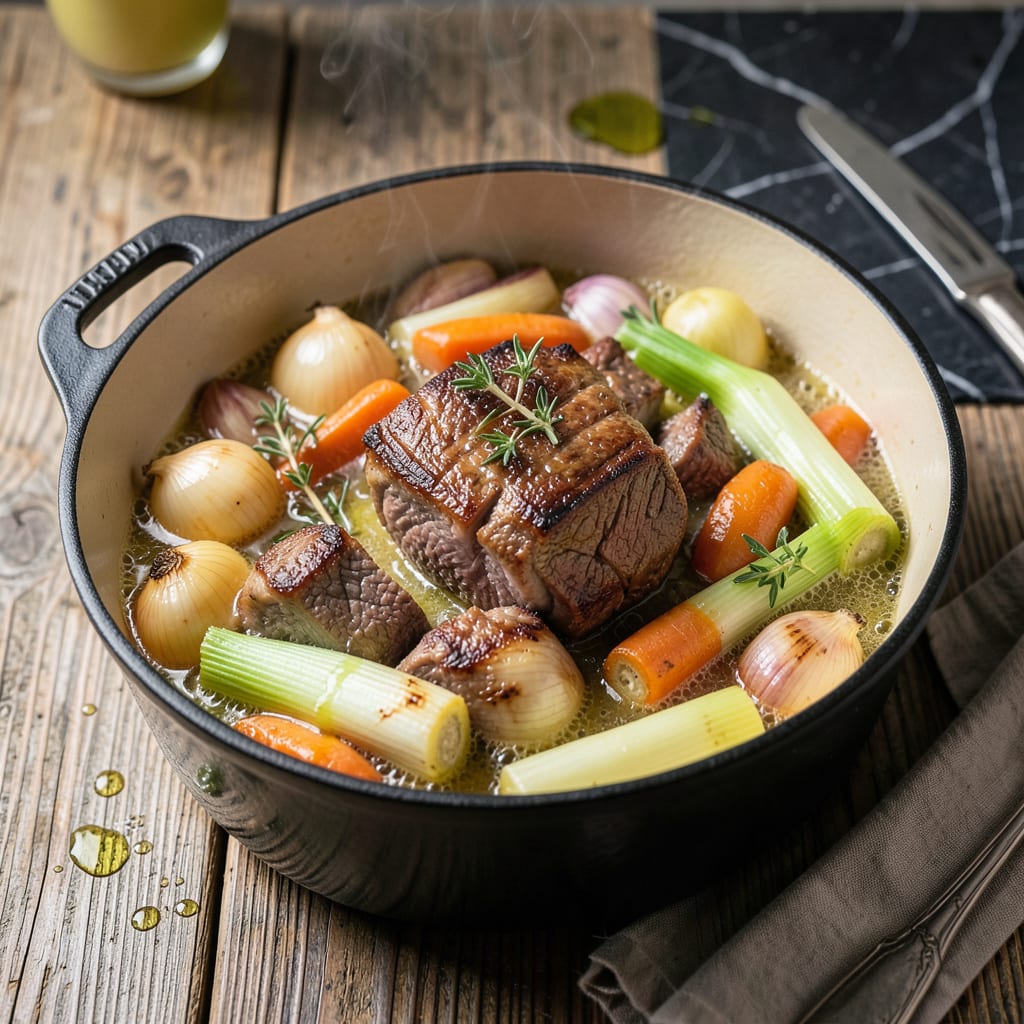
This rustic French stew transforms simple ingredients into a deeply satisfying meal. The slow cooking process ensures the beef becomes tender while vegetables absorb rich, savory flavors.
Traditional techniques and careful timing create a dish that’s hearty and comforting. Perfect for a cozy dinner, this classic brings French countryside warmth to your table.
Ingredients for Pot De Feu
Hearty beef, seasonal vegetables, and aromatic herbs form the foundation of this classic French preparation.
| Ingredient | Amount | Notes |
|---|---|---|
| Beef Chuck Roast 🥩 | 2 lb | Cut into 2-inch cubes, well-marbled |
| Yellow Onions 🧅 | 2 whole | Peeled and quartered |
| Carrots 🥕 | 4 whole | Peeled, cut into 2-inch pieces |
| Leeks 🧅 | 2 whole | White and light green parts only, cleaned |
| Celery Roots 🥬 | 2 whole | Peeled and cubed |
| Garlic Cloves 🧄 | 6 cloves | Smashed, peeled |
| Bay Leaves 🍃 | 2 pieces | Dried, whole |
| Fresh Thyme Sprigs 🌿 | 4 pieces | Tied with kitchen twine |
| Fresh Parsley Sprigs 🌿 | 4 pieces | Tied with kitchen twine |
| Black Peppercorns 🌶️ | 1 tbsp | Whole, lightly crushed |
| Kosher Salt 🧂 | 1 tbsp | Diamond Crystal preferred |
| Beef Stock 🍲 | 8 cups | Low-sodium preferred, homemade ideal |
| Dry White Wine 🍷 | 1 cup | Sauvignon Blanc or Pinot Grigio |
| Tomato Paste 🍅 | 2 tbsp | Double-concentrated preferred |
| Clarified Butter 🧈 | 2 tbsp | Or substitute neutral oil |
The beef is paramount for authentic pot de feu. Chuck roast with abundant marbling yields the most tender results after long, gentle simmering. Source from a trusted butcher or Whole Foods for consistent quality. The vegetables should be fresh and firm—avoid any with bruising or soft spots. Organic carrots and leeks often have superior flavor, especially in winter months when they’re at peak season.
Short on time? Use pre-cut stew meat from the grocery store, though whole chuck allows better control over cube size. No white wine? Additional beef stock with a splash of lemon juice provides necessary acidity. Dried thyme can substitute for fresh at one-third the quantity. For the stock, Better Than Bouillon paste offers excellent depth if making from scratch isn’t feasible.
This stew improves overnight as flavors meld. Refrigerate for up to 5 days in an airtight container. For longer storage, freeze portions for 3 months. The clarified butter can be made in advance and stored in the refrigerator for 2 weeks.
Why You’ll Love This Recipe
- Set and Forget: I toss everything in the pot in the morning, and by dinner, the beef chuck is fall-apart tender without me lifting a finger.
- Deep, Rich Broth: The carrots and leeks melt into the stock, creating a flavor so good I could drink it straight from the bowl.
- Feeds My Crowd: One pot, endless possibilities—leftovers make killer sandwiches or stew the next day.
- Budget Stretcher: Honestly, a cheap cut like chuck roast simmers into something luxurious with just onions and celery root.
Step-by-Step Instructions for Pot De Feu
Master this traditional French technique for fall-apart beef and deeply flavored broth.
Step 1: Sear and Brown the Beef Chuck Roast
Heat the 2 tbsp clarified butter in a large Dutch oven over medium-high heat until shimmering but not smoking. Pat the 2 lb beef chuck roast cubes dry with paper towels—this ensures a proper sear rather than steaming.
Working in batches to avoid crowding, add the beef to the pot. Sear undisturbed for 3-4 minutes per side until deeply browned on all surfaces. The meat should release easily from the pot when properly caramelized. Transfer the browned beef to a plate and set aside.
Step 2: Build the Aromatic Base
In the same pot, add the 2 whole yellow onions, 4 whole carrots, 2 whole leeks, and 2 whole celery roots. Sauté over medium heat for 8-10 minutes, stirring occasionally, until the vegetables begin to soften and develop golden edges.
Add the 6 cloves garlic cloves, 2 tbsp tomato paste, 1 tbsp kosher salt, and 1 tbsp black peppercorns. Cook for 2 minutes, stirring constantly, until the tomato paste darkens slightly. This step deepens the flavor foundation of your stew.
Step 3: Deglaze and Simmer
Pour in the 1 cup dry white wine, scraping the browned bits from the bottom of the pot with a wooden spoon. Bring to a boil and cook for 3 minutes until the liquid reduces by half. This deglazing process captures all the caramelized flavors from the searing step.
Return the beef to the pot along with any accumulated juices. Add the 8 cups beef stock, 2 pieces bay leaves, 4 pieces fresh thyme sprigs, and 4 pieces fresh parsley sprigs. Bring to a boil, then reduce heat to maintain a gentle simmer.
Step 4: Slow Cook to Perfection
Cover the pot and let the stew simmer on the stovetop over low heat for 2.5 to 3 hours. Alternatively, transfer to a 325°F oven. The beef is done when it shreds easily with a fork and the vegetables are fork-tender.
Check occasionally and add a splash of water if the liquid level drops below the beef. The surface should barely bubble—vigorous boiling will toughen the meat. Skim any excess fat from the surface as it accumulates.
Step 5: Rest and Serve
Remove the pot from heat and let the stew rest for 15 minutes before serving. This allows the flavors to meld and the beef to reabsorb some of the liquid. Discard the herb sprigs and bay leaves before serving.
Ladle the stew into deep bowls, ensuring each serving has a generous portion of beef and vegetables. The broth should be rich and deeply flavored, with the beef so tender it nearly collapses at the touch of a spoon.
Pro Tips For Making Pot De Feu
- Brown the Beef Well: Sear the chuck roast in batches—don’t crowd the pot or it’ll steam instead of brown. I learned this the hard way after my first few attempts looked pale.
- Cut Vegetables Evenly: Keep your carrots, leeks, and celery roots in similar-sized chunks, about 2 inches, so they cook at the same rate. Sounds obvious, but it makes a real difference in the final texture.
- Skim the Foam: After the initial simmer, skim off the gray foam that rises to the top—it’s impurities and can make the broth bitter. My grandmother swore by this, and she was right.
- Add Acid Last: If you’re using a splash of vinegar or wine to brighten the flavors, stir it in during the last 10 minutes of cooking. Adding it too early can toughen the beef.
Regional Styles of This pot de feu
Parisian Classic
In the French capital, pot de feu remains a beloved bistro staple, often served with crusty baguette and Dijon mustard. Parisian cooks typically use charolais beef for its superior marbling. The broth is strained and served separately as a light first course.
Provençal Variation
In Provence, chefs add herbes de Provence and local olive oil for a Mediterranean twist. Tomatoes and zucchini often join the traditional vegetables. I love this version for its sunny, aromatic profile.
Lyon Specialty
Lyonnais cooks are famous for their rich version, sometimes adding pork belly or sausage alongside the beef. The stew often includes potatoes and is served with a side of grainy mustard. This heartier style reflects Lyon’s reputation as France’s culinary capital. 💛
Brittany Style
Near the coast, seafood elements appear in some versions, with mussels or clams added during the last 30 minutes of cooking. The broth takes on a briny depth that pairs beautifully with the beef’s richness.
Alsatian Approach
In Alsace, the stew often includes sauerkraut and juniper berries, reflecting the region’s German influences. The tangy fermented cabbage adds a bright contrast to the rich beef. I find this version particularly comforting in colder months.
Rustic Country
In rural areas, pot de feu might include whatever vegetables are in season, from turnips to parsnips. The cooking method remains the same, but the ingredients adapt to what’s available. This flexibility is the dish’s true charm. ✨
Nutrition Facts
Frequently Asked Questions
What’s the best cut for this stew?
Use well-marbled beef chuck roast for the most tender results. This cut holds up beautifully to the long, slow cooking process.
Can I use a slow cooker instead?
Yes! Sear the beef first, then cook on low for 6-7 hours or high for 4-5 hours. The flavors will deepen beautifully.
How do I prevent the meat from drying out?
Keep the heat at a gentle simmer, never a boil. Also, ensure the beef is submerged in liquid during cooking.
Can I make this ahead of time?
The stew tastes even better the next day. Refrigerate for up to 5 days or freeze for 3 months.

- 4C Bread Crumbs Meatballs Recipe: Crispy Crust and Juicy Centers - September 25, 2026
- 6 Oz Chocolate Chip Cookie Recipe: Perfectly Balanced Crispy Edges and Chewy Hearts - September 25, 2026
- 6-Inch Coffee Cake Recipe: Vanilla Bean Swirls and Buttery Streusel Topping - September 25, 2026