
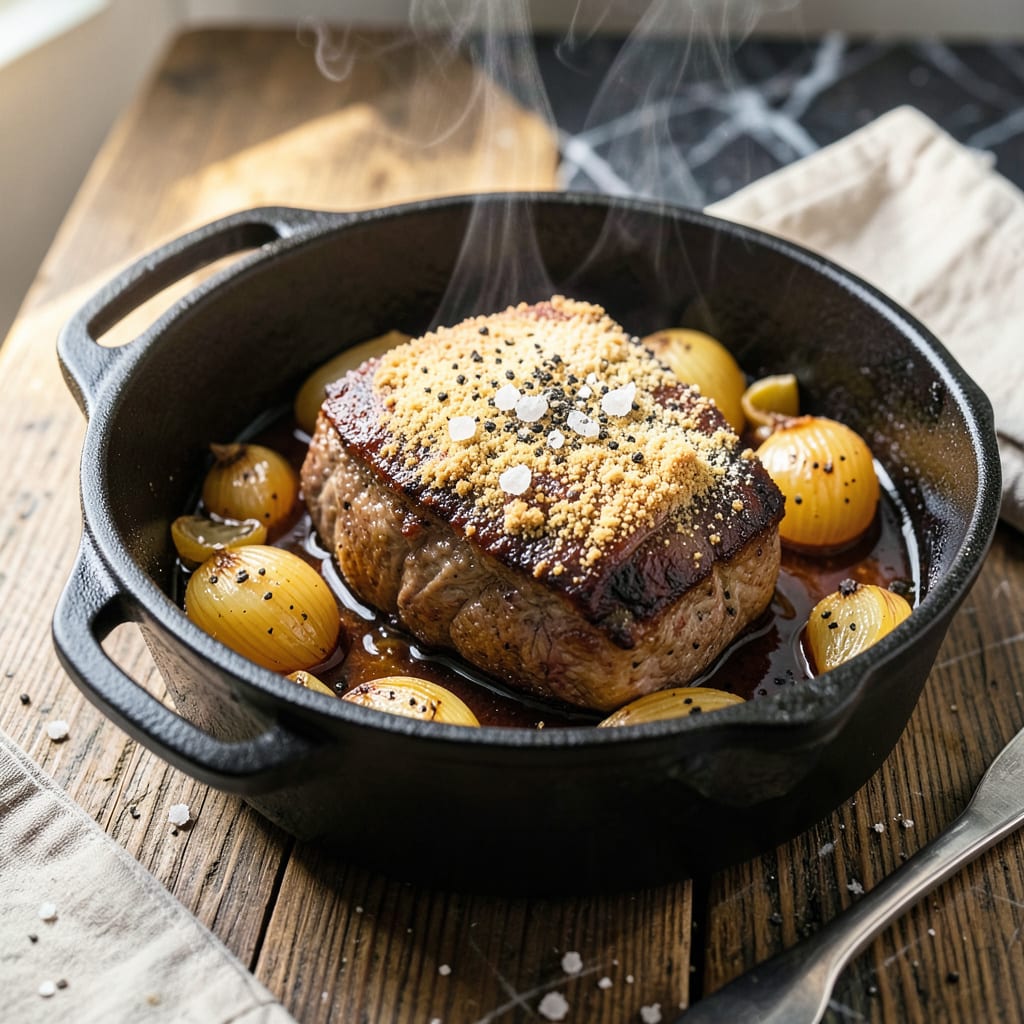
There’s nothing like a slow-braised pot roast to bring the family together for Sunday supper. This traditional method transforms tough cuts into tender, flavorful meat that falls apart at the touch of a fork.
With simple ingredients and a low-and-slow approach, this recipe delivers the comforting, hearty meal that defines a classic Sunday tradition. The aroma alone will have everyone gathering at the table.
Ingredients for Original Pot Roast
Classic comfort food requires just these simple, hearty ingredients for Sunday perfection.
| Ingredient | Amount | Notes |
|---|---|---|
| Chuck Roast 🥩 | 3 lb | Well-marbled, bone-in preferred |
| Kosher Salt 🧂 | 1 ½ tbsp | Diamond Crystal preferred |
| Black Pepper 🌶️ | 1 tbsp | Freshly ground for best flavor |
| All-Purpose Flour 🌾 | ¼ cup | For dusting roast |
| Olive Oil 🫒 | 2 tbsp | Divided for searing and browning |
| Yellow Onions 🧅 | 2 whole | Large, roughly chopped |
| Carrots 🥕 | 4 whole | Peeled, cut into chunks |
| Celery Stalks 🌿 | 3 whole | Cut into large pieces |
| Garlic Cloves 🧄 | 6 cloves | Smashed for robust flavor |
| Red Wine 🍷 | 2 cups | Dry variety like Cabernet |
| Beef Stock 🥩 | 2 cups | Low-sodium preferred |
| Tomato Paste 🍅 | 2 tbsp | For depth of flavor |
| Fresh Thyme Sprigs 🌿 | 4 whole | Plus extra for garnish |
| Bay Leaves 🍃 | 2 whole | Dried, for aromatic base |
| Water 💧 | 1 cup | As needed for braising liquid |
[recipeingredientscaler]
The chuck roast is non-negotiable for this dish. Look for well-marbled pieces with good fat distribution—this ensures the meat stays moist during the long braise. Costco and Whole Foods consistently carry quality cuts, but any reputable butcher will have what you need. Bone-in adds extra depth to the broth, though boneless works in a pinch (just reduce cooking time slightly).
No red wine? Dry white wine or additional beef stock works, though the flavor profile shifts slightly. Fresh thyme is ideal, but dried at one-third the amount is acceptable. For the tomato paste, those squeeze tubes are convenient and prevent waste. If you’re avoiding alcohol entirely, beef stock with a splash of balsamic vinegar mimics the acidity and complexity.
This tastes even better the next day. Store in an airtight container in the fridge for up to 4 days, or freeze for 3 months. Reheat gently on the stovetop to preserve the meat’s tenderness—microwaving can dry it out.
Why You’ll Love This Recipe
- Set It and Forget: I sear the chuck roast, dust it with flour, then let the oven do the work—no babysitting required.
- Crispy, Tender Bite: That flour crust browns up so nicely in olive oil, locking in juices for fall-apart meat with a flavorful crust.
- Sunday or Tuesday: Honestly, it’s just as welcome at a lazy weekend dinner as it is on a hectic weekday.
- Stretches Far: One chuck roast feeds my family for two nights, and the leftovers make killer sandwiches.
Step-by-Step Instructions for Slow-Braised Pot Roast
This method delivers tender, fall-apart meat with rich, deeply flavored braising liquid every time.
Step 1: Sear and Season the Chuck Roast
Pat the 3 lb chuck roast dry with paper towels, then season all over with 1.5 tbsp kosher salt and 1 tbsp black pepper. Dredge the roast in 0.25 cup all-purpose flour, shaking off any excess. This coating creates a beautiful crust and thickens the braising liquid later.
Heat 1 tbsp olive oil in a heavy Dutch oven over medium-high heat until shimmering. Add the roast and sear for 4-5 minutes per side until deeply browned. You’ll know it’s ready to flip when it releases easily from the pot. Transfer the roast to a plate and set aside.
Step 2: Build the Aromatic Base
In the same pot, add the remaining 1 tbsp olive oil and reduce heat to medium. Add the 2 whole yellow onions, 4 whole carrots, and 3 whole celery stalks, cooking for 5-6 minutes until the vegetables begin to soften and brown around the edges.
Stir in the 6 cloves garlic cloves and 2 tbsp tomato paste, cooking for 1-2 minutes until the tomato paste darkens slightly. This step develops the base flavors that will infuse the entire dish. The mixture should smell rich and deeply savory at this point.
Step 3: Deglaze and Braise the Roast
Pour in the 2 cups red wine and scrape up any browned bits from the bottom of the pot with a wooden spoon. Simmer for 3-4 minutes until the wine reduces by about half. Add the 2 cups beef stock, 4 whole fresh thyme sprigs, 2 whole bay leaves, and 1 cup water, stirring to combine.
Return the seared roast to the pot, along with any accumulated juices. The liquid should come about halfway up the roast—add a bit more water if needed. Bring to a simmer, then cover and transfer to a preheated 325°F oven.
Step 4: Slow-Braise to Perfection
Braise the roast for 2.5 to 3 hours, turning it once halfway through, until the meat is fork-tender and easily pulls apart. Check occasionally to ensure the liquid is simmering gently—adjust the oven temperature if needed.
You’ll know it’s done when a fork slides into the meat with no resistance and the internal temperature reaches 195-200°F. The vegetables should be soft, and the braising liquid will have reduced into a rich, flavorful sauce.
Step 5: Rest and Serve
Carefully transfer the roast to a cutting board and tent loosely with foil. Let it rest for 15-20 minutes to allow the juices to redistribute. Skim any excess fat from the surface of the braising liquid and discard the thyme sprigs and bay leaves.
Slice or pull the roast apart and serve with the braised vegetables and sauce spooned over the top. The meat should be impossibly tender, with a deep, savory flavor that defines this classic Sunday supper.
Pro Tips For Making Original Pot Roast
- Pat It Dry: Use paper towels to thoroughly dry the chuck roast before seasoning—this guarantees a proper sear instead of a sad, steamed surface.
- Sear in Batches: Don’t crowd the pan when browning; sear the roast in sections if needed, so the olive oil stays hot and the flour coating crisps up right.
- Season Aggressively: Chuck roast can handle more kosher salt and black pepper than you think, especially since it’s cooking low and slow—I learned this the hard way after too many bland bites.
- Let It Rest: After pulling it from the oven, tent the roast with foil and give it 10-15 minutes before slicing, or all those juices will end up on the cutting board instead of in the meat.
Perfect Pairings for These Flavors
Side Dishes
Creamy mashed potatoes are my go-to for soaking up the rich braising liquid. I make mine with Yukon Golds, ½ cup whole milk, and 4 tbsp butter for the perfect texture. Buttery egg noodles also work beautifully if you prefer a lighter option.
Bread Options
A crusty sourdough loaf or warm dinner rolls are perfect for mopping up every last bit of sauce. I love Boudin Bakery sourdough from San Francisco—its tangy flavor complements the meat’s richness. Toast slices lightly before serving for extra crunch.
Wine Pairings
The same Cabernet Sauvignon you cooked with makes an excellent pairing. I recommend Josh Cellars or Robert Mondavi Private Selection for their bold fruit notes. For white wine lovers, a full-bodied Chardonnay with buttery oak stands up to the dish. 🍷
Vegetable Sides
Roasted Brussels sprouts with bacon add a smoky contrast. Toss 1 lb trimmed sprouts with 2 tbsp olive oil, salt, and pepper, then roast at 400°F for 20-25 minutes. Steamed green beans with almonds offer a lighter alternative.
Fresh Finishes
A simple garden salad with balsamic vinaigrette cuts through the richness. I use mixed greens, cherry tomatoes, and cucumber for crunch. A sprinkle of fresh parsley over the roast adds a pop of color and freshness. 💛
Nutrition Facts
Frequently Asked Questions
What cut of meat works best for this?
Chuck roast is ideal due to its marbling and connective tissue that breaks down beautifully during the long braise. A well-marbled 3 lb piece ensures tender, flavorful results every time.
Can I use a slow cooker instead?
Yes! Sear the meat first, then transfer everything to the slow cooker. Cook on low for 8-10 hours or high for 5-6 hours until fork-tender. The flavors develop just as deeply.
Why rest the meat before serving?
Resting for 15-20 minutes allows juices to redistribute throughout the roast. Slicing too soon causes all the delicious moisture to spill out, leaving the meat dry.
How do I thicken the braising liquid?
After removing the meat, simmer the liquid on the stovetop until reduced by half. For a quicker method, mix 1 tbsp cornstarch with 1 tbsp water and stir into the hot liquid.

- 4C Bread Crumbs Meatballs Recipe: Crispy Crust and Juicy Centers - September 25, 2026
- 6 Oz Chocolate Chip Cookie Recipe: Perfectly Balanced Crispy Edges and Chewy Hearts - September 25, 2026
- 6-Inch Coffee Cake Recipe: Vanilla Bean Swirls and Buttery Streusel Topping - September 25, 2026