
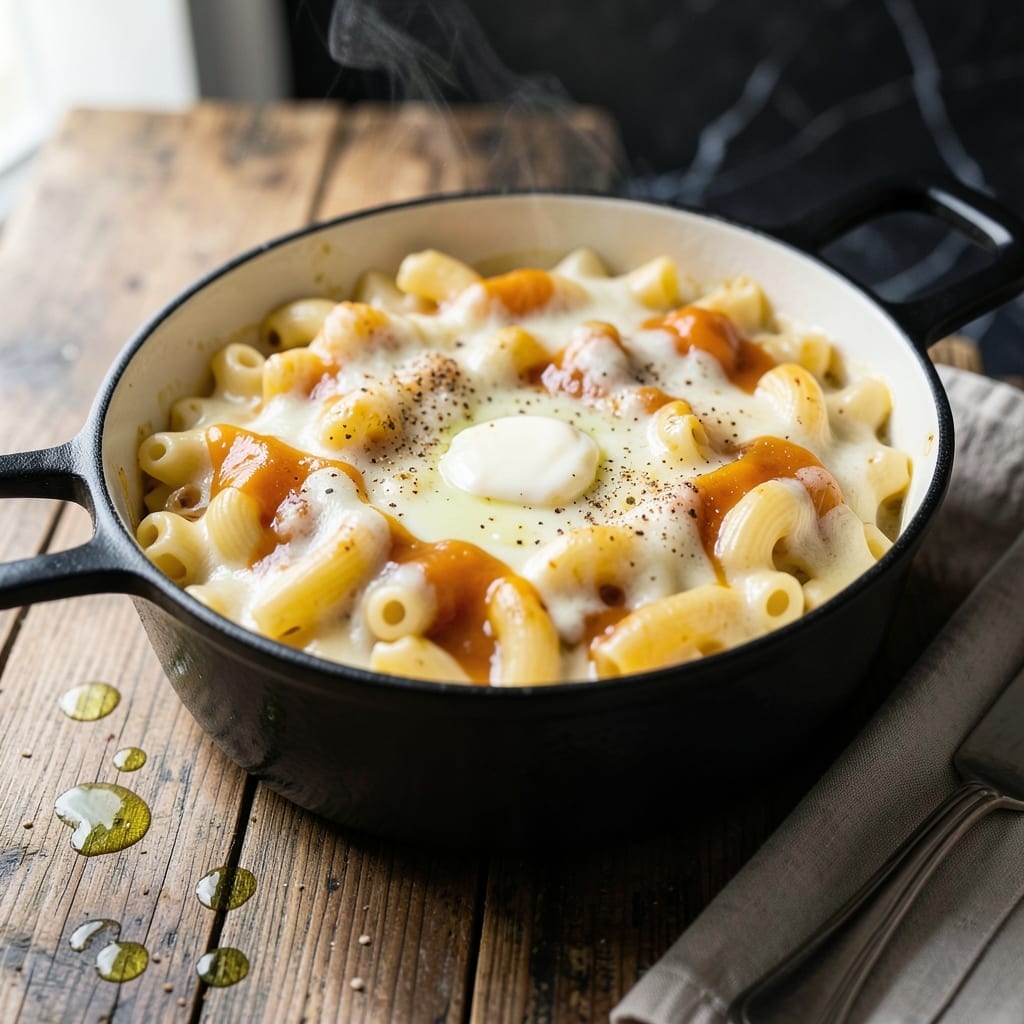
There’s nothing quite like a warm bowl of creamy macaroni and cheese to deliver pure comfort in every bite. This one-pot method simplifies the process while maximizing flavor and texture.
The secret lies in cooking the pasta directly in the cheese sauce, allowing it to absorb all that rich, velvety goodness. No straining, no extra pots—just a straightforward approach that guarantees creamy results every time.
What you’ll get is perfectly al dente pasta coated in a smooth, luscious sauce that clings to every noodle. The one-pot technique ensures minimal cleanup, making it as practical as it is delicious.
Ideal for busy weeknights or when you need a quick dose of comfort. Here’s how to make it.
Ingredients for Pot Macaroni and Cheese
One pot, twelve ingredients, pure comfort food in every bite.
| Ingredient | Amount | Notes |
|---|---|---|
| Elbow Macaroni 🍝 | 8 oz | Or any short pasta shape |
| Unsalted Butter 🧈 | 4 tbsp | Divided for sauce and topping |
| All-Purpose Flour 🌾 | 3 tbsp | For roux thickening |
| Whole Milk 🥛 | 2 cups | Full-fat for creaminess |
| Sharp Cheddar Cheese 🧀 | 2 cups | Freshly grated from block |
| Gruyère Cheese 🧀 | 1 cup | Freshly grated preferred |
| Dijon Mustard 🟡 | 1 tsp | Smooth, not grainy |
| Garlic Powder 🧄 | ½ tsp | Not garlic salt |
| Onion Powder 🧅 | ½ tsp | Fine ground preferred |
| Kosher Salt 🧂 | 1 tsp | Diamond Crystal preferred |
| Ground Black Pepper 🌶️ | ½ tsp | Freshly ground for best flavor |
| Dry Mustard Powder 🟡 | ¼ tsp | Boosts cheese flavor |
| Panko Breadcrumbs 🍞 | ½ cup | For optional crispy topping |
The cheese is everything here. Cheddar and Gruyère give that perfect melty, tangy balance—skip the pre-shredded kind (it has anti-caking agents that mess with the sauce). Whole Foods or Trader Joe’s have great block cheeses. For the milk, whole is non-negotiable—lower fat just won’t get as creamy. And keep the butter unsalted so you control the seasoning.
No Gruyère? Fontina or Monterey Jack melt beautifully. Out of Dijon? Yellow mustard at half the amount works. The dry mustard powder is subtle but worth the extra minute—it amps up the cheese flavor. If you’re skipping the topping, you can use regular breadcrumbs, but panko gives that perfect crunch. And yes, you can use half-and-half instead of milk for extra richness.
This keeps 3-4 days in the fridge—reheat with a splash of milk to loosen it up. Freezes well for 2 months, but the texture changes slightly. Best made fresh though. The pasta soaks up sauce overnight, so leftovers are thicker (not bad, just different).
Why You’ll Love This Recipe
- One Pot Wonder: I love that everything cooks in a single pot—no colander, no extra bowls, just macaroni, butter, and cheese melting together.
- Sharp Cheese Magic: That sharp cheddar gives it a bold, tangy kick that’s way richer than the boxed stuff.
- Feeds the Crowd: Honestly, it’s my go-to for potlucks or lazy Sundays when I need to feed a hungry group.
- Budget Stretch: Elbow macaroni and cheddar are cheap, but this tastes like a million bucks. Leftovers? Even better the next day.
Step-by-Step Instructions for One-Pot Macaroni and Cheese
This one-pot method keeps cleanup minimal while delivering maximum creamy comfort in every bite.
Step 1: Cook the Pasta in Milk
In a large pot, combine the 8 oz Elbow Macaroni with 2 cups Whole Milk, 1 tsp Kosher Salt, 0.5 tsp Garlic Powder, and 0.5 tsp Onion Powder. Bring to a boil over medium-high heat, stirring frequently to prevent sticking.
Cook for 8-10 minutes, stirring often, until the pasta is nearly tender and most of the milk has been absorbed. The starch from the pasta will naturally thicken the milk, creating a creamy base. Watch closely toward the end—you want the mixture thick but not dry.
Step 2: Create the Roux and Melt the Cheeses
Reduce heat to medium and stir in 4 tbsp Unsalted Butter until melted. Immediately add the 3 tbsp All-Purpose Flour and whisk vigorously for 1-2 minutes to form a smooth roux. This step removes the raw flour taste and builds the sauce foundation.
Gradually add the 2 cups Sharp Cheddar Cheese, 1 cup Gruyère Cheese, 1 tsp Dijon Mustard, 0.25 tsp Dry Mustard Powder, and 0.5 tsp Ground Black Pepper. Stir constantly until the cheeses melt completely into a velvety sauce. The mixture should coat the back of a spoon thickly.
Step 3: Adjust Consistency and Add Topping
If the sauce seems too thick, add a splash of warm milk to reach your desired creaminess. The ideal texture should be smooth and pourable, not gluey. Taste and adjust seasoning if needed—sometimes cheese needs a little extra salt to shine.
For a crispy finish, melt 1 tbsp Unsalted Butter in a small pan, toss with the 0.5 cup Panko Breadcrumbs until golden, then sprinkle over the macaroni before serving. This optional step adds a delightful textural contrast to the creamy pasta.
Step 4: Rest and Serve
Let the macaroni sit off heat for 5 minutes before serving. This brief rest allows the sauce to thicken slightly and the flavors to meld together. The pasta will absorb some of the sauce during this time, creating that perfect creamy consistency.
Serve immediately while hot, garnished with the buttery breadcrumbs if using. Each serving should have that signature velvety texture with a rich, cheesy flavor in every forkful. The residual heat keeps it saucy without being watery.
Pro Tips For Making Pot Macaroni And Cheese
- Undercook the Pasta: Pull the elbow macaroni off the heat 1-2 minutes before it’s fully tender—it’ll finish cooking in the sauce and absorb the cheesy flavor better.
- Grate Your Own Cheese: Pre-shredded sharp cheddar has anti-caking agents that make the sauce grainy; freshly grated melts smoothly every time.
- Temper the Milk: Warm the whole milk slightly before adding it to the flour-butter roux to prevent lumps—cold milk seizes up the mixture.
- Add Cheese Off Heat: Stir in the sharp cheddar after removing the pot from the burner to keep the sauce creamy instead of stringy or separated.
Pro Cooking Tips for This Recipe
Roux Perfection
Cook your roux for exactly 1-2 minutes over medium heat—this removes the raw flour taste without browning it. I use a wooden spoon for constant stirring to prevent hot spots. The mixture should look like wet sand when ready.
Cheese Melting Order
Add the sharp cheddar first, then the Gruyère last. Cheddar’s higher melt point creates a stable base, while Gruyère’s lower melt point ensures a silky finish. Stir in a figure-eight motion for even melting.
Always shred from a block—pre-shredded has anti-caking agents that make the sauce grainy. 🧀
Milk Temperature
Start with cold milk straight from the fridge. As it heats with the pasta, the starches release gradually, creating a natural thickener. If using warm milk, reduce initial heat to medium-low to prevent scorching.
Pasta Timing
Cook the pasta until it’s just shy of al dente (8-10 minutes) before adding the roux. It’ll finish cooking in the hot sauce. Test a noodle—it should have a slight bite but no hard center.
Sauce Consistency
If your sauce is too thick, add warm milk 1 tbsp at a time. Too thin? Return to medium-low heat and cook uncovered for 2-3 minutes. The ideal texture should ribbon off a spoon. 💫
Resting Time
That 5-minute rest is non-negotiable. It lets the sauce thicken and the pasta absorb flavors. Skip it, and you’ll have a watery mess. I set a timer—trust me, it makes a difference.
Nutrition Facts
Frequently Asked Questions
Can I use a different type of pasta?
Any short shape like shells or penne works well. Just adjust cooking time to 8-10 minutes since shapes vary. Avoid long pasta like spaghetti as it won’t hold the sauce as nicely.
Why does my sauce turn out grainy?
This usually happens with pre-shredded cheese. Always grate from a block to avoid anti-caking agents. Also, keep heat at medium to prevent cheese from separating.
Can I make this ahead of time?
Yes, but prepare it 1 day ahead max. Reheat gently with a splash of milk to restore creaminess. The pasta will absorb sauce overnight, so add extra milk when reheating.

- 4C Bread Crumbs Meatballs Recipe: Crispy Crust and Juicy Centers - September 25, 2026
- 6 Oz Chocolate Chip Cookie Recipe: Perfectly Balanced Crispy Edges and Chewy Hearts - September 25, 2026
- 6-Inch Coffee Cake Recipe: Vanilla Bean Swirls and Buttery Streusel Topping - September 25, 2026