
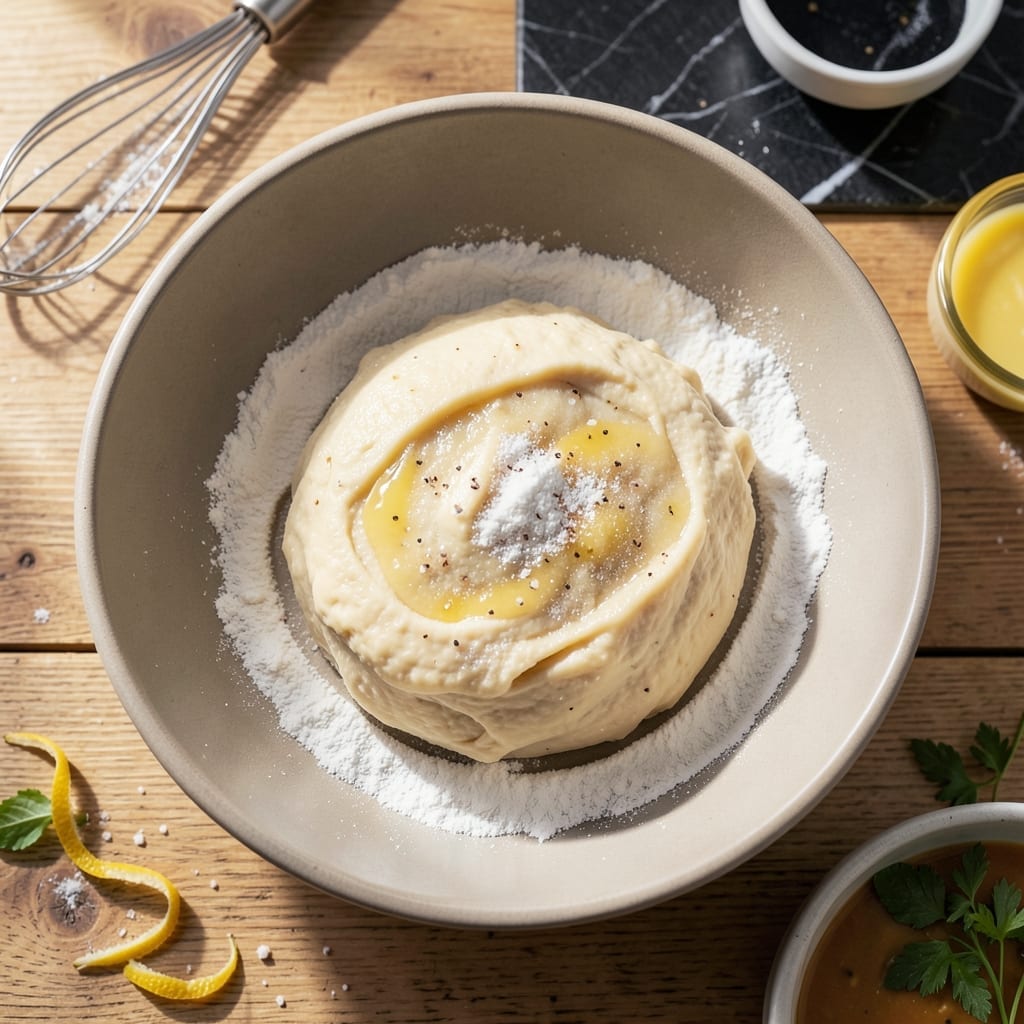
This pastry dough transforms pot pie from good to extraordinary with its buttery, flaky layers that shatter at the touch. I developed this recipe after years of testing ratios and techniques to achieve the perfect balance of tenderness and structure.
The secret lies in cold ingredients and minimal handling, which prevents gluten development and ensures those coveted flaky layers. A generous amount of butter creates steam during baking, lifting the dough into delicate, crisp sheets that encase the filling perfectly.
What sets this dough apart is its versatility—it works for both top and bottom crusts, holding up to hearty fillings without turning soggy. The result is a golden, tender crust that complements rather than competes with the savory filling inside.
With just a few simple ingredients and a bit of patience for chilling, you’ll have pastry that rivals any bakery’s. This is the foundation of a pot pie worth making from scratch.
Ingredients for Pot Pie Pastry Dough
Seven ingredients stand between you and extraordinary pastry layers that shatter beautifully.
| Ingredient | Amount | Notes |
|---|---|---|
| All-Purpose Flour 🌾 | 2 ½ cups | Sifted for even texture |
| Unsalted Butter 🧈 | 1 cup | Cold, cubed for flakiness |
| Ice Water 💧 | ½ cup | Plus 1 tbsp as needed |
| Fine Sea Salt 🧂 | 1 tsp | Diamond Crystal preferred |
| Granulated Sugar 🍚 | 1 tsp | Balances savory fillings |
| White Vinegar 💧 | 1 tbsp | Tenders the gluten |
| Egg Yolk 🥚 | 1 whole | For golden finish |
The butter is non-negotiable. European-style unsalted butter with 82% fat gives the best flakiness—Plugra or Kerrygold are top choices. Keep it ice cold until the second it hits the flour. The flour? Standard all-purpose works, but King Arthur or Bob’s Red Mill have consistent protein content. Weigh if you can (12 oz for 2.5 cups), but volume works fine for this. Cold is the theme here.
No vinegar? Lemon juice or vodka at the same amount keeps the dough tender. Using salted butter? Omit the added salt entirely. The egg yolk is optional but adds color—skip it for a vegan version. If your kitchen is warm, chill the flour for 30 minutes first. The water must be ice cold, and use just enough to bring the dough together—too much develops gluten.
Dough keeps 2-3 days wrapped tightly in the fridge, or freeze for 3 months. For best results, rest it at least 1 hour before rolling. Freeze extras in discs—thaw overnight in the fridge before using. Always handle minimally for those perfect layers.
Why You’ll Love This Recipe
- One-Bowl Magic: I just dump flour, cold butter, and ice water in one bowl—no fancy equipment, no fuss.
- Buttery Layers: That flaky crust? Comes from the cold butter and just a touch of sugar for the perfect balance.
- Freezer Friendly: I always make a double batch and freeze half for next time. Honestly, it’s my weekday shortcut.
- Pantry Staples: All-purpose flour, butter, salt—things I already have. Between us, it’s cheaper than store-bought.
Step-by-Step Instructions for Pot Pie Pastry Dough
Master these techniques to achieve perfectly flaky, buttery layers that elevate your pot pie to new heights.
Step 1: Combine Dry Ingredients and Cold Butter
In a large bowl, whisk together the 2.5 cups All-Purpose Flour, 1 tsp Fine Sea Salt, and 1 tsp Granulated Sugar. The sugar isn’t for sweetness—it helps create that beautiful golden color as the pastry bakes.
Add the 1 cup Unsalted Butter, which must be very cold and cut into ½-inch cubes. Use a pastry cutter or your fingers to work the butter into the flour until the mixture resembles coarse crumbs with pea-sized butter pieces visible. This creates the flaky layers—don’t overwork it or the butter will melt and ruin the texture.
Step 2: Incorporate Liquid Ingredients Gradually
In a small bowl, combine the 0.5 cup Ice Water, 1 tbsp White Vinegar, and 1 whole Egg Yolk. The vinegar tenderizes the gluten, while the egg yolk adds richness and contributes to that beautiful golden finish.
Create a well in the center of the flour-butter mixture and add the liquid ingredients, 1 tablespoon at a time, mixing gently with a fork. Stop as soon as the dough begins to come together—it will look shaggy and slightly dry. Overmixing develops gluten, which makes the pastry tough instead of tender.
Step 3: Knead and Chill the Dough
Turn the dough onto a lightly floured surface and gently knead it 3-4 times just until it forms a cohesive ball. If it’s too dry, add 1 tablespoon of cold water; if too sticky, add a bit more flour. The dough should be smooth but not elastic.
Divide the dough into two equal portions, flatten each into a 1-inch thick disc, and wrap in plastic. Refrigerate for at least 1 hour (or up to 2 days). This chilling step is crucial—it relaxes the gluten and rechills the butter, preventing shrinking and ensuring maximum flakiness.
Step 4: Roll and Shape for Pot Pie
On a lightly floured surface, roll one disc of dough into a 12-inch circle about ⅛-inch thick. To transfer it to your pie dish, roll the dough loosely around your rolling pin, then unroll it over the dish. Press it gently into the bottom and up the sides without stretching—stretching causes shrinking during baking.
For the top crust, roll the second disc to the same size. Cut a few small slits in the center to allow steam to escape. Brush the edges of the bottom crust with water, then place the top crust over the filling. Crimp the edges together with a fork or your fingers to seal. Chill the assembled pie for 30 minutes before baking for the best results.
Pro Tips For Making Pot Pie Pastry Dough
- Chill the Butter: Cut your unsalted butter into small cubes and freeze for 10 minutes before mixing—I learned this the hard way after my dough turned out tough from warm butter.
- Ice Water Only: Use the coldest water possible, straight from the ice bath, and add it 1 tablespoon at a time. Sounds tedious, but it keeps the dough flaky instead of gummy.
- Skip Overworking: Mix just until the dough comes together, even if it looks shaggy. After burning three batches, I finally figured out that overmixing makes the pastry dense.
- Rest 30 Minutes: Give the dough a solid 30 minutes in the fridge before rolling—my grandmother swore by this, and she was right: it relaxes the gluten and prevents shrinking.
Best Sauces and Condiments for This pot pie pastry dough
Classic Gravy Pairing
I always serve this pastry with a rich homemade turkey gravy that soaks into the flaky layers. Use 2 cups pan drippings from your pot pie filling, thickened with 2 tbsp cornstarch for the perfect consistency. The buttery crust absorbs the gravy beautifully. 💛
Herb-Infused Options
A drizzle of rosemary-thyme compound butter melts into warm pastry. Mix ¼ cup softened butter with 1 tbsp fresh herbs and a pinch of flaky salt. Brush it on top crusts fresh from the oven for an aromatic finish.
Spicy Ketchup Twist
For a surprising kick, I love sriracha ketchup on the side. Mix ½ cup ketchup with 1 tbsp sriracha and 1 tsp honey. The sweet heat cuts through the richness of the buttery pastry and savory filling.
Creamy Dipping Sauce
A cool dill-yogurt sauce balances the warm pastry. Combine 1 cup Greek yogurt, 1 tbsp fresh dill, 1 minced garlic clove, and 1 tsp lemon juice. Serve chilled for a refreshing contrast.
Cheesy Enhancement
Sprinkle grated Parmesan cheese over the top crust during the last 5 minutes of baking. The cheese melts into the flaky layers, adding a nutty depth that pairs perfectly with the buttery pastry.
Nutrition Facts
Frequently Asked Questions
Why must the butter stay cold?
Cold butter creates steam when baking, which separates the dough into flaky layers. If it melts prematurely, your crust will be dense and tough instead of light and crisp.
Can I make this dough ahead of time?
Yes! Wrap it tightly and refrigerate for up to 2 days or freeze for 3 months. Thaw overnight in the fridge before rolling for best results.
What if my dough cracks when rolling?
Let it warm slightly at room temperature for 5-10 minutes. If cracks persist, patch them with extra dough and press gently to seal. Avoid overworking it.
Can I use a food processor?
but pulse the butter just until pea-sized chunks form. Over-processing warms the butter and develops too much gluten, ruining the flakiness.

- 4C Bread Crumbs Meatballs Recipe: Crispy Crust and Juicy Centers - September 25, 2026
- 6 Oz Chocolate Chip Cookie Recipe: Perfectly Balanced Crispy Edges and Chewy Hearts - September 25, 2026
- 6-Inch Coffee Cake Recipe: Vanilla Bean Swirls and Buttery Streusel Topping - September 25, 2026