
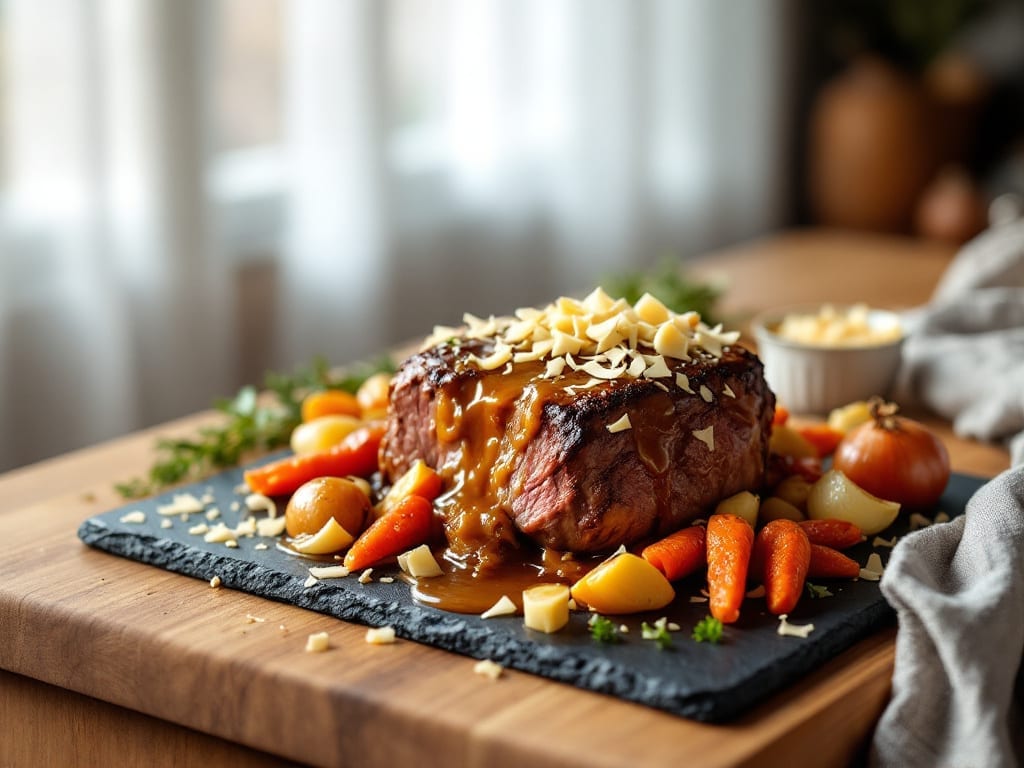
Slow-cooked pot roast with French onion gravy transforms tough beef into melt-in-your-mouth perfection while creating a rich, caramelized sauce that elevates every bite. This recipe delivers restaurant-quality results at home, where the key lies in proper searing, slow braising, and carefully reduced gravy that clings to both meat and potatoes.
The process begins with browning the beef to develop deep, meaty flavors, then simmering it low and slow until fork-tender while onions caramelize into a sweet, golden base.
Professional chefs rely on this method to ensure the meat stays juicy while the gravy achieves that velvety, onion-forward richness that defines French cuisine.
By the time your pot roast emerges from the oven, you’ll have perfectly tender beef that practically falls apart, surrounded by potatoes that’ve absorbed the flavorful juices.
The gravy, thickened to a luxurious consistency, coats everything in a glossy, aromatic sauce that’s worth the wait—every spoonful delivers layers of caramelized onion and savory beef.
This complete dish requires just a few simple ingredients but delivers maximum flavor, making it ideal for family dinners or special occasions. The slow cooking process (about 3 hours) ensures you’ll have a meal that feels luxurious without requiring advanced techniques—just patience and attention to detail.
Ingredients for pot roast beef with french onion gravy
Restaurant-quality pot roast begins with these 14 precision ingredients: tender beef, caramelized onions, and aromatic herbs.
| Ingredient | Amount | Notes |
|---|---|---|
| Beef Chuck Roast 🥩 | 3 lb | Center-cut preferred for tenderness |
| Yellow Onions 🧅 | 3 whole | Medium-large size, peeled |
| Yellow Onion Powder 🧅 | 1 tbsp | For gravy depth |
| Garlic Cloves 🧄 | 6 cloves | Peeled, smashed for infusion |
| Fresh Thyme 🌿 | ¼ cup | Stems removed, loosely packed |
| Fresh Parsley 🌿 | 0.1 cup | Chopped, for garnish |
| Russet Potatoes 🥔 | 2 lb | Yukon gold alternative |
| Beef Broth 💧 | 4 cups | Low-sodium preferred |
| Dry Red Wine 🍷 | 1 cup | Cabernet Sauvignon recommended |
| All-Purpose Flour 🌾 | 2 tbsp | For gravy thickening |
| Unsalted Butter 🧈 | ½ cup | Cold, cubed for gravy |
| Diamond Crystal Kosher Salt 🧂 | 1 ½ tsp | Divided for seasoning |
| Freshly Ground Black Pepper 🌶️ | 1 tsp | Coarsely ground |
| Olive Oil 🫒 | 2 tbsp | For searing beef |
The beef chuck roast is non-negotiable for optimal texture—center-cut delivers maximum tenderness. Most butcher counters will trim excess fat for you, but inspect for marbling before purchasing. Whole Foods or local butchers offer superior quality over standard grocery store cuts. For the onions, yellow provides the perfect balance of sweetness and depth—red can be substituted but lacks the same caramelization potential. The fresh thyme and parsley should be vibrant green with no wilting, indicating peak freshness. Purchase thyme in bundles rather than pre-chopped for maximum aroma retention.
No red wine? Beef broth with 1 tbsp balsamic vinegar replicates the acidity profile. The yellow onion powder is essential for gravy complexity—McCormick brand delivers consistent quality. Substituting potatoes? Sweet potatoes work but require 15% longer cooking time. For the butter, European-style (like Plugrá) contains higher fat content, ideal for gravy emulsification. The kosher salt must be Diamond Crystal—Morton has coarser grains that won’t dissolve properly in the gravy. Fresh herbs can be replaced with dried at one-third quantity, though texture and aroma will differ significantly.
Store the chuck roast in its original packaging for up to 5 days in the fridge or 6 months frozen. Onions keep for 2 weeks in a cool, dark pantry. The fresh herbs should be wrapped in damp paper towels and stored in a sealed container for 5-7 days. Gravy components (flour, butter, broth) maintain shelf life for 6 months in airtight containers. Prep ahead tip: Sear the beef and caramelize onions 24 hours in advance—they’ll develop even deeper flavors when reheated slowly. The completed dish reheats beautifully, with the gravy thickening further as it sits.
Why You’ll Love This Recipe
- Same recipe, different vibes: serve it with crusty bread for a cozy night in or platter it with mashed potatoes for guests. The gravy makes everything feel fancy.
- Deep Caramelized Magic: The onions turn golden and sweet, then melt into that rich gravy—like a hug in a bowl. That crispy edge on the beef? Pure satisfaction.
- Weeknight to Dinner Party: Same recipe, different vibes: serve it with crusty bread for a cozy night in or platter it with mashed potatoes for guests. The gravy makes everything feel fancy.
- Budget-Friendly Feast: A single roast stretches to four meals, and onions are practically free. Leftovers? Even better the next day—just reheat and enjoy that tender, saucy goodness again.
Step-by-Step instructions for pot roast beef with French onion gravy
A methodical approach ensures tender beef and rich, caramelized onion gravy every time.
Sear the Beef Chuck Roast for Deep Flavor
Pat the 3 lb beef chuck roast completely dry with paper towels. Season generously with ½ teaspoon diamond crystal kosher salt and ½ teaspoon freshly ground black pepper on all sides, including the fat cap. Heat 2 tablespoons olive oil in a heavy Dutch oven over medium-high heat until shimmering.
Place the roast in the pot, fat-side down, and press gently with a spatula to maintain contact. Sear for 4-5 minutes until a deep golden-brown crust forms. Flip and repeat on the second side for another 4-5 minutes. Remove the roast and set aside—this initial sear locks in juices and builds flavor foundation.
While the beef rests, peel and halve 2 of the 3 whole yellow onions, reserving one whole for later. Thinly slice the halved onions into ¼-inch rounds—this maximizes surface area for caramelization. Add them to the same Dutch oven and cook over medium heat for 8-10 minutes, stirring occasionally, until softened and beginning to color.
Build Layers of Flavor with Aromatics and Wine
Push the onions to one side of the pot and add 2 tablespoons olive oil if needed. Add the remaining whole yellow onion, cut into ¼-inch slices, and cook for 5 minutes until lightly golden. Add the 6 smashed garlic cloves and cook for 30 seconds until fragrant—don’t let them brown or they’ll turn bitter.
Deglaze the pot immediately by pouring in the 1 cup dry red wine, scraping up all the browned bits with a wooden spoon. Let the wine simmer for 3-4 minutes until reduced by half. Stir in the 1 tablespoon yellow onion powder and 0.25 cup fresh thyme, allowing the spices to bloom for 1 minute—this releases their essential oils and deepens the gravy’s complexity.
Return the seared beef to the pot, fat-side up. Pour in the 4 cups beef broth, ensuring the roast is mostly submerged. Bring to a gentle simmer—small bubbles should break the surface occasionally. Cover and transfer to a 325°F oven for 3 hours, or until the beef is fork-tender and easily pulls apart.
Prepare the Potatoes and Complete the Braise
After 2 hours of braising, peel and cut the 2 lb russet potatoes into 1-inch chunks. Add them to the pot around the beef, ensuring they’re partially submerged. The potatoes will absorb the rich braising liquid while finishing cooking. Return to the oven for the final 30-45 minutes—the potatoes should be fork-tender with no resistance.
Check for doneness by inserting a meat thermometer into the thickest part of the beef—it should read 200-205°F. If the potatoes aren’t quite tender, remove them to a plate and return the beef to the oven for another 10-15 minutes. The beef will continue cooking off the heat, so don’t overcook it.
Create the French Onion Gravy
Remove the beef and potatoes from the pot and set aside to rest. Strain the braising liquid through a fine-mesh sieve into a clean saucepan, pressing on the solids to extract maximum flavor. Skim off any remaining fat from the surface—about ¼ cup should remain for richness.
Return the strained liquid to the Dutch oven over medium heat. Whisk in the 2 tablespoons all-purpose flour to form a smooth paste. Cook for 2-3 minutes, stirring constantly, until the mixture thickens slightly. Gradually whisk in the 0.5 cup cold unsalted butter, 1 tablespoon at a time, until the gravy emulsifies into a velvety consistency.
Season to taste with the remaining ½ teaspoon diamond crystal kosher salt and ½ teaspoon freshly ground black pepper. The gravy should coat the back of a spoon and cling to the beef and potatoes. If too thick, whisk in 1-2 tablespoons beef broth to reach your desired consistency.
Finish and Serve with Garnish
Slice the beef against the grain into ½-inch thick portions. Arrange the beef and potatoes on a warm serving platter, ladling the French onion gravy generously over the top. Garnish with the 0.1 cup chopped fresh parsley just before serving—this adds a bright contrast to the rich flavors and signals freshness.
Serve immediately with crusty bread to soak up the luxurious gravy. The beef should be fork-tender with a deep, caramelized crust, while the potatoes absorb the onion-infused liquid. Each bite delivers layers of texture—tender beef, creamy potatoes, and silky gravy—all harmonized by the complex French onion profile.
Pro Tips For Making Pot Roast Beef With French Onion Gravy
- Sear the Roast: Hit that chuck roast with a screaming-hot pan—no half-measures—until it’s deeply browned on all sides. I learned this the hard way: skipping the sear means flavor stuck in the middle instead of caramelized on the outside, which is where the gravy magic starts.
- Sweat, Don’t Burn: When caramelizing onions for the gravy, keep the heat low and resist the urge to rush. Burnt onions taste bitter, and no amount of thyme or garlic will fix that. If they’re browning too fast, turn the heat down—this isn’t a race.
- Deglaze Like a Pro: After searing the beef, scrape up every last bit of browned bits with a wooden spoon—don’t just splash in the liquid. Those bits are pure flavor, and skipping them means a weaker gravy. (Yes, even if it looks like you’re overworking the pan.)
- Salt the Onions: Toss your sliced onions with a pinch of salt before they hit the pan. It draws out moisture, so they caramelize faster and deeper. I was skeptical until I tried it—now I never skip it. Trust the process.
Flavor customization for these flavors
Sweet & Smoky Twist
Add 1 tablespoon brown sugar to the caramelizing onions during Step 1 for subtle sweetness that balances the savory beef. For smokiness, include ½ teaspoon smoked paprika with the initial seasoning on the roast.
This pairs beautifully with the wine reduction, creating a depth that feels like a French bistro meets Texas BBQ. 🌶️
Herb-Forward Variation
Boost the aromatic profile by adding 1 sprig rosemary and 1 sprig tarragon to the braising liquid in Step 2. These herbs complement the onions and beef without overpowering. Remove them before serving to avoid bitterness. For a Mediterranean touch, swap thyme for 1 teaspoon dried oregano in the gravy.
Creamy Onion Sauce Upgrade
For a richer gravy, stir in ¼ cup heavy cream at the end of Step 4 while the gravy simmers. This creates a velvety texture that coats every bite. Alternatively, replace 2 tablespoons butter with 2 tablespoons crème fraîche for a tangy twist. Adjust seasoning afterward—cream can dilute flavors slightly.
Spicy Kick Option
Infuse heat by adding 1 teaspoon hot sauce (like Cholula) to the braising liquid in Step 2. For deeper spice, include ½ teaspoon cayenne pepper with the initial beef seasoning. Balance with a splash of balsamic vinegar (1 tbsp) in the gravy to mellow the heat while adding brightness.
Umami Bomb Addition
Elevate the gravy by adding 1 teaspoon fish sauce (like Red Boat) or 1 tablespoon soy sauce to the strained braising liquid in Step 4. These umami-rich ingredients deepen the onion flavor without altering the dish’s French profile. Taste before serving—start with half the amount to avoid overpowering.
Vegetable-Packed Side
Add 1 cup chopped carrots and 1 cup pearl onions with the potatoes in Step 3 for a colorful, nutrient-dense side. These vegetables absorb the onion-infused juices, adding natural sweetness and texture contrast. For a heartier dish, include ½ cup mushrooms sliced and sautéed with the onions in Step 1.
Nutrition facts
Frequently asked questions
Can I use a different cut of beef for this recipe?
While chuck roast is ideal for its marbling and tenderness, you can substitute with bottom round or short ribs. For round roast, add 30 minutes to the cooking time since it’s leaner. Short ribs will require 2 hours instead of 3 hours—they’re already tender from the bone. Avoid cuts like sirloin or filet mignon, which lack the connective tissue needed for slow braising.
How do I make the gravy thicker or thinner?
For a thicker gravy, whisk in 1 extra tablespoon flour and simmer 2 more minutes. For a thinner consistency, add 1-2 tablespoons beef broth while whisking. The key is gradual adjustments—too much flour at once can create lumps. Always whisk constantly over medium-low heat to prevent burning.
Can I prepare this dish ahead of time?
This recipe actually tastes better the next day! Cook the beef and potatoes as directed, then refrigerate for up to 3 days. Reheat gently in the oven at 300°F for 30 minutes covered, then add gravy and warm through. The flavors meld beautifully overnight, and the gravy thickens further. For make-ahead convenience, sear the beef and caramelize onions 24 hours in advance—store in the fridge and complete the braise when ready.
What if my beef isn’t tender enough after 3 hours?
Check the internal temperature—it should reach 200-205°F. If not, continue cooking in 15-minute increments until tender. For stubborn toughness, try this trick: Add ½ cup extra beef broth and 1 bay leaf during the final 30 minutes of cooking. The bay leaf adds subtle flavor while the extra liquid helps break down fibers. Never rush—tender beef is worth the wait!
Can I make this dish in a slow cooker?
Brown the beef and caramelize the onions as directed, then transfer everything to a 6-quart slow cooker. Add the remaining ingredients and cook on LOW for 8 hours or HIGH for 5 hours. For the gravy, strain the cooking liquid, thicken with flour/butter as written, and reduce on the stovetop. The slow cooker method yields equally tender beef with less monitoring—just remember to add potatoes in the last 1 hour of cooking.

- Baked Potatoes in Crock Pot Recipe: Buttery Interiors and Crispy Top Magic - November 1, 2026
- Braised Beef Short Ribs Recipe: Crock Pot Fall-Off-Bone Magic in 6 Hours - November 1, 2026
- Crock Pot Cocoa Recipe: Velvety Warmth With Hidden Spice Magic - November 1, 2026