
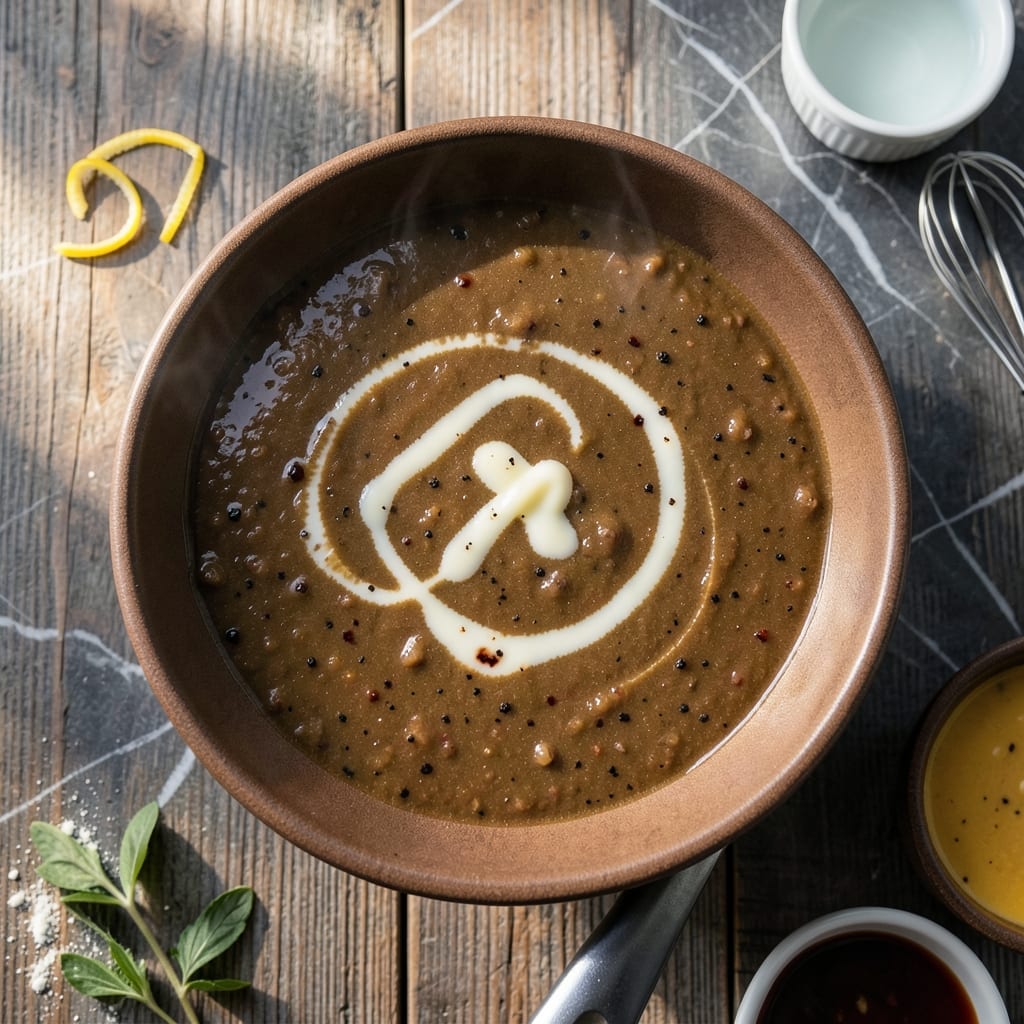
There’s a simple art to making perfect pot roast gravy that transforms pan drippings into a velvety, rich sauce worthy of any Sunday dinner.
This method relies on a classic flour slurry, a foolproof technique that thickens gravy without lumps or thin results. The key is whisking the flour into cold liquid before introducing it to the hot drippings, ensuring smooth integration every time.
What you get is a smooth, glossy gravy with deep, savory flavor that enhances the natural richness of the roast. It’s the kind of finishing touch that turns a good meal into an unforgettable one.
Master this technique, and you’ll never settle for store-bought gravy again.
Ingredients for Pot Roast Gravy Recipe with Flour
Transform pan drippings into velvety richness with these nine essential components for exceptional gravy.
| Ingredient | Amount | Notes |
|---|---|---|
| Pan Drippings 🥩 | 2 cups | From cooked pot roast, fat skimmed |
| All-Purpose Flour 🌾 | ¼ cup | For thickening slurry |
| Cold Water 💧 | ½ cup | For flour slurry |
| Beef Stock 🍲 | 1 cup | Low-sodium preferred for control |
| Unsalted Butter 🧈 | 2 tbsp | For enriching flavor |
| Worcestershire Sauce 🍶 | 1 tsp | For umami depth |
| Kosher Salt 🧂 | ½ tsp | Adjust to taste |
| Freshly Ground Black Pepper 🌶️ | ½ tsp | Coarse grind preferred |
| Fresh Thyme 🌿 | ½ tsp | Chopped, optional garnish |
The pan drippings are non-negotiable—use the fond from your pot roast for maximum flavor. Skim off excess fat for a cleaner finish. For flour, King Arthur or Gold Medal deliver consistent results. The beef stock should be high-quality; Better Than Bouillon or homemade is ideal. Unsalted butter allows precise seasoning control, and Plugrá or Kerrygold are professional-grade choices.
Need to make this gluten-free? Cornstarch at half the amount (mixed with cold water) works as a substitute. No beef stock? Mushroom broth adds similar depth. Fresh thyme can be swapped for dried at one-third the amount, or use rosemary for a different herbal note. The Worcestershire sauce can be omitted, but it adds a critical savory layer—Annie’s or Lea & Perrins are reliable brands.
Gravy is best served immediately but keeps 3-4 days in the fridge. Reheat gently with a splash of water to restore consistency. For longer storage, freeze in ice cube trays for up to 3 months. The flavor actually deepens after a day, making leftovers a bonus.
Why You’ll Love This Recipe
- One Pot Wonder: I just reuse the pan drippings—no extra bowls, no extra mess, just a quick whisk with flour and stock.
- Rich & Deep: That beefy depth from the drippings, thickened with butter and flour, makes every bite taste like slow-cooked love.
- Sunday to Tuesday: I pour this over mashed potatoes, roast beef sandwiches, or even scrambled eggs the next morning.
- Pennywise Perfect: A few pantry staples and leftovers turn into a luxury sauce that costs almost nothing.
Step-by-Step Instructions for Pot Roast Gravy With Flour
Master this technique for velvety, lump-free gravy that elevates your pot roast to restaurant quality.
Step 1: Skim and Measure the Pan Drippings
After removing the pot roast, pour all 2 cups Pan Drippings into a fat separator or measuring cup. Let it sit for 2-3 minutes so the fat rises to the surface. Skim off and discard all but 2 tablespoons of fat—this ensures a rich flavor without greasiness.
Return the skimmed 2 cups Pan Drippings to the pot and place it over medium heat. You want the liquid simmering gently—look for small bubbles breaking the surface—before proceeding to the next step. This temperature ensures the flour slurry incorporates smoothly without clumping.
Step 2: Create and Whisk in the Flour Slurry
In a small bowl, whisk together the 0.25 cup All-Purpose Flour and 0.5 cup Cold Water until completely smooth with no lumps. Cold water is critical here—it prevents the flour from cooking into paste before it disperses in the hot liquid.
Slowly pour the slurry into the simmering Pan Drippings while whisking constantly with your other hand. Continue whisking for 1-2 minutes until the mixture thickens slightly and turns a deeper amber color. The whisk should leave visible trails in the gravy as it thickens.
Step 3: Build Depth with Stock and Seasonings
Add the 1 cup Beef Stock, 1 tsp Worcestershire Sauce, 0.5 tsp Kosher Salt, and 0.5 tsp Freshly Ground Black Pepper to the pot. Stir well to combine. The Worcestershire adds a subtle umami complexity that balances the richness of the drippings.
Bring the mixture to a gentle boil, then reduce heat to maintain a steady simmer. Cook for 5-7 minutes, stirring occasionally, until the gravy coats the back of a spoon and has reduced slightly. You’ll notice it takes on a glossy sheen when it’s ready.
Step 4: Finish with Butter and Thyme
Remove the pot from heat and stir in the 2 tbsp Unsalted Butter one tablespoon at a time. This final step, called “mounting,” gives the gravy a luxurious, velvety texture. The butter should melt completely and create a silky finish.
Stir in the 0.5 tsp Fresh Thyme for a subtle herbal note. Taste and adjust seasoning if needed—though remember the flavors will intensify slightly as it cools. Let the gravy rest for 2-3 minutes before serving to allow the flavors to meld fully.
Strain through a fine-mesh sieve if you prefer an ultra-smooth texture, though I find the fine bits of thyme and pepper add character. Serve warm over sliced pot roast and mashed potatoes.
Pro Tips For Making Pot Roast Gravy Recipe With Flour
- Deglaze First: Pour a splash of cold water or beef stock into the hot pan with drippings and scrape up all those browned bits—this is where the deep flavor hides. I learned this the hard way after making bland gravy from skipping this step.
- Chill the Drippings: Skim off the fat after letting the pan drippings sit for 5 minutes, or better yet, chill them in the freezer for 15 minutes so the fat hardens on top. Sounds tedious, but it keeps your gravy from tasting greasy.
- Whisk Constantly: As soon as you add flour to the drippings, whisk nonstop over medium heat for 1-2 minutes to cook out the raw taste. After burning two batches, I finally figured out that walking away even for a second leads to lumps or scorching.
- Use Cold Water: Always mix your flour with cold water (not hot) to make a smooth slurry—about 2 tablespoons flour to 1/4 cup water. My grandmother swore by this, and she was right: it prevents clumps and gives you silky gravy every time.
Pro Cooking Tips for pot roast gravy recipe with flour
Slurry Success
Always whisk flour into cold water first—hot liquid causes immediate clumping. I use a small jar with a tight lid and shake vigorously for 15-20 seconds to eliminate lumps completely. The ratio of 1 part flour to 2 parts liquid works perfectly for this recipe. 💡
Temperature Control
Maintain a gentle simmer, not a rolling boil, when adding the slurry. Too-high heat can break the starch bonds, thinning your gravy. I keep my burner at medium-low and adjust as needed. A heavy-bottomed pot, like my Le Creuset Dutch oven, prevents hot spots.
Fat Management
Leave just 1-2 tablespoons of fat in your drippings for flavor without greasiness. For easy skimming, I chill the drippings for 5 minutes—the fat solidifies for effortless removal. A fat separator is worth the $15 investment for frequent gravy makers.
Flavor Layering
Bloom the flour in the fat for 1-2 minutes before adding liquid to develop a nutty depth. I also add a splash of red wine to deglaze the pan, scraping up all those flavorful browned bits. This step makes a noticeable difference in complexity.
Final Consistency
If your gravy is too thick, whisk in ¼ cup hot water at a time. Too thin? Return to a simmer and cook for 2-3 more minutes. Remember, it thickens further as it cools. I aim for a consistency that coats a spoon but still drizzles. ✨
Straining Option
For ultra-smooth results, strain through a fine-mesh sieve before serving. I skip this for rustic texture, but it’s essential for formal dinners. Press the solids gently with a spoon to extract all the flavorful liquid.
Nutrition Facts
Frequently Asked Questions
Why use cold water for the flour slurry?
Cold water prevents the flour from cooking into paste before it disperses. Whisking 1 part flour to 2 parts cold water first ensures smooth integration into hot drippings, avoiding lumps.
How do I fix lumpy gravy?
Whisk vigorously to break up lumps, or strain through a fine-mesh sieve. For prevention, always add slurry slowly while whisking constantly. Too thick? Thin with ¼ cup hot water at a time.
Can I make this gravy gluten-free?
Yes! Replace flour with cornstarch at half the amount (mixed with cold water). The technique remains the same, and the result will be just as smooth and flavorful.
How long can I store leftover gravy?
Store in an airtight container in the fridge for 3-4 days, or freeze for up to 3 months. Reheat gently with a splash of water to restore the perfect consistency.

- 7 Eleven Buffalo Chicken Rollers Recipe: Spicy Kick and Creamy Twist in 20 Minutes - September 25, 2026
- 4 Banana Bread Recipe Healthy: Moist Whole-Grain Loaf Without Refined Sugar - September 25, 2026
- 5 Star Chili Con Carne Recipe: Deep-Roasted Beef and Spice Intensity - September 25, 2026